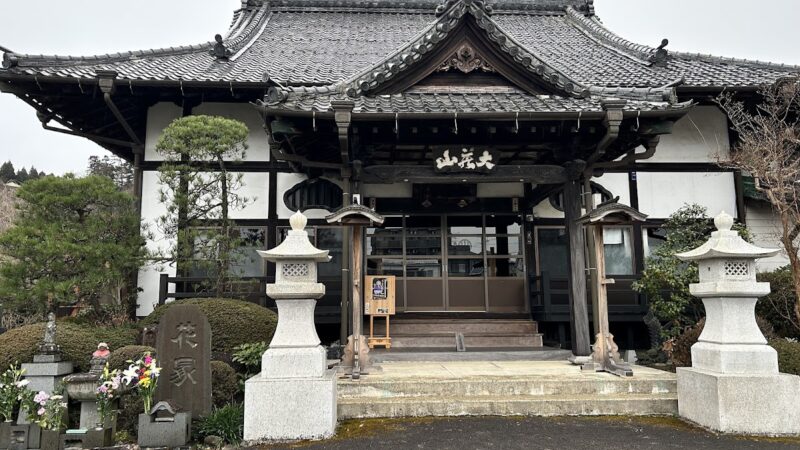
Shogenji Temple (Aoba-ku, Sendai City, Miyagi Prefecture) | Complete Guide to History, Access, and Funeral Services
About Shogenji Temple
Shogenji Temple is a Soto Zen Buddhist temple located at 1-6-30 Tsuchidoi, Aoba-ku, Sendai City, Miyagi Prefecture. Its mountain name is Daizozan, and as a temple in Sendai with a long history, it has played a central role in the local faith.
The Soto Zen sect is a branch of Zen Buddhism that emphasizes practice centered on seated meditation. Shogenji Temple, based on the teachings of the Soto Zen sect, serves as a spiritual haven for its parishioners and is used by many as a venue for funerals and memorial services.
Despite its convenient location easily accessible from the center of Sendai City, Shogenji Temple stands in a tranquil environment, making it a beloved place to escape the hustle and bustle of the city and find peace of mind.
History and Origins of Shogenji Temple
Founding and Development
While detailed records of Shogenji Temple’s founding date and its founder are limited, it is known as an ancient temple dating back to the Sendai Domain era. Sendai City was a castle town built by Date Masamune, and many temples were established from Masamune’s time through the Edo period. It is believed that Shogenji Temple also became part of Sendai’s temple network during this period.
As a Soto Zen temple, Shogenji Temple has attracted the faith of local residents and has served as a family temple, conducting funerals and memorial services under the danka system (parishioner system).
To the Present Day
Having overcome numerous difficulties, including the anti-Buddhist movement after the Meiji Restoration, the wartime damage of the Showa era, and the Great East Japan Earthquake of the Heisei era, Shogenji Temple has continued to uphold its Buddhist traditions to this day. In particular, while Sendai City suffered significant damage from the Great East Japan Earthquake, the temple played a crucial role as a spiritual pillar in the region’s recovery.
Currently, in addition to traditional temple activities, the temple also accommodates modern funeral formats and memorial services, ensuring its operation is in line with contemporary needs.
Guide to Matsugenji Temple Grounds
Main Hall
The main hall of Matsugenji Temple is a building in the traditional style of a Soto Zen temple. The principal image is enshrined within, and daily services and memorial services are held here. It serves as a central gathering place for parishioners to perform ancestral rites and Buddhist rituals.
Cemetery
A cemetery is maintained within the temple grounds, containing the graves of parishioners. Despite being located in an urban area, it maintains a quiet environment, and its convenient location for visits is one of its attractions.
Other Facilities
Facilities for funerals and memorial services are also available, allowing for the holding of wakes, funeral services, and other Buddhist ceremonies. For detailed information on facilities and usage conditions, we recommend contacting the temple directly.
How to Access Matsugenji Temple
Location
1-6-30 Tsuchitoi, Aoba-ku, Sendai City, Miyagi Prefecture 980-0065
Phone: 022-225-2603
Access by Public Transportation
By Subway
The nearest station is Atagobashi Station on the Sendai City Subway Namboku Line. It’s about a 10-minute walk from the station, making it relatively easy to access.
After exiting Atagobashi Station, head south (opposite to the Sendai city center). After passing through a residential area, you will arrive at Matsugenji Temple. The route is mostly flat, making it relatively easy to walk even for the elderly.
By Bus
You can also use local buses running within Sendai City. There are bus routes that pass through the Tsuchitoi area, and the temple is a few minutes’ walk from the nearest bus stop. For detailed bus routes and timetables, please check the Sendai City Transportation Bureau website.
Access by Private Car
The temple is approximately a 10-minute drive from the center of Sendai City. It is also approximately a 20-minute drive from the Sendai-Miyagi Interchange on the Tohoku Expressway.
We recommend contacting the temple in advance regarding parking availability and capacity. Prior confirmation and guidance are especially important for funerals and memorial services where a large number of attendees are expected.
Landmarks in the Surrounding Area
The Tsuchitoi area is close to the center of Sendai City, and educational facilities such as Tohoku Gakuin University’s Tsuchitoi Campus are nearby. This area is a mix of residential and student areas, maintaining a quiet environment.
About Funerals and Memorial Services at Matsugenji Temple
Funeral Conduct
Matsugenji Temple can conduct funerals according to the rituals of the Soto Zen sect. While we can accommodate funerals for temple parishioners, we may also be able to accommodate funerals for non-parishioners depending on the circumstances.
Types of Funerals
- Wake and Funeral Service: A traditional two-day funeral service.
- One-Day Funeral: A funeral service that omits the wake and only includes the funeral service.
- Family Funeral: A small-scale funeral attended only by relatives and close friends.
In recent years, various funeral styles have been chosen according to the wishes of the deceased and their families. Matsugenji Temple can also flexibly accommodate modern needs.
Types of Memorial Services
Matsugenji Temple can perform the following types of memorial services:
- First Seven-Day Memorial Service: A memorial service held on the seventh day after death.
- Forty-Ninth Day Memorial Service: An important memorial service marking the end of the mourning period.
- First, Third, and Seventh Anniversary Memorial Services: Annual memorial services.
- Obon and Higan Memorial Services: Ancestor worship as an annual event.
Costs of Funerals and Memorial Services
The costs of funerals and memorial services vary greatly depending on the scale and content. Generally, the following are the types of expenses involved:
- Offering: A gratuity for the monk
- Posthumous Name Fee: A gratuity for bestowing a posthumous name
- Transportation Allowance: The monk’s travel expenses
- Meal Allowance: A gratuity if the monk does not participate in the meal.
Specific amounts vary depending on local customs and temple policies, so it is recommended to consult with the temple in advance.
Funeral Service Flow
- Pre-consultation: If possible, it is reassuring to visit the temple and consult with them before death.
- Notification of Death: The temple will be notified promptly upon death.
- Schedule Adjustment: The dates for the wake and funeral service will be coordinated with the temple and funeral home.
- Meeting: Details regarding the content and progress of the funeral will be decided.
- Funeral Service Execution: The funeral service will be conducted by a monk from the temple.
- Post-funeral Procedures: Discussions regarding future memorial services, such as the 49th-day memorial service, will be held.
Crematorium Information near Matsugenji Temple
We will guide you through the main crematoriums used when holding funerals in Sendai City and its surrounding areas.
Kuzuoka Crematorium
This is one of the most frequently used crematoriums in Sendai City. Located in Kuzuoka, Goro, Aoba-ku, Sendai City, it is relatively close to Matsugenji Temple. It also has a funeral hall, allowing for the entire process from the wake and funeral service to cremation to be conducted in one place.
Natori City Crematorium
This crematorium is located in Natori City, which is adjacent to the south of Sendai City. It is available for use by Sendai residents and is known as a relatively new facility.
Rifu Crematorium
This crematorium is located in Rifu Town and is easily accessible from northern Sendai City and Miyagi County.
The choice of crematorium is determined by considering the deceased’s address, the family’s residence, and costs. It is important to choose the most suitable facility in consultation with a funeral home or temple.
Temple Environment in Aoba Ward, Sendai City
Characteristics of Aoba Ward
Aoba Ward in Sendai City is an administrative district that includes the central part of Sendai City, with a concentration of government offices such as the city hall and prefectural office, commercial facilities, and educational institutions. At the same time, many historical temples and shrines remain, making it a region where urban functions and traditional culture coexist.
Major Temples in Aoba Ward
Besides Matsugenji Temple, many other temples are scattered throughout Aoba Ward. There are temples of various sects, including the Soto, Rinzai, Jodo, and Shingon schools, each supporting the local faith.
Many temples have ties to the Date family of the Sendai Domain, and many possess historically valuable temple architecture and cultural assets.
About the Soto School
Teachings and Characteristics of the Soto School
The Soto School originates from the Soto Zen of China and was founded in Japan by Zen Master Dogen. It emphasizes “Shikantaza,” or simply sitting in meditation, and is characterized by the philosophy of “Shusho Itto,” which views daily life itself as practice.
Characteristics of Soto School Funerals
In Soto school funerals, the basic idea is to bestow a posthumous Buddhist name upon the deceased, sending them to the Buddhist world as a disciple of Buddha. Unique Soto school rituals, such as the Indo Hōgo (guiding sermon) and the conferment of the lineage, are performed.
A funeral is not only a time to pray for the deceased’s peaceful repose, but also an opportunity for those left behind to engage with Buddhist teachings and reflect on their own lives.
Choosing a Temple and the Danka System
What is a Danka?
A Danka is someone who financially supports a specific temple and receives religious services from it. Becoming a Danka allows one to hold funerals and memorial services at the temple, and may also grant the right to use a cemetery plot.
Considerations When Becoming a Danka
- Confirmation of Sect: Does it match the sect of your ancestors?
- Location: Is it easily accessible?
- Cost: What are the financial burdens such as membership fees and annual maintenance fees?
- Temple Atmosphere: Do the head priest and the temple’s policies suit you?
Use by Non-Dankas
In recent years, there has been an increase in funeral and memorial service forms that are not bound by the Danka system. Some temples accept funerals even for non-Dankas. For information regarding Matsugenji Temple’s policies, please contact the temple directly.
Considering a Grave
Types of Cemeteries
- Temple Cemetery: A cemetery managed by a temple. Often requires becoming a temple parishioner.
- Public Cemetery: A cemetery operated by a local government. Open to all religions and relatively inexpensive.
- Private Cemetery: A cemetery operated by a private company. Often offers excellent facilities.
Using a Cemetery at Matsugenji Temple
Matsugenji Temple also has a cemetery, but you need to check directly with the temple regarding usage conditions and availability. Temple cemeteries in urban areas have limited plots, so early consultation is recommended.
New Forms of Memorial Service
In addition to the traditional method of erecting a tombstone, the following options are available:
- Perpetual Memorial Grave: A grave managed and cared for by a temple for eternity.
- Columbarium: A form of burial where cremated remains are interred in an indoor facility.
- Tree Burial: A form of grave where a tree serves as a grave marker instead of a tombstone.
- Scattering of Ashes/Sea Burial: A form of returning to nature.
Each has its own advantages and disadvantages, and it is important to choose based on family structure, values, budget, etc.
About Floral Offerings and Gifts
Floral Offerings for Wakes and Funerals
Floral offerings for the altar and gifts from attendees play an important role in funerals. It is common to order floral offerings through the funeral home.
In Soto Zen funerals, white chrysanthemums and lilies are often used, but the deceased’s preferences or seasonal flowers may also be incorporated.
Offerings for Memorial Services
Fruits, sweets, and the deceased’s favorite foods are offered during memorial services. In Buddhism, the Five Offerings (incense, flowers, lamp, purified water, and food) are fundamental, but in modern times, they are often simplified.
Notes and Manners When Using Matsugenji Temple
Manners When Visiting
- Attire: For memorial services and funerals, mourning attire is the basic requirement. Even for regular visits, please try to wear clothing that is not too flashy.
- Mobile Phones: Please turn off your phone or set it to silent mode while on the temple grounds.
- Photography: Please refrain from taking photographs on the temple grounds or inside the main hall without permission.
- Quietness: Temples are places of training and prayer. Please avoid loud conversations.
Importance of Prior Contact
When using the temple for funerals or memorial services, it is essential to contact them by phone in advance to discuss the date and details. Unannounced visits should be avoided as they depend on the temple’s schedule.
How to Give an Offering
The offering should be placed in a white envelope or a special condolence envelope, and “Offering” should be written on the front. It is proper etiquette to wrap the offering in a fukusa (a type of cloth wrapping) and hand it directly to the monk, or to present it on a small tray.
Annual Events at Matsugenji Temple
Obon
During Obon in August (or July depending on the region), ceremonies are held to welcome and honor the spirits of ancestors. Many parishioners visit graves, and special memorial services are sometimes held at the temple.
Ohigan
Ohigan is a seven-day period centered around the spring and autumn equinoxes. This period is also a time for ancestor worship, with visits to graves and memorial services held at temples.
Other Events
Some temples may also hold Buddhist ceremonies such as Hanamatsuri (April 8th), celebrating the birth of Buddha; Jodo-e (December 8th), commemorating Buddha’s enlightenment; and Nirvana-e (February 15th), commemorating Buddha’s death.
For detailed information on annual events, please contact Matsugenji Temple directly.
Summary
Matsugenji Temple, located in Tsuchitoi, Aoba-ku, Sendai City, Miyagi Prefecture, is a Soto Zen Buddhist temple with a long history and tradition, while also adapting to modern needs.
It boasts many attractive features, including its convenient location (approximately 10 minutes on foot from Atagobashi Subway Station), its tranquil environment, and its meticulous execution of funerals and memorial services based on Soto Zen teachings.
If you are considering a funeral or memorial service, looking for a grave, or seeking a Soto Zen temple, we highly recommend contacting Matsugenji Temple. Prior consultation will allow you to conduct important Buddhist ceremonies with greater peace of mind.
Contact Information
Soto Zen Buddhism, Daizozan Matsugenji Temple
1-6-30 Tsuchitoi, Aoba-ku, Sendai City, Miyagi Prefecture 980-0065
Phone: 022-225-2603
We recommend contacting the temple by phone before visiting.