
Complete Guide to Meitoku-ji Temples | A Thorough Explanation of the History and Benefits of Famous Temples Scattered Across Japan
There are several temples named “Meitoku-ji” throughout Japan. Each has its own unique history and character, and has attracted local faith. This article focuses on the particularly famous Meitoku-ji temples in Izu City, Shizuoka Prefecture, Nagano City, Nagano Prefecture, and Amakusa City, Kumamoto Prefecture, and provides detailed information on the charm, history, and access of each temple.
What is Meitoku-ji? Origin of the Name and Nationwide Distribution
The name Meitoku-ji often originates from the era name “Meitoku” (1390-1394) during the Nanboku-cho period, and temples founded during this time exist throughout the country. The word Meitoku means “clear virtue,” and was chosen as a name symbolizing enlightenment and merit in Buddhism.
There are several Meitoku-ji temples throughout Japan, including those in Izu City, Shizuoka Prefecture, Nagano City, Nagano Prefecture, Amakusa City, Kumamoto Prefecture, and Fukui City, Fukui Prefecture, each deeply connected to the history and culture of its region. The temples belong to a wide range of sects, including the Soto Zen and Shinshu Takada sects, and each temple possesses its own unique characteristics.
Meitoku-ji Temple in Izu City, Shizuoka Prefecture | Nationally Famous as the God of Toilets
A Unique Spot in Amagi-Yugashima
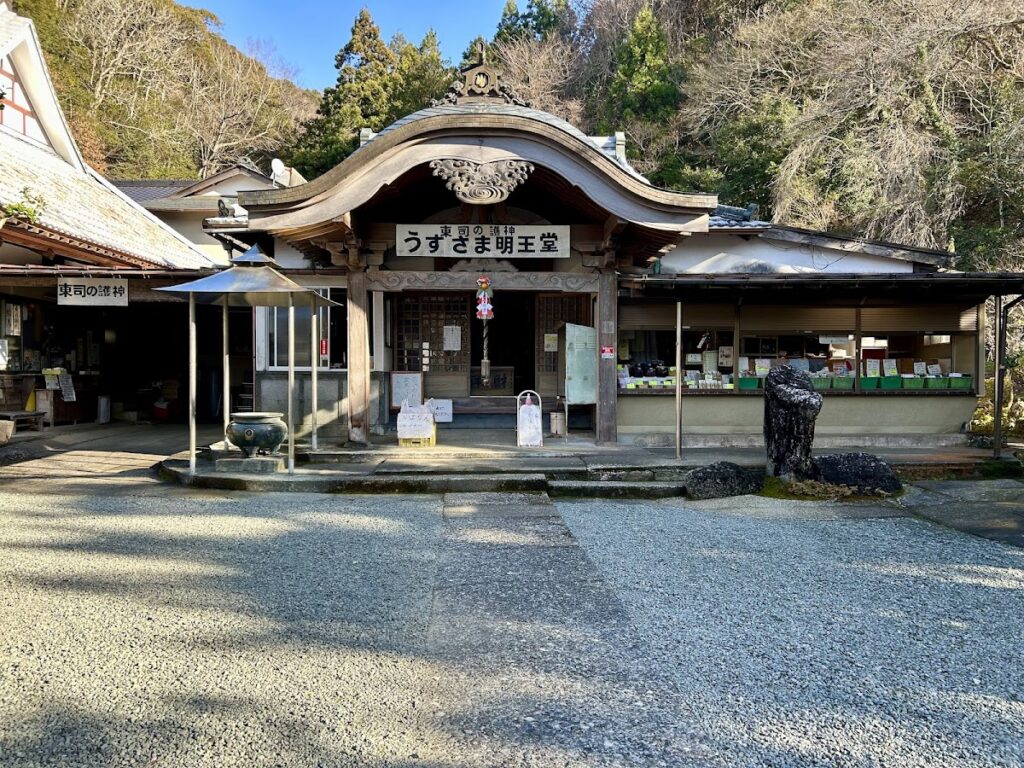
Meitoku-ji Temple, located in Yugashima, Izu City, Shizuoka Prefecture, is a nationally renowned tourist spot known for enshrining the “God of Toilets.” Founded during the Meitoku era (1390-1393) at the end of the Nanboku-cho period by Zen Master Rizan Chueki, it is an ancient Soto Zen temple boasting a history of over 600 years.
Located close to the Amagi-Yugashima hot spring resort area, this temple, nestled in a quiet mountain valley, possesses a unique atmosphere that sets it apart from typical temples. In recent years, it has been frequently featured on tourism information websites and social media as a “unique spot you’ll want to tell everyone about.”
About Ususama Myoo
The most distinctive feature of Meitoku-ji Temple is that it enshrines Ususama Myoo (also written as Ususama Myoo), the guardian deity of the latrine (toilets). This deity is believed to possess the power to transform impurity into purity with the power of fire, and has been worshipped as one of the Five Great Wisdom Kings in Esoteric Buddhism.
Ususama Myoo is a deity originally from Indian mythology, and is believed to possess the power of purification, burning away impurities. In Japan, it has been worshipped since the Heian period, and has been widely revered among ordinary people, especially for its miraculous powers in treating “lower body diseases” and urinary tract disorders.
The Deity Enshrined in the Toilets
The most distinctive feature of Meitoku-ji Temple is that Ususama Myoo is enshrined in the actual toilet (toilets). In Zen Buddhist temples, the toilets are considered one of the places of training, and keeping them clean has been considered important. At Meitoku-ji Temple, this tradition is carried on in the modern age by enshrining the deity inside a functional toilet.
Visitors can pray for good health while actually using the toilet. This unique style of worship is extremely rare throughout Japan and is a reason why many people visit the temple. The toilet is kept clean and is available for use by anyone who observes proper worship etiquette.
Benefits and Faith Regarding Lower Body Illnesses
People suffering from so-called “lower body illnesses,” such as hemorrhoids, constipation, diarrhea, urinary tract disorders, and gynecological diseases, come to Meitoku-ji Temple from all over Japan. Even in today’s age of advanced medicine, it functions as a place of faith that provides spiritual support for people with delicate problems.
The method of worship is the same as at a typical temple, but when praying at the toilet, one quietly clasps their hands together and prays for good health. Amulets and talismans are also available, which can be placed in the toilet at home to pray for daily health.
Other Places to Visit and Highlights
Besides Ususama Myoo, Meitoku-ji Temple offers several other places to worship. The main hall enshrines the principal image, Shakyamuni Buddha, and is open for regular temple worship. The temple grounds also house Jizo Bodhisattva and Kannon Bodhisattva, allowing for worship tailored to various wishes.
The path leading from the temple gate to the main hall is surrounded by nature that changes with the seasons, offering particularly beautiful scenery during the fresh green season and the autumn foliage season. The peaceful environment, perfect for calming the mind during worship, is another of the temple’s charms.
Access and Visiting Information
Location: Yugashima, Izu City, Shizuoka Prefecture
Access:
- Train/Bus: Approximately 25 minutes by Tokai Bus bound for “Kawazu Station” from Shuzenji Station on the Izuhakone Railway, get off at “Yugashima” bus stop, and walk for approximately 5 minutes.
- Car: Approximately 50 minutes from Numazu IC on the Tomei Expressway or Nagaizumi-Numazu IC on the Shin-Tomei Expressway.
Parking: Available (free, several spaces)
Visiting Hours: Anytime during the day (avoid nighttime)
Admission Fee: Free
Inquiries: Information can be confirmed at the Amagi Branch of the Izu City Tourism Association, etc.
Meitoku-ji Temple, Nagano City, Nagano Prefecture | An ancient temple associated with Kosaka Danjo
The Battle of Kawanakajima and Takeda Shingen’s Strategist
Meitoku-ji Temple, located in Matsushiro-cho, Nagano City, Nagano Prefecture, is famous as a temple associated with Kosaka Danjo-no-chu Masanobu, a renowned retainer of Takeda Shingen. It is a Soto Zen temple said to have been founded in 1390 by the monk Meitoku, and boasts a history of over 600 years.
Kosaka Danjo was a renowned general, counted among the Twenty-Four Generals of Takeda, and played a particularly important role as a strategist for the Takeda side in the Fourth Battle of Kawanakajima (1561). After the battle, he became the first lord of Kaizu Castle (present-day Matsushiro Castle) and governed northern Shinano.
Kosaka Danjo’s Grave
Meitoku-ji Temple houses the grave of Kosaka Danjo, attracting many history enthusiasts and tourists visiting sites associated with the Takeda clan. It is said that Danjo Kosaka was deeply devoted to Meitoku-ji Temple, repaired its various buildings, and became its founder.
His tomb is located behind the main hall, and a magnificent five-tiered pagoda stands there. It is relatively well-preserved for a tomb of a Sengoku period warlord, making it a valuable historical site that conveys the nature of faith at that time.
A Historical Spot in Matsushiro
Matsushiro is known as the castle town of the Sanada clan and is a tourist area with many historical buildings remaining. Visiting Meitoku-ji Temple in conjunction with Matsushiro Castle ruins, the Sanada residence, and the Bunbu School will allow you to gain a deeper understanding of the region’s history.
The area around the temple is a quiet residential area, retaining the calm atmosphere of the former castle town. It is recommended to take your time and visit the temple as part of a historical exploration.
Access and Visiting Information
Location: Matsushiro-cho, Nagano City, Nagano Prefecture
Access:
- Train/Bus: Approximately 30 minutes by Alpico Kotsu bus bound for “Matsushiro” from JR Nagano Station
- Car: Approximately 10 minutes from Nagano IC on the Joshinetsu Expressway, or approximately 15 minutes from Suzaka-Nagano East IC
Parking: Available
Visiting Hours: Open throughout the day
Admission Fee: Free
Meitoku-ji Temple, Amakusa City, Kumamoto Prefecture | Amakusa’s First Zen Temple
Reconstruction and Buddhist Spreading After the Amakusa-Shimabara Rebellion
Meitoku-ji Temple, located in Hondo-machi, Amakusa City, Kumamoto Prefecture, is Amakusa’s first Zen temple. It was established by Suzuki Shigenari, the local magistrate of Amakusa at the time, to spread Buddhism and stabilize the minds of the islanders who were in turmoil after the Amakusa-Shimabara Rebellion (1637-1638).
The Amakusa-Shimabara Rebellion erupted as a peasant uprising against the persecution of Christians and harsh tax collection, and was suppressed after fierce fighting with the shogunate forces. After the rebellion, Amakusa was devastated, and its population plummeted. Suzuki Shigenari promoted the construction of Buddhist temples to stabilize the civil administration and promote spiritual recovery.
The Mystery of the Foreigner Jizo
At the main gate of Meitoku-ji Temple is a unique Jizo Bodhisattva statue known as the “Foreigner Jizo.” This Jizo has a face that resembles a Westerner, and is known as the “Foreigner’s Face.”
There are various theories about the origin of this Foreigner Jizo. One theory suggests it symbolizes the fusion of Christianity and Buddhism, given Amakusa’s history as a region with a strong Christian faith. Another theory suggests it is a work influenced by the Nanban trade (trade with European countries). In any case, it is a valuable cultural asset that tells the story of Amakusa’s complex religious history.
A Temple that Conveys the History and Culture of Amakusa
Meitoku-ji Temple is one of the important tourist spots for understanding the history of Amakusa. Visiting it along with other Christian-related historical sites such as the Amakusa Christian Museum and Sakitsu Church allows for a deeper understanding of Amakusa’s multifaceted religious culture.
The temple grounds have a quiet and peaceful atmosphere and are still cherished as a place of worship for the local people. The main hall and gardens are well-maintained, creating an environment where visitors can worship at their leisure.
Meitoku-ji Temple is one of the important tourist spots for understanding the history of Amakusa. ### Access and Visiting Information
Location: Hondomachi, Amakusa City, Kumamoto Prefecture
Access:
- By Car: Approximately 2 hours from Kumamoto City via National Routes 266 and 324
- By Bus: Within walking distance from Hondo Bus Center
Parking: Available
Visiting Hours: Open throughout the day
Admission Fee: Free
Myotoku-ji Temple, Fukui City, Fukui Prefecture | A Shinshu Buddhist Temple Associated with Shibata Katsuie
Myotoku-ji Temple, located in the Kifune district of Fukui City, Fukui Prefecture, is a Shinshu Takada sect temple known for its connection to the Sengoku period warlord Shibata Katsuie. It is said to have been founded in 1391 (Meitoku 2), boasting a history of over 600 years.
Shibata Katsuie served as a senior retainer of Oda Nobunaga, and after Nobunaga’s death, he ruled Echizen (present-day Fukui Prefecture). Myotoku-ji Temple is said to have received Katsuie’s patronage and developed as a center of local faith.
Fukui City has many other historical temples, and Meitoku-ji Temple is one of them, preserving the region’s history to this day.
How to Enjoy and Etiquette When Visiting Meitoku-ji Temple
Understanding the Individuality of Each Temple
Even though they share the same name, “Meitoku-ji,” each temple has a different history and characteristics. By researching the origins and features of each temple before your visit, you can gain a deeper understanding and appreciation.
For example, the Meitoku-ji Temple in Shizuoka has a unique belief in the “god of toilets,” the Meitoku-ji Temple in Nagano has a connection to the Sengoku period warlord Kosaka Danjo, and the Meitoku-ji Temple in Kumamoto focuses on the religious history of Amakusa. Each temple offers a unique theme for your visit.
Visiting Etiquette and Precautions
When visiting a temple, please observe the following basic manners:
- Dress Code: Avoid revealing clothing and wear clean attire.
- Photography: Photography inside the main hall and of the deity is generally prohibited. Please refrain from taking photos within the temple grounds.
- Silence: Avoid loud conversations and noise, and pray quietly.
- Smoking and Eating: Refrain from smoking and eating outside of designated areas within the temple grounds.
- Offerings: Offer what you can afford, with gratitude.
Especially at Meitoku-ji Temple in Izu, Shizuoka, the toilets (latrines) are considered objects of worship, so please use them with extra care and consideration for the next worshipper.
Combining with Nearby Sightseeing
Each Meitoku-ji Temple is located in an attractive sightseeing area:
Around Meitoku-ji Temple in Izu, Shizuoka:
- Amagi Yugashima Onsen (numerous hot spring inns)
- Joren Falls (one of Japan’s Top 100 Waterfalls)
- Shuzenji Onsen
- Sites associated with “The Izu Dancer”
Around Meitoku-ji Temple in Matsushiro, Nagano:
- Matsushiro Castle Ruins
- Sanada Treasure Museum
- Sanada Residence
- Bunbu School
- Zozan Underground Bunker
Around Meitoku-ji Temple in Amakusa, Kumamoto:
- Amakusa Christian Museum
- Sakitsu Church (World Heritage Site)
- Amakusa Five Bridges
- Dolphin Watching
By combining these sightseeing spots, you can create a fulfilling travel plan.
Amulets and Souvenirs at Meitoku-ji Temple
Souvenirs at Meitoku-ji Temple in Shizuoka and Izu
Meitoku-ji Temple in Shizuoka offers amulets and talismans related to Ususama Myoo. The “Lower Health Amulet” is particularly popular, as it is believed to bring daily health when placed in the bathroom.
Goshuin (temple stamps) are also available, and many people receive them as a memento of their visit. However, since the head priest may not always be present, it is recommended to check in advance if you wish to receive a goshuin.
Other Souvenirs at Meitoku-ji Temple
Meitoku-ji Temples in Nagano and Kumamoto also offer their own unique goshuin and souvenirs. Many of these reflect the history and characteristics of each temple, making them valuable as collector’s items.
Best Time to Visit Meitoku-ji Temple
Charms of Each Season
Meitoku-ji Temple is open year-round, but each season offers a different charm:
Spring (March-May):
- Beautiful fresh greenery, making for a refreshing visit
- The surrounding scenery is also beautiful during cherry blossom season
Summer (June-August):
- The area around Meitoku-ji Temple in Izu is a comfortable summer resort
- The greenery is lush, and the trees within the temple grounds are vibrant
Autumn (September-November):
- The autumn foliage is beautiful, making it the most suitable season for visiting
- The climate is mild, making it ideal for sightseeing
Winter (December-February):
- A quiet and peaceful atmosphere for visiting
- Snowscapes (such as Meitoku-ji Temple in Nagano) are also picturesque
Tips for Avoiding Crowds
While Meitoku-ji Temples are generally not as crowded as typical tourist temples, they tend to be more crowded on holidays and long weekends. For a quiet visit, weekday mornings are recommended.
Historical Significance and Cultural Value of Meitoku-ji Temple
As a Center of Regional Faith
Meitoku-ji temples throughout Japan have functioned as important centers of faith in their respective regions. The Meitoku-ji in Shizuoka demonstrates a fusion of folk belief and Buddhism, the Meitoku-ji in Nagano reflects the faith of the samurai class, and the Meitoku-ji in Kumamoto tells the story of religious policy history.
These temples are not merely religious institutions; they also possess value as valuable cultural assets that convey the history and culture of their respective regions.
Significance in the Modern Age
In modern society, community-based temples like Meitoku-ji continue to serve as spiritual havens. In particular, the Meitoku-ji temples in Shizuoka and Izu continue to provide spiritual support to people suffering from delicate health problems, even in today’s advanced medical age.
They are also important places for historical exploration and cultural learning, and their educational value is highly regarded.
Summary | Experiencing Japan’s Diverse History and Culture Through a Tour of Myotoku-ji Temples
While sharing the same name, “Myotoku-ji,” these temples each possess their own unique history and character. From the “Toilet God” temple in Izu, Shizuoka, to the temple associated with Kosaka Danjo in Matsushiro, Nagano, and the “First Zen Temple” in Amakusa, Kumamoto, each temple vividly reflects the history and culture of its region.
Visiting these temples allows you to experience Japan’s diverse religious culture and regional history. By understanding the unique charm of each Myotoku-ji and visiting with proper etiquette, you can gain a deeper sense of awe and learning.
When traveling or sightseeing, be sure to visit Myotoku-ji temples throughout Japan and experience their history and culture. It is in these seemingly unassuming local temples that Japan’s rich spiritual culture truly thrives.

