Complete Guide to Muryoji Temples: A Thorough Explanation from Famous Temples in Kushimoto, Gamagori, and Nara to the Head Temple of the Nenbutsu Sect
There are several temples named “Muryoji” throughout Japan, each with its own unique history and characteristics. This article provides detailed explanations of major Muryoji temples, including a Rinzai Zen temple in Kushimoto, Wakayama Prefecture; a “cancer-fighting temple” in Gamagori, Aichi Prefecture; a Jodo Shinshu temple in Kashiba, Nara Prefecture; and the head temple of the Nenbutsu sect in Kato, Hyogo Prefecture.
Kinkozan Muryoji Temple, Kushimoto, Kishu: An Ancient Temple Housed in Masterpieces by Maruyama Okyo and Nagasawa Rosetsu
History and Origin of Muryoji Temple
Located in Kushimoto, Higashimuro District, Wakayama Prefecture, Kinkozan Muryoji Temple is known as a special temple of the Tofukuji branch of the Rinzai sect. Founded by Zen Master Kokan, this Zen temple is a historic temple situated at the southernmost tip of mainland Japan.
Originally located in the Fukuro district on the west coast of Kushimoto, it suffered catastrophic damage from the massive tsunami caused by the Hoei earthquake in October 1707. Afterward, it was relocated to its current location in the center of Kushimoto town and rebuilt as a center of local faith. This historical background reflects the history of the Kushimoto region, which has faced the threat of the Nankai Trough earthquake.
Okyo-Rosetsu Museum: A Treasure Shining in the History of Japanese Art
The greatest highlight of Muryoji Temple is the “Okyo-Rosetsu Museum” located within its grounds. Here, valuable screen paintings and sliding door paintings by Maruyama Okyo, a representative painter of the Edo period, his leading disciple Nagasawa Rosetsu, and Ito Jakuchu are preserved.
In particular, Nagasawa Rosetsu’s works are breathtaking, allowing visitors to appreciate his unique style, a fusion of bold composition and delicate brushwork. The realistic style of Okyo and the unconventional ideas of Rosetsu are contrasted, creating a valuable space where visitors can experience the diversity of Edo period painting.
The exhibits at the Okyo-Rosetsu Museum are all precious works, including nationally designated important cultural properties and Wakayama Prefecture designated cultural properties. These works are in excellent condition, and the colors from over 200 years ago remain vividly preserved.
Access and Visiting Information
Location: Kushimoto, Kushimoto-cho, Higashimuro-gun, Wakayama Prefecture
Transportation Access:
- Approximately 10 minutes on foot from Kushimoto Station on the JR Kisei Main Line
- Approximately 30 minutes by car from Susami-Minami IC on the Kisei Expressway
Visiting Hours: Usually 8:00~17:00 (may vary depending on the season)
Admission Fee: A separate fee is required to visit the Okyo-Rosetsu Museum.
Since it is located on a narrow street in Kushimoto, it is recommended to check nearby parking information in advance if you are coming by car.
Muryoji Temple, Gamagori City, Aichi Prefecture: A Sacred Site Known Nationwide as a “Cancer Prevention Temple”
History of Cancer Prevention Beliefs
Muryoji Temple, located in Nishiura-cho, Gamagori City, Aichi Prefecture, is a Shingon sect Daigo-ha temple and boasts nationwide recognition as “Nishiura Fudo” and a “Cancer Prevention Temple.” Founded during the Heian period, this ancient temple has long attracted many worshippers as a sacred site for warding off evil and cancer.
The principal image, Nishiura Fudo, is considered a hidden Buddha and is believed to have particularly strong efficacy in preventing serious illnesses. Even today, people continue to visit the temple to pray for cancer prevention and recovery from illness.
Highlights of the Temple Grounds
The temple grounds are adorned with numerous votive tablets (ema) dedicated by worshippers from all over Japan, creating an impressive sight. Each tablet is inscribed with wishes for good health and words of gratitude, deeply touching the hearts of visitors.
The head priest regularly holds sermons and prayers, where visitors can learn about cancer prevention and the Buddhist perspective on life and death. Behind the main hall is a space modeled after Chinese cave temples, creating a unique religious atmosphere.
Visiting Information and Access
Location: 30 Nichu, Nishiura-cho, Gamagori City, Aichi Prefecture
Transportation Access:
- Approximately 5 minutes on foot from Nishiura Station on the Meitetsu Gamagori Line
- Approximately 30 minutes by car from the Otowa-Gamagori Interchange on the Tomei Expressway
Visiting Hours: 8:00 AM – 5:00 PM
Admission Fee: Free entry to the grounds (prayer services etc. are separate)
Located near Nishiura Onsen (hot springs), it attracts many tourists who combine their visit with a hot spring trip. Its scenic location overlooking Mikawa Bay is also a major draw.
Procedures for Praying for Cancer Prevention
There are unique procedures for praying for cancer prevention at Muryoji Temple:
- Worship at the Main Hall: First, offer your prayers to Nishiura Fudo in the main hall.
- Dedication of Ema (votive tablet): Write your wish on a cancer prevention ema and dedicate it.
- Receiving an Amulet: Receive an amulet for cancer prevention.
- Prayer by the Chief Priest: Those who wish can receive a prayer from the chief priest.
Many worshippers visit regularly to offer continuous prayers.
Muryoji Temple, Kashiba City, Nara Prefecture: A community-based temple of the Jodo Shinshu Honganji sect
Temple Overview and History
Muryoji Temple, located in Kashiba City, Nara Prefecture, is a temple of the Jodo Shinshu Honganji sect (Nishi Honganji sect). The current chief priest is the 12th chief priest, Nakagawa Daijo, and the temple engages in community-based activities.
Based on the teachings of Jodo Shinshu Buddhism, this temple cherishes faith in the original vow of Amida Buddha and has long been a beloved spiritual center for local residents.
Temple Activities and Events
Muryoji Temple holds various Buddhist services and events throughout the year:
- Regular Dharma Talks: Monthly Dharma talks
- Ho-on-ko (Memorial Service): The most important Buddhist service in Jodo Shinshu Buddhism
- Eitaikyo (Perpetual Sutra Recitation Service): A memorial service for ancestors
- Children’s Club: Buddhist education for local children
The temple also provides consultations on Buddhist services such as funerals and memorial services, operating in a way that is close to the lives of local residents.
Access Information
Location: Kashiba City, Nara Prefecture
Transportation Access:
- Within walking distance of the Kintetsu Osaka Line (nearest station to be confirmed)
- Approximately 10 minutes by car from the Nishimeihan Expressway Kashiba Interchange
For detailed access information and event schedules, please check the temple’s official website.
Nenbutsu-shu Sanbozan Muryoju-ji Temple: A Magnificent Head Temple in Kato City, Hyogo Prefecture
About the Nenbutsu-shu Sect
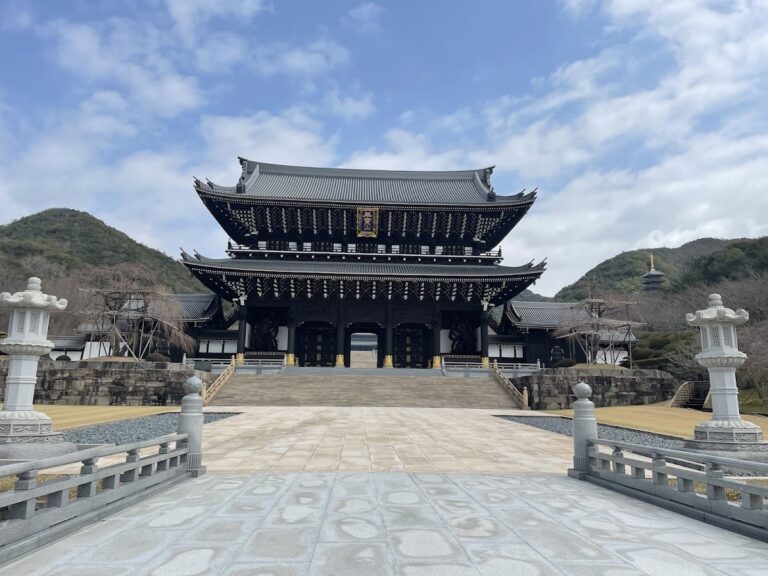
Located in Kato City, Hyogo Prefecture, Nenbutsu-shu Sanbozan Muryoju-ji Temple is the head temple of the Nenbutsu-shu sect. Although its name is “Muryoju-ji,” it is generally known as the head temple of the Nenbutsu-shu sect.
The Nenbutsu-shu sect is a sect that advocates “the practice of true Buddhism,” and its head temple, the “Buddhist King’s Hall,” was built with the hope that it would become a beacon of hope, heralding the “dawn of spiritual civilization.”
The Magnificent Architecture of the Buddhist King’s Hall
The Buddhist King’s Hall, the heart of the head temple, is known for its magnificent scale and opulent decorations. While adhering to traditional Buddhist architectural styles, the building, constructed using modern architectural techniques, overwhelms visitors.
The temple grounds feature facilities modeled after Buddhist sacred sites around the world, as well as beautiful gardens, boasting a scale and content that could truly be described as a “Buddhist theme park.”
Regarding Visits
Visiting the Nenbutsu-shu Sanbozan Muryoju-ji Temple may require advance reservations or introductions. We recommend checking the official website for the latest information on public opening dates and visiting procedures.
Location: Kato City, Hyogo Prefecture
Access: Approximately 15 minutes by car from Hyogo-Tojo IC on the Chugoku Expressway
Other Muryoji Temples
Muryoji Temples Scattered Across Japan
Besides the above, there are temples named “Muryoji” throughout Japan:
- Hokkaido and Tohoku Regions: Multiple Muryoji temples exist, belonging to various Buddhist sects.
- Kanto Region: Muryoji temples are scattered throughout Tokyo and Kanagawa Prefectures.
- Chubu Region: Located in Nagano and Gifu Prefectures, among others.
- Kinki Region: Multiple temples exist in Kyoto and Osaka Prefectures.
- Chugoku and Shikoku Regions: Scattered throughout each prefecture.
- Kyushu Region: Located in Fukuoka and Nagasaki Prefectures, among others.
The word “Muryo” is a Buddhist term meaning “immeasurable” or “limitless,” and is often used in temple names to represent the immeasurable light and lifespan of Amida Buddha.
Guidelines and Manners for Visiting Muryoji Temple
Basic Temple Visiting Manners
Regardless of whether it’s Muryoji Temple or any other temple, please be sure to follow these basic manners:
- Attire: Avoid revealing clothing and wear clean attire.
- Photography: Never take photos in areas where photography is prohibited.
- Quietness: Be quiet on the temple grounds and refrain from speaking loudly.
- Smoking and Eating: Refrain from smoking and eating outside designated areas.
- Offering: Offer respectfully and within your means.
Understanding Differences Between Sects
Each Muryoji Temple belongs to a different sect, so the worship customs differ slightly:
- Rinzai Sect (Kushimoto): Follow Zen Buddhist customs.
- Shingon Sect (Gamagori): Respect Esoteric Buddhist customs.
- Jodo Shinshu Sect (Nara): Only join your hands in prayer; do not clap.
- Nembutsu Sect (Hyogo): Some sects have their own unique customs and practices.
It’s best to check the official website of each temple beforehand or follow the instructions given on-site.
Tourist Spots Around Muryoji Temple
Around Kushimoto (Wakayama Prefecture)
- Hashigui-iwa Rocks: A group of uniquely shaped rocks designated as a national natural monument
- Kushimoto Marine Park: The southernmost underwater observation tower on Honshu
- Shionomisaki Cape: The southernmost point of Honshu
- Turkish Memorial Museum: A facility commemorating the Ertuğrul frigate disaster
Around Gamagori (Aichi Prefecture)
- Takeshima Island: A small island in Mikawa Bay where Yaotomi Shrine is located
- Gamagori Orange Park: Enjoy mandarin orange picking and more
- Laguna Ten Bosch: A multi-purpose resort facility
- Nishiura Onsen: A hot spring resort overlooking Mikawa Bay
Around Kashiba (Nara Prefecture)
- Taima-dera Temple: An ancient temple known for the legend of Princess Chūjō
- Katsuragi-san Mountain: Ideal for hiking
- Futakami-san Mountain: A mountain located on the border between Nara and Osaka prefectures.
How to Contact Muryoji Temples
Contact methods vary for each Muryoji temple:
Kushimoto Muryoji Temple
Inquiries can be made via the official website or by phone. Reservations for viewing the Okyo Rosetsu Museum and consultations for group visits are also accepted.
Gamagori Muryoji Temple
Inquiries can also be made through the Nishiura Tourism Association or the Gamagori City Tourism Association. For reservations regarding cancer prevention prayers, it is best to contact the temple directly by phone.
Nara Muryoji Temple
An inquiry form is available on the official website. Consultations regarding memorial services and funerals are also accepted.
Nenbutsu-shu Muryoju-ji Temple
Inquiries can be made through the official website, but there may be restrictions on visits, so prior confirmation is essential.
Muryoji Temple’s Annual Events Calendar
Spring Events (March-May)
- Spring Equinox: Equinox memorial services are held at each Muryoji temple.
- Flower Festival (April 8th): A memorial service celebrating the birth of Buddha.
- Golden Week: An increase in tourists in Kushimoto.
Summer Events (June-August)
- Obon: Obon services are held at each temple.
- Segaki Memorial Service: An important memorial service for ancestors.
Autumn Events (September-November)
- Autumn Equinox: Autumn equinox memorial service.
- Hoonko: The most important event at Jodo Shinshu temples.
- Autumn Leaves Season: The autumn leaves on the temple grounds are beautiful.
Winter Events (December-February)
- New Year’s Eve Bell Ringing: New Year’s Eve Bell Ringing
- First Shrine Visit of the Year: New Year’s worship
- Setsubun Festival: Events such as bean-throwing
Specific dates vary by temple, so please check the official website or call for details.
Cultural Properties and Treasures of Muryoji Temple
Cultural Properties of Muryoji Temple, Kushimoto
The wall paintings by Maruyama Okyo and Nagasawa Rosetsu are highly valued in art history as the pinnacle of Edo period painting. Rosetsu’s “Dragon and Tiger” and “Mountain Witch” paintings, in particular, showcase the true essence of Rosetsu as a painter of eccentric imagination.
These works undergo regular restoration, and preservation efforts continue to pass them on to future generations.
Treasures of Muryoji Temple, Gamagori
The temple houses Buddhist statues and implements dating back to the Heian period, including the Nishiura Fudo Myoo statue. The main image, a hidden Buddha, is usually not open to the public, but may be unveiled on special festival days.
Other Cultural Assets
Each Muryoji temple preserves ancient documents, Buddhist statues, Buddhist implements, and paintings that tell their respective histories. These are valuable resources for understanding the history of the region.
Best Time and Season for Visiting Muryoji Temples
Spring (March-May)
The temple grounds are vibrant during cherry blossom season, making it ideal for visiting. Especially in Kushimoto, the mild climate causes the cherry blossoms to bloom early, offering the earliest cherry blossom viewing in Honshu.
Summer (June-August)
In Gamagori, combining a visit with a swim in Mikawa Bay is popular. However, due to the intense summer heat, early morning or evening visits are recommended.
Autumn (September-November)
The temple grounds are beautifully colored during the autumn foliage season. The mild climate makes it the most suitable season for visiting. In Kushimoto, you can also enjoy autumn seafood.
Winter (December-February)
This is the perfect time for New Year’s visits to temples and to experience the tranquil atmosphere of winter. However, snow can fall at Muryoji Temples in Nara and Hyogo, so warm clothing is necessary.
Experiences to Combine with a Visit to Muryoji Temple
Shojin Ryori (Vegetarian Buddhist Cuisine) Experience
Some Muryoji Temples offer vegetarian cuisine by reservation. Vegetarian dishes based on Buddhist teachings are believed to have a purifying effect on the mind and body.
Sutra Copying/Buddhist Image Copying Experience
Some temples offer sutra copying and Buddhist image copying experiences, allowing you to calm your mind and connect with Buddhist teachings. Programs are available that are easy for beginners to participate in.
Zen Meditation Experience
At Kushimoto Muryoji Temple of the Rinzai sect, there may be opportunities to experience Zen training. Inquire in advance.
Goshuin (Temple Stamp) Pilgrimage
Each Muryoji Temple offers its own unique goshuin. Planning a “Muryoji Pilgrimage” to visit Muryoji temples throughout Japan would be an interesting idea.
Summary: The Diversity and Charm of Muryoji Temples
Temples bearing the name “Muryoji” are scattered throughout Japan, each possessing its own unique history and characteristics. From the artistically significant temple in Kushimoto, Wakayama Prefecture, housing masterpieces by Maruyama Okyo and Nagasawa Rosetsu; to the nationally renowned sacred site in Gamagori, Aichi Prefecture, known for its cancer-preventing properties; to the community-based Jodo Shinshu temple in Kashiba, Nara Prefecture; and the magnificent head temple of the Nenbutsu sect in Kato, Hyogo Prefecture—this diversity speaks to the richness of Buddhist culture.
By visiting each Muryoji temple, you can learn about the depth of Japanese Buddhist culture, regional history, and the forms of people’s faith. When traveling or sightseeing, be sure to visit Muryoji temples and experience their charm.
The time spent quietly visiting the temples, while contemplating the immeasurable compassion of the Buddha embodied in the word “Muryo” (immeasurable), will be a precious moment in today’s busy life. We hope that you will discover the unique charm of each Muryo-ji temple and rediscover the splendor of Japanese temple culture.