Myodenji Temple (Kamakura City, Kanagawa Prefecture) Complete Guide | History, Access, and Perpetual Memorial Services: A Thorough Explanation
About Myodenji Temple
Myodenji Temple is a Nichiren Buddhist temple located in Koshigoe, Kamakura City, Kanagawa Prefecture. Its official name is “Ryukozan Myodenji,” and it is known as a historical temple founded in 1308 during the Kamakura period.
Nearby in Koshigoe, away from the hustle and bustle of the Kamakura Station area, this temple has played an important role as one of the “Eight Ryukozan Temples” that protect the site of the Ryukuchi Persecution, associated with Nichiren Shonin. While it lacks the flashiness of a tourist temple, it is a beloved place of faith rooted in the community and a modern memorial site with perpetual memorial graves.
History of Myōdenji Temple
Founding and Founding Priest
Myōdenji Temple is believed to have been founded in April of Enkei 1 (1308). It was founded by Mino Ajari Tenmoku Shōnin and established as a branch temple of Myōhonji Temple in Hikigaya, Kamakura. Some sources suggest it was founded in Shōwa 2 (1313), but it is certain that it was established in the early 14th century.
Tenmoku Shōnin was a high-ranking priest of the Nichiren sect who dedicated himself to spreading the teachings of Nichiren Shōnin. The founding of Myōdenji Temple had the important mission of preserving the sacred site of the “Tatsunokuchi Persecution,” where Nichiren Shōnin was nearly executed at the Tatsunokuchi execution grounds on September 12, Bun’ei 8 (1271).
Role as one of the eight rotating temples of Tatsuguchi
Myotenji Temple, as one of the “eight rotating temples of Tatsuguchi” (also known as the eight Katase temples), has played a special role in rotating the position of chief priest of Tatsuguchi Temple. This system continued until 1886 (Meiji 19) and was an important mechanism for protecting the sacred site of the Tatsuguchi Persecution within the Nichiren sect.
The eight rotating temples of Tatsuguchi refer to the eight temples (Myotenji, Honryuji, Joryuuji, Jorakuji, Honrenji, Josenji, Myorenji, and Eiunji) built on the site of the Tatsuguchi Persecution, and these are also related to the “six temples of Koshigoe.” Myotenji Temple has held an important position among these temples.
From the Edo Period to the Present
Throughout the Edo period, Myotenji Temple, as a branch temple of Kamakura Hikigaya Myohonji Temple and as one of the eight rotating temples of Tatsuguchi, attracted the faith of the local community. Despite the impact of the anti-Buddhist movement of the Meiji era, the temple continued to exist. The current Myōdenji Temple, formerly known as Hikigaya Myōhonji Temple, belongs to the Ikegami lineage. It is registered as a religious corporation with corporate number “1021005001988”. While maintaining its role as a traditional temple, it also undertakes initiatives to meet modern needs, such as the establishment of perpetual memorial graves.
Highlights of Myōdenji Temple
Main Hall and Temple Grounds
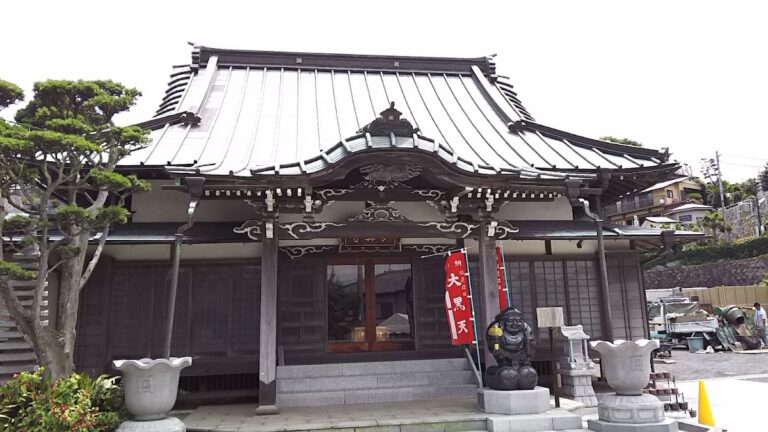
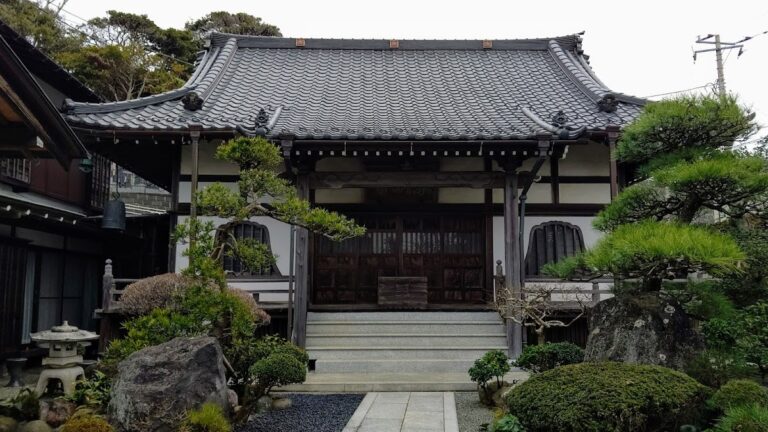
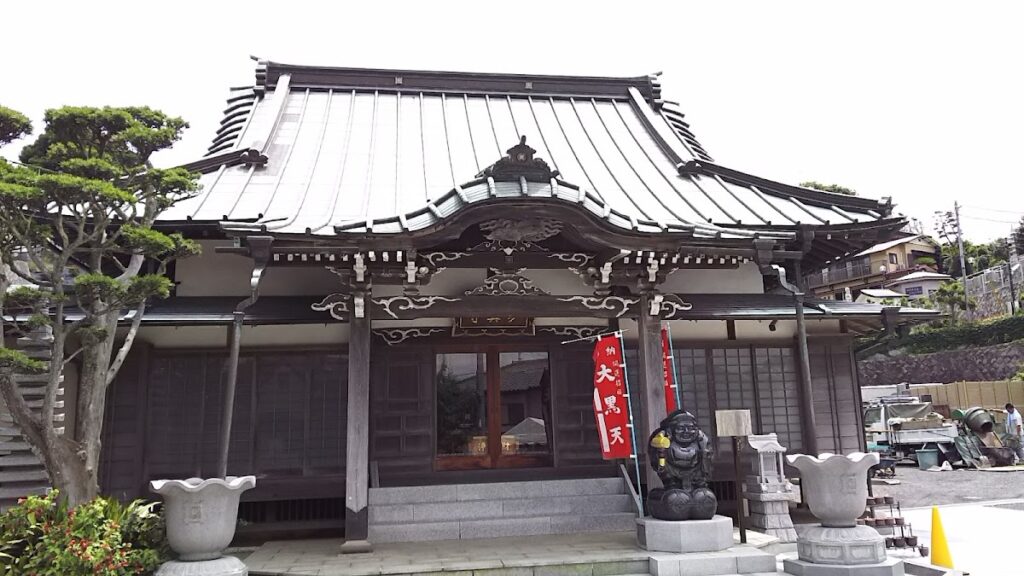
The main hall of Myōdenji Temple exhibits a solemn appearance befitting a Nichiren Buddhist temple. Daily services are held in the main hall, which serves as the center of faith for parishioners. While the temple grounds are not particularly vast, they are well-maintained and clean, providing a peaceful environment for worship.
Compared to tourist temples around Kamakura Station, Myōdenji Temple is less crowded with tourists, offering a calm atmosphere for leisurely worship. It has a strong character as a “temple rooted in daily life,” cherished by locals, and possesses a warmth as a place of everyday faith.
Perpetual Memorial Grave “Shoenbyo”
One of Myodenji Temple’s notable modern initiatives is the perpetual memorial grave “Shoenbyo.” This communal grave is designed for those without heirs or those who do not wish to burden their descendants with grave maintenance.
The features of Shoenbyo are as follows:
- No Religion or Sect Requirements: Available to those of all faiths, not just Nichiren Buddhism.
- No Nationality Requirements: Available to foreign nationals.
- No Temple Membership Required: No need to become a temple member.
- Regular Memorial Services: Communal memorial services are held three times a year by Myodenji Temple: during the spring equinox, autumn equinox, and Obon.
- Permanent Management: Memorial services and management will be provided indefinitely as long as the temple exists.
The Shoenbyo’s excellent location in the scenic Kamakura area, just a 2-3 minute walk from Koshigoe Station on the Enoden line, is another major attraction.
Connection to the Tatsunokuchi Persecution
The Koshigoe area where Myodenji Temple stands is a place deeply connected to the Tatsunokuchi Persecution, the greatest trial in the life of Nichiren Shonin. Legend says that on the night of September 12, 1271 (Bun’ei 8), Nichiren Shonin was about to be executed at the Tatsunokuchi execution grounds (near the present-day Tatsunokuchi Temple), but a mysterious light appeared, and the execution was stopped.
This miraculous event, attributed to “the power of Buddhism saving him from execution,” led to the construction of the six Koshigoe temples, including Myodenji Temple, to preserve this sacred site. The Tatsunokuchi Persecution is an extremely important event in the history of the Nichiren sect, and Myodenji Temple is a valuable temple that preserves its memory to this day.
Access and Transportation Information
Basic Information
Location
2-20-5 Koshigoe, Kamakura City, Kanagawa Prefecture 248-0033
Nearest Station
- Approximately 3 minutes on foot (approx. 250m) from Koshigoe Station on the Enoshima Electric Railway Line
- Approximately 8 minutes on foot from Shonan-Enoshima Station on the Shonan Monorail Enoshima Line
Access by Train
Using the Enoden Line
The most convenient way to access Myodenji Temple is from Koshigoe Station on the Enoshima Electric Railway Line (Enoden). Take the Enoden from Kamakura Station and arrive at Koshigoe Station in approximately 15 minutes. Myodenji Temple is located in a residential area, about a 3-minute walk east from the station.
The Enoden is a charming streetcar line connecting Kamakura and Fujisawa, offering scenic views from the train windows. Because it passes through scenic spots such as Shichirigahama and Inamuragasaki, it is a popular route for those who want to combine sightseeing with their visit.
If using the Shonan Monorail:
From JR Ofuna Station, take the Shonan Monorail Enoshima Line and get off at the last stop, “Shonan Enoshima” Station. From there, it’s about an 8-minute walk to Myodenji Temple. The Shonan Monorail is a unique suspended monorail, offering an experience like walking in the air.
Access by Car:
From Yokohama:
- Take National Route 1 or Yokohama Shindo towards Fujisawa
- Take National Route 134 (along the Shonan coast) towards Kamakura and proceed to the Koshigoe area
From Tokyo:
- Approximately 40 minutes from the Tomei Expressway “Atsugi IC”
- Approximately 20 minutes from the Yokohama-Yokosuka Expressway “Asahina IC”
Parking:
Myodenji Temple has parking spaces for visitors, but the number of spaces is limited. Furthermore, since the Koshigoe area is a residential area with narrow roads, we recommend using public transportation whenever possible. Please be especially careful on weekends and during peak seasons, as the area around Enoshima can become very crowded.
Nearby Tourist Attractions
The following tourist attractions are located near Myodenji Temple:
- Ryukoji Temple: A head temple of the Nichiren sect built on the site of the Ryukuchi Persecution (approximately 10-minute walk)
- Kodō Shrine: A shrine located on a hill overlooking Koshigoe Fishing Port (approximately 5-minute walk)
- Enoshima Island: A representative tourist destination of Shonan (approximately 15-minute walk)
- Koshigoe Fishing Port: A fishing port where you can enjoy fresh seafood (approximately 5-minute walk)
We recommend visiting these nearby spots in conjunction with your visit to Myodenji Temple.
Memorial Services and Prayers at Myodenji Temple
About Various Memorial Services
Myodenji Temple accepts the following memorial services at any time:
Ancestral Memorial Services
We perform memorial services to pray for the repose of ancestors’ souls, such as annual memorial services and monthly memorial services. In addition to chanting services in the main hall, memorial services at the grave are also possible.
Memorial Services for Stillborn Children
We also perform memorial services for stillborn children with respect. We offer individual consultations and provide support including emotional care.
Pet Memorial Services
We also accept memorial services for pets that lived as members of the family. In response to the growing demand for pet memorial services in recent years, we perform respectful services.
Prayers and Consultations
Myodenji Temple accepts various prayers and life consultations at any time:
- Family Safety
- Business Prosperity
- Recovery from Illness
- Traffic Safety
- Academic Success
- Protection from Misfortune
The head priest also offers life consultations, providing solace to those troubled or anxious. Consultations are best booked in advance, so we recommend contacting us by phone.
About the Danka System
Myodenji Temple is a temple with a traditional danka system, but those using the perpetual memorial grave “Shoenbyo” do not need to become danka members. Those who wish to become danka members will receive a thorough explanation of their rights and obligations.
Becoming a danka member requires participation in annual events and cooperation in temple management, but in return, you will receive attentive memorial services and consultation support.
Annual Events at Myodenji Temple
Major Memorial Services and Events
As a Nichiren Buddhist temple, Myodenji Temple holds the following annual events:
Spring Equinox Service (March)
A memorial service for ancestors is held during the equinox period, centered around the spring equinox. A joint memorial service for the perpetual memorial grave “Shoenbyo” is also held during this time.
Obon Memorial Service (August)
A memorial service to welcome the spirits of ancestors is held in accordance with the Obon festival according to the lunar calendar. A service for feeding hungry ghosts is also held, and many parishioners visit to pay their respects.
Autumn Equinox Service (September)
A memorial service for ancestors is again held during the equinox period, centered around the autumn equinox. A joint memorial service for Shoenbyo is also held during this time.
Ryūkuchi Persecution Memorial Service (Around September 12th)
A memorial service is held to commemorate the persecution of Nichiren Shonin at Ryūkuchi. As a temple associated with the eight temples of Ryuguchi Rotating Service, this is a particularly important event.
Oeshiki (October)
A memorial service commemorating the passing of Nichiren Shonin, and one of the most important events in Nichiren Buddhist temples.
Seasonal Events
Hatsumode (January)
Prayers are offered to welcome worshippers in the new year and to pray for their safety throughout the year.
Setsubun-e (February)
Events such as bean-throwing may be held.
These events may change in date and content from year to year, so it is recommended that those wishing to participate inquire with the temple in advance.
Myodenji Temple and the Nichiren Sect
What is the Nichiren Sect?
The Nichiren Sect is a Buddhist sect founded by Nichiren Shonin (1222-1282), a monk of the Kamakura period. The Lotus Sutra is considered the supreme scripture, and it is taught that one can attain Buddhahood in this lifetime by chanting the title “Namu Myoho Renge Kyo.”
Nichiren Shonin criticized the corruption of the Buddhist world at the time and asserted that the Lotus Sutra is the only scripture that conveys the true meaning of Shakyamuni Buddha. His intense missionary activities led to conflicts with the shogunate and other sects, and he suffered numerous persecutions, the most famous of which was the Tatsunokuchi Persecution.
Religious Positioning of Myodenji Temple
Myodenji Temple, as a Nichiren sect temple, has the following characteristics:
Former Head Temple: Hikigaya Myohonji
Myohonji Temple, located in Hikigaya, Kamakura City, is one of the important temples of the Nichiren sect. Historically, Myodenji Temple has been positioned as a branch temple of Myohonji Temple.
Dharma Lineage: Ikegami Dharma Lineage
The Nichiren sect is divided into several groups called “Dharma Lineages,” and Myodenji Temple belongs to the Ikegami Dharma Lineage. The Ikegami Dharma lineage is centered around Ikegami Honmonji Temple in Ota Ward, Tokyo.
The Eight Temples of Tatsuguchi
As mentioned above, Myodenji Temple is one of the eight temples that protect the sacred site of the Tatsuguchi Persecution, and holds special historical significance within the Nichiren sect.
Teachings of the Nichiren Sect
The main teachings of the Nichiren sect practiced at Myodenji Temple are as follows:
Practice of the Title
Chanting the seven-character title “Namu Myoho Renge Kyo” is considered the most important practice.
Faith in the Lotus Sutra
The Lotus Sutra is respected as the ultimate teaching of Shakyamuni Buddha, and living life based on its teachings is required.
Worldly Benefits
The Nichiren sect also emphasizes happiness in this world, aiming for peace in this life and enlightenment in the next through faith.
The Spirit of Shakubuku
Emphasis is placed on correcting erroneous teachings and spreading the correct teachings. However, in modern times, a more conciliatory stance towards other Buddhist sects is also seen.
Kamakura’s Temple Culture and Myodenji Temple
Position in Kamakura Buddhism
Kamakura is known as the “ancient capital of the samurai,” and many temples were built with the establishment of the Kamakura Shogunate. While Zen temples, including the Five Great Zen Temples of Kamakura, are famous, Nichiren Buddhist temples have also played an important role.
The Koshigoe district, where Myodenji Temple is located, has fostered its own unique culture as the western gateway to Kamakura and as a fishing town. Unlike the touristy central part of Kamakura, faith rooted in daily life still thrives here.
History and Culture of Koshigoe
Koshigoe is also known as the place where Minamoto no Yoshitsune stayed, seeking a meeting with his brother Yoritomo, and where he wrote the famous “Koshigoe Letter.” It also flourished as a fishing town, and fresh seafood is still landed at Koshigoe Fishing Port today.
This area, in addition to Myōdenji Temple, is home to a concentration of Nichiren Buddhist temples such as Ryūkōji, Honryūji, and Jōryūji, forming a unique religious and cultural sphere associated with the Ryūkō Persecution.
Differences from Tourist Temples
Around Kamakura Station, there are many popular tourist attractions such as Kenchōji, Engakuji, and Tsurugaoka Hachimangū, which attract millions of visitors annually. Compared to these, Myōdenji Temple has fewer tourist elements and fewer visitors.
However, this is precisely what makes Myōdenji Temple so appealing. The quiet environment, free from tourist crowds, offers a valuable opportunity to experience the true essence of a temple. Furthermore, the warmth of its role as a place of daily faith for local people is something special that cannot be experienced at tourist temples.
Points to Note When Visiting Myōdenji Temple
Etiquette for Visiting
A Bow at the Temple Gate
When entering the temple, bow at the temple gate before entering the grounds. This shows respect for entering the realm of Buddha.
Procedure for Washing Hands
If there is a water basin for washing hands and mouth, cleanse them. Cleanse your left hand, then your right hand, then your mouth, and finally your left hand.
Worship at the Main Hall
Clasp your hands together in prayer and bow before the main hall. In the Nichiren sect, it is common to chant “Namu Myoho Renge Kyo,” but simply praying quietly in your heart is also acceptable.
Offering Money
If there is an offering box, place your offering in it. There is no set amount, but it is important to offer it with sincerity.
Best Time to Visit
Myodenji Temple is open for worship year-round, but the following times are especially recommended:
Spring (March-May)
The weather is mild, and the flowers and plants on the temple grounds are beautiful. A memorial service is held during the spring equinox.
Autumn (September-November)
The weather is pleasant, and important events such as the Ryukuchi Persecution Memorial Service and the Oeshiki Ceremony are held during this time.
Weekdays
Weekdays offer a quieter atmosphere for worship than weekends. The mornings, in particular, have a refreshing ambiance.
Attire and Items to Bring
Attire
There are no specific dress code requirements, but appropriate and respectful attire for a sacred temple is desirable. For memorial services, semi-formal attire or subdued colors are appropriate.
Items to Bring
- Prayer beads (if you have them)
- Offering money
- Camera (check where photography is permitted)
- Goshuincho (stamp book) (if you wish to receive a Goshuin stamp)
Photography
Photography is generally permitted within the temple grounds, but photography inside the main hall or during memorial services should be avoided. Respect for the privacy of other worshippers is also necessary. It is recommended to check with the temple staff if you have any questions.
For Those Considering a Perpetual Memorial Grave
Detailed Information on Shoenbyo
Myodenji Temple’s perpetual memorial grave, “Shoenbyo,” is attracting attention as a form of memorial service that meets the diverse needs of modern times.
Conditions of Use
- Open to all, regardless of religion or sect
- Open to all nationalities
- No need to become a temple parishioner
- No need for a successor
Contents of Memorial Services
- Joint memorial services held three times a year: Spring Equinox, Autumn Equinox, and Obon
- Permanent management and memorial services by the temple
- Individual memorial services can also be arranged upon consultation
Regarding Costs
The cost of a perpetual memorial grave varies depending on the type of interment and contract details. For detailed costs, we recommend contacting Myodenji Temple directly. Generally, perpetual memorial graves are often less expensive than traditional cemeteries, and management fees are either waived or very low.
Benefits of Perpetual Memorial Graves
No Successor Required
For those without children or those who do not want to burden their children, perpetual memorial graves are an ideal option. Because the temple manages the grave permanently, there is no worry of it becoming an unclaimed grave.
Clear Costs
By paying a lump sum upfront, subsequent management fees are either waived or very low. There is no need to worry about future financial burdens.
Freedom of Religion
Since there are no restrictions on religion or sect, freedom of belief is preserved.
Convenient Location
The grave is conveniently located just a 2-3 minute walk from Koshigoe Station, making it easy to visit.
Joint Memorial Services
Joint memorial services are held regularly by the temple, providing peace of mind even when you cannot visit.
Visits and Consultations
Visits and consultations for Shoenbyo are accepted at any time. Visiting the site in person and speaking directly with the head priest and staff will give you a more concrete understanding.
When visiting, it is recommended to confirm the following points:
- Type of interment (individual or communal)
- Contract period (perpetual or fixed period)
- Content and frequency of memorial services
- Details of costs (initial costs, management fees, etc.)
- Changes or cancellations after contract signing
- Access and parking
It is recommended to make a reservation by phone before visiting.
Summary
Myodenji Temple is a historic Nichiren Buddhist temple located in Koshigoe, Kamakura City, Kanagawa Prefecture. Founded in 1308 by Tenmoku Shonin, it has played an important role as one of the eight temples that guarded the sacred site of the Ryukuchi Persecution.
While it does not have the flashy appearance of a tourist temple, it is a place of faith rooted in the community and is cherished by many as a modern place of memorial service equipped with the perpetual memorial tomb “Shoenbyo.” Its convenient location, just a 3-minute walk from Koshigoe Station on the Enoden Line, is also one of its attractions.
When visiting Kamakura, why not spend some time at the tranquil Myodenji Temple, away from the hustle and bustle, to find peace and tranquility? For those considering perpetual memorial services, Myodenji Temple, with its rich history and tradition while also meeting modern needs, is a worthwhile option to consider.
We accept consultations regarding memorial services, prayers, and perpetual memorial graves at any time, so please feel free to inquire.