
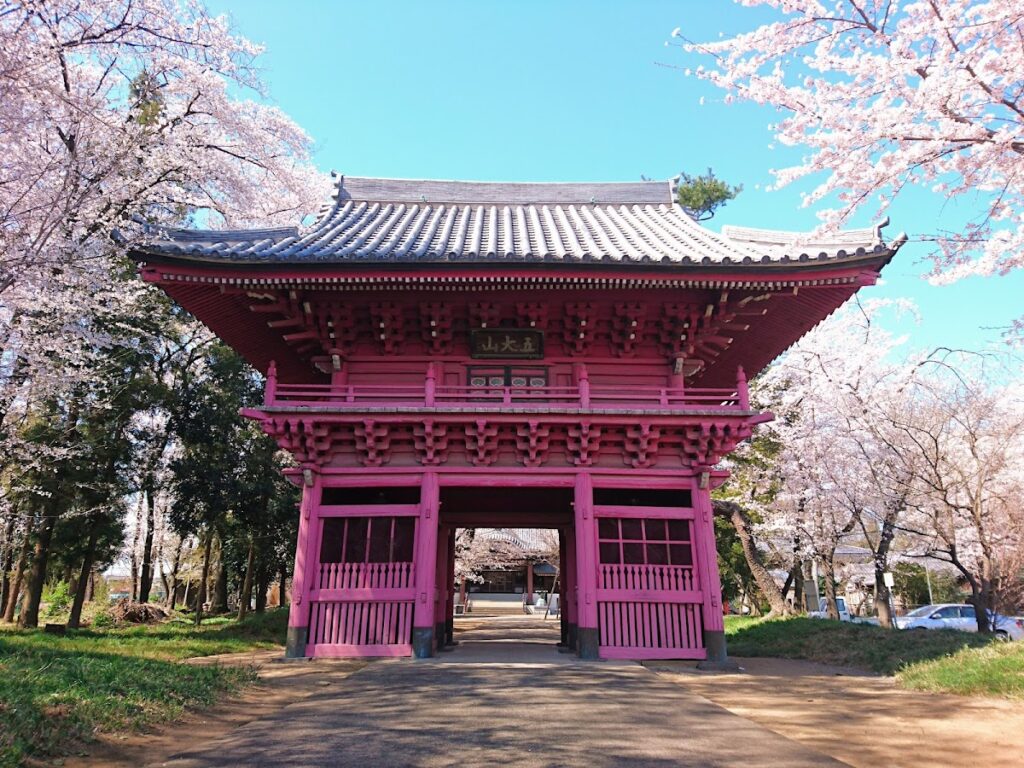
Complete Guide to Myojoin Temples: History and Visiting Information for Famous Temples in Hiroshima, Goto, and Okegawa
Myojoin is the temple name for Shingon Buddhist temples found throughout Japan. In particular, the Myojoin temples in Hiroshima City, Goto City (Nagasaki Prefecture), and Okegawa City (Saitama Prefecture) are known as famous temples with their own unique history and cultural value. This article provides a detailed explanation of the history, characteristics, and visiting information for these three major Myojoin temples.
What is Myojoin?: Origin of the Temple Name and its Relationship to Shingon Buddhism
The temple name Myojoin often derives from the “morning star.” In Buddhism, the morning star is deeply associated with Kokuzo Bodhisattva and is considered a symbol of wisdom and good fortune. The reason why many Shingon Buddhist temples are named Myojoin is based on the legend that Kobo Daishi Kukai, in his youth, practiced the Kokuzo Gumonji ritual and had a mystical experience in which the morning star flew into his mouth.
Myojoin temples throughout Japan belong to different sects within the Shingon sect, such as the Omuro, Chizan, and Koyasan Shingon schools, but all have functioned as important centers for transmitting the teachings of Esoteric Buddhism.
Myojoin Temple in Higashi-ku, Hiroshima City: The Prayer Temple of the Mori, Fukushima, and Asano Families
Overview and Location of Gekkozan Myojoin Temple
Located at 2-6-25 Futaba-no-sato, Higashi-ku, Hiroshima City, Myojoin Temple belongs to the Omuro branch of the Shingon sect. Its mountain name is Gekkozan, and its temple name is Dainichi Mitsuji. It is conveniently located a thirteen-minute walk from the north exit of Hiroshima Station. The temple grounds boast an area of approximately 2,250 tsubo (about 7,250 square meters), and it enjoys a scenic environment with the lush green Futaba-yama mountain in the background and the clear waters of the Ota River in front.
The temple grounds, with their lush, ancient pine trees and verdant forest-like atmosphere, possess a solemn and majestic beauty, offering a tranquil space for prayer despite its urban location. The principal image is the Thousand-Armed, Thousand-Eyed Kannon Bodhisattva. As one of the five temples within the Hiroshima Domain, it possessed a temple territory of 400 koku and served as the official temple for the Shingon sect within the castle town, making it a highly prestigious temple.
1. Myojoin Temple during the Mori and Fukushima Eras
The history of Myojoin Temple dates back to the time when it was originally called Nankogetsu Sogetsuzan Myojuji Temple (Rinzai sect). This temple was founded as a memorial hall for Myojuin, the mother of Mori Terumoto, a powerful daimyo of Aki Province during the Sengoku period. Myojuin is known as the principal wife of Mori Motonari and was an important figure who supported the prosperity of the Mori family.
After the Battle of Sekigahara in 1600, when the Mori clan was transferred to Choshu (present-day Yamaguchi Prefecture), Fukushima Masanori, the new lord of Hiroshima Castle, provided patronage to this temple. Fukushima Masanori was a devout follower of Shingon Buddhism, and he converted Myoju-ji Temple, which had been of the Rinzai sect, to Shingon Buddhism and renamed it Myosho-in. It is believed that the foundation of the temple’s current status was laid during this period.
2. The Development of Myosho-in During the Asano Family Era
In 1619, when Asano Nagaakira succeeded the Fukushima clan as lord of Hiroshima Domain, Myosho-in continued to receive the domain’s patronage. The Asano family had long been followers of Shingon Buddhism and considered Myosho-in important as the third family’s prayer temple, following the Mori and Fukushima families.
During the Asano family’s rule, memorial services for the lord and his retainers were regularly held, and the temple functioned as a central Shingon Buddhist temple in Hiroshima Castle town. With an economic base of 400 koku of temple land, Myojoin Temple was able to maintain its buildings, train monks, and also serve as a place of learning.
Myojoin Temple in the Meiji and Taisho Eras
The anti-Buddhist movement following the Meiji Restoration affected Myojoin Temple, but the temple survived due to the strong faith of the local community. Although its economic base was lost due to the confiscation of its temple land by the Meiji government, a new management system was established with the creation of the danka (parishioner) system.
From the Meiji to the Taisho era, in Hiroshima, which was undergoing urbanization, Myojoin Temple continued to function as a spiritual pillar for the local residents. During this period, the temple grounds were also improved, and the basic form of the temple layout seen today was completed.
Myojoin Temple in the Showa and Heisei Eras and the Present Day
While the central part of Hiroshima suffered catastrophic damage from the atomic bombing on August 6, 1945, Myojoin Temple, being relatively far from the hypocenter, escaped major damage. After the war, the temple played a crucial role in Hiroshima’s reconstruction, including holding memorial services for atomic bomb victims.
Since the Heisei era, efforts have been made to protect cultural properties and improve the temple grounds. In modern times, the temple also engages in activities that meet the needs of the times, such as various memorial services and the operation of a pet cemetery.
≪Construction of the Chinkoku-do Hall≫ and Highlights of the Temple Grounds
The grounds of Myojo-in Temple contain several halls, including the Chinkoku-do Hall. The Chinkoku-do Hall was built to pray for national peace and regional peace, and holds particular significance as a place of peace prayer in the postwar period.
Other buildings on the grounds include the main hall, the Daishi-do Hall, and the bell tower, each embodying the worldview of Shingon Esoteric Buddhism. The scenery of the temple grounds, with Mount Futaba as a backdrop, harmonizes with the beauty of nature throughout the seasons, providing deep peace to visitors.
Visiting and Access Information
Location: 2-6-25 Futaba-no-Sato, Higashi-ku, Hiroshima City, Hiroshima Prefecture
Transportation Access:
- Approximately 13 minutes on foot from the North Exit of JR Hiroshima Station
- Approximately 15 minutes on foot from Hiroshima Electric Railway “Hiroshima Station”
- If using the bus, get off at “Futaba-no-Sato” bus stop and walk for 5 minutes
Visiting Hours: Grounds are freely accessible (prior contact required for entry into the main hall)
Parking: Parking available for visitors
Myojo-in Temple, Goto City, Nagasaki Prefecture: The oldest temple in Goto, designated as a Japan Heritage site
History and Characteristics of Goto Myojo-in Temple
Myojo-in Temple, located in Goto City, Nagasaki Prefecture, is the head temple of the Goto Shingon sect, belonging to the Koyasan Shingon sect. Its principal image is Kokuzo Bosatsu (Akasagarbha Bodhisattva), and it welcomes pilgrims as the first of the 88 sacred sites of Goto. The principal image is considered a hidden Buddha and cannot be easily seen.
Myojoin Temple has played an important role as a place of prayer for the Goto family. The Goto clan, who ruled the Goto Islands, governed this region, a crucial point for maritime traffic, through Buddhist faith.
Reconstruction by Lord Moriyuki Goto
In 1778 (An’ei 7), the wooden main hall was rebuilt by Lord Moriyuki Goto, the 28th lord of the Goto domain. This main hall is a valuable cultural asset that preserves the architectural style of the late Edo period and is an important building that tells the history of Goto.
The construction of the main hall showcases the skills of the finest temple carpenters of the time, and the detailed carvings and structure demonstrate high artistic merit. The fact that such a building was constructed in the geographical conditions of an isolated island demonstrates the wealth and deep faith of the Goto family.
Legend of Kobo Daishi Kukai
A legend remains at Myojoin Temple that Kobo Daishi Kukai stopped in Goto on his return journey from Tang China. Kukai was a high-ranking Buddhist monk who introduced Shingon Esoteric Buddhism to Japan. While legends associated with Kukai remain throughout Japan, the legend of Myojoin Temple in Goto is particularly interesting as it reveals a part of his missionary activities along sea routes.
This legend supports the idea that Myojoin Temple was an important religious facility at a key point of maritime traffic from ancient times.
Japan Heritage Designation and its Value
In 2015, Myojoin Temple was designated a Japan Heritage site as part of the “Border Islands: Iki, Tsushima, and Goto – A Bridge from Ancient Times” cultural property. This designation demonstrates that Myojoin Temple is not merely a religious facility, but an important heritage site that tells the history of cultural exchange between Japan and the continent.
From ancient to medieval times, the Goto Islands were at the forefront of exchange with the continent and played a crucial role in the spread of Buddhist culture. As a witness to this history, Myojoin Temple continues to preserve faith and culture to this day.
Access to Goto Myojoin Temple
Location: Goto City, Nagasaki Prefecture
Access:
- Approximately 10 minutes by car from Fukue Port
- Approximately 15 minutes by car from Fukue Airport
- Take a Kyushu Shosen ferry from Nagasaki Port or Hakata Port to Fukue Port
Visiting Information: As the first temple of the Goto Eighty-Eight Sacred Sites, it offers sutra copying and Goshuin (temple stamp) services.
Myojoin Temple in Okegawa City, Saitama Prefecture: One of the Eleven Shingon Buddhist Temples of the Kanto Region
History of Godaizan Yoganji Myojoin Temple
Myojoin Temple, located in Kurata, Okegawa City, Saitama Prefecture, is a temple belonging to the Chizan branch of the Shingon sect. Its mountain name is Godaizan, and its temple name is Yoganji. The principal image is Kokuzo Bosatsu (Akasagarbha Bodhisattva), and during the Edo period, it played an important role as an educational institution for monks as one of the Eleven Shingon Buddhist Temples of the Kanto Region.
A Danrin was a place of study where monks learned Buddhist doctrines and rituals, and Myojoin was one of the centers of Shingon Buddhist studies in the Kanto region. Many learned monks trained here before going on to various temples throughout the country.
Founder Ryūson Shōnin and the Myōjō Well
According to temple tradition, Myojoin was founded in 1378 (Eiwa 3) during the early Muromachi period by Ryūson Shōnin. The “Morning Star Well,” which gave the temple its name, originated when Ryūson Shōnin, while practicing asceticism, saw the morning star reflected in the well’s water and named it “Morning Star Well.”
This well still remains on the temple grounds and is a valuable historical relic that conveys the history of Myojoin. The legend of Ryūson Shōnin attaining enlightenment after seeing the morning star reflected in the well is deeply connected to the worship of Kūkai Bodhisattva.
Tokugawa Ieyasu’s Donation of Temple Land and the Development of the Edo Period
In 1590, when Tokugawa Ieyasu entered the Kanto region, he donated 10 koku of land to Myojoin Temple the following year, 1591. This donation document is still preserved as a temple treasure and is an important historical document showing the relationship between the Tokugawa family and Myojoin Temple.
Throughout the Edo period, Myojoin Temple was located near Okegawa-juku, a post town on the Nakasendo road, and attracted the faith of travelers and local residents. In addition to its function as a Buddhist temple, it also functioned as a center of local culture and education.
Cultural Assets and Highlights of Okegawa Myojoin Temple
Myojoin Temple preserves numerous cultural assets, including Buddhist statues, paintings, and ancient documents dating back to the Edo period. In particular, the principal image, a statue of Kokuzo Bodhisattva, is a valuable artifact said to have been created by the temple’s founder, Ryuson Shonin.
The temple grounds include the main hall, priest’s quarters, and bell tower, preserving the architectural style of Edo period temples. The Myojo Well is preserved in a corner of the temple grounds and is freely accessible to visitors.
Access to Okegawa Myojoin Temple
Location: Kurata, Okegawa City, Saitama Prefecture
Access:
- Approximately 20 minutes on foot from JR Takasaki Line “Okegawa Station”
- Bus available from Okegawa Station
- Parking available
Visiting Hours: Free entry to the temple grounds (advance notice required for viewing the interior of the main hall)
Common Characteristics and Beliefs of Myojoin Temples in Various Locations
Connection to the Faith of Kokuzo Bodhisattva
What Myojoin temples in Hiroshima, Goto, and Okegawa have in common is the faith in Kokuzo Bodhisattva. Kokuzo Bodhisattva is considered a bodhisattva possessing vast and boundless wisdom and good fortune, and is particularly believed to bring benefits such as improved memory, academic success, and improvement in skills.
The legend that Kobo Daishi Kukai, in his youth, practiced the Kokuzo Gumonji ritual and experienced a morning star flying into his mouth, forms the foundation of the worship of Kokuzo Bodhisattva in Shingon Buddhism. The temple name Myojoin itself is deeply connected to this belief.
Role as a Training Ground for Shingon Esoteric Buddhism
Myojoin temples throughout the region have functioned as training grounds for practicing the teachings of Shingon Esoteric Buddhism. Esoteric Buddhist rituals, practices, and meditations are performed daily, serving as training grounds for monks and as a place of faith for lay believers.
In particular, the Goma ritual is an important ritual of Shingon Buddhism and is performed regularly at each Myojoin temple. This solemn ceremony using fire is believed to burn away worldly desires and grant wishes.
Preservation of Local History and Culture
Myojoin temples throughout the region have also played a role in preserving the history and culture of their respective areas. In Hiroshima, the history of the Mori, Fukushima, and Asano families; in Goto, the history of maritime exchange; and in Okegawa, the culture of the Nakasendo post town—all are preserved and passed down to the present day through Myojoin Temple.
The ancient documents, Buddhist statues, and buildings preserved at the temple are invaluable resources for studying the region’s history and are highly valued as cultural assets.
Various Memorial Services and Modern Activities at Myojoin Temple
Types of Traditional Memorial Services
Myojoin Temple offers various memorial services, including ancestral memorial services, memorial services for stillborn babies, and memorial services for animals. In particular, Myojoin Temple in Hiroshima also operates a pet cemetery, providing memorial services that meet modern needs.
Annual events include the New Year’s visit, the spring and autumn equinox services, the Obon memorial service, and the Mikage-ku service on the 21st, the anniversary of Kobo Daishi’s death, attracting many visitors.
The Role of Myojoin Temple in Modern Society
In modern times, Myojoin Temple transcends its role as a mere religious institution, serving as a central hub for the local community. Through activities such as Zen meditation sessions, sutra copying sessions, and Dharma talks, it provides a place of peace and tranquility for modern people.
Furthermore, it actively engages in educational and cultural activities, including the public display of cultural properties and the holding of history lectures, contributing to the promotion of local culture.
Summary: The Historical Value and Future Prospects of Myojoin Temple
Myojoin Temples exist throughout Japan, including Hiroshima, Goto, and Okegawa, each possessing its own unique history and cultural value. The Myojoin Temple in Hiroshima, which flourished as a prayer temple for the Mori, Fukushima, and Asano families; the Myojoin Temple in Goto, the oldest temple in the Goto Islands and a designated Japan Heritage site; and the Myojoin Temple in Okegawa, one of the eleven major temples in the Kanto region and a center of learning—all are deeply intertwined with the history of their respective regions.
Sharing common characteristics such as devotion to Kokuzo Bodhisattva, practice of Shingon Esoteric Buddhism, and preservation of local culture, Myojo-in temples throughout Japan continue to play a vital role as places of worship and cultural centers even today.
As historical temples, Myojo-in temples, while upholding tradition, also adapt to the needs of the times, making them invaluable examples of the richness of Japanese Buddhist culture. Visiting Hiroshima Myojo-in, conveniently located just a thirteen-minute walk from Hiroshima Station’s north exit, Goto Myojo-in (a Japan Heritage site), and Okegawa Myojo-in (where the Myojo Well remains) allows you to experience the history and culture of Shingon Esoteric Buddhism that flourished throughout Japan.

