
Myokan-in Temple (Nanao City, Ishikawa Prefecture) Complete Guide | An Ancient Temple on the Sea with Seven Wonders and a Tiger Bell on Bamboo
Myokan-in Temple, located in Nanao City, Ishikawa Prefecture, is an ancient temple of the Shingon sect, Koyasan branch, said to have been founded by Kobo Daishi Kukai. This temple, once built on a remote island in the sea, is full of historical and cultural attractions, including the legend of its “Seven Wonders” and the unique tiger bell on bamboo, said to be the only one of its kind in Japan. This article provides a thorough introduction to everything you need to know before visiting, from the history of Myokan-in Temple and details of the Seven Wonders to its highlights and access information.
History and Origins of Myokan-in Temple
Founded by Kobo Daishi Kukai
Myokan-in Temple is said to have been founded in 830 AD (Tencho 7) by Kobo Daishi Kukai. This temple, belonging to the Koyasan branch of the Shingon sect, boasts a long history of approximately 1,200 years and has functioned as an important center of Shingon Esoteric Buddhism in the Noto region. It is said that Kukai, during his travels throughout Japan, felt a spiritual presence in this area and established the temple, and since then, it has continued to attract the faith of the local people.
A Temple on a Solitary Island
The most distinctive aspect of Myokan-in’s history is the fact that it was once built on a solitary island. Until land reclamation projects were carried out at the end of the Meiji era, the temple was located on a small island in Nanao Bay, and worshippers had to travel by boat. Even today, sheer cliffs remain next to the parking lot, and the exposed tree roots offer a glimpse of the former coastline.
This geographical feature is the source of Myokan-in’s mystical atmosphere, and it is believed to have played an important role as a temple for praying for safe voyages in Nanao Bay, a key point for maritime traffic.
The Starting Point of the Mountain Temple Group
Myokan-in Temple is located at the starting point of the “Mountain Temple Group” in Nanao City. The Mountain Temple Group consists of 16 temples established by Maeda Toshiie during the Sengoku period as defensive strongholds for Nanao Castle. Myokan-in, being the temple closest to the sea, played a crucial role among them. Currently, it serves as the starting point of the Mountain Temple walking trail, attracting many tourists and worshippers.
The Seven Mysteries of Myokan-in Temple
Myokan-in Temple has a long-standing legend of “Seven Mysteries,” and these mysterious tales enhance the temple’s mystique. Each mystery has a deep meaning and historical background.
1. The Mystery of the Tiger Bell in the Bamboo Grove
The most famous of Myokan-in Temple’s Seven Mysteries is the “Mystery of the Tiger Bell in the Bamboo Grove.” This bell is said to be the only one of its kind in Japan, and its surface is beautifully cast with the image of a tiger running through a bamboo grove. While temple bells typically feature dragons or arabesque patterns, there are several theories as to why the unusual design of a tiger on bamboo was chosen.
One theory suggests it originates from a legend in which a tiger appeared and protected Kobo Daishi Kukai’s ship during a storm upon his return from Tang China. Another theory suggests that the tiger, as a protector of Buddhist teachings, symbolizes the protection of the temple from evil.
This bell is highly valuable as a cultural artifact, attracting the attention of many researchers and art lovers due to its exquisite casting techniques and beautiful design.
2. Somen Fudo
“Somen Fudo” is a mysterious story surrounding the statue of Fudo Myoo enshrined at Myokan-in Temple. According to legend, one day, a poor worshipper, having nothing else to offer, offered a small amount of somen noodles, and a miracle occurred: Fudo Myoo actually ate the noodles.
This legend symbolizes the Buddhist teaching that the Buddha’s compassion transcends wealth and poverty, and that sincere offerings are what truly matter. Even today, some visitors offer somen noodles, demonstrating the continuation of this tradition.
3. Lion Rock and Drum Rock
Within the temple grounds are two distinctive rocks called “Lion Rock” and “Drum Rock.” Lion Rock is named for its resemblance to a seated lion, while Drum Rock is named because it produces a drum-like sound when struck.
These rocks are believed to have been formed by coastal erosion when the area was once an isolated island, representing an example of the interplay between natural beauty and religious belief. Drum Rock, in particular, produces a unique sound when struck, so it’s highly recommended to experience this during your visit.
4. Other Mysteries
In addition to the above, several other legends are associated with the Seven Mysteries of Myokan-in Temple. For example, there are mysterious phenomena that have been passed down among the local people, such as the “Everlasting Well,” where the water never dries up from a well on the temple grounds, and the “Phantom Stone Buddha,” which only appears on certain days.
Many of these legends are thought to have originated from the unique location of the temple on an isolated island in the sea, combined with ancient beliefs, further enhancing the mystical charm of Myokan-in Temple.
Highlights of Myokan-in Temple
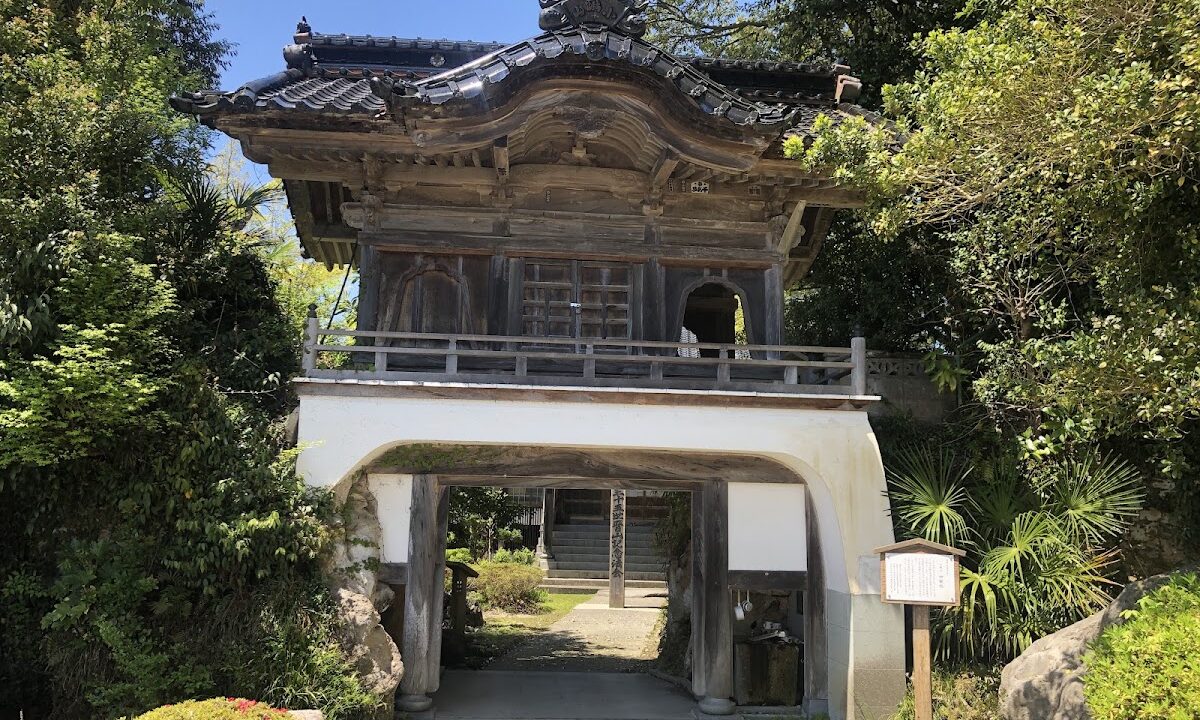
The Temple Gate in the Karamon Style, Reminiscent of the Dragon Palace
The first thing visitors to Myokan-in Temple see is its unique temple gate, reminiscent of the Dragon Palace. This architectural style, called Karamon-zukuri, incorporates Chinese architectural styles and is characterized by its elegant roof shape with many curves.
The temple gate, adorned with vibrant colors based on vermilion and gold, creates an atmosphere as if it were the entrance to the Dragon Palace at the bottom of the sea. Considering Myokan-in Temple’s history as a remote island in the sea, the design of its gate, modeled after Ryugu-jo (the Dragon Palace), is highly symbolic, inviting visitors to another world.
The gate’s intricate details feature carvings of mythical creatures such as dragons and phoenixes, showcasing the excellent carving techniques of the Edo period. It’s a popular spot for photography, especially on sunny days when the gate stands beautifully against the blue sky.
Kannon-do Hall
At the back of the temple grounds is the Kannon-do Hall, where the Eleven-Faced Kannon Bodhisattva is enshrined as the principal image. This Kannon-do Hall also incorporates the architectural style of the Karamon-zukuri (Chinese-style gate), and its interior houses exquisitely crafted Buddhist statues and paintings.
The Kannon-do Hall is particularly popular with women, attracting many worshippers seeking prayers for safe childbirth and successful child-rearing. During the “Sennichi-mairi” (Thousand-Day Pilgrimage) held annually from August 9th to 10th, the Kannon-do Hall becomes the center of worship, bustling with many visitors.
Nature and Scenery of the Temple Grounds
The grounds of Myokan-in Temple are characterized by a unique topography that tells the story of its history as a solitary island floating in the sea. Tree roots are exposed on the sheer cliffs, showcasing the natural beauty formed over long periods of time.
From the temple grounds, you can enjoy views of Nanao Bay, and on clear days, you can admire Noto Island and the scenery across the bay. It’s also a place where you can enjoy the beauty of nature throughout the seasons: cherry blossoms in spring, fresh greenery in early summer, and autumn leaves in fall.
Stone Buddha Statues and Cultural Assets
Numerous stone Buddha statues, donated from the Edo period to the Meiji period, are scattered throughout the temple grounds. Many of these statues were donated by fishermen praying for safe voyages and bountiful catches, conveying the history of Myokan-in Temple as a temple floating on the sea.
Furthermore, the main hall houses valuable cultural assets related to Kobo Daishi Kukai, as well as Buddhist art collected by successive chief priests. Viewing may be possible with prior notice.
Sennichi Mairi and Annual Events
Sennichi Mairi (August 9th-10th)
The most important annual event at Myokan-in Temple is the “Sennichi Mairi,” held every year from August 9th to 10th. It is believed that visiting the temple during these two days brings the merit of a thousand days’ prayers, and it has been a traditional event attracting many believers for centuries.
During the Sennichi Mairi, numerous stalls line the temple grounds, and visits are possible even at night. Special religious services are held in the Kannon Hall, including goma fire rituals and chanting. It has become a summer tradition for local residents, and families and young people can enjoy the lively festival atmosphere.
Other Annual Events
In addition to the Sennichi Mairi, Myokan-in Temple holds various events throughout the year. Traditional Buddhist temple events such as the New Year’s visit, the spring equinox service, and the Obon memorial service are held, making it a central part of the religious life of the local community. Especially around March 21st, the anniversary of Kobo Daishi’s death, a memorial service called Miekū is held, attracting followers of the Shingon sect.
Goshuin Information
You can receive a goshuin (temple stamp) at Myōkan-in Temple. Simply ask at the main hall or the temple’s living quarters, and they will carefully write it for you. The goshuin will have the temple’s name, “Myokan-in,” and the name of the principal deity written in ink, and the temple’s official seal will be stamped.
Even if you don’t have your own goshuin book, they may have pre-written goshuin available, so it’s recommended to check beforehand. The offering fee for a goshuin is usually around 300 to 500 yen.
Goshuin pilgrimages visiting the mountain temples are also popular, and there are courses that start at Myōkan-in and visit multiple temples. While receiving goshuin at each temple, you can gain a deeper understanding of Nanao’s history and culture.
Access and Basic Information
Location
Address: Nu 63-ko, Kojima-machi, Nanao City, Ishikawa Prefecture
Phone: 0767-52-1019
Transportation Access
Access by Train:
- Approximately 10 minutes by car from JR Nanao Line “Nanao Station”
- Taking a taxi from Nanao Station is convenient
- By bus, take a bus bound for “Yama-no-tera” from Nanao Station, get off at the “Yama-no-tera” bus stop, and walk for approximately 5 minutes.
Access by Car:
- Approximately 15 minutes from Noto Satoyama Expressway “Tazuruhama IC”
- Approximately 10 minutes from Noto Expressway “Nanao IC”
- Parking available (free, approximately 10 cars)
Visiting Information
Visiting Hours: Grounds are freely accessible (advance contact required for viewing inside the main hall)
Admission Fee: Free (special viewings require confirmation)
Closed Days: None (The temple may be closed for memorial services, etc.)
Notes for Visitors
- Please pray quietly within the temple grounds.
- Photography is permitted, but permission may be required inside the main hall.
- When requesting a temple stamp (Goshuin), it is recommended to call ahead as the person in charge may be absent.
- Crowds are expected during events such as the Sennichi-mairi (1000-day pilgrimage).
Nearby Tourist Attractions
Mountain Temple Group
Starting from Myokan-in Temple, there is a walking course that takes you around the mountain temple group in Nanao City. Sixteen temples are scattered along the approximately 3km walking path, each showcasing unique architecture, gardens, and cultural assets. The tour takes about 2-3 hours and is especially recommended for history buffs and those who enjoy visiting temples.
Nanao Castle Ruins
The ruins of Nanao Castle, known as a famous castle from the Sengoku period, are located about 15 minutes by car from Myokan-in Temple. From the mountaintop, you can enjoy a spectacular view of Nanao Bay, and it is also known as a cherry blossom viewing spot in spring.
Wakura Onsen
Located about 20 minutes by car from Myokan-in Temple, Wakura Onsen is a representative hot spring resort in Noto with a 1200-year history. The hot spring town, facing the sea, is lined with luxury ryokans (traditional Japanese inns), and there are also day-use bathing facilities. It’s highly recommended to relax and soothe your fatigue in the hot springs after visiting Myokan-in Temple.
Noto Shokusai Market
Near Nanao Station, the Noto Shokusai Market offers fresh seafood and dining options. It also boasts a wide selection of Noto’s local specialties and souvenirs, making it a convenient base for sightseeing.
Recommended Points When Visiting Myokan-in Temple
Best Time to Visit
While Myokan-in Temple can be visited throughout the year, the following times are particularly recommended:
Spring (March-May): The cherry blossoms in the temple grounds are beautiful, and the mild climate is ideal for strolling.
Summer (August): Experience a special atmosphere during the Sennichi-mairi (1000-day pilgrimage) period. However, be prepared for the heat.
Autumn (October-November): The autumn foliage is beautiful, and the weather is perfect for strolling around the mountain temple complex.
Winter (December-February): There are fewer tourists, allowing for a peaceful visit. Myokan-in Temple in the snow also has a charming atmosphere.
Estimated Time Required
If visiting Myokan-in Temple alone, it will take about 30 minutes to 1 hour. If you plan to visit Myokan-in Temple and the mountain temple complex together, allow 3 to 4 hours. If you want to take your time, read the explanations of the seven mysteries, stroll around the temple grounds, and enjoy taking photos, it is recommended to allow ample time.
Combination Sightseeing Plans
Half-Day Course: Myokan-in Temple → Stroll through the mountain temple complex → Lunch in Nanao City
Full-Day Course: Myokan-in Temple → Mountain Temple Complex → Nanao Castle Ruins → Noto Food Festival Market → Day trip to Wakura Onsen (hot springs)
1-Night, 2-Day Course: Day 1: Myokan-in Temple and sightseeing in Nanao City, overnight stay at Wakura Onsen. Day 2: Extend your trip to Noto Island or Wajima.
The Charm and Cultural Value of Myokan-in Temple
Myokan-in Temple is not merely a tourist spot, but a precious cultural heritage site that has been protected by the local people for 1,200 years, a place of history and faith. With its unique location as a former isolated island, its history as a temple founded by Kobo Daishi Kukai, its seven mysteries, and the nation’s only bamboo bell with a tiger design, this temple boasts many sights and stories, providing visitors with deep emotion and spiritual peace.
As a temple that preserves the teachings of Shingon Esoteric Buddhism and as an important historical site that tells the story of Nanao’s history, Myokan-in Temple is a must-visit spot when visiting the Noto region. Passing through its gate, reminiscent of a dragon palace, listening to the legends of its seven wonders, and reflecting on the history of the temple that once floated on the sea, will be a precious experience that allows you to forget the hustle and bustle of modern life.
When you visit Nanao City in Ishikawa Prefecture, be sure to stop by Myokan-in Temple and experience its history and charm.


