Myōsenji Temple (Chiba Prefecture) Complete Guide: History, Goshuin (Temple Seal), Access Information, and Highlights
Located in Chiba Prefecture, Myōsenji Temple is a Nichiren Buddhist temple with a long history. This article comprehensively covers information useful for those considering a visit, from the temple’s historical background to information on goshuin (temple seals), access methods, and highlights within the temple grounds.
Basic Information about Myōsenji Temple
Myōsenji Temple is a Nichiren Buddhist temple located in Chiba Prefecture and is cherished as a center of local faith. Situated in a tranquil environment, it is a valuable temple that conveys the teachings of Nichiren Buddhism to the present day, attracting many visitors not only from the local community but also from a wide range of worshippers.
Temple Overview
- Sect: Nichiren Buddhism
- Principal Image: Shakyamuni Buddha or statue of Nichiren Shonin (may vary depending on the temple)
- Location: Chiba Prefecture (please confirm the detailed address in advance)
- Founding Date: A historical temple estimated to date back to the Edo period or medieval period
History and Origins of Myōsen-ji Temple
Background of Founding
The founding of Myōsen-ji Temple is believed to date back to the period when Nichiren Buddhism’s missionary activities spread throughout the Kanto region. Chiba Prefecture is close to Awa Province (present-day southern Chiba Prefecture), the birthplace of Nichiren Shonin, and is a region where many Nichiren Buddhist temples were established.
Nichiren Buddhism is a sect founded by Nichiren Shonin during the Kamakura period, characterized by a faith centered on chanting the title “Namu Myōhō Renge Kyō.” Myōsen-ji Temple has also inherited this teaching and has functioned as a center of Lotus Sutra faith in the region.
Origin of the Temple Name
The temple name “Myōsen” likely combines “Myōhō,” meaning the teachings of the Lotus Sutra, with the name of the founding or restorer of the temple. Many Nichiren Buddhist temples use the character “Myō” (妙) in their names, signifying devotion to the Lotus Sutra.
Historical Changes
Throughout the Edo period, Myōsen-ji Temple maintained close ties with the local community under the danka system (parishioner system). Even after the anti-Buddhist movement of the Meiji era and the social changes of the post-war period, it has continued to uphold its traditions, supported by the faith of the local people.
Myōsen-ji Temple Grounds and Highlights
Main Hall
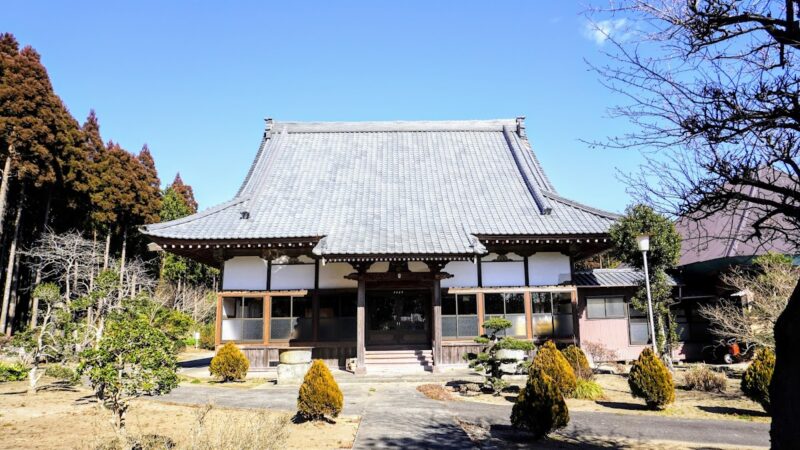
The main hall of Myōsen-ji Temple follows the traditional architectural style of Nichiren Buddhist temples. The principal image is enshrined within, and daily services and ceremonies are held there. Visitors can quietly offer their prayers and find peace of mind in the main hall.
Atmosphere of the Temple Grounds
The temple grounds are surrounded by well-maintained gardens and plants, allowing visitors to experience the beauty of nature throughout the seasons. Especially during the cherry blossom season in spring and the autumn foliage season, beautiful scenery awaits visitors. The tranquil environment is ideal for escaping the hustle and bustle of the city and finding peace of mind.
Stone Monuments and Memorials
The temple grounds are dotted with stone monuments and memorial towers erected by successive chief priests and parishioners, telling the story of the temple’s history. These inscriptions reveal the history of the region and the depth of people’s faith.
About Goshuin (Temple Seals)
Issuance of Goshuin
Myōsenji Temple offers Goshuin to visitors. Goshuin are cherished as proof of worship and as a way to forge a connection with the temple.
Manners for Receiving a Goshuin (Temple Stamp)
- Pray First: Always pray at the main hall before receiving a goshuin.
- Prepare a Goshuincho (Stamp Book): It is advisable to bring a dedicated goshuincho.
- Prepare the Offering: Generally around 300-500 yen (varies by temple).
- Check Reception Hours: It is recommended to check in advance by phone.
- Polite Attitude: Request politely with gratitude.
Characteristics of the Goshuin
Goshuin from Nichiren Buddhist temples include the title “Namu Myoho Renge Kyo,” the temple name, and the date of visit, all written in ink, and stamped with the temple’s seal. Myosenji Temple’s goshuin follows this tradition.
Access Information
Access by Public Transportation
Access to Myosenji Temple is generally via railway lines within Chiba Prefecture. From the nearest station, you can walk, take a bus, or a taxi. Main Access Methods:
- Walking from the nearest station: Approximately 10-20 minutes (Please confirm the specific station name in advance)
- By bus: A few minutes’ walk from the nearest bus stop
- By taxi: Approximately 5-10 minutes by taxi from the nearest station
Access by Car
If visiting by car, it is accessible from major roads within Chiba Prefecture. Please enter the temple name or address into your car navigation system.
Parking: There may be parking spaces on the temple grounds or nearby, but it is recommended to check in advance.
Precautions When Accessing
- If located in a residential area, please be considerate of noise levels.
- Roads may be narrow, so please drive carefully.
- Visiting hours are generally during the daytime (around 9:00-17:00), but it is best to check in advance.
Annual Events and Memorial Services
Main Annual Events
As a Nichiren Buddhist temple, Myōsen-ji Temple holds the following annual events.
Spring Events:
- Spring Equinox Service (March): Memorial service for ancestors
- Flower Festival (April 8th): Memorial service celebrating the birth of Shakyamuni Buddha
Summer Events:
- Obon Festival (July or August): Memorial service for ancestors during the Obon festival
Autumn Events:
- Autumn Equinox Service (September): Memorial service for ancestors
- Oeshiki Festival (October-November): Memorial service for the anniversary of Nichiren Shonin’s death
Winter Events:
- New Year’s Eve Bell Ringing (December 31st): New Year’s Eve event
- First Shrine Visit of the Year (January 1st-3rd): New Year’s visit
Special Memorial Services
Special memorial services for parishioners and believers are held as needed, accepting requests for ancestor worship and prayers. For application and details regarding memorial services, please contact the temple directly.
Points and Manners for Visiting a Temple
Etiquette for Visiting a Temple
The basic etiquette for visiting a Nichiren Buddhist temple is as follows:
- Bow at the temple gate: Bow before entering the temple grounds.
- Purify yourself at the water basin: Purify your hands and mouth (if there is a water basin).
- Clasp your hands together in prayer at the main hall: Clasp your hands together in prayer in front of the main hall and bow once or twice.
- Chant the title: Chant “Namu Myoho Renge Kyo” silently.
- Quietly exit: Bow again when leaving the temple gate.
Regarding Clothing
There are no specific dress code requirements, but clean and subdued clothing appropriate for a sacred place like a temple is desirable. Avoid overly revealing or flashy clothing.
Photography Etiquette
Photography is generally permitted on the temple grounds, but please note the following:
- Photography inside the main hall may require permission.
- Please be considerate of other visitors.
- Use of tripods requires prior confirmation.
- Please respect the temple’s wishes when posting on social media.
About Nichiren Buddhism
Teachings of Nichiren Buddhism
Nichiren Buddhism is a Buddhist sect founded by Nichiren Shonin (1222-1282), a monk of the Kamakura period. It considers the Lotus Sutra (Myoho Renge Kyo) as the supreme scripture and teaches that anyone can attain Buddhahood by chanting the mantra “Namu Myoho Renge Kyo.”
Relationship between Nichiren Shonin and Chiba Prefecture
Nichiren Shonin was born in Awa Province (present-day Kamogawa City, Chiba Prefecture), making Chiba Prefecture a special sacred place for Nichiren Buddhism. Many temples associated with Nichiren Shonin exist within the prefecture, and Myosenji Temple is one of them, supporting local faith.
The Teachings of the Lotus Sutra
The Lotus Sutra is a representative scripture of Mahayana Buddhism, expounding on the principle of equality, stating that all people possess Buddha-nature and that everyone can attain Buddhahood. This teaching forms the fundamental philosophy of the Nichiren sect.
Nearby Tourist Attractions
Nichiren Sect Temples in Chiba Prefecture
When visiting Myōsenji Temple, we recommend also visiting nearby Nichiren sect temples.
- Tanjōji Temple (Kamogawa City): The head temple built on the birthplace of Nichiren Shonin
- Seichōji Temple (Kamogawa City): The sacred site where Nichiren Shonin founded the sect
- Nakayama Hokkeji Temple (Ichikawa City): One of the leading Nichiren sect head temples in the Kanto region
Local Cultural Facilities
Chiba Prefecture has many history museums and local history museums where you can learn about the region’s history and culture. Visiting these in conjunction with your visit to Myōsenji Temple will provide a deeper understanding.
Prayers and Memorial Services at Myōsen-ji Temple
Various Prayers
Myōsen-ji Temple accepts the following types of prayers (may vary by temple):
- Family Safety: Prayers for the health and peace of the family
- Business Prosperity: Prayers for the development of the business
- Academic Success: Prayers for academic improvement
- Exorcism: Prayers for protection from misfortune during the unlucky year
- Traffic Safety: Prayers for the safety of vehicles
Ancestor Memorial Services
Nichiren Buddhist temples place great importance on ancestor memorial services, and the following services are performed:
- Annual Memorial Services: First anniversary, third anniversary, seventh anniversary, etc.
- Obon Memorial Service: A memorial service to welcome the spirits of ancestors
- Higan Memorial Service: Memorial services during the spring and autumn equinoxes
For applications and details regarding memorial services, please contact the temple directly.
Cultural Properties and Treasures of Myōsen-ji Temple
About Temple Treasures
Temples with long histories often possess valuable cultural properties such as Buddhist statues, paintings, and ancient documents. Myōsen-ji Temple may also possess temple treasures that have been preserved by successive chief priests and parishioners.
Protection of Cultural Properties
These cultural properties are appropriately stored and managed as valuable historical materials that convey the history of the region. They may not be open to the public, so prior confirmation is necessary if you wish to view them.
The Danka System and Temple Management
About the Danka System
Many Buddhist temples in Japan are supported by the Danka system. A Danka refers to a family that belongs to a specific temple and provides financial support.
How to Interact with Temples
Even if you are not a Danka, you can interact with temples in the following ways:
- General Visit: Anyone can freely visit the temple.
- Sutra Copying Sessions & Dharma Talks: Regularly held Buddhist cultural experiences.
- Requests for Prayers & Memorial Services: Individual prayers and memorial services can be requested.
- Donations & Offerings: Support for the maintenance and operation of the temple.
Buddhist Experiences and Learning
Sutra Copying Experience
Many temples offer sutra copying experiences. By copying a passage from the Lotus Sutra, you can calm your mind and connect with the teachings of Buddhism.
Dharma Talks & Study Sessions
Dharma talks and Buddhist study sessions are sometimes held by the head priest. This is a good opportunity to learn about the teachings of Nichiren Buddhism and the basics of Buddhism.
Zen Meditation & Chanting
While chanting (Namu Myoho Renge Kyo) is central to Nichiren Buddhism, some temples offer opportunities to experience other practices such as Zen meditation.
The Charms of Myōsenji Temple in Each Season
Myōsenji Temple in Spring
In spring, cherry blossoms, plum blossoms, and other flowers adorn the temple grounds. During the Flower Festival (April 8th), a memorial service celebrating the birth of Shakyamuni Buddha is held, including a ceremony of pouring sweet tea.
Myōsenji Temple in Summer
During the Obon period, the Urabon-e ceremony is held, attracting many parishioners and worshippers to pay respects to their ancestors. The lush green grounds provide a cool and refreshing space to alleviate the summer heat.
Myōsenji Temple in Autumn
In autumn, the autumn leaves are beautiful, enveloping the tranquil grounds in an even more profound atmosphere. Traditional events such as a lantern procession may be held during the Oeshiki (memorial service on the anniversary of Nichiren Shonin’s death).
Myōsenji Temple in Winter
Visiting the temple in the crisp winter air is a special experience that purifies both mind and body. The temple is bustling with many people offering prayers for the new year during the New Year’s Eve bell ringing and the first shrine visit of the year.
Guidelines for Visiting Myōsen-ji Temple
Purpose of Visit
While the purpose of visiting a temple varies from person to person, the following mindsets are important:
- A Heart of Gratitude: Offering gratitude for daily blessings
- A Heart of Reflection: Using it as an opportunity to re-examine oneself
- A Heart of Prayer: Wishing for the happiness of oneself and others
- A Heart of Learning: Learning wisdom for life from Buddhist teachings
Continuous Visits
By repeatedly visiting the temple not just once, but also during seasonal and annual events, a deep connection with the temple is forged. Continuous visits lead to inner stability and spiritual growth.
Inquiries to Myōsen-ji Temple
Matters Recommended to Check in Advance
When visiting Myōsen-ji Temple, it is recommended to check the following points in advance.
- Opening Hours and Visiting Hours
- Goshuin (Temple Seal) Issuance Hours
- Parking Availability and Number of Spaces
- Annual Event Dates and Times
- Memorial Service and Prayer Reception Methods and Fees
- Schedule of Sutra Copying Sessions and Dharma Talks
Contact Methods
Contacting the temple is generally done by phone. The head priest or temple staff will assist you. Calling before your visit will ensure a smooth visit.
Summary
Myōsenji Temple, located in Chiba Prefecture, is a historic Nichiren Buddhist temple that continues to be a center of faith in the region. It is a precious place where you can find peace of mind in its tranquil grounds and experience the teachings of Nichiren Buddhism.
You can engage with the temple in various ways, including receiving a Goshuin, participating in annual events, and experiencing sutra copying. When visiting Chiba Prefecture, please be sure to visit Myōsenji Temple and experience the depth of Japanese Buddhist culture and history.
When visiting a temple, it is important to observe basic manners and approach the visit with gratitude and respect. Remember that temples are not merely tourist attractions, but places of faith and prayer. Please visit with a calm and peaceful heart.
We hope that your experience at Myōsen-ji Temple will lead to inner peace and spiritual enrichment.