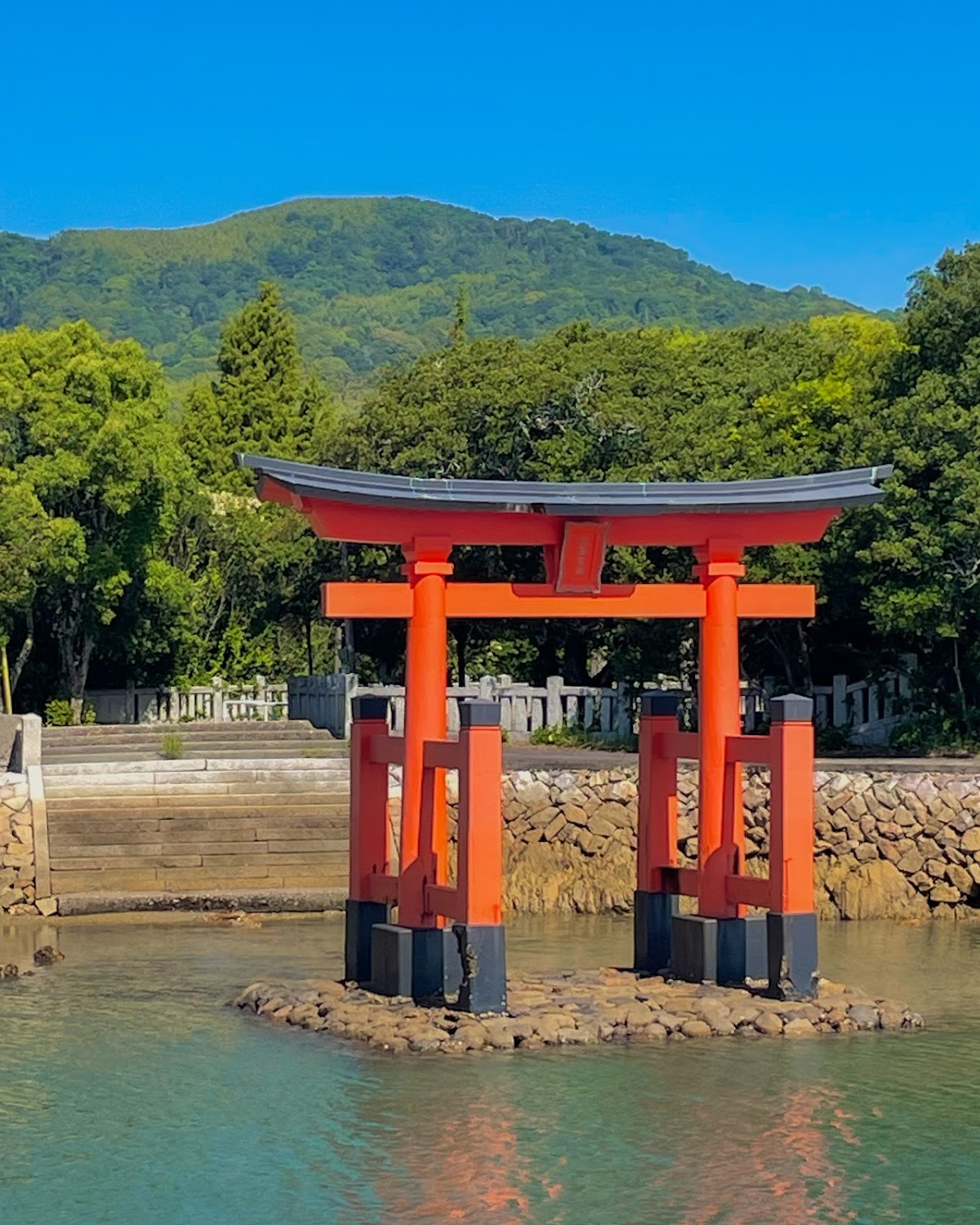
Nagao Hachimangu Shrine (Suo-Oshima Town, Yamaguchi Prefecture) Complete Guide | History, Deities, and Access Information
Nagao Hachimangu Shrine, located in Suo-Oshima Town, Oshima District, Yamaguchi Prefecture, is a venerable shrine boasting a history of over a thousand years dating back to the Heian period. It enshrines a divided spirit from Usa Hachimangu Shrine in Buzen Province and continues to welcome many worshippers as a center of local faith. This article comprehensively introduces all the information you need to know before visiting Nagao Hachimangu Shrine, including its detailed history, enshrined deities, blessings, festivals, and access information necessary for visiting.
Overview of Nagao Hachimangu Shrine
Nagao Hachimangu Shrine is a shrine located in Kannan, Nishian Shimosho, Suo-Oshima Town, Oshima District, Yamaguchi Prefecture. It is a prestigious shrine that was ranked as a local shrine in 1873 (Meiji 6). Its current location on Kannan Mountain is nestled in the rich natural environment of Suo-Oshima, offering a tranquil space for worship.
Location
Address: 1431-2, Kannan, Nishiansho, Suo-Oshima-cho, Oshima-gun, Yamaguchi Prefecture 742-2806
Nagao Hachimangu Shrine, located on Kannan Mountain, is situated on the western side of Suo-Oshima Island. The surrounding area is blessed with natural beauty, and as you proceed along the approach to the shrine, you are enveloped in a solemn atmosphere. The shrine building was rebuilt during the Edo period and is a valuable structure that conveys the history of the region.
History of Nagao Hachimangu Shrine
From Founding to the Heian Period
Nagao Hachimangu Shrine was founded in the Heian period, in the second year of Jogen (977 AD). In that year, a divided spirit of Usa Hachimangu Shrine in Buzen Province was invited to the summit of Ohatayama (Uematsuue) in Anshosho. Usa Hachimangu Shrine is the head shrine of all Hachimangu shrines nationwide, and the enshrinement of its divided spirit speaks to the importance of faith in Suo-Oshima at that time.
Fire and Reconstruction in the Edo Period
During the Keicho era (1596-1615), a major turning point occurred during the time of the shrine priest, Sakon. A major disaster struck, with the shrine buildings and sacred treasures being destroyed by fire. However, the faith of the local people remained unwavering, paving the way for reconstruction.
Between 1625 (Kanei 2) and 1647 (Shoho 4), the shrine buildings were rebuilt on the current site, Kannan-yama, by Musashi-dayu and Hitachi-dayu. With this reconstruction, the procession of two portable shrines was revived, and the local festival culture flourished once again. This reconstruction can be said to have laid the foundation for the present-day Nagao Hachimangu Shrine.
After the Meiji Era
In 1873 (Meiji 6), Nagao Hachimangu Shrine was ranked as a Gosha (village shrine). Gosha is one of the shrine ranks under the modern shrine ranking system, signifying official recognition as an important shrine in the region. This ranking further solidified Nagao Hachimangu Shrine’s position as a center of faith on Suo-Oshima Island.
Deities Enshrined
Nagao Hachimangu Shrine enshrines the deities central to Hachiman worship.
Main Deities
Emperor Ojin
The 15th Emperor, he is enshrined as Hachiman-sama in Hachiman shrines throughout Japan. He has long been worshipped as a god of military fortune and national protection.
Empress Jingu
The mother of Emperor Ojin, she is known as the Empress who conquered the Three Kingdoms of Korea. She is also worshipped as a goddess of safe childbirth and child-rearing.
Hime-no-Okami
One of the three Munakata goddesses, she is revered as a guardian deity of maritime safety and traffic safety.
These three deities are enshrined as the “Three Gods of Hachiman” in many Hachiman shrines, and Nagao Hachiman Shrine also carries on this tradition.
Divine Blessings
Nagao Hachiman Shrine is believed to offer various blessings through the divine virtues of its enshrined deities.
Main Benefits
- Long-lasting Military Fortune and Victory: Due to Emperor Ojin’s character as a god of war, this shrine is associated with wishes for success in competitions and passing exams.
- Protection from Misfortune and Good Fortune: Wards off disasters and brings good fortune.
- Safe Childbirth and Child-rearing: Through the divine virtues of Empress Jingu.
- Family Safety: Peace and prosperity for the family.
- Maritime Safety: Safety in fishing and navigation through the protection of Hime-no-Okami.
- Traffic Safety: Prayers for safe travel in modern times.
- Business Prosperity: Development and prosperity of businesses.
Located in the sea-surrounded environment of Suo-Oshima, this shrine is particularly revered by those concerned with maritime safety and those involved in the fishing industry.
List of Festivals and Events
Nagao Hachimangu Shrine holds various festivals and events throughout the year.
Main Annual Events
New Year’s Day Festival (January 1st)
A festival to welcome the new year and pray for the peace and prosperity of the nation and the community.
Spring Grand Festival (Spring)
A festival to pray for a bountiful harvest and the development of the region as spring arrives.
Divine Procession Festival
A traditional festival revived in the Edo period, featuring a procession of two portable shrines. It is an important local festival that has been passed down through generations.
Autumn Grand Festival (Autumn)
An important festival to give thanks for the year’s harvest and pray for a bountiful harvest in the coming year.
Harvest Festival (Around November 23rd)
A festival to offer new grain to the gods and give thanks for the harvest.
Great Purification Ceremony (June 30th & December 31st)
A Shinto ritual to purify and cleanse away the sins and impurities accumulated over the past six months.
*Please note that the dates of the festival may change depending on the year. We recommend checking before your visit.
Highlights of the Shrine Grounds
Shrine Building
The shrine building, rebuilt during the Kan’ei and Shōhō periods of the Edo era, exudes a sense of historical weight. The architecture, harmonizing with the natural surroundings of Suō-Ōshima, provides visitors with a tranquil atmosphere.
Approach and Shrine Grounds
The approach, surrounded by the nature of Mt. Kannan, offers a peaceful space away from the hustle and bustle of everyday life. Experiencing the changing seasons while visiting is one of its charms.
Portable Shrines
The two portable shrines used in the Shinkōsai festival are precious ritual objects that convey a tradition that has continued since the Edo period’s reconstruction.
Access Information
Access by Public Transportation
Nearest Station: JR Ohata Station
- Walking from Ohata Station: Approximately 2 hours 19 minutes (approximately 11.1 km)
- Taxi from Ohata Station: Approximately 20 minutes
Nearest Bus Stop and Route:
- Bus Stop Name: Nishian Shimosho Bus Stop
- Distance from Bus Stop: Approximately 3 minutes on foot (approximately 223 m)
- Operating Company: Bocho Kotsu (Suo-Oshima Town Bus)
If using buses operating within Suo-Oshima Town, the Nishian Shimosho bus stop is the nearest. Since bus service is limited, we strongly recommend checking the timetable in advance.
Access by Car
From Yamaguchi area:
- From Kuga IC on the Sanyo Expressway, take National Route 437 and cross the Oshima Bridge to Suo-Oshima.
- Approximately 30 minutes from Oshima Bridge.
From Hiroshima area:
- Via Kuga IC or Otake IC on the Sanyo Expressway.
Parking: Parking is available on the temple grounds or nearby, but congestion is expected during festivals.
Access to Suo-Oshima
Suo-Oshima is connected to Honshu by the Oshima Bridge, making it easily accessible by car. The view while crossing the bridge is beautiful, offering views of the islands of the Seto Inland Sea.
Manners and Precautions for Visiting a Shrine
Proper Way to Visit a Shrine
- Bow before passing through the torii gate.
- Purify your body and mind at the water basin. (Left hand → Right hand → Mouth → Left hand in that order)
- Walk along the edge of the path. (The center is the path for the gods.)
- Bow twice, clap twice, and bow once in front of the main hall.
Precautions When Visiting a Shrine
- The shrine grounds are a sacred place, so please visit quietly.
- Take photographs only in designated areas.
- Always take your trash with you.
- Respect nature and avoid damaging plants and other vegetation.
About Goshuin (Shrine Seals)
Goshuin are available at Nagao Hachimangu Shrine. In recent years, electronic goshuin are also available, providing a modern way to record your visits.
Manners for Receiving a Goshuin (Shrine/Temple Stamp)
- It is customary to receive the stamp after visiting the shrine.
- Prepare your Goshuincho (stamp book).
- Prepare the offering (the amount to be paid).
- It is recommended to check in advance, as the shrine staff may be absent.
Nearby Tourist Attractions
The Charms of Suo-Oshima Island
Suo-Oshima Island, known as the “Hawaii of the Seto Inland Sea,” is a warm-climate island with numerous tourist attractions that can be enjoyed in conjunction with a visit to Nagao Hachimangu Shrine.
Southern Seto Towa Roadside Station
A popular spot where you can purchase local specialties and fresh seafood.
Katazoegahama Beach Park
A beautiful beach that is bustling with swimmers during the summer.
Tetsuro Hoshino Memorial Museum
A museum showcasing the achievements of Tetsuro Hoshino, a lyricist from Suo-Oshima Island.
Mutsu Memorial Museum
A museum exhibiting materials related to the battleship Mutsu, recommended for history buffs.
History and Culture of Suo-Oshima Island
Suo-Oshima Island has flourished since ancient times as a key point in Seto Inland Sea transportation. Taking advantage of its warm climate, citrus fruit cultivation is thriving, and it is particularly known as a producer of mandarins. It also has a history of Hawaiian immigration, and the “Japan-Hawaii Immigration Museum” offers insights into that era.
Nagao Hachimangu Shrine has existed as a spiritual pillar of the region for over a thousand years within this history of Suo-Oshima Island. From its founding in the Heian period to its reconstruction in the Edo period, and continuing to the present day, it has remained a place of worship for the islanders.
Best Time to Visit
Charms of Each Season
Spring (March-May)
The warm climate makes it the perfect season for visiting. The fresh greenery is beautiful, and the Spring Grand Festival is held during this time.
Summer (June-August)
The blue sea and sky of the Seto Inland Sea are beautiful during this season. The surrounding beaches are also enjoyable.
Autumn (September-November)
This is an important period when the Autumn Grand Festival is held. It is also the harvest season, and the island’s specialty products are abundant.
Winter (December-February)
Suo-Oshima, with its mild climate, enjoys a relatively pleasant winter. Visiting the shrine for the New Year’s Day Festival is highly recommended.
The Significance of Visiting Nagao Hachimangu Shrine
Visiting Nagao Hachimangu Shrine holds more meaning than mere sightseeing. This shrine, with a history of over a thousand years, is a sacred place that has received the prayers and faith of the people of Suo-Oshima.
Away from the hustle and bustle of modern society, you can find peace of mind and renewed vitality by calming your mind in the tranquility of Kannan-yama and offering your prayers to the enshrined deities. Furthermore, its history of recovery from a fire during the Edo period symbolizes the strength to overcome difficulties.
Visitor Feedback
Many visitors to Nagao Hachimangu Shrine have shared comments such as, “It has a quiet and peaceful atmosphere,” “You can feel the history,” and “It’s a healing space surrounded by nature.” The availability of electronic goshuin (shrine stamps) and the provision of a modern pilgrimage experience are also appreciated.
Summary
Nagao Hachimangu Shrine is a venerable shrine with a history of over a thousand years, founded in 977 during the Heian period and rebuilt in its current location after a fire in the Edo period. It enshrines a divided spirit of Usa Hachimangu Shrine in Buzen Province, and its principal deities are Emperor Ojin, Empress Jingu, and Hime-no-Okami, the three Hachiman gods.
It offers a variety of blessings, including military success, protection from evil and good fortune, safe childbirth and child-rearing, and maritime safety, and continues to attract the faith of the people of Suo-Oshima. Various festivals are held throughout the year, and the procession of two portable shrines is a traditional event that has continued since the Edo period.
Access is by bus or taxi from JR Ohata Station, or by car, which takes about 30 minutes across the Oshima Bridge. It’s conveniently located just a 3-minute walk from the nearest Nishi-Anshimosho bus stop.
Visiting this shrine in conjunction with sightseeing on Suo-Oshima Island allows you to enjoy both the beautiful nature of the Seto Inland Sea and the charm of a historic shrine. Why not quietly pray at Nagao Hachimangu Shrine, where a thousand years of history breathes, and receive its divine blessings?