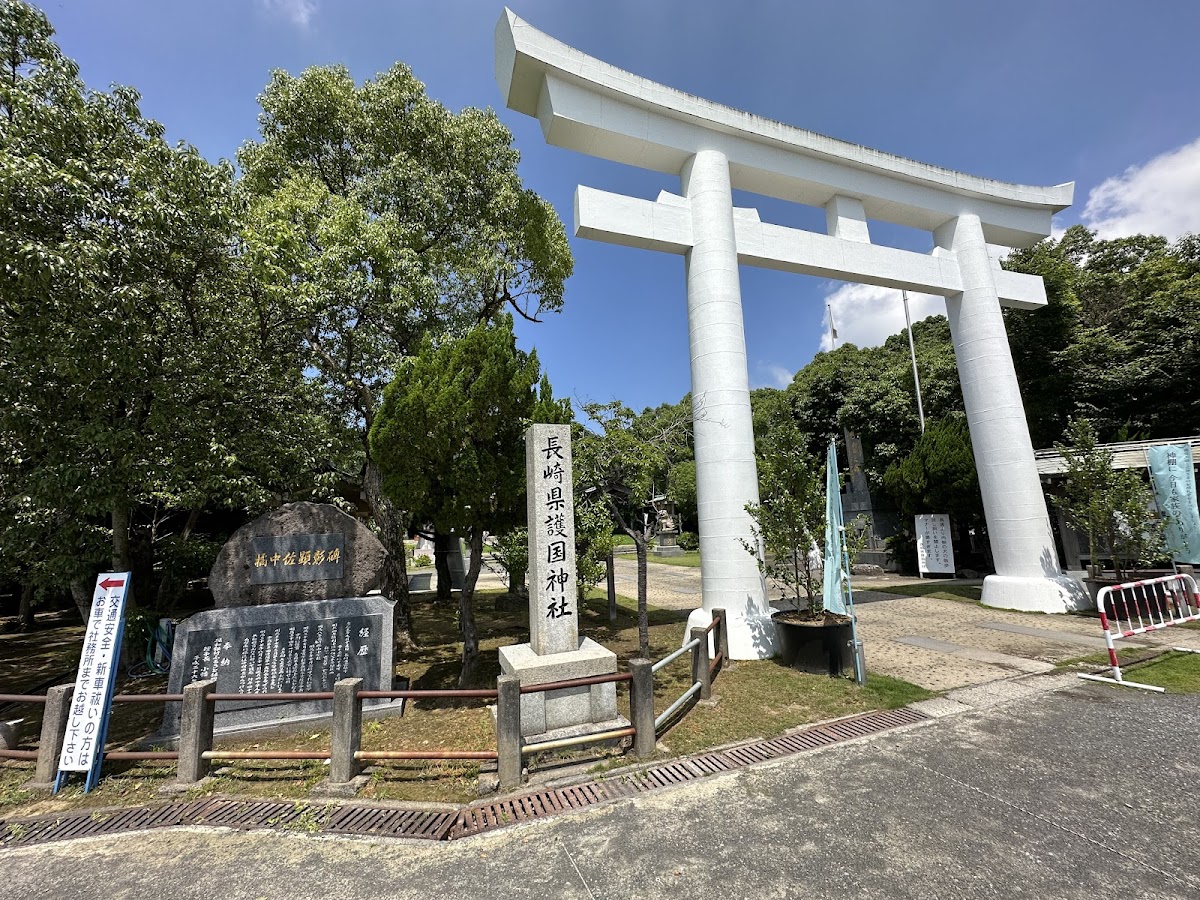
Complete Guide to Nagasaki Prefecture Gokoku Shrine | Thorough Explanation of History, Goshuin (Shrine Seals), Access, and Festival Information
Nagasaki Prefecture Gokoku Shrine is a shrine located in Jōei-machi, Nagasaki City, Nagasaki Prefecture. It is known as a representative Gokoku Shrine of Nagasaki Prefecture, enshrining approximately 60,812 war dead from Nagasaki Prefecture who perished in national crises from the Meiji Restoration to the Pacific War (Greater East Asia War).
This article comprehensively introduces information you should know before visiting Nagasaki Prefecture Gokoku Shrine, from its historical background to visiting information, goshuin, annual festivals, and access methods.
What is Nagasaki Prefecture Gokoku Shrine?
Nagasaki Prefecture Gokoku Shrine is a prestigious shrine designated as a special shrine by the Association of Shinto Shrines. It is situated on a hill on Shiroyama, in a tranquil environment overlooking Nagasaki city.
Deities and Number of Deities
Nagasaki Prefectural Gokoku Shrine enshrines approximately 60,812 war dead from Nagasaki Prefecture who sacrificed their lives for the nation from the Meiji Restoration to the Pacific War. Specifically, this includes the following:
- War dead of the Boshin War
- War dead of the Satsuma Rebellion
- War dead of the First Sino-Japanese War
- War dead of the Russo-Japanese War
- War dead of the Manchurian Incident and the Second Sino-Japanese War
- War dead of the Pacific War (Greater East Asia War)
- Victims of the Atomic Bombing
These heroic spirits are respectfully enshrined as those who sacrificed their precious lives for their country and homeland.
Role and Significance of Gokoku Shrines
Gokoku shrines play an important role in comforting the spirits of those who sacrificed their lives for the country and passing on their achievements to future generations. Nagasaki Prefectural Gokoku Shrine, in particular, has a unique history as a victim of the atomic bombing, and also functions as a place to convey the preciousness of peace.
Throughout the year, many worshippers visit the shrine to express gratitude to the war dead and offer prayers for peace. Especially on the anniversary of the end of the war and during the annual festival, bereaved families and related parties gather for solemn ceremonies.
History of Nagasaki Prefecture Gokoku Shrine
The history of Nagasaki Prefecture Gokoku Shrine dates back to the founding of the Shokonsha (shrine for the war dead) in the early Meiji era. Let’s examine its subsequent changes, the atomic bombing, and its history of reconstruction in detail.
From Founding to Enshrinement (Meiji Era)
Founding of Umegasaki Shokonsha
In December 1869 (Meiji 2), the Umegasaki Shokonsha was founded in Umegasaki, Nagasaki City, to enshrine 43 samurai who died in the Boshin War. This is one of the origins of Nagasaki Prefecture Gokoku Shrine.
In May 1875 (Meiji 8), it was elevated to the status of an officially recognized shrine, the Umegasaki Shokonsha, and became a shrine officially recognized by the government.
The Existence of Sako Shokonsha
Besides Umegasaki Shokonsha, there was another Shokonsha (shrine dedicated to war dead) in Nagasaki Prefecture: Sako Shokonsha. These two shrines each enshrined war dead related to Nagasaki Prefecture.
Renaming to Nagasaki Prefecture Gokoku Shrine and Construction of the Shrine Building (Early Showa Period)
On March 10, 1942 (Showa 17), Umegasaki Shokonsha and Sako Shokonsha merged and were newly established as “Nagasaki Prefecture Gokoku Shrine,” designated by the Minister of Home Affairs. Following this, construction of the new shrine building began on the hilltop of Shiroyama, its current location.
In December 1942 (Showa 17), the main hall, prayer hall, worship hall, offering hall, ritual implement storage, wing corridors, and large torii gate were completed. The shrine was officially completed and the relocation of the deities was finished in October 1944 (Showa 19).
The shrine buildings at the time were magnificent, boasting a grand presence as a representative shrine of Nagasaki Prefecture.
Atomic Bombing Damage and Complete Destruction (1945)
The Tragedy of August 9, 1945
At 11:02 AM on August 9, 1945, an atomic bomb was dropped on Nagasaki. Because Nagasaki Prefectural Gokoku Shrine was located approximately 800 meters from the hypocenter, the heat rays and blast from the atomic bomb instantly destroyed all of its newly constructed buildings.
The “August 9th Nagasaki Air Raid Disaster Summary Report” details the damage to the Gokoku Shrine, describing how the magnificent shrine buildings, completed just a few years prior, were lost in an instant.
Historical Significance of the Atomic Bombing Damage
Nagasaki Prefectural Gokoku Shrine, while a shrine dedicated to war dead, has a unique history of having suffered damage itself from the atomic bomb. This fact serves as important evidence to convey to future generations the tragedy of war and the preciousness of peace.
Reconstruction and Recovery (From the 1950s onward)
Continuation of Rituals in a Temporary Shrine
Although Nagasaki Prefectural Gokoku Shrine lost everything in the atomic bombing, it continued its rituals after the war by constructing a temporary shrine. Thanks to the enthusiasm of the bereaved families and those involved, the rituals for the war dead continued without interruption.
Full-Scale Shrine Reconstruction
On October 25, 1963, thanks to the efforts of many people, a full-scale shrine was reconstructed. This reconstruction marked Nagasaki Prefectural Gokoku Shrine’s postwar recovery, laying the foundation for its current form.
In 1966, it was added to the list of shrines listed by the Association of Shinto Shrines, recognizing it as a nationally important shrine.
To the Present
Since then, improvements have been made to the shrine grounds and facilities. Currently, it boasts a large parking lot (accommodating approximately 200 cars) and a pilgrimage hall, welcoming many visitors as one of Nagasaki Prefecture’s leading shrines.
Highlights of the Shrine Grounds
The grounds of Nagasaki Gokoku Shrine offer various points of interest for visitors.
Main Hall and Worship Hall
Rebuilt in 1963, the main hall and worship hall adhere to traditional shrine architectural styles while being built with robust construction techniques developed after the war.
In the worship hall, visitors can offer gratitude to the war dead and prayers for peace. Visiting in this tranquil atmosphere is particularly calming and allows one to truly appreciate the preciousness of peace.
Grand Torii Gate
A magnificent grand torii gate stands at the entrance to the shrine grounds. Passing through this gate prepares one to enter the sacred realm from the secular world.
Shrine Office and Gift Shop
The shrine office is where you can receive Goshuin (shrine stamps) and make various prayers. At the gift shop, you can receive amulets, talismans, and other items.
Parking and Approach
Nagasaki Prefectural Gokoku Shrine has a large parking lot that can accommodate approximately 200 cars, making it convenient for visitors by car. The walk from the parking lot to the main shrine is a good time to compose your mind.
View from the Shrine Grounds
Located on a hill on Shiroyama, Nagasaki Prefectural Gokoku Shrine offers a panoramic view of Nagasaki city. This view is a precious sight that allows you to truly feel the presence of your hometown watched over by the spirits of the fallen.
Goshuin Information
Nagasaki Prefectural Gokoku Shrine offers Goshuin as proof of your visit.
Types and Designs of Goshuin
The Goshuin at Nagasaki Prefectural Gokoku Shrine is in the traditional style, featuring the calligraphy of “Nagasaki Prefectural Gokoku Shrine” and a red seal. The powerful brushstrokes of the calligraphy convey the dignity of the shrine.
Time and Location of Goshuin (Shrine Seal) Issuance
Goshuin are issued at the shrine office. Issuance hours are generally as follows:
- Weekdays: 9:00 AM – 5:00 PM
- Weekends and Holidays: 9:00 AM – 5:00 PM
*Hours may change due to festivals and events. If you wish to be sure of receiving a goshuin, it is recommended to confirm by phone in advance.
About Goshuincho (Shrine Seal Books)
Please inquire at the shrine office regarding the availability of original goshuincho. It is also possible to have your goshuincho from other shrines stamped.
Offering Fee
The offering fee for a goshuin is a general amount (around 300-500 yen), but please check with the shrine office for details.
Annual Festivals and Events
Nagasaki Prefectural Gokoku Shrine holds various festivals and events throughout the year.
Major Festivals
Spring Grand Festival
This important festival, held in spring, is a time to express gratitude to the war dead and offer prayers for peace. Many bereaved families and related parties attend, and the ceremony is conducted in a solemn atmosphere.
Autumn Grand Festival
This grand festival, held in autumn, is as important as the Spring Grand Festival. It is a time to express gratitude for the harvest and to report to the war dead.
End of War Memorial Day (August 15th)
A special ceremony is held on August 15th, the anniversary of the end of the war. Many worshippers visit on this important day to commemorate the war dead and renew their pledge for peace.
Atomic Bomb Victims Memorial Service (August 9th)
On August 9th, the day the atomic bomb was dropped on Nagasaki, a memorial service for the victims of the atomic bomb is held. Because Nagasaki Prefectural Gokoku Shrine itself was completely destroyed by the atomic bomb, this ceremony holds special significance. ### Other Annual Events
New Year’s Visit
Nagasaki Prefectural Gokoku Shrine is known as one of the most popular New Year’s visit spots in Nagasaki City. Many worshippers visit in the new year to pray for peace and safety for their families throughout the year.
Traffic Safety Prayer
The shrine is also known for prayers for traffic safety, and many people visit when purchasing a new car or obtaining a driver’s license.
Shichi-Go-San (7-5-3 Festival)
In autumn, many families visit for Shichi-Go-San, praying for the healthy growth of their children.
Other Prayer Festivals
The shrine also accepts various prayers for important life events, such as protection from evil, success in exams, and safe childbirth.
Visitor Information
This summarizes the basic information you need when visiting Nagasaki Prefectural Gokoku Shrine.
Basic Information
Official Name: Nagasaki Prefecture Gokoku Shrine
Address: 41-67 Jōei-machi, Nagasaki City, Nagasaki Prefecture 852-8034
Phone Number: 095-844-3221
Shrine Rank: Special Shrine (Association of Shinto Shrines), Former Minister of Home Affairs Designated Gokoku Shrine
Deities Enshrined: Approximately 60,812 war dead from Nagasaki Prefecture from the Meiji Restoration to the Pacific War
Visiting Hours
Entry to the shrine grounds is generally free, but the shrine office is open from approximately 9:00 to 17:00. If you wish to pray or receive a Goshuin (shrine stamp), it is recommended to visit during these hours.
Admission Fee
Worship is free. A separate offering is required if you wish to pray.
Parking
A free parking lot with a capacity of approximately 200 vehicles is available. Large vehicles can also be parked, but it may become full during peak times. Therefore, on days when crowds are expected, such as New Year’s Day or the annual festival, we recommend arriving early.
Dress Code and Manners
When visiting the shrine, please observe the following manners:
- Bow when passing through the torii gate
- Avoid walking in the center of the approach (the center is considered the path of the gods)
- Cleanse your hands and mouth at the temizuya (water basin)
- At the haiden (main hall), perform the “two bows, two claps, one bow” ritual
- Maintain silence and respect the solemn atmosphere
There are no strict dress code regulations, but modest attire that reflects the sacred nature of the place is desirable.
Access Methods
Detailed access methods to Nagasaki Prefecture Gokoku Shrine are provided below, categorized by mode of transportation.
Access by Train/Tram
Using Nagasaki Electric Tramway (Tram)
Nearest Station: Ohashi Station (Nagasaki Electric Tramway Lines 1 & 3)
Approximately 15-20 minutes on foot from Ohashi Station. Walk uphill from the station towards Shiroyama.
Access from JR Nagasaki Station
It’s convenient to transfer to the tram from JR Nagasaki Station and get off at Ohashi Station. The journey takes approximately 30-40 minutes, including transfer time.
Access by Bus
Nagasaki Bus routes are also available. Get off at “Gokoku Jinja-mae” or a nearby bus stop and walk for a few minutes. Please check the Nagasaki Bus official website for bus routes and timetables.
Access by Car
From the Nagasaki Expressway
- Approximately 20 minutes from Nagasaki IC
- Approximately 25 minutes from Nagasaki Tarami IC
Car Navigation Settings
Address: 41-67 Jōei-machi, Nagasaki City, Nagasaki Prefecture
Phone Number: 095-844-3221
Searching with this information will provide accurate directions.
Parking Available
As mentioned above, there is a free parking lot with a capacity of approximately 200 cars, making access by car very convenient.
Access by Taxi
If using a taxi from JR Nagasaki Station or the city center, the journey takes approximately 15-20 minutes and the fare is approximately 1,500-2,000 yen.
Access on Foot/Bicycle
Walking from the city center of Nagasaki takes approximately 30-40 minutes. Please note that there are many slopes as it is located on a hill on Shiroyama.
Similarly, caution is needed regarding slopes when cycling, but there is a bicycle parking area on the temple grounds.
Nearby Tourist Attractions
Here are some nearby tourist attractions you might want to visit when you come to Nagasaki Prefectural Gokoku Shrine.
Nagasaki Atomic Bomb Museum
Located approximately 0.8 kilometers northwest of Nagasaki Prefectural Gokoku Shrine, the Nagasaki Atomic Bomb Museum is an important facility that conveys the tragedy of the atomic bomb and the preciousness of peace. Visiting it in conjunction with a visit to the Gokoku Shrine will deepen your understanding of peace.
Peace Park
Peace Park, located near the hypocenter of the atomic bomb, contains various peace monuments, including the Peace Memorial Statue. It is also relatively close to Nagasaki Prefectural Gokoku Shrine.
Shiroyama Elementary School Peace Memorial Hall
This facility preserves the school building that was hit by the atomic bomb, conveying the events of that time. It is a valuable place to consider war and peace from the perspective of children.
Urakami Cathedral
Urakami Cathedral, which was destroyed by the atomic bomb and rebuilt after the war, is also an important symbol of peace in Nagasaki.
Meganebashi Bridge and Nakashima River Area
Returning to the center of Nagasaki city, you can enjoy the Meganebashi Bridge, Japan’s oldest arched stone bridge, and a stroll along the picturesque Nakashima River.
Glover Garden and Oura Church
As representative tourist spots of Nagasaki, Glover Garden and Oura Church, which retain a strong influence of Western culture, are also recommended.
Characteristics and Charms of Nagasaki Prefectural Gokoku Shrine
This summarizes the unique characteristics and charms of Nagasaki Prefectural Gokoku Shrine.
Gokoku Shrine with a History of Atomic Bombing
While there are many Gokoku Shrines throughout Japan, a major characteristic of Nagasaki Prefectural Gokoku Shrine is its history of being completely destroyed by the atomic bomb. The fact that the shrine itself, which enshrines the war dead, suffered damage from the war, conveys an important message about the preciousness of peace.
A Place of Prayer for Peace
Nagasaki Prefectural Gokoku Shrine plays an important role as a place to offer prayers for peace, along with gratitude to the war dead, so that war will never be repeated. The memorial service for atomic bomb victims on August 9th is a particularly significant event unique to Nagasaki.
A Shrine Beloved by Citizens
The shrine is a beloved place of worship for citizens, serving as a place of daily prayer for things like New Year’s visits and traffic safety. Its spacious grounds and excellent facilities host a variety of events and activities.
A Shrine on a Hill Overlooking Nagasaki City
Located on a hill on Shiroyama, its location offering panoramic views of Nagasaki city is one of its attractions. It holds a symbolic position as a place where the spirits of the fallen watch over their homeland.
Information Dissemination via Official Social Media
Nagasaki Gokoku Shrine operates an official Instagram account (@nagasaki_gokoku), where it shares information about festivals and the seasonal scenery of the shrine grounds. You can check the latest information before your visit.
Points to Note and Requests When Visiting
We have summarized points to note when visiting Nagasaki Gokoku Shrine.
Caution Regarding Hills
Since the shrine is located on a hill on Shiroyama, please be aware that there are many hills if you are accessing it on foot. We recommend wearing comfortable shoes.
Caution Regarding Crowded Times
Crowds are expected during New Year’s Day (January 1st-3rd), the Spring and Autumn Grand Festivals, the anniversary of the end of the war (August 15th), and the anniversary of the atomic bombing (August 9th). Please plan your visit with ample time.
Regarding Photography
Photography is generally permitted on the shrine grounds, but please be considerate of those performing rituals or other visitors. There may be restrictions on photography inside the main hall, so please check in advance.
Inquiries
For details on prayers, rituals, and the latest information, please contact the shrine directly.
Phone: 095-844-3221
Summary
Nagasaki Prefectural Gokoku Shrine is an important shrine where history and prayers for peace intersect, enshrining approximately 60,812 war dead from Nagasaki Prefecture from the Meiji Restoration to the Pacific War.
Despite its tragic history of being completely destroyed by the atomic bomb, it achieved post-war reconstruction and now welcomes many visitors as one of Nagasaki Prefecture’s representative shrines. It is a shrine worth visiting as a place to offer gratitude to the war dead and prayers for peace, and as a place to learn about Nagasaki’s history.
Nagasaki Prefectural Gokoku Shrine has many attractions, including its location overlooking Nagasaki city from a hill on Shiroyama, its excellent facilities, and various festivals held throughout the year. When you visit Nagasaki, be sure to stop by.
It also has a large parking lot and is easily accessible. Goshuin (shrine stamps) are available, making it recommended for those who collect them.
With the wish that “all people may be happy,” Nagasaki Prefectural Gokoku Shrine quietly welcomes visitors every day. We wholeheartedly recommend visiting Nagasaki Prefectural Gokoku Shrine as a place to truly appreciate the preciousness of peace and offer gratitude to the war dead.