Naiku (Okayama Prefecture) Complete Guide | History, Goshuin (Shrine Seal), and Access Information
Naiku (内宮), located in Hamano, Minami-ku, Okayama City, Okayama Prefecture, is a historically significant shrine affectionately known locally as “Naiku-sama” or “Moto-Ise Okayama no O-Ise-san” (Original Ise Okayama’s Ise Shrine). It is a Shikinaisha (shrine listed in the Engishiki Jinmyocho) and a highly prestigious shrine dedicated to Amaterasu Omikami, attracting many worshippers.
This article provides a detailed explanation of Naiku’s historical background, enshrined deities, annual festivals, goshuin information, and access methods.
Basic Information on Naiku (Okayama Prefecture)
Naiku is located in Hamano, Minami-ku, Okayama City, and is formally known as Kibi-no-Kuni-no-Miya or Naiku-sha.
Location: 1-3-8 Hamano, Minami-ku, Okayama City, Okayama Prefecture 700-0845
Phone: 086-223-3393
FAX: 086-223-3306
Common Name: Naiku-sama, Moto-Ise Okayama no Oise-san
Located approximately 3km southeast of Okayama Station, the shrine grounds are situated along the road running west of the Asahi River. The entrance to the grounds faces east, with a torii gate next to a paper mill, and a path several tens of meters long extending westward.
History and Origins of Naiku
Status as a Shikinaisha (Shrine Listed in the Engishiki)
Naiku is known as a candidate for the Shikinaisha (minor shrine listed in the Engishiki) “Ise Shrine” in Mino-gun, Bizen Province, Sanyo-do, Volume 9 & 10 of the Engishiki Jinmyocho (List of Shrines in the Engi Era). A Shikinaisha is a shrine listed in the Engishiki, a compilation of laws and regulations compiled in 927 during the Heian period. It signifies a prestigious shrine recognized by the imperial court since ancient times.
Its former rank was Village Shrine, and it has a long history as a center of local faith.
The Legend of Moto-Ise
The reason why the Inner Shrine (Naiku) is called “Moto-Ise” (original Ise) stems from a legend concerning the divine dwelling place of Amaterasu Omikami.
During the reign of Emperor Sujin, the 10th emperor, Amaterasu Omikami, who had previously been enshrined within the imperial palace, was towed from Nara to various locations by Yamato-hime no Mikoto, and finally settled at the present-day Ise Grand Shrine (Ise City, Mie Prefecture). Places where Amaterasu Omikami was temporarily enshrined during this touring are called “Moto-Ise” (original Ise).
There is a legend that the Inner Shrine in Okayama was also located on this touring route, and it is affectionately known locally as “Moto-Ise Okayama no Oise-san” (Okayama’s original Ise). ### Damage and Reconstruction from the Okayama Air Raid
The Inner Shrine (Naiku) possessed valuable buildings such as the main hall, offering hall, worship hall, and front gate, all built during the Edo period. However, these were destroyed in the Okayama air raid of 1945.
After the war, thanks to the efforts of local parishioners and devotees, the shrine was rebuilt, resulting in the current shrine buildings. The buildings before the fire were of great historical value as Okayama’s architecture, making their loss a significant blow to the region.
Deities and Divine Virtues
Main Deities
The main deities of the Inner Shrine are the following three:
Amaterasu Omikami
The supreme deity in Japanese mythology, a goddess who personifies the sun. Revered as the ancestral deity of the Imperial Family, she is also the main deity of the Inner Shrine of Ise Grand Shrine.
Yamato-hime no Mikoto
A princess of the 11th Emperor Suinin, and a miko (shrine maiden) who traveled throughout Japan in search of a suitable place for Amaterasu Omikami to reside. She is an important deity deeply involved in the founding of Ise Grand Shrine.
Ōnamuchi no Mikoto / Ōkuninushi no Mikoto
A deity known as the principal deity of Izumo Taisha Shrine, a god of nation-building. He bestows blessings related to matchmaking, business prosperity, and agriculture.
Divine Blessings and Benefits
The following divine blessings are believed to be bestowed at the Inner Shrine:
- Family Safety: Protecting the health and safety of the family
- Exorcism and Good Fortune: Warding off misfortune and inviting good luck
- Business Prosperity: Development and prosperity of business
- Matchmaking: Forging good relationships
- Abundant Harvest: Bountiful agricultural harvests
- Healthy Longevity: Health and longevity of mind and body
It is believed that the divine power of Amaterasu Omikami grants the power to all kinds of wishes, and many worshippers visit in particular to pray for family safety.
Annual Festivals and Events
Various festivals are held at the Inner Shrine throughout the year.
Major Festivals
Annual Festival
The annual festival, the most important festival at the shrine, is held once a year. It is a solemn Shinto ritual praying for the peace and prosperity of the parish area.
Summer Festival
This festival is held in the summer, and local people gather to express gratitude to the gods and pray for a bountiful harvest. New Year’s Day Festival (Saitansai)
This festival welcomes the new year and prays for the prosperity of the Imperial Family, the peace and security of the nation, and the happiness of the parishioners and worshippers.
Monthly Festivals
These festivals are held regularly every month, offering daily gratitude and prayers.
These festivals are important opportunities to deepen the bonds of the local community and are deeply rooted in the lives of the people in the parish area.
Parish Area
The parish area of the Inner Shrine spans a wide area of Minami Ward, Okayama City.
- Susaki
- Shinpuku
- Hamano
- Tomihama-cho
- Fukunari
- Fukuhama-nishimachi
- Fukuhama-cho
- Fukutomi-nishi
- Fukutomi-minaka
- Fukutomi-higashi
- Toyohama-cho
For the residents of these areas, Naiku (Inner Shrine) is a spiritual anchor and an important shrine they visit at life’s milestones and during annual events.
Goshuin Information
Naiku offers Goshuin (shrine stamps).
Features of Goshuin
Naiku’s Goshuin features the calligraphy of “Naiku” and the shrine’s seal. The design incorporates a seal indicating its historical significance as a former Ise Shrine and reflects the prestige of a shrine dedicated to Amaterasu Omikami.
Time and Location of Issuance
Goshuin (shrine stamps) are issued at the shrine office. However, staff may not always be present, so if you definitely want a goshuin, it is recommended to call in advance (086-223-3393).
Goshuincho (Shrine Stamp Book)
Please check with the shrine office upon your visit to see if they have an original goshuincho.
Access Method
Access by Public Transportation
Using Okayama Electric Tramway (Streetcar)
- Take the Okayama Electric Tramway (Streetcar) Seikibashi Line from in front of JR Okayama Station.
- Get off at the last stop, “Seikibashi Station.”
- Head towards Sakurabashi and walk south along the Asahi River embankment road for approximately 30 minutes.
Since it is a 30-minute walk, it is recommended to plan your trip considering the weather and your physical condition.
Using the Bus
If you are using the bus from Okayama Station, you can access the shrine on foot from the nearest bus stop. For detailed bus routes, please check the Okayama City public transportation information.
Access by Car
It takes approximately 10-15 minutes by car from Okayama Station. It is located along the road running west of the Asahi River, and you can arrive by searching for “1-3-8 Hamano, Minami-ku, Okayama City” or “Naiku” on your car navigation system.
Parking
There may be parking spaces on the shrine grounds or nearby, but please inquire with the shrine in advance for details.
Landmarks in the Surrounding Area
There is a paper mill to the east of the shrine entrance, which serves as a landmark. The torii gate is visible along the road running west of the Asahi River, making it a relatively easy location to find.
Highlights of the Shrine Grounds
Shrine Building
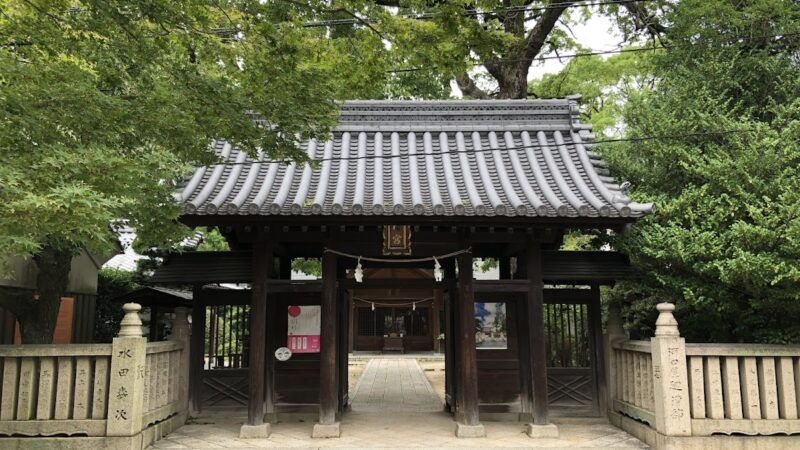
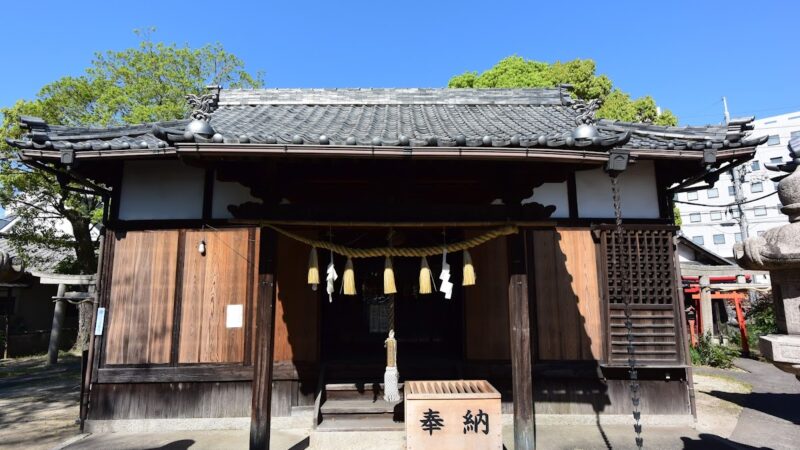
The shrine building, rebuilt after the war, is a magnificent structure incorporating the Shinmei-zukuri style reminiscent of Ise Grand Shrine. The main hall, offering hall, and worship hall are integrated into a single structure, welcoming visitors with a solemn atmosphere.
Approach to the Shrine
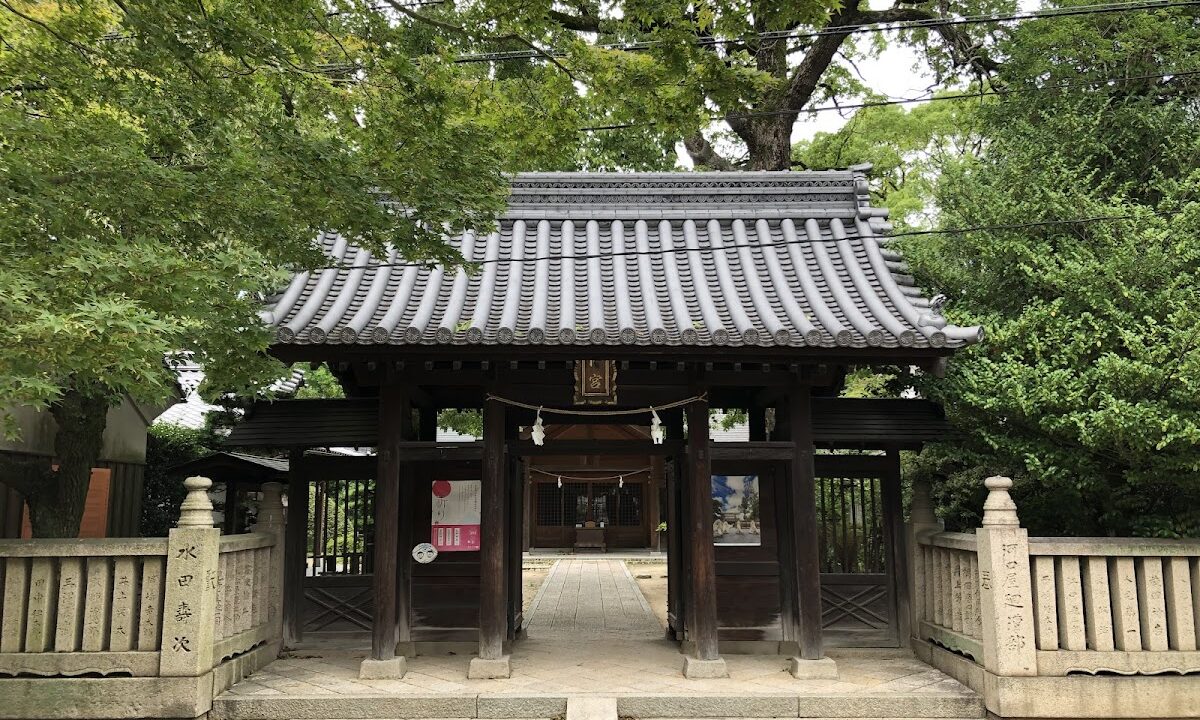
The approach, stretching several tens of meters westward from the east-facing torii gate, creates a tranquil space despite its urban location. Walking along the approach allows one’s mind to shift from everyday life to a sacred space.
Atmosphere of the Shrine Grounds
Despite being surrounded by modern buildings such as paper mills, the shrine grounds maintain a tranquility that feels like another world. It is a warm and welcoming shrine where the faith of the local people still thrives.
Manners and Etiquette for Visiting a Shrine
Basic Etiquette for Visiting a Shrine
- Bow at the Torii Gate: Bow before passing through the torii gate to prepare yourself to enter the sacred area.
- Walking Along the Path: The center of the path is considered the path of the gods, so walk along the sides.
- Purification at the Water Basin: If there is a water basin, purify your hands and mouth.
- Worship at the Main Hall: Worship using the two bows, two claps, and one bow ritual.
Mindset During Worship
The Inner Shrine (Naiku) enshrines Amaterasu Omikami, the highest deity in Japan. It is important to worship with gratitude and humility.
Tourist Spots Around the Inner Shrine
Asahi River
The Asahi River, which flows just east of the Inner Shrine, is a representative river of Okayama City. The walking path along the embankment is a place of relaxation for citizens, where you can enjoy the changing seasons.
Okayama City Center
Around Okayama Station, there are tourist attractions such as Okayama Castle and Korakuen Garden, which can be visited in conjunction with a visit to the Inner Shrine (Naiku).
Relationship between the Inner Shrine and Ise Grand Shrine
Significance of the Moto-Ise Legend
There are numerous “Moto-Ise” (original Ise) legend sites throughout Japan, each preserving the mythical event of Amaterasu Omikami’s pilgrimage as a source of local pride. Okayama’s Inner Shrine is one such site, conveying a spiritual connection to Ise Grand Shrine to this day.
Inner Shrine and Outer Shrine
Ise Grand Shrine has an Inner Shrine (Kotai Jingu) and an Outer Shrine (Toyouke Daijingu), but Okayama’s Inner Shrine is mainly discussed in relation to the Inner Shrine (Kotai Jingu). Both share the commonality of enshrining Amaterasu Omikami as their principal deity.
Role of the Inner Shrine in the Region
Center of Faith
The Inner Shrine has served as a spiritual pillar for its parishioners, participating in important life events such as first shrine visits, Shichi-Go-San (a traditional rite of passage for children), exorcisms, and weddings. ### Community Gathering
Annual festivals and ceremonies are valuable opportunities for local residents to gather and serve as a place for intergenerational exchange.
Passing on History
The Inner Shrine, rebuilt after overcoming war damage, is a symbol of Okayama’s history and recovery. It also plays a role in passing on this history to future generations.
Precautions When Visiting
Dress Code
There are no specific dress code regulations, but modest attire that reflects the sacred nature of the place is desirable.
Photography
Photography is generally permitted within the shrine grounds, but there are areas where photography is prohibited, such as inside the main hall. If unsure, please check with the shrine office.
Respect
Please worship quietly within the shrine grounds and be considerate of other worshippers.
Summary
The Inner Shrine (Naiku), located in Hamano, Minami-ku, Okayama City, Okayama Prefecture, is a historically significant shrine dedicated to Amaterasu Omikami and is affectionately known locally as “Moto-Ise Okayama no Ise-san” (Original Ise Okayama’s Ise Shrine). Despite being a prestigious shrine listed in the Engishiki Jinmyocho (a historical record of shrines), it suffered the hardship of being destroyed in the Okayama air raids and was rebuilt after the war to its current form. This history speaks to the strong faith and determination of the people of Okayama.
The shrine enshrines three deities: Amaterasu Omikami, Yamato-hime no Mikoto, and Onamuchi no Mikoto, and is believed to bestow blessings for family safety, protection from evil and good fortune, and business prosperity. Festivals such as the annual festival and summer festival are held throughout the year, deeply rooted in the lives of the people in the parish.
It is accessible from Okayama Station by tram and on foot, and Goshuin (shrine stamps) are available. Even for those unable to visit Ise Grand Shrine, it is a valuable shrine where you can feel close to Amaterasu Omikami.
When you visit Okayama, be sure to visit the Inner Shrine and experience its history and sacred atmosphere. A warm and welcoming shrine, where the faith of the local people still thrives, will welcome you.