Nensaiji Temple (Kanazawa City, Ishikawa Prefecture) Complete Guide | A Jodo Sect Temple Associated with Kaga Chiyojo
Nensaiji Temple, quietly nestled in the Izumi district of Kanazawa City, Ishikawa Prefecture, is an ancient Jodo sect temple known as the temple where Kaga Chiyojo (Chiyo-ni), a renowned female haiku poet of the Edo period, spent her later years. Despite being located in a quiet residential area, its historical value and cultural significance have made it a popular tourist spot in Ishikawa Prefecture, attracting many worshippers and literature lovers. This article provides a detailed introduction to Nensaiji Temple, including its history, highlights, access methods, and surrounding area information.
What is Nensaiji Temple? | Overview of Jodo Sect Temples
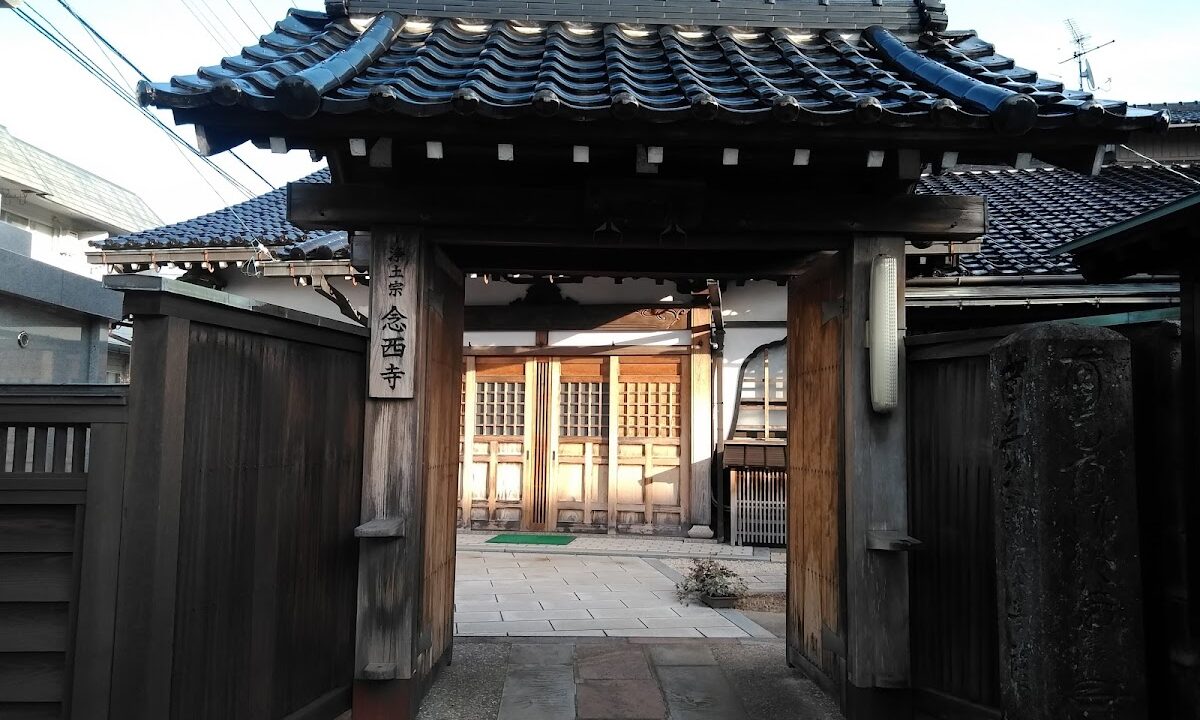
Nensaiji Temple is a Jodo sect temple located at 2-12-14 Izumi, Kanazawa City, Ishikawa Prefecture. The temple’s mountain name is Bukki-san, and it houses a seated wooden statue of Amida Buddha as its principal image, flanked by Kannon Bodhisattva and Seishi Bodhisattva.
The Jodo sect, founded by Honen Shonin, is a Buddhist sect that teaches the hope of attaining rebirth in the Pure Land by chanting the Nembutsu, “Namu Amida Butsu.” Nensai-ji Temple, based on the doctrines of the Jodo sect, has long been a place of worship for the local people.
While not large in scale, its historical background and cultural value make it a noteworthy presence within Kanazawa City. Its deep connection to the Edo period’s haikai culture is perhaps its greatest characteristic.
Deep Connection with Kaga Chiyojo (Chiyo-ni)
About Chiyojo
The greatest reason why Nensaiji Temple is considered a historically important temple lies in its deep connection with Kaga Chiyojo, a prominent female haiku poet of the mid-Edo period. Chiyojo was born in 1703 (Genroku 16) in Mattō, Ishikawa Prefecture (present-day Hakusan City), and displayed her talent for haiku from a young age.
Her haiku, “The morning glory has taken my well bucket, so I beg for water,” is widely known as one of Chiyojo’s representative works. This work, which captures an ordinary everyday scene with delicate sensibility, remains popular with many people today. Chiyojo was active in the world of haiku, following in the footsteps of Matsuo Bashō, and received an exceptionally high reputation for a female haiku poet of her time.
Chiyojo and Nensaiji Temple
Chiyojo lost her husband at the age of 52 and subsequently shaved her head and became a nun. Her Buddhist name was Soen, and it is said that she lived at Nensaiji Temple in her later years. She spent the rest of her life quietly at this temple and passed away in 1775 (An’ei 4) at the age of 73.
The period Chiyojo spent at Nensaiji Temple was a time of significant spiritual deepening in her life, and she continued to compose haiku even after entering the Buddhist priesthood. Her works are imbued with profound insights into the impermanence of life and nature, and her later works are particularly moving.
Chiyo-ni’s Tomb (Chiyojo’s Grave)
Within the grounds of Nensaiji Temple is the “Chiyo-ni’s Tomb,” a memorial to Chiyojo. This tomb was erected to honor Chiyojo’s achievements and pass them on to future generations, and it remains a pilgrimage site visited by many haiku enthusiasts and literature fans.
Standing before the Chiyo-ni’s Tomb, one can reflect on the life of this Edo-period female haiku poet, and the tranquil atmosphere of the temple grounds, combined with the tomb itself, deeply moves visitors. While there are sites related to Chiyojo’s birthplace and a memorial hall in Mattō (Hakusan City), Ishikawa Prefecture, Nensaiji Temple holds special significance as the place where she spent the end of her life.
History and Cultural Background of Nensaiji Temple
Although much remains unknown about Nensaiji Temple’s founding date and detailed history due to limited existing documents, it has a history of being a Jodo sect temple rooted in Kanazawa and attracting the faith of the local people.
Kanazawa flourished as the castle town of the Maeda family of the Kaga Domain, and during the Edo period, it was a culturally and economically prosperous city known as “Kaga Hyakumangoku” (Kaga of a Million Koku). Many temples and shrines were built in this area, and Buddhist culture blossomed. Nensaiji Temple also played a part in this temple culture of Kanazawa.
Especially from the mid to late Edo period, haikai culture spread among the common people, and many haiku poets were active in Kanazawa. The fact that Chiyo-jo resided at Nensai-ji Temple suggests that this temple was not merely a religious facility but also a place of cultural exchange.
Highlights of Nensai-ji Temple
Main Hall and Principal Image
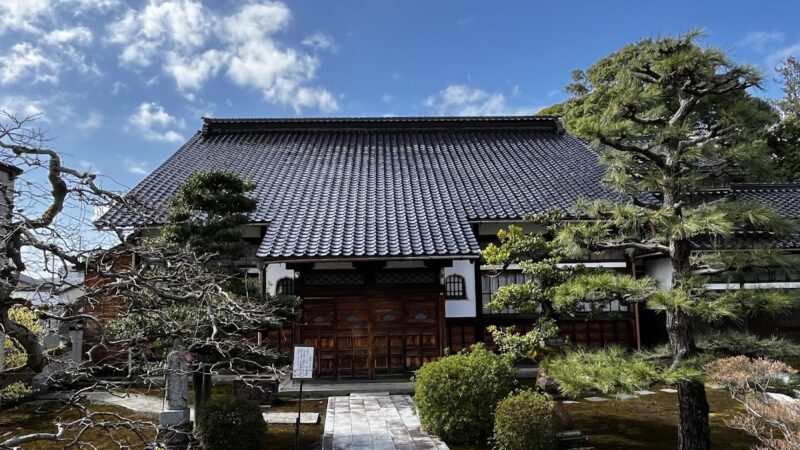
The main hall of Nensai-ji Temple houses the principal image, a seated statue of Amida Buddha. This wooden Buddha statue, with its serene expression befitting a principal image of a Jodo sect temple, warmly welcomes visitors. Flanking it are statues of Kannon Bodhisattva and Seishi Bodhisattva, worshipped as the Amida Triad.
The architectural style of the main hall is simple yet dignified, providing a quiet space for prayer.
Chiyo-ni’s Mound
As mentioned above, Chiyo-ni’s mound, located within the temple grounds, is the main highlight of Nensai-ji Temple. The area around the mound is meticulously maintained, creating an environment where visitors can quietly reflect on Chiyo-jo’s achievements and offer their prayers.
For those interested in haiku or the history of Japanese literature, Chiyo-nizuka is a must-see spot. It is especially meaningful for those aspiring to the path of haiku, as it allows them to trace the footsteps of their predecessors.
Atmosphere of the Temple Grounds
Nensaiji Temple is located in a quiet residential area, and its grounds are enveloped in tranquility. While not a large temple, this allows for a peaceful atmosphere where visitors can enjoy leisurely worship and strolls.
The temple grounds display different appearances depending on the season, offering the beauty of each season: cherry blossoms in spring, fresh greenery in summer, autumn leaves in fall, and snowscapes in winter.
Basic Information
Location and Contact Information
- Location: 2-12-14 Izumi, Kanazawa City, Ishikawa Prefecture 921-8041
- Phone Number: 076-241-4592
- Sect: Jodo-shu (Pure Land Buddhism)
- Mountain Name: Butsukizan
- Temple Name: Nensaiji
- Chief Priest: Ryokan Banada
- Principal Image: Seated Amida Buddha statue (wooden)
- Attendant Bodhisattvas: Kannon Bodhisattva, Seishi Bodhisattva
Visiting Information
- Visiting Hours: Daytime (No specific hours designated, but visiting during reasonable hours is recommended)
- Admission Fee: Free
- Parking: Parking is available (however, the number of vehicles is limited, so please consider using public transportation).
*During special events or memorial services, general visits may be restricted, so it is recommended to check by phone in advance.
Access Methods
Access by Public Transportation
Using the Hokuriku Railway Ishikawa Line
- Approximately 9 minutes on foot from Nomachi Station
- Nomachi Station is also accessible by bus from Kanazawa Station and is a major transportation hub in Kanazawa City.
Using the Bus
- Immediately accessible on foot from the Hokuriku Railway Bus “Izumi 2-chome” bus stop
- Approximately 15-20 minutes by bus from Kanazawa Station
- Multiple bus routes pass through the Izumi area, so it is recommended to check the Hokuriku Railway website or timetable in advance.
Access by Car
From Kanazawa City Center
- Approximately 10 minutes (approx. 3 km) from Kanazawa Station
- Take National Route 157 or a prefectural road towards the Izumi area.
If using the Expressway
- Approximately 15 minutes from the Hokuriku Expressway “Kanazawa-Nishi IC”
- After exiting the Kanazawa-Nishi IC, proceed towards National Route 157 and head towards the Izumi area.
Parking Information
Nensaiji Temple has a parking lot, but space is limited. It may be full, especially on weekends and during events, so we recommend using public transportation whenever possible. Also, since the surrounding area is a residential area, street parking is strictly prohibited.
Nearby Tourist Attractions
When visiting Nensaiji Temple, you can enjoy a more fulfilling travel experience by also visiting other tourist attractions in Kanazawa City.
Myoryu-ji Temple (Ninja Temple)
Located about 5 minutes by car or 15 minutes on foot from Nensai-ji Temple, Myoryu-ji Temple is a Nichiren Buddhist temple known as the “Ninja Temple.” Its complex interior structure and numerous hidden mechanisms make it a popular tourist spot in Kanazawa.
Nishi Chaya District
Nishi Chaya District, one of Kanazawa’s three geisha districts, is within walking distance of Nensai-ji Temple. You can stroll through the charming streets with their traditional teahouse architecture and experience Kanazawa’s culture.
21st Century Museum of Contemporary Art, Kanazawa
Kanazawa’s 21st Century Museum of Contemporary Art, known as a mecca for contemporary art, is about 10 minutes by car from Nensai-ji Temple. It’s a facility where you can experience Kanazawa’s culture, where tradition and modernity blend.
Kenrokuen Garden and Kanazawa Castle Park
Kenrokuen Garden, one of Japan’s three most famous gardens, and Kanazawa Castle Park, the site of Kanazawa Castle, the former residence of the Kaga Domain, are classic Kanazawa tourist spots. They are accessible in about 15 minutes by car from Nensai-ji Temple. ## Points to Note and Manners When Visiting Nensaiji Temple
Visiting Manners
Nensaiji Temple is a temple that still functions as a place of worship. Please observe the following manners when visiting.
- Be Quiet: Please be quiet on the temple grounds and refrain from loud conversations.
- Photography: Photography is generally permitted on the temple grounds, but please be considerate of those inside the main hall and other visitors. Avoid using flash photography.
- Dress Code: There are no strict regulations, but appropriate and modest attire for a temple is desirable.
- Offering: When praying in front of the main hall, please offer a sincere offering.
Best Time to Visit
Nensaiji Temple is open for worship throughout the year, but the following times are particularly recommended:
- Spring (Late March to April): This is the cherry blossom season, and the temple grounds and surrounding scenery are beautiful.
- Autumn (October-November): The autumn foliage is beautiful, making it the perfect season for a stroll.
- Summer (July-August): Around the anniversary of Chiyo-jo’s death (July), people involved in haiku sometimes visit.
Winter (December-February) offers the unique snowy scenery of Kanazawa, but caution is needed due to snow accumulation and icy roads.
Visiting Places Associated with Chiyo-jo
After visiting Nensaiji Temple, you can visit other spots associated with Chiyo-jo to gain a deeper understanding of her life.
Chiyo-jo no Sato Haiku Museum (Hakusan City)
In Hakusan City (formerly Mattō City), Chiyo-jo’s birthplace, there is the “Chiyo-jo no Sato Haiku Museum.” It features exhibits introducing Chiyo-jo’s life and works, and you can also see her handwritten haiku. It’s about a 30-minute drive from Nensaiji Temple.
Site of Chiyojo’s Birthplace
In Hakusan City, there is the site of Chiyojo’s birthplace, and a monument has been erected there. The area around the birthplace has been developed as “Chiyojo no Sato” (Chiyojo’s Village), and a haiku path has been created.
Nensaiji Temple and Kanazawa’s Temple and Shrine Culture
Besides Nensaiji Temple, Kanazawa City has many other historical temples and shrines. Kanazawa flourished as a castle town of “Kaga Hyakumangoku” (Kaga with a million koku), and many temples were built under the patronage of the Maeda family.
Kanazawa’s Temple Cluster
Within Kanazawa City, there is a particularly concentrated area called the “Teramachi Temple Cluster,” where approximately 70 temples are located. This originates from Maeda Toshiie’s placement of temples as defensive bases for Kanazawa Castle. Nensaiji Temple is also part of this Kanazawa temple culture.
Role as a Jodo Sect Temple
The Jodo sect, which preaches the teachings of exclusive recitation of the Buddha’s name, has been widely accepted by ordinary people. Nensaiji Temple has served as a spiritual center for the local community, supporting their religious lives in various ways, including funerals, memorial services, and daily visits.
Model Itinerary for Visiting Nensaiji Temple
We propose a model itinerary for sightseeing in Kanazawa, centered around Nensaiji Temple.
Half-Day Course (Morning)
- 9:00 Depart from Kanazawa Station and take a bus or train to Nensaiji Temple.
- 9:30 Visit Nensaiji Temple and Chiyo-nizuka (30 minutes)
- 10:00 Walk to Nishi Chaya District.
- 10:15 Stroll through Nishi Chaya District and take a break at a cafe (1 hour)
- 11:30 Visit Myoryu-ji Temple (Ninja Temple) (Reservation required, 1 hour)
- 12:30 Lunch in the surrounding area.
Full-Day Course
The morning will cover the above half-day course, and the afternoon will visit major tourist attractions in Kanazawa City as follows.
- 14:00 Visit to the 21st Century Museum of Contemporary Art, Kanazawa (Duration: 1.5 hours)
- 16:00 Stroll through Kenrokuen Garden and Kanazawa Castle Park (Duration: 2 hours)
- 18:00 Dinner and stroll through Higashi Chaya District
Summary
Nensaiji Temple, a Jodo sect temple located in Kanazawa City, Ishikawa Prefecture, is a place of local faith and also holds significant literary history as the place where Kaga Chiyojo, a renowned female haiku poet of the Edo period, spent her later years.
The Chiyo-nizuka (Chionoe’s Tomb) within the temple grounds is a special pilgrimage site for haiku enthusiasts and literature fans. The atmosphere of the temple, nestled in a quiet residential area, offers peace of mind to visitors.
When sightseeing in Kanazawa, why not visit not only the famous tourist spots but also small temples like this one, steeped in history and culture? A quiet moment at Nensaiji Temple will surely be an opportunity to rediscover the profound charm of Kanazawa.
The kindness and keen observation embodied in Chiyojo’s haiku, “The morning glories have taken my well bucket, so I beg for water,” and standing on the very spot where she met her end, allows one to reflect on the culture and lives of people during the Edo period.
Nensaiji Temple is conveniently accessible from Kanazawa Station by public transport in about 15-20 minutes, and there are many other tourist attractions nearby. This temple is a must-visit for anyone who wants to deeply experience Kanazawa’s traditional culture and history.