
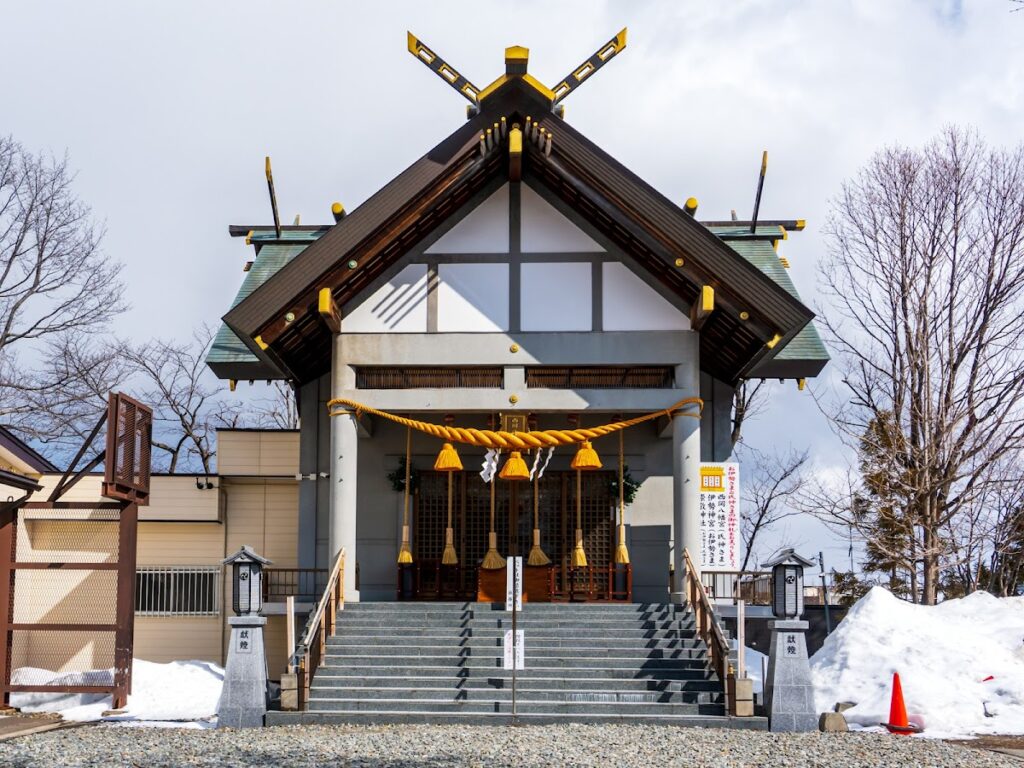
Nishioka Hachimangu Shrine: A Thorough Explanation of the Guardian Deity of the Pioneers and its Historical Value in Toyohira Ward, Sapporo City
What is Nishioka Hachimangu Shrine?
Nishioka Hachimangu Shrine is a historic shrine located at 293, Nishioka 4-jo 8-chome, Toyohira Ward, Sapporo City, Hokkaido. Founded in 1890 (Meiji 23) by settlers from Hyogo Prefecture, it has been revered by local residents for over 130 years as the guardian deity of the Nishioka region.
As a Hachiman shrine enshrining Emperor Ojin, Empress Jingu, and Hime-no-Okami, it is a historically significant shrine in Sapporo, attracting worshippers seeking blessings for fertility, family safety, and peace in the community.
History and Founding of Nishioka Hachimangu Shrine
Meiji Era Settlement and the Beginning of the Shrine
The history of Nishioka Hachimangu Shrine dates back to 1890 (Meiji 23). The origins of this shrine are said to lie in the fact that Kinzo Mori and other Hokkaido pioneers, who migrated from Jindai Village, Mihara District, Hyogo Prefecture (present-day Minamiawaji City) to Hokkaido for the development of the region, sought spiritual solace amidst the harsh conditions of pioneering life and enshrined a divided spirit of the Hachiman Shrine from their hometown.
At that time, the Nishioka area was an undeveloped land also known as “Yakiyama Bangaichi,” and the settlers were battling the harsh natural environment as they proceeded with development. In such circumstances, enshrining the guardian deity of their hometown became a spiritual pillar for the settlers and a driving force for advancing the development project.
Construction and Development of the Shrine
The first shrine building was simple, but a full-fledged shrine building was constructed in June 1906 (Meiji 39). The construction of this shrine involved the collective efforts of the local residents, and a particularly impressive anecdote remains: 50 people worked together to lift a massive 1.5-ton stone from the Tsukisamu River flowing behind the shrine and use it as a base.
This stone still remains on the shrine grounds, serving as a valuable historical artifact that conveys the hardships and deep faith of the pioneers of that time.
Developments Since the Showa Era
During the Showa era, the shrine underwent development alongside the growth of the Nishioka region. The shrine building was constructed in the traditional Shinmei-zukuri style, covering an area of 48 tsubo (159 m²), and the grounds now encompass a vast area of approximately 1,346 tsubo (4,441 m²).
Currently, it belongs to the Hokkaido Shrine Association and is positioned as one of the important shrines in Sapporo. While its former rank was that of a shrine without a specific purpose, it is highly valued as a center of faith in the region and as a cultural asset that conveys the history of pioneering.
Deities and Divine Virtues
Nishioka Hachimangu Shrine enshrines three deities.
Emperor Ojin
The 15th Emperor and the central figure of Hachiman. He is revered as the god of military success, victory in competitions, and career advancement. Furthermore, she is also known as the god of industrial development and was an important guardian deity for those involved in pioneering projects.
Empress Jingu
She was the mother of Emperor Ojin and is worshipped as the guardian deity of safe childbirth and child-rearing. One of the reasons why Nishioka Hachimangu Shrine is popular for prayers for fertility is that Empress Jingu is enshrined there. She is also known as the guardian deity of women and is believed to bestow blessings of family harmony and prosperity of descendants.
Hime-Okami
This is the collective name for the three Munakata goddesses and is worshipped as the goddess of maritime safety and traffic safety. She is also revered as the guardian deity of women and is believed to bestow blessings of matchmaking, beauty, and performing arts.
Due to the combination of these three deities, Nishioka Hachimangu Shrine is a shrine cherished by local residents for its wide range of divine blessings, including protection of pioneers, family safety, prayers for fertility, prayers for safe childbirth, and traffic safety.
Highlights of the Shrine Grounds
Shrine Buildings and Architectural Style
The shrine buildings of Nishioka Hachimangu Shrine are built in the traditional Shinmei-zukuri architectural style. Shinmei-zukuri is one of the oldest shrine architectural styles in Japan, exemplified by Ise Grand Shrine, and gives a simple yet dignified impression.
The shrine buildings are regularly maintained and are highly regarded by visitors as a “beautiful shrine, both inside and out.”
Pioneer Memorials and Historical Stone Monuments
Several pioneer memorials and historical stone monuments are placed within the shrine grounds, offering a glimpse into the history of the Nishioka region’s development. These monuments are valuable historical documents recording the region’s development from the Meiji era to the Showa era.
Of particular note is the 1.5-ton base stone, transported from the Tsukisamu River when the shrine was built. It is carefully preserved as a symbol of the pioneers’ hard work and faith.
Sapporo Olympic Prize-Winning Athletes’ Commendation Monument
The shrine grounds also feature a monument commemorating the prize-winning athletes of the 1972 Sapporo Olympics. This is a fascinating historical site commemorating historical events in the Nishioka area and Sapporo City, demonstrating the shrine’s function as a central hub for the local community.
Distinctive Komainu (Guardian Lion-Dogs)
The guardian lions at Nishioka Hachimangu Shrine are known as “pigeon-chested guardian lions,” attracting the attention of visitors with their unique appearance. These lions also have a long history, continuing to watch over the shrine grounds as its guardians.
Annual Festival and Regular Events
Annual Festival (September 15th)
The annual festival at Nishioka Hachimangu Shrine is held every year on September 15th. The annual festival is the most important festival for the shrine and, as the largest religious event in the Nishioka area, attracts many visitors.
During the annual festival, a portable shrine procession (mikoshi togyo) takes place, parading through the community and praying for the safety and prosperity of the region. Stalls are also set up on and around the shrine grounds, adding to the festive atmosphere. There are many events that children can enjoy, and it is an important annual gathering place for local residents.
Other Annual Events
In addition to the annual festival, Nishioka Hachimangu Shrine holds the following annual events:
- Hatsumode (January 1st-3rd): The shrine is bustling with worshippers praying for safety and prosperity in the new year.
- Setsubun Festival (around February 3rd): Shinto rituals such as bean-throwing are performed.
- Natsukoshi no Oharae (June 30th): A Shinto ritual to purify and cleanse away the impurities accumulated over the past six months.
- Shichi-Go-San Pilgrimage (November): A pilgrimage to celebrate the growth of children.
- Toshikoshi no Oharae (December 31st): A Shinto ritual to purify and prepare for the new year by cleansing away the impurities accumulated over the past year.
Goshuin Information
Types of Goshuin and Offering Fees
Nishioka Hachimangu Shrine offers Goshuin (shrine stamps). The offering fee is 500 yen. In addition to the regular handwritten goshuin (temple/shrine stamp), sticker-type (pre-printed) goshuin are also available, and may be available even when the chief priest is absent.
The goshuin bears the name of “Nishioka Hachimangu Shrine” and the shrine’s seal, making it a popular souvenir of your visit. A bookmark is sometimes given along with the goshuin, adding to the memento of your visit.
Shrine Office Hours
The shrine office is open from 9:00 AM to 4:00 PM, but the chief priest is often absent, so it is recommended to check in advance if you want to be sure to receive a goshuin. The priest is especially likely to be absent on weekdays, so visiting on weekends or during events such as the annual festival is more reliable.
According to visitor reviews, there are reports of being able to receive service even 15 minutes before the office closing time, indicating that the courteous service is highly valued.
Access Methods
Access by Public Transportation
Using Chuo Bus
- Nearest bus stop: “Nishioka 3-jo 8-chome”
- Approximately 3 minutes on foot from the bus stop
- Take a Chuo Bus from Sapporo Station or a subway station and head towards Nishioka.
Using the Subway
- Nearest station: Subway Namboku Line “Sumikawa Station” or “Fukuzumi Station”
- Approximately 29 minutes on foot from the east exit of Sumikawa Station (bus use recommended)
- Accessible by bus or on foot from Fukuzumi Station.
Access by Car
Route from Major Roads
- Head north from the intersection of Fukuzumi-Soen Street and Suigenchi Street
- Near Sapporo Hitsujigaoka Observation Hill
- Located in a quiet residential area along the Tsukisamu River
Parking
- Parking space available for visitors on the shrine grounds
- Consider using nearby parking lots during busy periods such as the annual festival.
Nearby Tourist Attractions
The following tourist attractions are located near Nishioka Hachimangu Shrine:
- Sapporo Hitsujigaoka Observation Hill: Approximately 10 minutes by car, a classic Sapporo tourist spot
- Nishioka Park: A park rich in nature, perfect for a stroll
- Tsukisamu River: A clear stream flowing behind the shrine
Features and Charms of Nishioka Hachimangu Shrine
Conveying the History of Development
The greatest charm of Nishioka Hachimangu Shrine is that you can feel the history of Hokkaido’s development firsthand. The history of the Meiji-era settlers who worshipped the gods of their homeland and overcame the harsh pioneering life is etched throughout the shrine grounds.
The pioneering monument and the 1.5-ton pedestal stone are not merely historical relics, but “living history” that conveys the hardships and faith of the ancestors to the present day, deeply moving visitors.
A Power Spot for Prayers for Fertility
Because it enshrines Empress Jingu, Nishioka Hachimangu Shrine is popular for prayers for fertility and safe childbirth. Not only local residents, but also couples from all over Sapporo hoping for children visit the shrine, and many joyful stories have been received.
Center of the Local Community
Nishioka Hachimangu Shrine is not merely a place of worship, but also functions as the center of the local community. Annual events, including the Grand Festival, provide valuable opportunities for local residents to gather and deepen their bonds.
Many families participate in the festivals with their children, making it an indispensable part of the community as a place for intergenerational exchange.
Tranquil Atmosphere
Despite being in Sapporo, the grounds of Nishioka Hachimangu Shrine are enveloped in a tranquil atmosphere. The gentle murmur of the Tsukisamu River and the rich natural environment allow for peaceful worship, which is a major attraction.
When you want to escape the hustle and bustle of the city and find peace of mind, or when you want to express gratitude to the gods at a turning point in your life, Nishioka Hachimangu Shrine is an ideal place to visit.
Manners and Etiquette for Visiting a Shrine
Basic Etiquette for Visiting a Shrine
- Bow before passing through the torii gate: As a sign of respect before entering the sacred area.
- Purify your body and mind at the water basin: Purify your left hand, right hand, and mouth in that order, and finally wash the handle of the ladle.
- Avoid walking in the center of the path: The center is considered the path of the gods.
- Etiquette in front of the main hall: Two bows, two claps, one bow (bowing twice, clapping twice, bowing once).
- Bow again when leaving the torii gate: Expressing gratitude when leaving the sacred area.
Points to Note When Praying
- Do not throw your offering; gently place it in the offering box.
- Be specific with your wishes, and don’t forget to express your gratitude.
- Take photographs only in designated areas and be considerate of other worshippers.
- The shrine grounds are a sacred place, so please refrain from speaking loudly.
History of the Nishioka Region and the Role of the Shrine
History of Nishioka’s Development
The development of the Nishioka region began in earnest during the Meiji era. Centered around settlers from Kamishiro Village, Mihara District, Hyogo Prefecture, it has a history of clearing the undeveloped land known as “Yakiyama Bangaichi.”
The development at that time involved unimaginable difficulties. Overcoming various trials such as the harsh winter cold, undeveloped roads, and the threat of wild animals, the settlers cultivated the land, engaged in agriculture, and formed a community.
Role as a Guardian Deity
In such a harsh environment, Nishioka Hachimangu Shrine played a crucial role as a spiritual pillar for the settlers. By enshrining the local deity, they felt a connection to their distant hometown and were able to maintain their motivation for development.
The shrine was not merely a place of worship, but also a place where settlers gathered to exchange information, share difficulties and encourage each other, and find brief moments of peace through festivals.
Significance in the Modern Era
In the modern era, Nishioka Hachimangu Shrine continues to function as a spiritual anchor for local residents, while also possessing value as a cultural asset that conveys the history of pioneering. In Sapporo, a city undergoing rapid urbanization, the existence of such a historic shrine is extremely important for maintaining the region’s identity.
Summary
Nishioka Hachimangu Shrine is a historic shrine that has been revered as the guardian deity of the Nishioka region for over 130 years since its founding in 1890 (Meiji 23). It began when settlers from Hyogo Prefecture enshrined a divided spirit of their hometown’s Hachiman Shrine, and has been carefully preserved to this day as a testament to the faith and efforts of the pioneers who overcame the harsh pioneering era.
With Emperor Ojin, Empress Jingu, and Hime-no-Okami as its enshrined deities, the shrine offers a wide range of divine blessings, including protection of pioneers, family safety, and prayers for fertility. It attracts worshippers not only from the local area but also from all over Sapporo.
Within the shrine grounds, numerous historical sites that tell the story of the region’s history are scattered, including the Pioneer Memorial and the Sapporo Olympic Games medal-winning athletes’ monument, conveying the history of Hokkaido’s development to visitors. In particular, the 1.5-ton base stone, transported from the Tsukisamu River, is a symbolic representation of the hardships endured by the pioneers.
The annual grand festival, held on September 15th, is a lively event featuring a portable shrine procession and numerous stalls, attracting many people as the largest event in the region. Goshuin (shrine stamps) are also available and are popular as mementos of visits.
Nishioka Hachimangu Shrine, conveniently located near Sapporo Hitsujigaoka Observation Hill, is a hidden gem worth visiting during Sapporo sightseeing. In its tranquil atmosphere, it is a precious shrine where one can quietly reflect on the history of Hokkaido’s development and offer prayers, and it will undoubtedly continue to be cherished by many for years to come.

