Nyu Kannon (Obanazawa City, Yamagata Prefecture) Complete Guide | History and Visiting Information for the 30th Temple of the Mogami Thirty-Three Kannon Pilgrimage
Nyu Kannon, quietly nestled in the Nyu district of Obanazawa City, Yamagata Prefecture, is a Kannon hall that has been cherished by the local people for centuries as the 30th temple of the Mogami Thirty-Three Kannon Pilgrimage. Officially known as Takao-san Hannya-in (Tendai sect), this sacred site has a deep connection to the Asakusa Kannon of Edo, and a moving story beginning with the last will and testament of a traveling monk is still told today.
What is Nyu Kannon? | Basic Information
Nyu Kannon is a Tendai sect temple located in Nyu, Obanazawa City, Yamagata Prefecture. As the 30th temple of the Mogami Thirty-Three Kannon Pilgrimage, it is a sacred site visited by many pilgrims and is affectionately known locally as “Nyu Village Kannon.”
Basic Information
- Official Name: Takao-san Hannya-in
- Sect: Tendai Buddhism
- Pilgrimage Site: 30th of the Mogami Thirty-Three Kannon Pilgrimage
- Principal Image: Holy Kannon Bodhisattva
- Location: Niu, Obanazawa City, Yamagata Prefecture
- Founded: Edo period (exact date unknown)
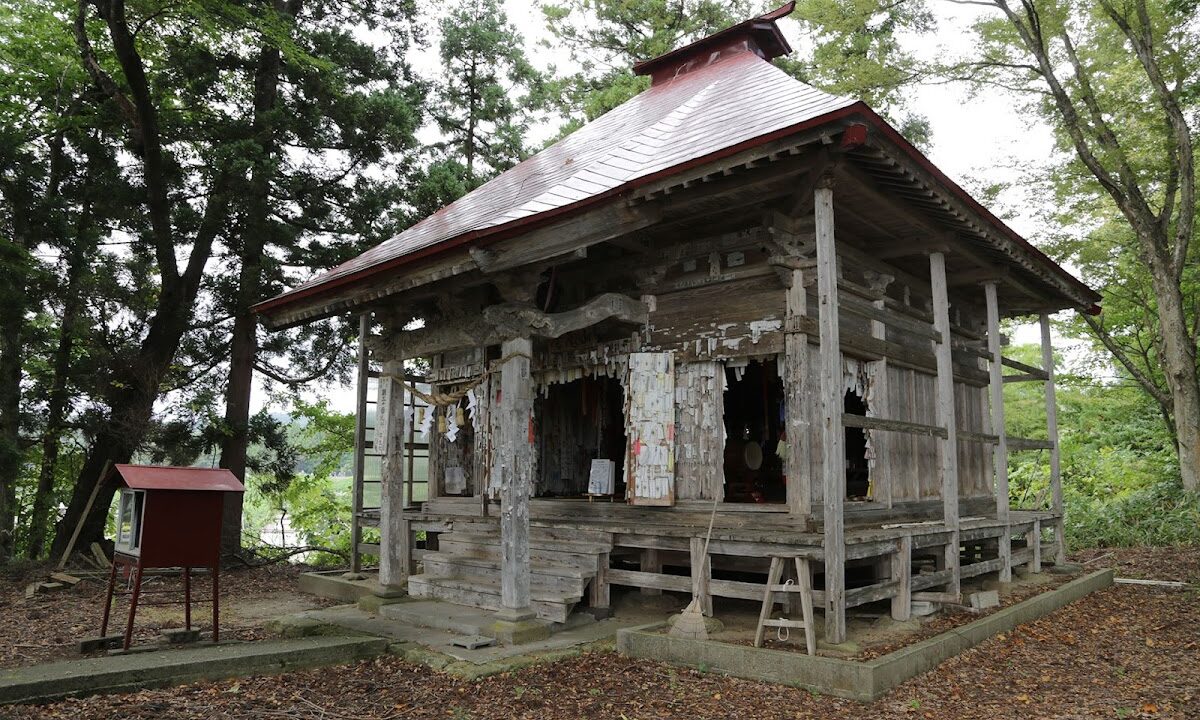
The Niu area is located in a mountainous region rich in nature within Obanazawa City, surrounded by a quiet environment of rural landscapes and mountains. From the Kannon Hall, visitors can enjoy views of the undulating mountain ranges characteristic of Yamagata, and the beautiful scenery of each season welcomes them.
Origin and History of Niu Kannon | Deep Connection with Asakusa Kannon
A moving and memorable legend is told regarding the founding of Niu Kannon.
The Story of the Traveling Monk and the Holy Kannon
The exact time is uncertain, but an elderly traveling monk, while pilgrimage through various provinces, arrived in the land of Niu. However, he fell gravely ill there and was on his deathbed.
As he faced death, the old monk left the following last words for the villagers:
“I have traveled throughout the land, carrying a sacred statue of the Holy Kannon Bodhisattva bestowed upon me from the Kannon Hall in Asakusa, Edo. I believe that ending my life in this land of Niu is some kind of Buddhist destiny. Surely, it is Kannon’s wish to remain in this place. Please enshrine this statue in a suitable place and continue your faith in it for generations to come.”
Deeply moved by these words, the villagers built a temple at the site of the old monk’s death and enshrined the Holy Kannon Bodhisattva. This is considered the beginning of Niu Kannon (Niu Village Kannon).
The Origin of Asakusa Kannon
The tradition that the principal image of Niu Kannon, the Holy Kannon Bodhisattva, was bestowed from the Kannon Hall (Senso-ji Temple) in Asakusa, Edo, speaks to the special origins of this sacred site. Asakusa Kannon was a renowned temple that flourished as a center of popular faith during the Edo period, and the fact that a replica of its Kannon was enshrined in the distant Yamagata region demonstrates the spread of faith and the depth of Kannon worship at that time.
Why the traveling monk lost his life in Niu, and why Kannon wished to remain in this place, remains unclear. However, the warm hearts of the people of Niu and the spiritual power of this land may have guided both Kannon and the traveling monk.
About the Mogami Thirty-Three Kannon Pilgrimage
Niu Kannon is the 30th temple of the Mogami Thirty-Three Kannon Pilgrimage, playing an important role in Kannon worship in Yamagata Prefecture.
Overview of the Mogami Thirty-Three Kannon Pilgrimage
The Mogami Thirty-Three Kannon Pilgrimage is a pilgrimage route that visits thirty-three Kannon temples scattered throughout the Mogami region of Yamagata Prefecture. These temples, designated in honor of the thirty-three manifestations of Kannon Bodhisattva, have attracted many followers since the Edo period.
Relationship with the Dewa Hundred Kannon Pilgrimage
The Mogami Thirty-Three Kannon Pilgrimage, along with the Shonai Thirty-Three Kannon Pilgrimage and the Okitama Thirty-Three Kannon Pilgrimage, constitute the “Dewa Hundred Kannon Pilgrimage.” The Dewa Hundred Kannon Pilgrimage is a magnificent network of Kannon temples spanning the entire Yamagata Prefecture, allowing pilgrims to gain peace of mind and merit by visiting Kannon statues throughout the prefecture.
Positioning of the 30th Temple
Nyu-mura Kannon is a temple located towards the end of the Mogami Thirty-Three Kannon Pilgrimage. The typical pilgrimage route starts at No. 22 Enzawa Kannon, proceeds to No. 23 Rokuzawa Kannon, No. 24 Kaminohata Kannon, No. 25 Obanazawa Kannon, and continues to No. 30 Niumura Kannon. Afterward, a recommended route involves staying at hot spring resorts such as Ginzan Onsen, Akakura Onsen, and Semi Onsen while continuing the pilgrimage.
Highlights of Niu Kannon
Holy Kannon Bodhisattva
The principal image, the Holy Kannon Bodhisattva, is a precious statue said to have been bestowed from Asakusa Kannon. The Holy Kannon is the basic form of Kannon Bodhisattva, depicted with one face and two arms. The compassionate expression of Kannon watching over all beings brings deep peace to the hearts of worshippers.
Temple and Grounds
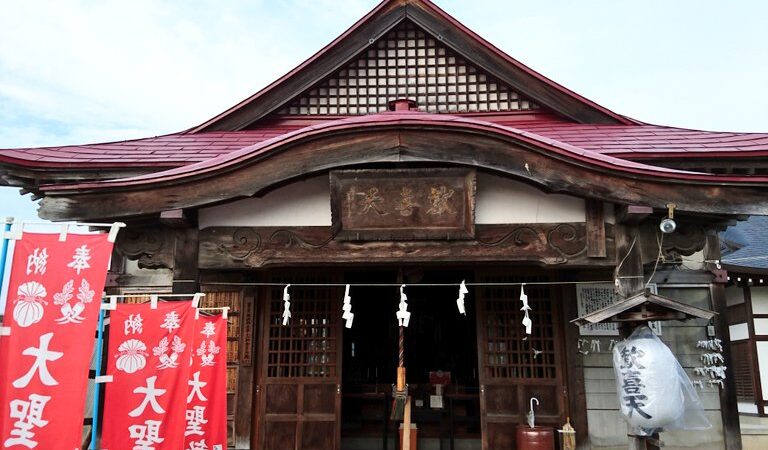
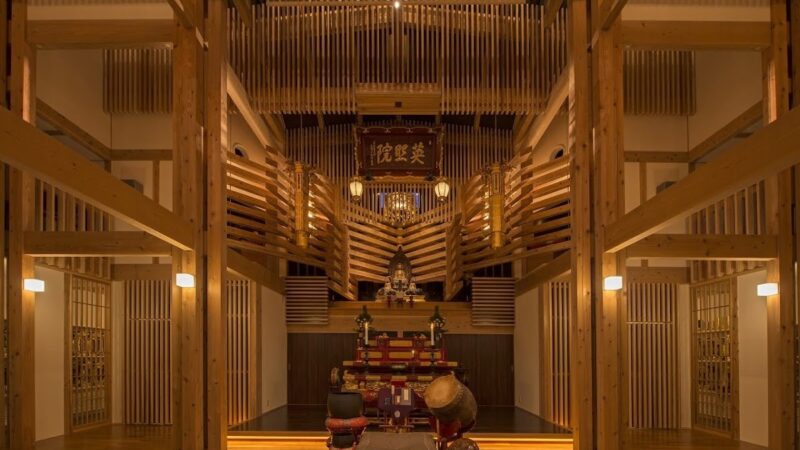
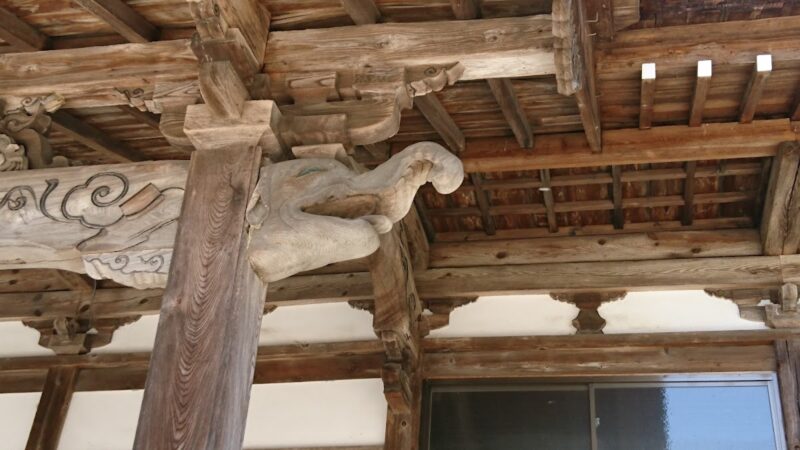
The temple hall of Niu Kannon is built in a quiet, mountainous environment. While lacking ostentatious decorations, the simple and warm appearance of this Kannon Hall speaks volumes about its history and the faith of the local people.
From the temple grounds, you can see the surrounding mountains, and the undulating mountain ranges characteristic of Yamagata are particularly impressive. The scenery is similar to the mountains seen on the left side of the train window after passing Yamadera when traveling from Sendai to Yamagata on the Senzan Line, allowing you to truly appreciate the natural beauty of Yamagata.
Scenery of the Four Seasons
The Nyu area is a region where the changing seasons are beautiful. From the fresh greenery of spring, the deep green of summer, the vibrant autumn leaves, and the snowy landscapes of winter, it offers different expressions depending on the season you visit. Especially during the autumn foliage season, the surrounding mountains are ablaze with color, creating a beautiful landscape where the Kannon Hall and nature harmonize.
Access | How to Get to Nyu Kannon
Nyu Kannon is located in a mountainous area, so access by car is convenient.
Access by Car
- From the Tohoku Chuo Expressway, Obanazawa IC: Approximately 15-20 minutes
- From Yamagata City: Approximately 40-50 minutes via National Route 13
- From Shinjo City: Approximately 30-40 minutes via National Route 13
Take the road from Obanazawa city center towards the Nyu area. Follow the road signs, and you will see directions to Nyu Kannon. Snow is present in winter, so snow tires are essential.
Access by Public Transportation
- The nearest stations are JR Ou Main Line Oishida Station or JR Ou Main Line Funagata Station, but the Kannon Hall is some distance from the stations.
- Taking a taxi is the most practical option.
- It is recommended to contact a taxi company in Obanazawa City in advance.
Parking
There is parking space for visitors around the Kannon Hall, but advance confirmation is necessary for large buses.
Nearby Tourist Attractions
When visiting Niu Kannon, be sure to explore the other attractive spots in the surrounding area.
Ginzan Onsen
Located about 20-30 minutes by car from Niu Kannon, Ginzan Onsen is nationally famous as a hot spring town overflowing with Taisho-era romance. The scenery of multi-story wooden inns creates an atmosphere that feels like stepping back in time. It’s the perfect hot spring resort to soothe the fatigue of your Kannon pilgrimage.
Kannon Pilgrimage Sites in Obanazawa City
When undertaking the pilgrimage of the Mogami Thirty-Three Kannon, there are several pilgrimage sites within Obanazawa City.
- No. 25 Obanazawa Kannon
- No. 24 Kaminohata Kannon
- No. 23 Rokusawa Kannon
Visiting these Kannon halls together will make for a more fulfilling pilgrimage experience.
Kannon Pilgrimage Sites in Oishida Town
In the neighboring town of Oishida, you will find No. 29 Oishida Kannon. Oishida Town is a historic town that flourished as a key point on the Mogami River shipping route, and it’s a great place to enjoy a stroll around.
Akakura Onsen and Semi Onsen
The pilgrimage route to the 33 Kannon temples of Mogami recommends staying at Akakura Onsen or Semi Onsen. These hot spring resorts are historic therapeutic bathing spots, offering a tranquil mountain environment where you can refresh both your mind and body.
Manners and Pilgrimage Guidelines
Basic Pilgrimage Etiquette
- Bow at the Entrance: Bow slightly before entering the temple grounds.
- Purify at the Water Basin: If there is a water basin, purify your hands and mouth.
- Offering: Place your offering in the offering box.
- Pray with Hands Clasped: Clasp your hands together and offer a prayer to Kannon.
- Bow Upon Exit: Bow again when leaving the temple grounds.
Sutra Copying and Stamping
On the pilgrimage of the 33 Kannon temples of Mogami, you can receive a stamp in your sutra copy book at each temple. Niu Kannon also offers stamps, but it is recommended to check in advance as it may be unattended.
Mindset for Pilgrimage
A Kannon pilgrimage is not merely sightseeing; it is a form of spiritual practice to confront oneself and purify the mind. Let us quietly converse with Kannon (Goddess of Mercy) and offer our daily gratitude and prayers. It is also important to remember to show respect to the local people and observe proper etiquette during your visit.
History and Culture of the Nyu District
The Place Name “Nyu”
The place name “Nyu” is often believed to originate from ancient production areas of cinnabar (mercury sulfide). The name “Nyu” can be found throughout Japan, each deeply connected to mineral resources or mountain worship. The Nyu district of Obanazawa City, Yamagata Prefecture, may also have once been a region blessed with abundant mountain resources.
History of Obanazawa City
Obanazawa City developed as a key transportation hub in the Mogami region during the Edo period. It particularly flourished as a center for the collection and distribution of safflower, and was a commercial city lined with wealthy merchants. It is also known as a place visited by Matsuo Basho during his journey on “Oku no Hosomichi” (The Narrow Road to the Deep North), where he stayed for 10 days.
The Nyu district is located in the mountainous area of Obanazawa City and is a quiet village centered on agriculture. As a region where Kannon worship is deeply rooted, the Nyu Kannon is still carefully preserved by the local people.
Recommendation for the Mogami Thirty-Three Kannon Pilgrimage
The Charm of the Pilgrimage
The Mogami Thirty-Three Kannon pilgrimage is a precious opportunity to experience a spiritual journey while immersing yourself in the rich nature and historical culture of Yamagata Prefecture. Each temple has its own unique history and story, and by visiting each one, you can feel the depth of Kannon worship and the faith of the local people.
Pilgrimage Planning
To visit all 33 Mogami Kannon temples, you will need several days to a week. To make the pilgrimage efficient, it is important to plan your route and book accommodations in advance.
Recommended Route Example:
- Day 1: Temples 19-22
- Day 2: Temples 23-27
- Day 3: Temples 28-30 (Nyu-mura Kannon) → Overnight stay at Ginzan Onsen
- Day 4: Temples 31-33
The Challenge of the Dewa Hundred Kannon Pilgrimage
After completing the Mogami Thirty-Three Kannon Pilgrimage, you can expand your pilgrimage to the Shonai Thirty-Three Kannon Pilgrimage and the Okitama Thirty-Three Kannon Pilgrimage, aiming to complete the Dewa Hundred Kannon Pilgrimage. This magnificent pilgrimage throughout Yamagata Prefecture will be a precious experience that will become a lifelong memory.
Summary | The Charm of Nyu Kannon
Nyu Kannon (Nyu-mura Kannon) in Obanazawa City, Yamagata Prefecture, is the 30th temple of the Mogami Thirty-Three Kannon Pilgrimage and a sacred site with a moving legend involving a traveling monk and Asakusa Kannon. Nestled in the tranquil mountains, this temple offers visitors peace and solace.
The surrounding area boasts numerous tourist attractions, including Ginzan Onsen hot springs, allowing you to fully enjoy the charm of Yamagata in conjunction with your Kannon pilgrimage. While access by car is convenient, combining public transport with a taxi is also possible.
When visiting Niu Kannon, take some time to reflect on why Kannon chose to remain in this remote location far from Edo, and quietly offer your prayers. Kannon’s compassionate gaze will surely bring peace to your heart.
Enjoy a journey through the pilgrimage of the 33 Kannon of Mogami and the 100 Kannon of Dewa, experiencing Yamagata’s rich nature, history, and the warm faith of its people.