
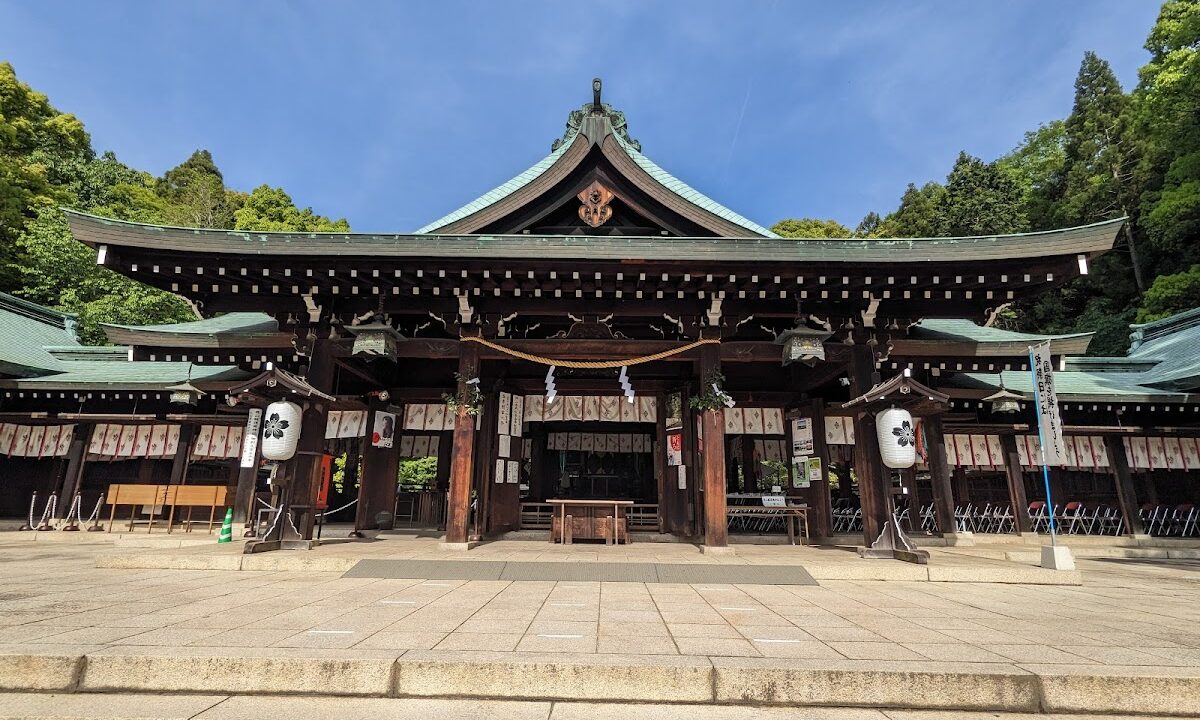
Complete Guide to Okayama Prefecture Gokoku Shrine | History, Goshuin (Shrine Seals), Access, and Annual Events Explained in Detail
The Okayama Prefecture Gokoku Shrine is located in a lush, natural setting on Mt. Misao, east of the Asahi River that flows through the heart of Okayama City. As a shrine dedicated to the heroic spirits who sacrificed their lives during national crises after the Meiji Restoration, it enjoys deep reverence from the people of Okayama Prefecture. This article provides a thorough explanation of everything you need to know before visiting, including the detailed history of Okayama Prefecture Gokoku Shrine, its enshrined deities, visiting information, goshuin (shrine seals), annual events, and access methods.
What is Okayama Prefecture Gokoku Shrine?
Okayama Prefecture Gokoku Shrine is a Gokoku Shrine located in Okuichi, Naka-ku, Okayama City, Okayama Prefecture. Its former shrine rank was a Gokoku Shrine designated by the Minister of Home Affairs, and after the war, it became a Beppyo Shrine (a shrine listed in the special register). Okayama Prefectural Gokoku Shrine enshrines the spirits of those who died in national crises since the Meiji Restoration, who were from or had ties to Okayama Prefecture. Currently, approximately 38,000 deities are enshrined there.
The shrine grounds, imbued with a quiet and solemn atmosphere, are a peaceful place embraced by the nature of Mt. Misao, offering visitors tranquility and peace of mind. Numerous memorials to war dead are erected within the grounds, making it an important place to reflect on the preciousness of peace.
History and Origins of Okayama Prefectural Gokoku Shrine
Origins of Founding
The Okayama Prefectural Gokoku Shrine dates back to April 3, 1869 (Meiji 2). It is believed to have originated when Lord Ikeda Akimasa, the lord of the Bizen Domain, held a memorial service for 34 war dead, including Suzumebe Hachiro Tokiyoshi, the commander of the Oshu War, at Takeda-gawara behind the shrine’s rear garden.
Subsequently, in June of the same year, a shrine and monument were erected on a 180-tsubo (approximately 595 square meters) plot of land in Heitateyama, Kadota Village, Kamimichi District, to enshrine those who died in the Oshu and Hakodate Wars. This location corresponds to the present-day Higashiyama Park in Okayama City.
Designation as an Officially-Sponsored Shokonsha Shrine
On March 17, 1874 (Meiji 7), Okayama Shokonsha Shrine was designated an officially-sponsored Shokonsha Shrine. This meant that all expenses, including rituals and repairs, were covered by government funds, strengthening its character as a national institution.
Renaming to Gokoku Shrine
On March 15, 1939 (Showa 14), it became a Gokoku Shrine designated by the Minister of Home Affairs, and its name was changed from “Okayama Shokonsha Shrine” to “Okayama Prefecture Gokoku Shrine.” During this period, there was a movement to rename Shokonsha Shrines throughout Japan to Gokoku Shrines, and Okayama followed suit.
Relocation to Current Location
On November 3, 1962 (Showa 37), the shrine was relocated from Higashiyama Park to its current location in Okuichi, Naka Ward, Okayama City. The tranquil environment at the foot of Mt. Misao was chosen as a suitable place to enshrine the spirits of the war dead, and it continues to welcome many worshippers to this day.
About the Enshrined Deities
Okayama Prefectural Gokoku Shrine enshrines the spirits of those who sacrificed their precious lives in the following national crises.
- Boshin War (1868-1869)
- Satsuma Rebellion (1877)
- First Sino-Japanese War (1894-1895)
- Russo-Japanese War (1904-1905)
- World War I (1914-1918)
- Manchurian Incident/China Incident (1931-1941)
- Greater East Asia War (Pacific War) (1941-1945)
In these wars and incidents, approximately 38,000 souls of those from Okayama Prefecture or with ties to Okayama Prefecture who sacrificed their lives for their country are enshrined as deities.
Highlights of the Shrine Grounds
Main Hall and Worship Hall
The main hall and worship hall, built during the relocation in 1962, adopt a traditional shrine architectural style. The magnificent cypress wood shrine building is a fitting structure to show respect to the war dead, instilling a sense of solemnity in visitors.
Memorials and Monuments
Several memorials and monuments are erected within the shrine grounds. These monuments commemorate those who died in various wars, as well as specific units and branches of service, each bearing a deep history and story. Visiting these monuments allows one to reaffirm the preciousness of peace and the tragedy of war.
Shrine Office and Gift Shop
At the shrine office, you can receive Goshuin (shrine stamps), various amulets, and talismans. Known for their courteous service, they kindly answer questions about the shrine.
Assembly Hall
The assembly hall, used for various festivals and events, is also used for gatherings of bereaved families and memorial services.
Goshuin Information
Okayama Prefecture Gokoku Shrine offers Goshuin as proof of worship.
Features of the Goshuin (Shrine Seal)
The goshuin of Okayama Prefecture Gokoku Shrine features the words “Okayama Prefecture Gokoku Shrine” in calligraphy in the center, “Homage” (拝) in the upper right corner, and the date of visit in the lower left corner. The seal includes both the shrine’s official seal and the date stamp, resulting in a simple yet dignified design.
Goshuincho (Shrine Seal Book)
Okayama Prefecture Gokoku Shrine also offers goshuincho specifically for Yasukuni Shrine and Gokoku Shrines. There are two types: one with the names of Gokoku Shrines nationwide printed on each page, and a blank type. These are popular with those visiting Gokoku Shrines throughout Japan. For those aspiring to visit Gokoku Shrines, this goshuincho holds special significance.
Issuance Hours
Goshuin are issued during the shrine office’s opening hours. It is recommended to check the official website or call before visiting.
Annual Rituals and Events
Okayama Prefectural Gokoku Shrine holds various rituals throughout the year.
Spring Grand Festival
This is one of the most important festivals, held every spring. It is a solemn ritual offering gratitude to the war dead and prayers for peace, attended by many bereaved families and related parties.
Autumn Grand Festival
The autumn grand festival, held in autumn, is also an important ritual, comparable to the spring festival. It expresses gratitude for the harvest and includes reporting to and commemorating the war dead.
Mitama Festival
The Mitama Festival, held in summer, is a festival to comfort the spirits of the war dead. Lanterns are lit, creating a mystical atmosphere for the memorial service.
Monthly Festival
The monthly festival, held regularly each month, expresses gratitude for daily peace and reports to the war dead.
Other Events
A special memorial service is held on the anniversary of the end of the war (August 15th), and various memorial services and ceremonies are also held by various organizations from time to time.
Manners and Etiquette for Visiting the Shrine
How to Pass Through the Torii Gate
When passing through the torii gate, bow before entering the shrine grounds. Since the center of the path is considered the path of the gods, it is polite to walk to either the left or right side.
How to Wash Your Hands at the Water Basin
Purify your body and mind at the water basin. Hold the ladle in your right hand and wash your left hand, then switch to your left hand and wash your right hand, then switch back to your right hand, receive water in your left hand, rinse your mouth, and finally hold the ladle upright to wash the handle.
How to Worship
At the front of the main hall, worship using the two bows, two claps, and one bow method. Place your offering in the offering box, ring the bell, bow deeply twice, clap your hands twice, offer your prayer, and then bow deeply once more.
Specific Mindset for Gokoku Shrines
Gokoku shrines are special shrines dedicated to the spirits of war dead. When visiting, it is important to remember to express gratitude for peace and respect for the war dead, and to pray quietly and sincerely.
Access and Basic Information
Location
3-21 Okuichi, Naka-ku, Okayama City, Okayama Prefecture 703-8272
Phone Number
086-272-3017
Access by Public Transportation
From JR Okayama Station
- Take the Okayama Electric Railway bus bound for Saidaiji via Higashiyama or Saidaiji via Masuno.
- Get off at the “Gokoku Jinja-mae” bus stop and walk for approximately 3 minutes.
- Travel time: Approximately 20-25 minutes
By Tram (Okayama Electric Railway)
- Get off at Higashiyama/Okaden Museum Station on the Higashiyama Line and walk for approximately 15 minutes.
Access by Car
From Okayama IC
- Approximately 20 minutes via the Okayama Blue Line
From Okayama City Center
- Approximately 15 minutes via National Route 250
Parking
Free parking is available on the temple grounds. There is space for approximately 50 regular cars, and large buses can also be parked. During major events such as the annual festival, congestion is expected, so please consider using public transportation.
Visiting Hours
The shrine grounds are generally open all day, but the shrine office is open from 9:00 AM to around 5:00 PM. If you wish to receive a Goshuin (shrine stamp) or other items, it is recommended to visit during opening hours.
Admission Fee
Free
Nearby Tourist Attractions
Higashiyama Park
Higashiyama Park, the former site of Okayama Prefectural Gokoku Shrine, is known as a famous cherry blossom viewing spot. In spring, it is bustling with many cherry blossom viewers, and the park also contains facilities such as the Okayama Prefectural General Ground and the Okayama Prefectural Martial Arts Hall.
Mt. Misao
Mt. Misao, towering behind the shrine, is a 169-meter-high mountain. Hiking trails are maintained, and from the summit, you can enjoy views of Okayama city and the Seto Inland Sea. It is a place beloved by citizens for its enjoyment of nature throughout the four seasons.
Okayama Korakuen Garden
Okayama Korakuen Garden, one of Japan’s three most famous gardens, is located in the heart of Okayama City, about a 15-minute drive from Gokoku Shrine. As a representative daimyo garden of the Edo period, it is designated as a National Special Place of Scenic Beauty.
Okayama Castle
Okayama Castle, also known as “Ujo” (Crow Castle) due to its black exterior, is located right next to Korakuen Garden. The view from the castle tower is magnificent, and you can learn about Okayama’s history.
Features and Charms of Okayama Prefectural Gokoku Shrine
Quiet Environment
Located at the foot of Mt. Misao, it offers a space enveloped in tranquility despite being in an urban area. It is a precious place where you can escape the hustle and bustle and quietly reflect on the spirits of the war dead.
The Weight of History
Okayama Prefectural Gokoku Shrine has a history of over 150 years since its founding in 1869 (Meiji 2). As a shrine that has witnessed Japan’s history from the end of the Edo period to the present day, it evokes a sense of historical weight in visitors.
Prayer for Peace
Okayama Prefectural Gokoku Shrine plays an important role as a place that conveys the tragedy of war and advocates for the preciousness of peace. It is especially important for younger generations, providing an opportunity to learn about history and reflect on peace.
Accessibility
Its relatively close proximity to the center of Okayama City and easy access by public transportation make it highly convenient for many visitors. Parking is also available, making it easy to visit by private car.
Precautions During Visits
Dress Code
There are no specific dress code requirements, but it is advisable to avoid revealing or overly flashy clothing, as it is a sacred place.
Photography
Photography is generally permitted on the shrine grounds, but it should be refrained from inside the main hall or during Shinto rituals. Consideration should also be given to avoiding disturbing other visitors.
Pets
Bringing pets to the shrine should be avoided in principle. If unavoidable, it is recommended to check with the shrine office in advance.
Smoking and Eating
Smoking is prohibited on the shrine grounds. Eating and drinking should also be avoided outside of designated areas.
Summary
Okayama Prefectural Gokoku Shrine is a representative Gokoku Shrine of Okayama Prefecture, enshrining the spirits of those who sacrificed their lives during national crises after the Meiji Restoration. Located in a tranquil environment surrounded by the greenery of Mt. Misao, it is a place where many people can feel the weight of history and the preciousness of peace.
Beginning with the memorial service held in 1869 by Lord Ikeda Akimasa, the lord of the Bizen domain, this shrine, with a history of over 150 years, is deeply intertwined with the history of Okayama. Annual events, including the spring and autumn festivals, offer gratitude to the war dead and prayers for peace, attracting many worshippers.
Goshuin (shrine stamps) and special Goshuin notebooks for Gokoku Shrines are also available, making it an important pilgrimage site for those visiting Gokoku Shrines throughout Japan. With easy access from central Okayama City and ample parking, it’s a convenient place to visit.
When you visit Okayama, why not take a trip to Okayama Prefectural Gokoku Shrine to pay your respects to the war dead and reflect on the preciousness of peace? A quiet visit to the tranquil grounds will offer a valuable experience unlike anything you’ll find in everyday life.


