About Omiwa Shrine (Miwa Myojin)
Omiwa Shrine, located in Sakurai City, Nara Prefecture, is the Ichinomiya (first-ranked shrine) of Yamato Province and is known as one of the oldest shrines in Japan. Also known as “Miwa Myojin,” it is a valuable shrine that preserves the form of primitive Shinto, with Mount Miwa (elevation 467m) itself as its sacred object.
A Unique Form of Worship Without a Main Hall
The most distinctive feature of Omiwa Shrine is the absence of a main hall. Behind the worship hall is a triple torii gate (an important cultural property), beyond which lies a restricted area leading to Mount Miwa. This strongly reflects the ancient forms of nature worship and mountain worship, preserving a form of worship that existed before the development of shrine architecture.
Deities and History
The deity enshrined is Omononushi-no-Okami. This deity, who appears in the Kojiki and Nihon Shoki, is considered the god of nation-building and is believed to be the gentle spirit (nigimitama) of Okuninushi-no-kami.
The exact founding date is unknown, but it is mentioned in the Nihon Shoki under the reign of Emperor Sujin, suggesting a history of at least 1800 years.
Points to Note During Your Visit
Formal Worship at the Main Hall
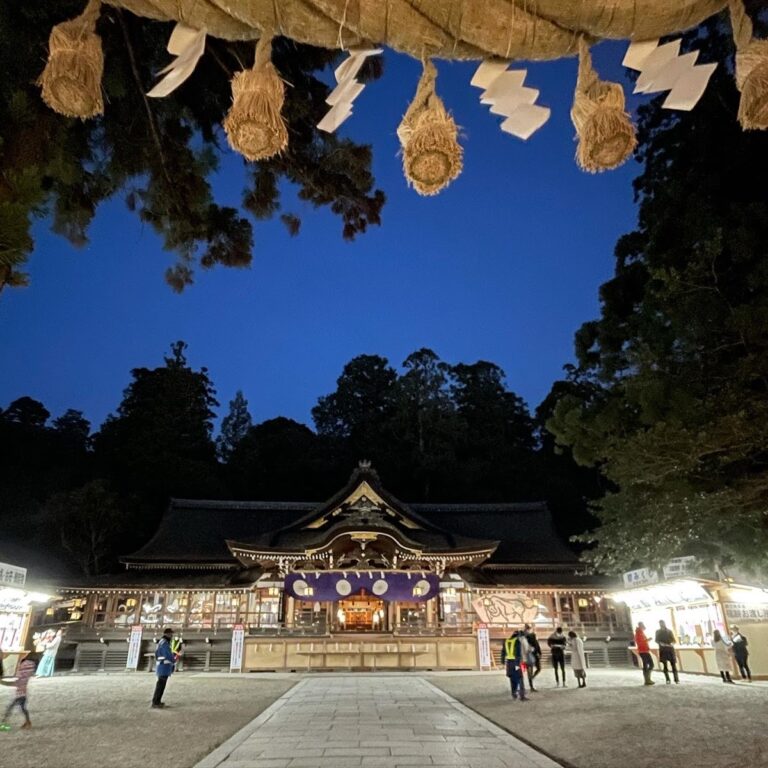
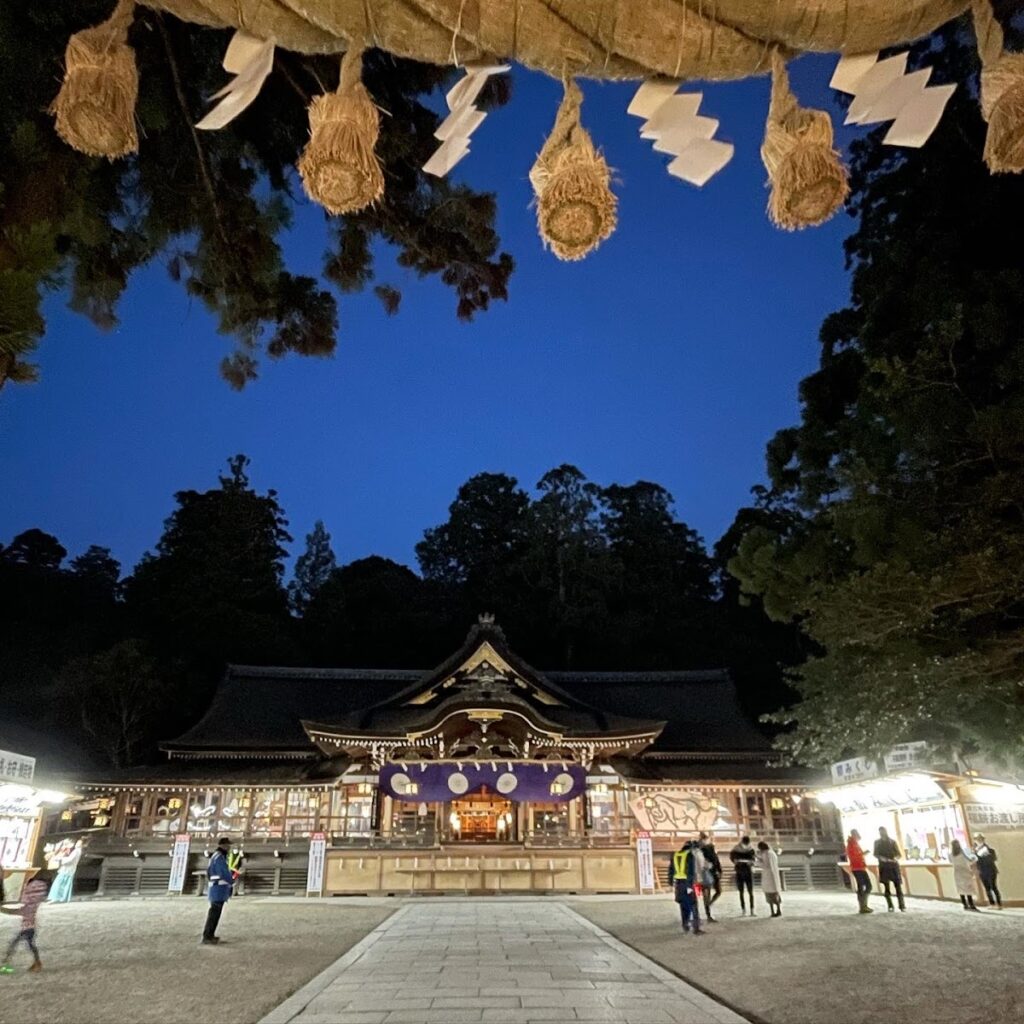
The main hall was rebuilt in 1664 by Tokugawa Ietsuna and is a magnificent building with a hipped roof and cypress bark roofing. Here, you pray using the two bows, two claps, and one bow ritual. You will be worshipping Mount Miwa from beyond the main hall, offering a unique experience of offering prayers to the mountain itself.
Triple Torii Gate (Important Cultural Property)
The triple torii gate, situated within the sacred enclosure behind the main hall, is a rare structure combining three Myojin torii gates. It is usually closed to the public, but can be viewed from a distance from the main hall. This torii gate serves as a boundary to Mount Miwa, marking the entrance to the sacred area.
Minokami-sugi (Snake God Cedar)
Located to the left of the main hall, this centuries-old cedar tree is said to be the dwelling place of a white snake, an incarnation of the deity Ōmononushi-no-Ōkami. Eggs and sake are offered at its base, demonstrating the enduring belief in snakes as divine messengers.
Ōmiwa-no-Mori Observation Deck
From the observation deck on a hill on the east side of the shrine grounds, you can enjoy a panoramic view of the Yamato Basin. The view at sunset is particularly spectacular, allowing you to imagine the landscape seen by ancient people.
Sai Shrine (Subsidiary Shrine)
Located about a 5-minute walk from the main shrine, this subsidiary shrine is worshipped as a deity of healing. Within the grounds is a “medicine well,” where you can freely draw sacred water said to cure all illnesses (bringing your own water bottle is recommended).
Climbing Mount Miwa (Reservation Required)
By registering at Sai Shrine, you can climb Mount Miwa (offering fee: 300 yen, approximately 2 hours). However, the following strict rules apply:
- No photography, eating, drinking, or smoking
- No collecting plants or stones
- Must wear the pilgrimage certificate sash
- Descend by 2 PM
The mountain itself is a sacred area, filled with a holy atmosphere.
Benefits
Omiwa Shrine is known as a god of all-powerful deities and is particularly famous for the following benefits:
Business Prosperity and Success
Since Omononushi-no-Okami is the god of nation-building, it is believed to bring business prosperity, industrial development, and success, and is constantly visited by business owners.
Matchmaking and Marital Harmony
From the myth of Omononushi-no-Okami and Ikutama-yorihime, it is believed to bring good fortune in relationships, matchmaking, and marital harmony. The Meoto Iwai (Husband and Wife Rocks) within the temple grounds are also a popular spot for those seeking love and marriage.
Healing from Illness and Longevity
In particular, the subsidiary shrine, Sai Shrine, is revered as the god of medicine and health, and many worshippers visit to seek the sacred water from the medicinal well.
Prosperity of Sake Brewing
Miwa is considered the birthplace of Japanese sake and also the birthplace of the sugidama (sugidama ball). Sake brewers from all over Japan visit the shrine, and every year on November 14th, the “Brewing Safety Prayer Festival (Sake Festival)” is held with great fanfare.
Access
Access by Train
Approximately a 5-minute walk from JR Sakurai Line “Miwa Station”, making it very convenient to access by train.
- From Osaka: JR Osaka Loop Line → JR Sakurai Line (approx. 1 hour)
- From Kyoto: Kintetsu Kyoto Line → Yamato-Yagi Station → JR Sakurai Line (approx. 1 hour 20 minutes)
- From Nara: JR Sakurai Line (approx. 30 minutes)
Access by Car
- Approximately 30 minutes from Tenri IC on the Nishi-Meihan Expressway via National Route 169
- Parking: Free parking available around the temple grounds (approx. 150 cars, charged during the New Year period)
Access by Bus
Get off at “Miwa Myojin Sando-guchi” bus stop on the Nara Kotsu bus from Kintetsu/JR Sakurai Station (operates only on Saturdays, Sundays, and public holidays)
Visiting Information
- Visiting Hours: Temple grounds are freely accessible (Shrine office is open from 9:00 to 17:00)
- Admission Fee: Free
- Estimated Time Required: 30 minutes to 1 hour if only visiting the shrine grounds, 1.5 hours including Sai Shrine, 3 hours including climbing Mount Miwa
- Address: 1422 Miwa, Sakurai City, Nara Prefecture 633-8538
- Phone: 0744-42-6633
- Official Website: http://oomiwa.or.jp/
Summary
Omiwa Shrine is one of the oldest shrines in Japan, with Mount Miwa as its sacred object of worship. It is a precious sacred site that preserves the form of primitive Shinto without a main hall. It offers many attractions, including powerful blessings, a mystical climb up Mount Miwa, and beautiful scenery within the shrine grounds. When visiting Nara, be sure to experience the origins of Japanese faith.