What is a Pine-lined Approach? The Charm of the Majestic Pine Trees Adorning Shrines and Temples, and a Guide for Visitors
Basic Knowledge of Pine-lined Approaches
What is a Pine-lined Approach?
A pine-lined approach refers to a row of pine trees planted along the approach to a shrine or temple. In Japan, pine trees have long been considered sacred, and as evergreens, they symbolize “eternal youth and longevity” and “prosperity,” playing a role in protecting sacred areas.
The pine trees neatly lined on both sides of the approach act as a boundary separating the secular world from the sacred realm, leading visitors into a solemn state of mind. Many of these trees are hundreds of years old, possessing high historical and cultural value.
Reasons for Planting Pine Trees Along Shrine Approaches
There are several reasons why pine trees are favored for planting along shrine approach routes:
- Sacredness: Revered since ancient times as trees where gods reside.
- Evergreen Nature: Remaining green all year round, symbolizing eternity and permanence.
- Vitality: Its resilience in harsh environments expresses the power of gods and Buddhas.
- Aesthetic Appeal: Its orderly appearance creates a solemn atmosphere.
- Practicality: It provides windbreak and sand-prevention effects, protecting the approach route.
Famous Pine Tree Approaches Across Japan
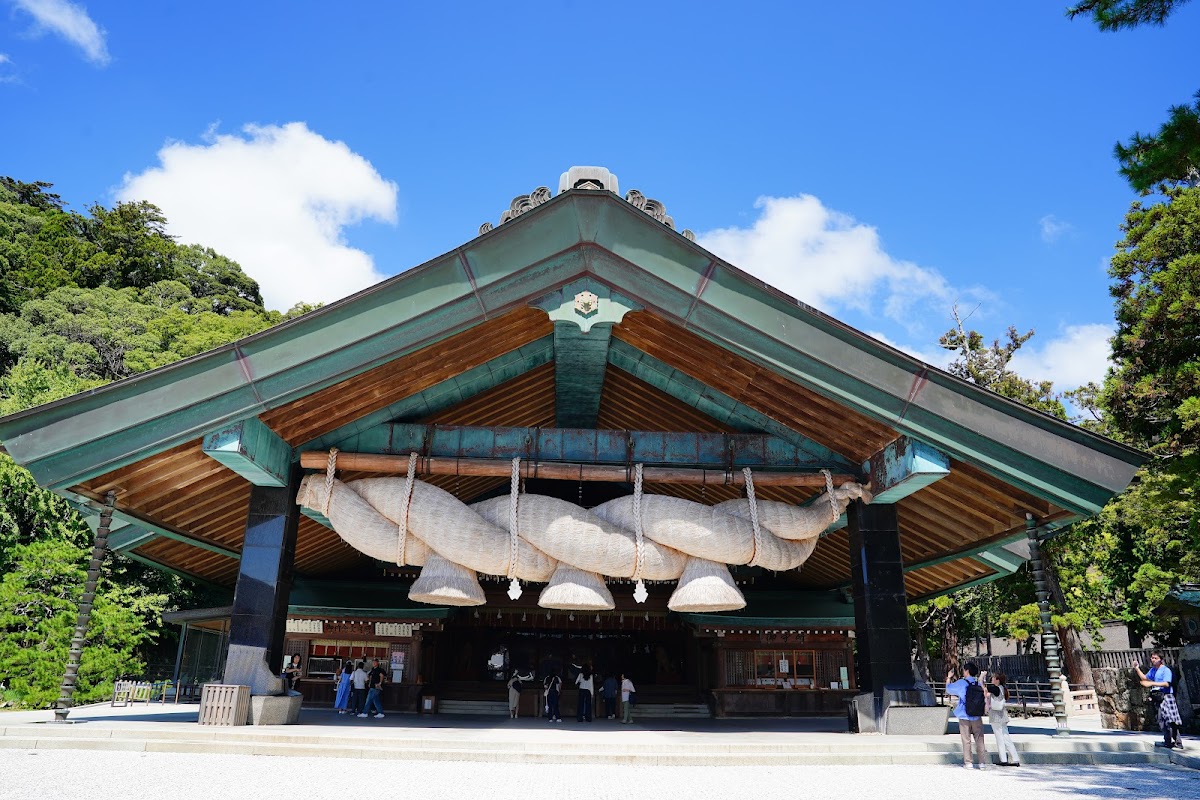
Izumo Taisha Shrine (Shimane Prefecture)
The approach route to Izumo Taisha Shrine is lined with black pines over 400 years old. The approach route from the second torii gate to the main hall is especially known as the “Path of Welcoming the Gods,” and it is believed that in the tenth month of the lunar calendar (the month of the gods’ presence), the eight million gods of Japan gather along this pine-lined path.
The approach to the shrine is approximately 700 meters long and lined with about 50 pine trees. In winter, the snow-covered pine trees create a fantastical landscape.
Tsurugaoka Hachimangu Shrine (Kanagawa Prefecture)
The Wakamiya-oji Avenue leading to Tsurugaoka Hachimangu Shrine in Kamakura once had a row of pine trees planted by Minamoto no Yoritomo to pray for the safe delivery of his wife, Hojo Masako. While it has now been renovated into the Dankazura (a raised walkway) and replaced with a row of cherry trees, magnificent pine trees remain along the approach to the shrine.
On both sides of the stone steps leading from the third torii gate to the main shrine, black pines over 200 years old welcome visitors.
Sumiyoshi Taisha Shrine (Osaka Prefecture)
The approach to the main shrine from the arched bridge (Taiko Bridge) of Sumiyoshi Taisha Shrine features a row of pine trees known as “Sumiyoshi no Matsu” (Sumiyoshi Pine). Approximately 600 pine trees are planted, and their beautiful shapes are maintained using a unique pruning method called “Sumiyoshi Matsu.”
Especially during the New Year’s pilgrimage season, the contrast between the green pine trees and the vermilion-lacquered shrine buildings is beautiful, and the area is bustling with many worshippers.
Nikko Toshogu Shrine (Tochigi Prefecture)
The approach to the World Heritage site Nikko Toshogu Shrine is famous for the cedar trees said to have been planted by Tokugawa Iemitsu, but the grounds are also dotted with sacred pine trees such as the “Yogo no Matsu” (Yogo Pine).
The pines on the main approach are over 300 years old and still convey the atmosphere of the Edo period.
Points for Worship
How to Walk Along the Pine-Lined Approach
When walking along the pine-lined approach, keeping the following points in mind will allow for a deeper worship experience:
1. Avoid Walking in the Center
The center of the approach is called “Seichu” and is considered the path where the gods pass. It is customary for worshippers to walk to either the left or right side. At Izumo Taisha Shrine, it is customary to walk on the left side when descending the path and on the right side when ascending.
2. Slowly Prepare Your Mind
Walking through the pine trees is a time to prepare your mind to shift from the secular world to the sacred realm. Take your time, enjoying the scent of the pine and the sunlight filtering through the leaves. Deep breathing will also allow you to benefit from the phytoncides released by the pine trees.
3. Touch the Pine Trees
Many shrines allow visitors to touch the ancient pine trees. Place your hand on the trunk and feel the life force that has endured for so many years. However, be careful not to touch the sacred trees that are adorned with shimenawa ropes.
4. Enjoying the Seasonal Expressions
- Spring: New buds sprout, creating a beautiful, youthful green.
- Summer: Deep green creates shade, resulting in a cool and refreshing space.
- Autumn: Pine cones fall, evoking the atmosphere of autumn.
- Winter: Snow-covered pines create a fantastical landscape.
Photography Tips
The pine-lined path is an excellent photo spot:
- Early Morning Light: The sight of the morning sun shining through the pines is mystical.
- Low Angle: Shooting from ground level, looking up, conveys the power of the pines.
- Telephoto Lens: Compresses depth and emphasizes the continuity of the pine avenue.
- Backlight: Creates fantastical photos utilizing dappled sunlight.
However, please refrain from taking photos during crowded times so as not to disrupt worshippers.
Access Information
Access to Izumo Taisha Shrine
Train
- Approximately 25 minutes by Ichibata Bus bound for “Izumo Taisha” from JR Izumo-shi Station, get off at the last stop.
- Approximately 7 minutes on foot from Ichibata Railway “Izumo Taisha-mae Station”.
Car
- Approximately 15 minutes from San’in Expressway “Izumo IC”.
- Parking: Free parking available (approximately 385 spaces)
Address: 195 Kitzuki-Higashi, Taisha-cho, Izumo City, Shimane Prefecture
Access to Tsurugaoka Hachimangu Shrine
Train
- Approximately 10 minutes on foot from the east exit of JR Yokosuka Line/Enoshima Electric Railway “Kamakura Station”.
Car
- Approximately 20 minutes from Yokohama-Yokosuka Expressway “Asahina IC”.
- Parking: Paid parking available (600 yen per hour for regular cars)
Address: 2-1-31 Yukinoshita, Kamakura City, Kanagawa Prefecture
Access to Sumiyoshi Taisha Shrine
By Train
- Approximately 3 minutes on foot from Sumiyoshi Taisha Station on the Nankai Main Line
- Approximately 5 minutes on foot from Sumiyoshi Higashi Station on the Nankai Koya Line
- Immediately accessible on foot from Sumiyoshi Torii-mae Station on the Hankai Tramway
By Car
- Approximately 5 minutes from the Tamade Exit of the Hanshin Expressway Route 15 Sakai Line
- Parking: Paid parking available (200 yen per hour)
Address: 2-9-89 Sumiyoshi, Sumiyoshi-ku, Osaka City, Osaka Prefecture
Access to Nikko Toshogu Shrine
By Train
- Approximately 5 minutes by Tobu Bus bound for Chuzenji Onsen or Yumoto Onsen from Nikko Station on the JR Nikko Line or Tobu Nikko Station on the Tobu Nikko Line, then approximately 8 minutes on foot from the Shinkyo bus stop
By Car
- Approximately 2 km from Nikko IC on the Nikko Utsunomiya Expressway
- Parking: Numerous paid parking lots available in the surrounding area
Address: 2301 Yamauchi, Nikko City, Tochigi Prefecture
Benefits of Walking Along the Pine-Lined Path
Purification and Protection from Evil
Walking along the pine-lined path is believed to purify the mind and body. It is believed that the pure energy of the pine trees, combined with the path leading to the sacred area, cleanses away daily impurities and evil spirits.
Especially older pine trees are considered “guardian trees” that have watched over many worshippers for centuries, and are believed to possess strong protective powers against evil.
Health and Longevity
Pine trees are evergreens and, because they can survive even in harsh environments, have been considered a symbol of “eternal youth and longevity.” Walking along the pine-lined path is believed to bring health and longevity by drawing on their vitality.
In fact, the phytoncides emitted by pine trees have been scientifically proven to have stress-reducing and immune-boosting effects.
Matchmaking and Family Safety
Because the Japanese word for pine tree (matsu) sounds similar to the word for “wait” (matsu), it is said to bring good fortune in matchmaking, as it is considered a tree that “waits” for a good relationship. Furthermore, because it is evergreen, it is also associated with the meaning of “the prosperity of the home” and “the unbroken bonds of family,” and has long been considered a symbol of family safety.
The pine trees at Tsurugaoka Hachimangu Shrine are particularly believed to bring good fortune for safe childbirth and marital harmony, as they are said to have been planted by Minamoto no Yoritomo to pray for the safe delivery of his wife, Masako.
Financial Fortune and Business Prosperity
At shrines like Sumiyoshi Taisha, which enshrine gods of maritime transport and commerce, the pine-lined approach is believed to bring good fortune in financial matters and business prosperity. The pine tree’s symbolic nature of “prosperity” is believed to lead to business development and increased wealth.
Preservation Activities of Pine-Lined Approaches
Challenges in Maintenance
Maintaining pine trees that are hundreds of years old requires specialized management. Main challenges include:
- Pine wilt disease: An infectious disease caused by the pine wood nematode
- Typhoon damage: Risk of trees falling due to strong winds
- Soil environment: Damage to roots due to foot traffic from worshippers
- Cultivating successor trees: A plan for replacing old trees
Many shrines carry out conservation activities such as regular diagnoses and treatments by arborists, pesticide spraying, and the installation of supports.
What worshippers can do
We worshippers can also cooperate in protecting the pine-lined approach to the shrine:
- Be careful not to step on the roots
- Do not break branches or damage the bark
- Take your trash home
- Donate to or cooperate with conservation activities
Some shrines have established systems such as “pine tree foster parent programs” to allow worshippers to participate in conservation activities.
Summary
The pine-lined approach to the shrine is not merely a path to the shrine, but a sacred space where one’s mind shifts from the secular world to the sacred realm. The ancient pine trees are living witnesses that have watched over a long history, and they bring us blessings of purification, health, and prosperity.
When you visit, take a leisurely stroll along the pine-lined path and experience its majestic atmosphere with all your senses. Furthermore, we hope you will take an interest in conservation efforts to pass on this precious cultural heritage to future generations.