Sapporo Mura Shrine (Hokkaido) Complete Guide | History, Deities, Goshuin (Shrine Seal), and Access Information
Sapporo Mura Shrine is a shrine located at 3-1, Kita 16-jo Higashi 14-chome, Higashi-ku, Sapporo City, Hokkaido. While its former shrine rank was unranked, it has been deeply revered by the residents of Higashi-ku, Sapporo City, as the local guardian deity from the Meiji era to the present day. This article provides a detailed introduction to the history, deities, visiting information, and access methods of Sapporo Mura Shrine.
History and Origins of Sapporo Mura Shrine
Founding and Origin of the Name
Sapporo Mura Shrine was founded in 1899 (Meiji 32). Initially, local residents attempted to establish a shrine under the name “Sapporo Shrine.” However, this name was already being used by the then-Kanpei Taisha (present-day Hokkaido Shrine), and permission was not granted.
Therefore, the name was changed to “Sapporo-mura Shrine” (Sapporo Village Shrine) by adding the character for “village” (村), which is the name of the local area, and it was founded on November 1, 1900 (Meiji 33). Records show that, in order to revere it as the tutelary deity of the village, the villagers consulted together and applied for permission in September 1901 (Meiji 34), and received permission that same year.
The origin of this name is deeply connected to the formation of Sapporo City. During the Meiji era, an administrative district called “Sapporo Village” existed next to the current “Sapporo Ward,” the predecessor of Sapporo City. Sapporo-mura Shrine was founded as the guardian deity of this former Sapporo Village area.
Changes in the Shrine’s Location
Initially, Sapporo-mura Shrine was located about 2 cho (approximately 220 meters) south of its current location. Later, due to regional development and urban planning, the shrine’s location was changed.
In the Showa period, when this area was incorporated from Sapporo Village into Sapporo City, the shrine building and office were constructed using the village’s basic assets. Furthermore, due to land readjustment projects, the shrine was relocated to its current location: 3-1, Kita 16-jo Higashi 14-chome, Higashi-ku, Sapporo City.
Registration as a religious corporation was carried out after the war, and it has continued to serve as a spiritual pillar of the local community until the Heisei era.
About the Deities
Sapporo Village Shrine enshrines the “Three Deities of Development,” known as the guardian deities of Hokkaido’s development. These deities were invited from Hokkaido Shrine (formerly the Kanpei Taisha Sapporo Shrine).
Okunitama-no-kami
Okunitama-no-kami is a deity that personifies the land of Hokkaido itself. It is revered as a god that protects the land and brings abundant harvests and national peace. In the development of Hokkaido, it held an important position as an object of prayer for the blessings and safety of the land.
Onamuchi-no-kami
Onamuchi-no-kami is a deity known as another name for Okuninushi-no-mikoto. He is worshipped as a god of nation-building, as well as a god of matchmaking, business prosperity, and medicine. He is counted as one of the three gods of Hokkaido’s development, protecting all aspects of the lives of the pioneers.
Sukunahikona-no-kami
Sukunahikona-no-kami is a god who, along with Ōkuninushi-no-kami, built the nation. Known as the god of medicine, hot springs, and incantations, he plays a role in protecting the health and medical care of the pioneers. Though small in stature, he is considered a god of great wisdom, and is believed to bestow the strength to overcome various difficulties.
These three gods are important figures in protecting the lives and safety of settlers during the development of Hokkaido, and are enshrined in shrines throughout the prefecture. At Sapporo Village Shrine, they are deeply revered as the guardian deities watching over the peace and prosperity of the local residents.
Sapporo Mura Shrine Grounds Guide
Features of the Shrine Building and Grounds
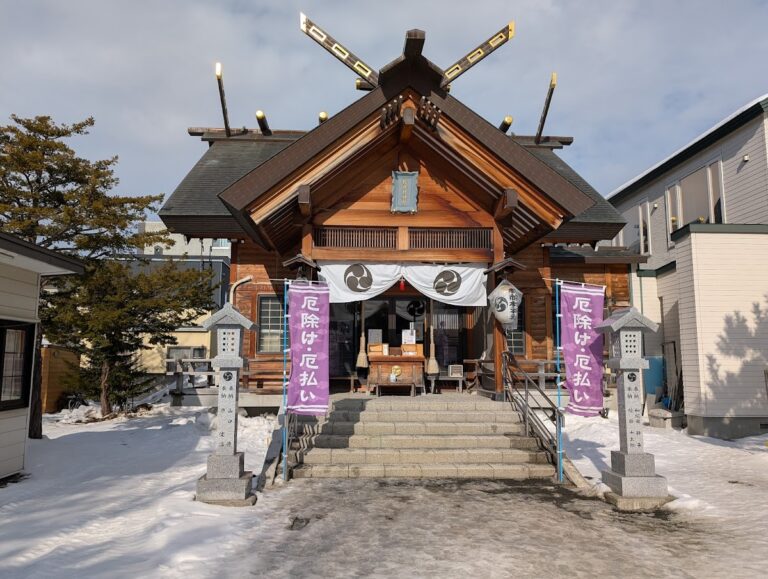
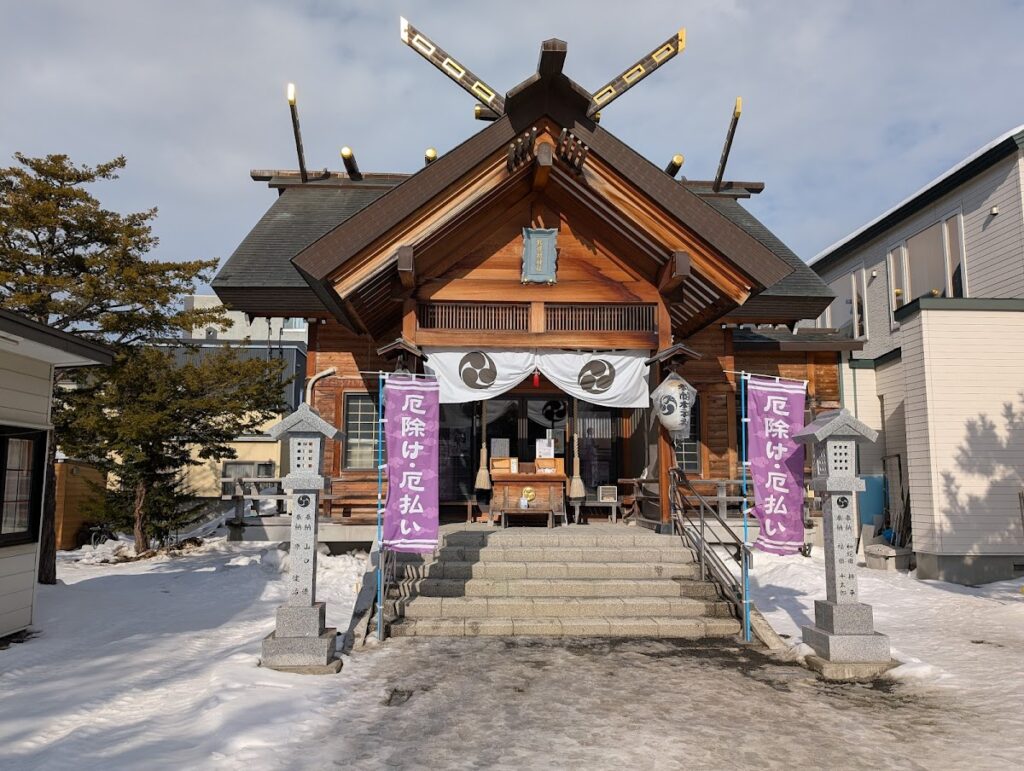
Sapporo Mura Shrine, despite being located in a residential area, maintains a tranquil atmosphere. The shrine building is constructed in a traditional wooden shrine architectural style, suited to Hokkaido’s climate.
Within the grounds, a well-maintained approach and a purification fountain are provided, allowing worshippers to offer their prayers in peace. The trees on the grounds display beautiful scenery throughout the seasons, allowing visitors to enjoy the changing beauty of spring’s fresh greenery, summer’s deep green, autumn’s vibrant foliage, and winter’s snowscapes.
Shrine Office and Offerings
At the shrine office, you can receive offerings such as Goshuin (shrine stamps), amulets, and talismans. Unusually for a shrine in Hokkaido, Sapporo Mura Shrine operates an official X (formerly Twitter) account (@sapporomura161), actively sharing information about annual events and amulets/talismans.
Goshuin (temple/shrine stamps) are popular as souvenirs of visits and are given out with careful calligraphy. Various types of amulets are available, including those for traffic safety, family safety, and academic success.
Annual Events and Grand Festival
Sapporo Mura Shrine holds various Shinto rituals throughout the year.
Main Annual Events
New Year’s Day Festival (January 1st)
This is a Shinto ritual to pray for happiness in the new year and safety throughout the year. It is bustling with many first shrine visits of the year.
Setsubun Festival (around February 3rd)
This is a ritual where beans are scattered to ward off evil and invite good fortune.
Grand Festival (September)
This is the most important festival of Sapporo Mura Shrine, featuring a portable shrine procession and Kagura (sacred dance) performances, attracting people from the local community. As a shrine under the jurisdiction of the Sapporo Branch of the Hokkaido Shrine Association, it plays a part in the local shrine network.
Shichi-Go-San Ceremony (November)
A visit to the shrine is held to celebrate the growth of children and pray for their healthy development.
Great Purification Ceremony (June & December)
This is a Shinto ritual to purify and cleanse away the sins and impurities accumulated over the past six months.
For details and dates of these events, please check the shrine’s official X account or call (011-741-7789).
About Prayers
Sapporo Village Shrine accepts various prayers.
Main Types of Prayers
- Family Safety: Prayers for the health of the family and peace in the home
- Business Prosperity: Prayers for the development and success of the business
- Traffic Safety: Prayers for safe driving of cars and motorcycles
- Exorcism: Prayers to ward off misfortune during the unlucky year
- Prayers for Success in Exams: Prayers for success in exams and qualification tests
- Prayers for Safe Childbirth: Prayers for the health of the pregnant woman and fetus, and for a safe delivery
- First Shrine Visit: Prayers for the healthy growth of the baby
- Shichi-Go-San (7-5-3 Festival): Prayers to express gratitude for the child’s growth and for their future health
Reservations for prayers are accepted by phone (011-741-7789). We recommend making a reservation in advance before visiting.
Access Information
Location
Address: 3-1, Kita 16-jo Higashi 14-chome, Higashi-ku, Sapporo, Hokkaido 065-0016
Phone: 011-741-7789
Access by Public Transportation
Using the Toho Subway Line
Get off at “Kanjodori Higashi Station” on the Toho Subway Line, and it’s about a 10-minute walk from Exit 1. Kanjodori Higashi Station is one of the main stations in Higashi-ku, Sapporo, and the route from the station to the shrine is relatively flat.
Using the Bus
Various Chuo Bus and JR Hokkaido Bus routes pass nearby. The nearest bus stops are “Kita 16-jo Higashi 14-chome” or “Kita 15-jo Higashi 14-chome”.
Access by Car
It’s about a 15-20 minute drive from central Sapporo. Access is possible via National Route 275 (Ishikari Kaido) and Kanjodori.
Parking: There is parking space for visitors on the shrine grounds, but the number of spaces is limited. During busy periods such as New Year’s Day and the annual festival, we recommend using public transportation.
Major Facilities in the Surrounding Area
Sapporo Mura Shrine is surrounded by residential areas, as well as commercial facilities and parks. You can enjoy exploring the area before or after your visit.
Sapporo Mura Shrine’s Connection to the Community
As the Local Guardian Deity
For over 120 years since its founding, Sapporo Mura Shrine has served as the local guardian deity, closely intertwined with the lives of the residents. Its parish encompasses the former Sapporo Mura area, now part of Sapporo’s Higashi Ward, and serves as a spiritual pillar for the residents.
During local festivals, neighborhood associations and children’s groups cooperate to carry the portable shrine, strengthening community bonds. Furthermore, through life milestones such as Shichi-Go-San (a traditional rite of passage for children) and Hatsumiyamairi (a first shrine visit for newborns), it fosters intergenerational community connections.
Relationship with the Hokkaido Association of Shrines
Sapporo Mura Shrine is one of the shrines belonging to the Sapporo Branch of the Hokkaido Association of Shrines. The Hokkaido Shrine Association is an organization that oversees shrines throughout Hokkaido, providing support for shrine management, training Shinto priests, and promoting Shinto culture.
The Sapporo branch includes major shrines in Sapporo and the surrounding areas, such as Hokkaido Shrine, Toyohira Shrine, Sapporo Gokoku Shrine, Yahiko Shrine, Shinkotoni Shrine, Teine Shrine, Nishino Shrine, Tobetsu Shrine, Toyosaka Shrine, and Chitose Shrine. Sapporo Village Shrine is also a member, forming a regional shrine network.
Manners and Points for Visiting Shrines
Basic Worship Etiquette
- Bow before passing through the torii gate: As a sign of respect when entering the sacred area, bow before the torii gate.
- Purify yourself at the water basin: Purify your left hand, then your right hand, then receive water in your left hand and rinse your mouth, and finally purify the handle of the ladle.
- Walk along the edge of the path: The center of the path is considered the path of the gods, so walk along the edge. 4. Two Bows, Two Claps, One Bow: Before entering the main hall, bow twice, clap twice, and finally bow once.
Attire for Visiting
While no special attire is required for regular visits, clean and modest clothing is desirable. If receiving a prayer, it is customary to wear slightly more formal attire, such as a suit or dress.
Photography
Photography is generally permitted within the shrine grounds, but it is considered good manners to refrain from taking photos inside the shrine or during religious ceremonies. Please check with the shrine office if you have any questions.
The Charm of Sapporo Village Shrine
A Space Where History Can Be Felt
Sapporo Village Shrine, which has existed since the pioneering era of the Meiji period, is a valuable place where you can feel the history of Hokkaido firsthand. The founding episode involving a name dispute with a Kanpei Taisha (Grand Imperial Shrine) is a fascinating historical episode that tells the story of the relationship between Hokkaido’s development and shrine faith at that time.
Rooted in the Community and Approachable
Unlike large-scale tourist shrines, Sapporo Murajinja Shrine, cherished by residents as the local guardian shrine, boasts a warm and welcoming atmosphere. It’s especially recommended for those seeking a quiet visit or a glimpse into local history.
Information Dissemination via Social Media
Unusually for a shrine in Hokkaido, Sapporo Murajinja Shrine actively disseminates information through its official X account. You can obtain timely information such as annual events, seasonal amulet introductions, and updates on the shrine grounds. This use of modern communication methods is another characteristic of Sapporo Murajinja Shrine.
Relationship with Surrounding Shrines
Many other shrines are located in Sapporo’s Higashi Ward and surrounding areas besides Sapporo Murajinja Shrine.
Sapporo Suwa Shrine is also located in Higashi Ward and is a historical shrine with its current building constructed in 1966. Records show that it once applied for the status of a regional shrine, making it one of the centers of local faith.
Shinkotoni Shrine is located in Kita Ward and has deep ties to the settlement of Tondenhei (frontier soldiers). Nishino Shrine is located in Nishi Ward and is known as a shrine for safe childbirth and matchmaking.
These shrines, along with Sapporo Mura Shrine, are connected through the Sapporo Branch of the Hokkaido Shrine Association and cooperate with each other to support Sapporo’s shrine culture. Those who enjoy visiting shrines may want to visit these shrines together.
Summary
Sapporo Mura Shrine was founded during the Meiji era’s pioneering period and has been revered by local residents as the guardian shrine of Higashi Ward in Sapporo for over 120 years. It enshrines the three pioneering deities: Okunitama-no-kami, Onamuchi-no-kami, and Sukunahikona-no-kami, and continues to watch over the peace and prosperity of the region.
It is located at 3-1, Kita 16-jo Higashi 14-chome, Higashi Ward, Sapporo City, and is accessible on foot from Kanjodori-Higashi Station on the Toho Subway Line. In addition to annual events such as New Year’s visits and grand festivals, it also accepts various prayers and is a popular place for performing rituals at important life milestones.
Sapporo Mura Shrine, while also engaging in modern initiatives such as disseminating information through its official X account, fulfills its role as a traditional shrine. If you wish to experience Hokkaido’s history and culture, seek tranquil worship, or visit your local guardian deity, we highly recommend a visit.
For inquiries regarding worship and prayers, please contact us by phone (011-741-7789) or through our official X account (@sapporomura161). We hope Sapporo Mura Shrine will become a spiritual haven for you, providing peace and strength in your daily life.