
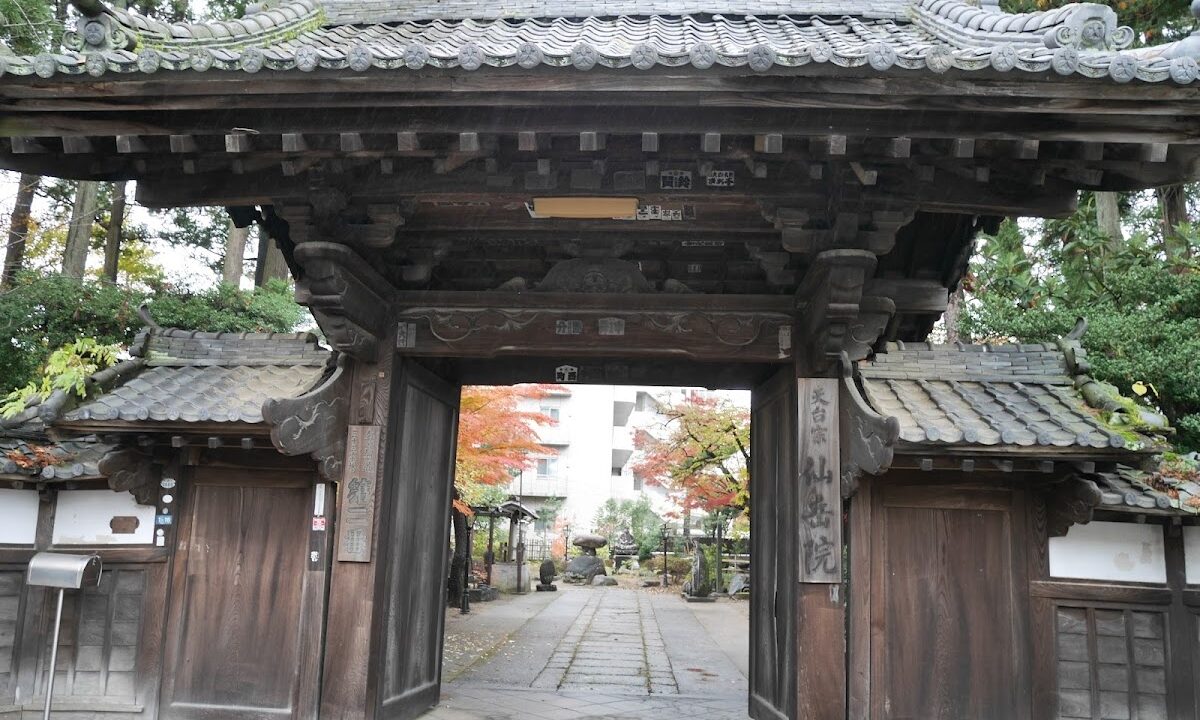
Complete Guide to Sengakuin Temple (Miyagi Prefecture) | History and Goshuin Information of the Temple that Served as the Head Temple of Sendai Toshogu Shrine
Sengakuin Temple, located in Toshogu, Aoba-ku, Sendai City, Miyagi Prefecture, is a historic Tendai sect temple founded in the early Edo period by Date Tadamune, the second lord of the Sendai domain. This guide provides a detailed overview of the temple, which has played an important role as the head temple of Sendai Toshogu Shrine and Hiraizumi Chusonji Temple, from its historical background to modern visitor information.
Basic Information on Sengakuin Temple
Sengakuin Temple is officially called “Chokaizan Kokokuji Sengakuin,” but has been commonly known as “Sengakuin” since the Edo period. It is a Tendai sect temple with Enryakuji Temple on Mount Hiei as its head temple, and is known as a temple of particularly high historical value within Sendai City.
Location and Access
Location: 1-1-16 Higashishogu, Aoba-ku, Sendai City, Miyagi Prefecture
Access from Nearest Station:
- Approximately 5 minutes on foot from JR Senzan Line “Higashishogu Station”
- Approximately 10 minutes on foot from Sendai City Subway Namboku Line “Daihara Station”
- Approximately 12 minutes on foot from JR Senzan Line “Kita-Sendai Station”
Located very close to Sendai Toshogu Shrine, it is a popular destination for visitors who combine a visit to the shrine with a visit to Sengakuin Temple.
History of Sengakuin Temple
Founding History and Date Tadamune
Sengakuin Temple was founded in 1654 (Shoo 3). When Date Tadamune, the second lord of the Sendai Domain, petitioned the Edo Shogunate to establish Toshogu Shrine (a shrine dedicated to Tokugawa Ieyasu) in Sendai, Sengakuin Temple was founded as its betto-ji (a temple managing the shrine).
Date Tadamune was born the second son of Date Masamune, the first lord of the domain, and inherited the family headship in 1636. Unlike his father Masamune’s glorious era, he prioritized stable domain administration, emphasizing relations with the shogunate. The establishment of the Toshogu Shrine and the founding of Sengakuin Temple are thought to have had political significance, demonstrating loyalty to the Tokugawa shogunate.
Relationship with Kōkoku-ji Temple
Sengakuin Temple is positioned as a sub-temple of Kōkoku-ji Temple. A sub-temple refers to a small temple built within or around the grounds of a larger temple. While its official name from the beginning was “Chōkaizan Kōkoku-ji Sengakuin,” throughout the Edo period, it became common to refer to Kōkoku-ji Temple itself as “Sengakuin.”
This confusion of names indicates that Sengakuin played a de facto central role within Kōkoku-ji Temple.
Role as a Betto-ji Temple
Sengakuin Temple served as the Betto-ji Temple of Sendai Toshogu Shrine, responsible for the shrine’s rituals and management. Under the Edo period’s syncretic Shinto-Buddhist beliefs, shrines and temples had close relationships, and many shrines had affiliated temples.
Furthermore, Sengakuin Temple also served as the affiliated temple of Chūson-ji Temple in Hiraizumi, occupying an important position within the network of Tendai Buddhist temples in the Tohoku region.
The Meiji Restoration and the Separation of Shinto and Buddhism
Following the Meiji Restoration’s decree separating Shinto and Buddhism, shrines and temples throughout Japan were separated. While Sengakuin Temple’s official relationship with Sendai Tōshō-gū Shrine was dissolved, its geographical proximity means it maintains a deep historical connection to this day.
Developments Since the Modern Era
Even after the Meiji era, Sengakuin Temple continued to exist as a center of local faith. Having overcome difficulties such as war damage and earthquakes, it has continued to uphold the teachings of the Tendai Buddhist sect to this day.
Architecture and Cultural Properties of Sengakuin Temple
Sengakuin Temple Main Hall
The main hall of Sengakuin Temple is a valuable building protected as a designated cultural property of Sendai City. This temple retains characteristics of Edo period temple architecture and is an important resource for understanding the architectural style of temples in the Sendai domain.
The main hall has a solemn atmosphere typical of Tendai sect temples, and inside are enshrined Buddhist statues and implements, including the principal image. The architectural style and decorations reflect the status of a temple that received patronage from the Date family.
Highlights of the Temple Grounds
Despite being located in an urban area, the grounds of Sengakuin Temple maintain a tranquil atmosphere. As you proceed along the tree-lined approach, the historically significant main hall comes into view.
Stone monuments and lanterns dating back to the Edo period remain on the grounds, allowing you to imagine the atmosphere of the past. In particular, its position relative to Sendai Toshogu Shrine presents a valuable historical landscape that tells the story of the former betto-ji (temple administrator) system.
Goshuin (Temple Seal) Information
Goshuin of Sengakuin Temple
Sengakuin Temple offers Goshuin (temple seals). In most cases, visitors receive a pre-written goshuin (temple stamp), but it is still possible to receive a dignified goshuin befitting a Tendai sect temple.
The goshuin includes the temple name “Sengakuin” along with an ink inscription indicating that it is a Tendai sect temple. Many visitors receive a goshuin as a memento of their visit and as proof of their faith.
Sengakuin as a Pilgrimage Site
Sengakuin is designated as a pilgrimage site for several pilgrimage routes:
- Oku no Hosomichi Michinoku Road: A pilgrimage route visiting places associated with Matsuo Basho’s “Oku no Hosomichi” (The Narrow Road to the Deep North)
- Hokugoku Eighty-Eight Sacred Sites: Eighty-eight sacred sites in the Tohoku region
- Sendai Thirty-Three Kannon Pilgrimage: Kannon pilgrimage sites in the Sendai area
For pilgrims undertaking these pilgrimages, Sengakuin is an important stop, and goshuin corresponding to each pilgrimage route are also available.
Points to Note When Receiving a Goshuin (Temple Stamp)
When receiving a Goshuin, please note the following:
- Visiting Hours: Visit during the temple’s opening hours.
- Preparation of a Goshuincho (Stamp Book): Even if you receive a pre-printed stamp, having a Goshuincho is convenient.
- Preparation of Offering: Generally around 300-500 yen (cash).
- Observance of Manners: Visit quietly and respectfully to the temple staff.
Relationship with Sendai Toshogu Shrine
Adjacent Sendai Toshogu Shrine
Immediately next to Sengakuin Temple stands Sendai Toshogu Shrine, the reason for its founding. Sendai Toshogu Shrine is a prestigious shrine, considered one of the “Three Great Toshogu Shrines of Japan,” following Nikko Toshogu Shrine and Kunozan Toshogu Shrine (there are various theories).
The Charm of a Unified Visit
By visiting both Sengakuin Temple and Sendai Toshogu Shrine, you can experience the syncretism of Shinto and Buddhism during the Edo period. Visiting both temples, which were once a single entity as a head temple, offers a valuable opportunity to deepen your historical understanding.
The contrast between the ornate shrine buildings of Sendai Toshogu Shrine and the tranquil temple space of Sengakuin Temple is also one of the highlights of the visit.
Sengakuin Temple as a Tendai Sect Temple
What is the Tendai Sect?
The Tendai sect is one of the major Buddhist sects in Japan, founded by Saicho (Dengyo Daishi) in the early Heian period. Its head temple is Enryaku-ji Temple on Mount Hiei, and it is characterized by the fusion of four schools: En, Esoteric, Zen, and Kai.
Connection to Enryaku-ji Temple
Sengakuin Temple is a branch temple of Enryaku-ji Temple, which is the head temple of the Tendai sect. This connection indicates that Sengakuin Temple is not merely a local temple, but a temple that plays a central role in one of the major Buddhist sects in Japan.
Tendai Buddhist Temples in Tohoku
The Tohoku region is home to numerous important Tendai Buddhist temples, including Chūson-ji Temple in Hiraizumi. Sengakuin Temple has played a central role in the Tendai Buddhist community in the Sendai area, within a network of these temples.
Information on Nearby Temples
Tendai Buddhist Temples in Aoba Ward, Sendai City
In addition to Sengakuin Temple, several other Tendai Buddhist temples exist in Aoba Ward, Sendai City:
- Enjuin: A Tendai Buddhist temple in Aoba Ward
- Seijōkōin: A temple that attracts local faith
Visiting these temples as well will provide a deeper understanding of the history of Tendai Buddhism in Sendai.
Historical Environment Around Miyacho
The area around Miyacho, where Sengakuin Temple is located, is a region where you can feel the history of Sendai. Historical buildings and sites, including Sendai Tōshōgū Shrine, are scattered throughout, making it an ideal area for strolling.
Miyacho Shopping Street is also nearby, allowing you to enjoy the local atmosphere after your visit.
Points to Note When Visiting
Etiquette for Visiting
When visiting Sengakuin Temple, please follow the etiquette of a Buddhist temple:
- Bow at the Temple Gate: Bow before entering the temple grounds.
- Purification at the Water Basin: If there is a water basin, purify your hands and mouth.
- Worship at the Main Hall: Join your hands in prayer and offer your prayers quietly.
- Bow Upon Exit: Turn around and bow when leaving the temple gate.
Photography
Photography is generally permitted on the temple grounds, but please note the following:
- Permission may be required to photograph inside the main hall.
- Be considerate of other visitors.
- Refrain from using flash photography.
- Remember to show respect to the temple when posting on social media.
Best Time to Visit
Sengakuin Temple is open for visits throughout the year, but each season has its own unique charm:
- Spring: Cherry blossom season, beautiful fresh greenery.
- Summer: The lush green grounds create a cool and refreshing atmosphere.
- Autumn: Autumn leaves adorn the grounds.
- Winter: A tranquil landscape covered in snow.
Sengakuin Temple and the Local Community
As a Center of Local Faith
Since its founding, Sengakuin Temple has functioned as a center of faith for local residents. It is deeply connected to the community through Buddhist services such as funerals and memorial services.
Commitment to Cultural Property Preservation
Sengakuin Temple strives to protect its valuable cultural properties, including the main hall, which is a designated cultural property of Sendai City. These cultural properties play an important role in passing on the history of Sendai to future generations.
Function as a Cemetery and Burial Ground
Sengakuin Temple also has a cemetery, serving as a place for ancestral worship for parishioners and local residents. Its quiet environment, despite being in an urban area, makes it suitable as a place for perpetual memorial services.
Detailed Access Information
Access by Public Transportation
Using the JR Senzan Line:
- Take the JR Senzan Line from Sendai Station and get off at “Toshogu Station” (approx. 5 minutes)
- Approximately 5 minutes on foot from Toshogu Station
Using the Subway:
- Take the Subway Namboku Line from Sendai Station and get off at “Daihara Station” (approx. 10 minutes)
- Approximately 10 minutes on foot from Daihara Station
Access by Car
It takes approximately 10-15 minutes by car from the center of Sendai City. However, it is recommended to check in advance whether there is a dedicated parking lot. Parking may be available at Sendai Toshogu Shrine.
Landmarks in the Surrounding Area
Sendai Toshogu Shrine is the easiest landmark to find. If you head towards Toshogu Shrine, you will find Sengakuin Temple next door.
Buddhist Services and Events at Sengakuin Temple
Annual Events
As a Tendai sect temple, Sengakuin Temple holds various Buddhist services. The main annual events include the following:
- Shōshō-e (January): New Year’s memorial service
- Haru Higan-e (March): Spring equinox memorial service
- Urabon-e (August): Obon memorial service
- Aki Higan-e (September): Autumn equinox memorial service
Requesting Individual Memorial Services
For individual memorial services such as funerals, Buddhist memorial services, and memorial services, please contact the temple directly. They conduct respectful services in accordance with the customs of the Tendai sect.
Summary: The Charm of Sengakuin Temple
Located in Aoba-ku, Sendai City, Miyagi Prefecture, Sengakuin Temple is a historic Tendai sect temple founded by Date Tadamune. Having played an important role as the head temple of Sendai Tōshōgū Shrine, this temple continues to welcome many visitors today.
Sengakuin Temple boasts many attractions, including its main hall, a designated cultural property of Sendai City, its status as a pilgrimage site for multiple sacred sites, and its historical ties to Sendai Toshogu Shrine. Despite its urban location, the temple grounds maintain a tranquil atmosphere, making it an ideal space for peaceful worship.
When visiting Sendai, be sure to stop by Sengakuin Temple and experience the history and faith that has continued since the Edo period. Visiting it in conjunction with Sendai Toshogu Shrine will allow you to gain a deeper understanding of the culture of the syncretic Shinto-Buddhist era.
Whether you’re collecting temple stamps, interested in history, or simply seeking quiet contemplation, Sengakuin Temple is well worth a visit. As a branch temple of Enryaku-ji Temple on Mount Hiei, a Tendai sect temple, and a cultural asset that tells the history of Sendai, Sengakuin Temple will continue to play an important role in the local community.


