

Senzoji Temple (Taito Ward, Tokyo) Complete Guide | History, Access, Cultural Properties, and Visiting Information
About Senzoji Temple
Senzoji Temple is a Shingon sect Chizan school temple located in Kotobuki 2-chome, Taito Ward, Tokyo. Its official name is “Minematsuyama Shanain Senzoji,” and it is known as the 79th temple of the Arakawa Eighty-Eight Sacred Sites.
Despite being located in the heart of Asakusa, it maintains a quiet environment away from the hustle and bustle of the city, and is cherished as a spiritual haven for local residents and tourists alike. Its convenient location, approximately a 2-minute walk from Tawaramachi Station on the Tokyo Metro Ginza Line, is another notable feature, making it easily accessible for visitors.
History of Senzoji Temple
History of Founding and Relocation
Senzoji Temple is said to have been founded in 1572 (Genki 3). Originally located in Hatchobori, Edo, the temple was relocated to its current location in Kotobuki, Taito Ward, in 1613 (Keicho 18). This relocation is thought to be related to urban planning and temple/shrine relocation policies of the early Edo period.
Loss of Historical Documents Due to Disasters
A major obstacle to understanding the detailed history of Senzo-ji Temple is the loss of its buildings and documents due to repeated disasters. From the Edo period to the present day, most of the temple was lost in the following major disasters:
- Great Fire of Meireki (1657): A massive fire that devastated most of Edo
- Great Kanto Earthquake (1923): A devastating earthquake that caused catastrophic damage to Tokyo
- Tokyo Air Raids (1945): Air raids at the end of World War II
Due to these disasters, valuable documents and records detailing the temple’s origins were lost, leaving many unknowns regarding its founding and activities during the Edo period. However, despite its long history of over 450 years, it has continued to uphold the faith of the local community.
Post-War Reconstruction and the Present
After the war, Senzo-ji Temple gradually recovered with the support of local residents. While the current main hall and other buildings were rebuilt after the war, they maintain the traditional Shingon Buddhist temple architectural style while also meeting the needs of modern worshippers.
About the Shingon Chizan School
Senzoji Temple belongs to the Shingon Chizan school. Shingon Buddhism is one of the major schools of Japanese Buddhism, founded in the early Heian period by Kobo Daishi Kukai, and is characterized by its doctrines centered on esoteric Buddhism.
The Chizan school is one of the influential factions within Shingon Buddhism, with its head temple being Chishaku-in in Kyoto. Many Chizan school temples exist in the Kanto region, and Senzo-ji Temple continues this tradition, performing religious activities such as Goma prayers, various memorial services, and sutra copying.
Cultural Properties of Senzo-ji Temple
Wooden Standing Statue of Yakushi Nyorai (Taito Ward Registered Cultural Property)
The most important cultural property of Senzo-ji Temple is the wooden standing statue of Yakushi Nyorai, designated as a Taito Ward Registered Cultural Property. Yakushi Nyorai is revered as the Buddha who presides over healing illnesses and promoting health and longevity, and this statue has been carefully preserved as the principal image of Senzo-ji Temple.
Having survived numerous disasters to this day, this statue is a valuable artifact that tells the history of Senzo-ji Temple and is highly valued from an art historical perspective.
Other Temple Treasures
In addition to the wooden standing statue of Yakushi Nyorai, Senzo-ji Temple also houses Shingon Buddhist ritual implements, scriptures, and items associated with successive chief priests. These are not usually open to the public, but there are opportunities to view them during special ceremonies and events.
Arakawa Eighty-Eight Sacred Sites, Temple No. 79
Senzoji Temple welcomes pilgrims as the 79th temple of the Arakawa Eighty-Eight Sacred Sites. The Arakawa Eighty-Eight Sacred Sites is a pilgrimage route in the Kanto region modeled after the Shikoku Eighty-Eight Sacred Sites, visiting temples in and around Arakawa Ward.
As a pilgrimage site, Senzoji Temple offers sutra copying and Goshuin (temple stamps) to pilgrims, attracting many visitors on their pilgrimage.
Access and Transportation Information
Basic Information
Address: 2-8-15 Kotobuki, Taito-ku, Tokyo 111-0042
Phone Number: 03-3844-1181
FAX: 03-3844-1290
Access by Train
Access to Senzoji Temple is very convenient. Detailed directions from the nearest stations are as follows:
Tokyo Metro Ginza Line “Tawaramachi Station”
- Approximately 2 minutes on foot from Exit 1 (approx. 124m)
- This is the most convenient access method.
Toei Subway Asakusa Line “Asakusa Station”
- Approximately 6 minutes on foot from Exit A4
Tokyo Metro Ginza Line/Toei Subway Asakusa Line “Asakusa Station”
- Approximately 5-8 minutes on foot from each exit
Tsukuba Express “Asakusa Station”
- Approximately 8 minutes on foot from Exit A1
Access by Car
Senzoji Temple does not have its own parking lot. If you are coming by car, please use a nearby coin-operated parking lot. There are several parking lots in the Asakusa area, but congestion is expected on weekends and during tourist seasons, so we recommend using public transportation.
Landmarks in the Area
Senzoji Temple is within walking distance of Senso-ji Temple and is also close to Kappabashi Kitchenware Street. It is located in a quiet residential area after walking along Kokusai-dori Street from Tawaramachi Station.
Visiting Information
Visiting Hours
Normal Visiting Hours: 8:00 AM – 4:30 PM
Anyone can freely enter the temple grounds and pray during the above hours. However, visiting may be restricted during religious services or events, so it is recommended to check in advance.
Visiting Etiquette
The basic visiting etiquette at a Shingon Buddhist temple is as follows:
- Bow at the temple gate before entering the grounds.
- Cleanse your hands and mouth at the water basin.
- Clasp your hands together and bow in front of the main hall.
- Place your offering in the offering box.
- If there is a bell, strike it quietly once.
- Clasp your hands together and chant “Namu Daishi Henjo Kongo” (in the case of Shingon Buddhism).
- Bow and leave.
About Goshuin (Temple Seals)
Senzo-ji Temple offers Goshuin. You can also receive a Goshuin as the 79th temple of the Arakawa Eighty-Eight Sacred Sites.
When requesting a Goshuin (temple stamp), please speak to the temple office during visiting hours. Even if you do not have a Goshuincho (stamp book), you may be able to receive a pre-written Goshuin.
Goshuin Reception Hours: Same as visiting hours, 8:00 AM to 4:30 PM (approximate)
*Please note that due to the priest’s schedule or religious services, Goshuin may not be available. If you wish to be sure to receive a Goshuin, we recommend calling ahead to confirm.
Main Activities at Senzo-ji Temple
Goma Prayer Ceremony
We regularly perform Goma prayer ceremonies, an important ritual of the Shingon sect. Goma prayer is a unique esoteric Buddhist practice where goma wood is burned on a goma altar and prayers are offered to various deities, including Fudo Myoo. You can receive prayers for various wishes, such as family safety, business prosperity, recovery from illness, and protection from evil.
Various Memorial Services
Senzoji Temple offers various memorial services, including ancestral memorial services, memorial services for stillborn babies, and memorial services for pets. We also accept requests for perpetual memorial services, catering to those without successors or those concerned about future memorial services.
Perpetual Memorial Service “Zuiun” Joint Burial Grave
Senzoji Temple has a joint perpetual memorial grave named “Zuiun.” The small joint burial plot adjacent to the main hall is meticulously maintained and features a tranquil atmosphere, far removed from the hustle and bustle of the city.
The perpetual memorial service fee includes management fees, and there are no annual maintenance charges, allowing you to entrust your loved ones’ memorials with peace of mind while minimizing financial burden. For details regarding perpetual memorial services, please inquire at the temple office.
Sutra Copying and Buddhist Practice Experience
Senzoji Temple also offers opportunities for sutra copying. Sutra copying is a valuable experience for calming the mind and connecting with Buddhist teachings, and is easily accessible even for beginners. For information on the schedule and participation methods for the sutra copying sessions, please inquire at the temple office or check the official website.
In addition, programs that allow you to experience Buddhist teachings in a modern form, such as meditation and yoga, are held irregularly.
Annual Events
At Senzo-ji Temple, various Buddhist services and events are held throughout the year in accordance with the traditions of the Shingon sect:
- First three days of the New Year: First shrine visit of the year, New Year’s prayers
- Setsubun: Setsubun ceremony, bean scattering
- Spring and Autumn Equinox: Equinox memorial service
- Obon: Obon festival
- Kobo Daishi Memorial Service: 21st of every month (Kobo Daishi’s memorial day)
Some of these events are open not only to temple parishioners but also to the general public. Please inquire in advance if you are interested.
Guide to Senzo-ji Temple Grounds
Main Hall
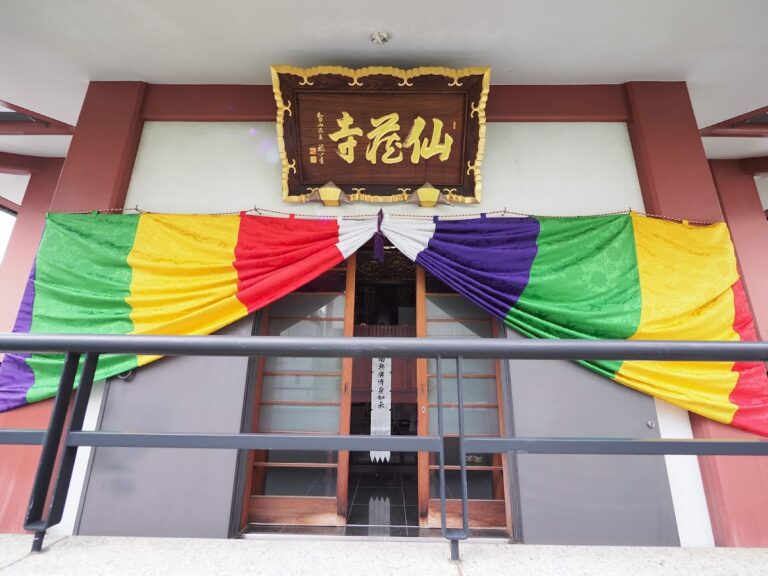
The main hall, the heart of Senzo-ji Temple, houses the principal image, a wooden standing statue of Yakushi Nyorai (Medicine Buddha). Rebuilt after the war, the main hall retains the traditional style of Shingon Buddhist temples while also incorporating modern functionality.
Daily services are held in the main hall, as well as ceremonies such as Buddhist services and Goma prayers. Visitors can offer their prayers in front of the main hall.
Atmosphere of the Temple Grounds
Although Senzo-ji Temple is located in a residential area in the heart of Tokyo, stepping onto the temple grounds reveals a tranquil space. The well-maintained grounds are clean and serene, and seasonal flowers and trees delight visitors.
Despite its small size, the temple grounds have a calm atmosphere and are cherished by local residents as a place to escape the hustle and bustle of everyday life and find peace of mind.
Attractions Around Senzo-ji Temple
Since Senzo-ji Temple is located in the heart of Asakusa, a popular tourist destination, exploring the surrounding area before or after your visit is highly recommended. ### Senso-ji Temple
A representative Tokyo tourist attraction within walking distance. It boasts numerous sights, including the Kaminarimon Gate, Nakamise Shopping Street, and the main hall.
Kappabashi Kitchenware Street
A wholesale district lined with specialty shops selling cooking utensils, tableware, and kitchen equipment. Enjoyable for everyone from professional chefs to the general public.
Asakusa Engei Hall
A long-established entertainment venue where you can enjoy rakugo (traditional Japanese storytelling) and manzai (comedy duo) performances. Experience traditional Japanese performing arts.
Sumida River and Sumida Park
Known as a famous cherry blossom viewing spot in spring, strolls along the Sumida River can be enjoyed throughout the four seasons.
Inquiries about Senzo-ji Temple
Inquiries regarding Senzo-ji Temple are accepted through the following methods:
Telephone: 03-3844-1181 (Reception hours: 8:00 AM – 4:30 PM)
FAX: 03-3844-1290
Address: 2-8-15 Kotobuki, Taito-ku, Tokyo 111-0042
Please feel free to contact us with any questions regarding memorial services, perpetual memorial services, Goshuin (temple stamps), and visits. We also post the latest information on Senzo-ji Temple’s official website, so please check there as well.
Summary
Senzoji Temple is a Shingon-shu Chizan-ha temple with a history of over 450 years, having overcome numerous disasters and continuing to protect the local faith to this day. It houses a wooden standing statue of Yakushi Nyorai (Medicine Buddha), a Taito-ku registered cultural property, and is also known as the 79th temple of the Arakawa Eighty-Eight Sacred Sites.
Located just a two-minute walk from Tawaramachi Station, Senzo-ji Temple maintains a quiet and peaceful atmosphere, serving as a spiritual haven for visitors. It actively engages in activities that meet modern needs, such as Goma prayers, various memorial services, perpetual memorial services, and sutra copying, making it easily accessible not only to parishioners but also to the general public.
When sightseeing in Asakusa, be sure to visit Senzo-ji Temple. You’ll find a peaceful space away from the hustle and bustle of the city, offering a moment of calm and tranquility.
-768x384.png)