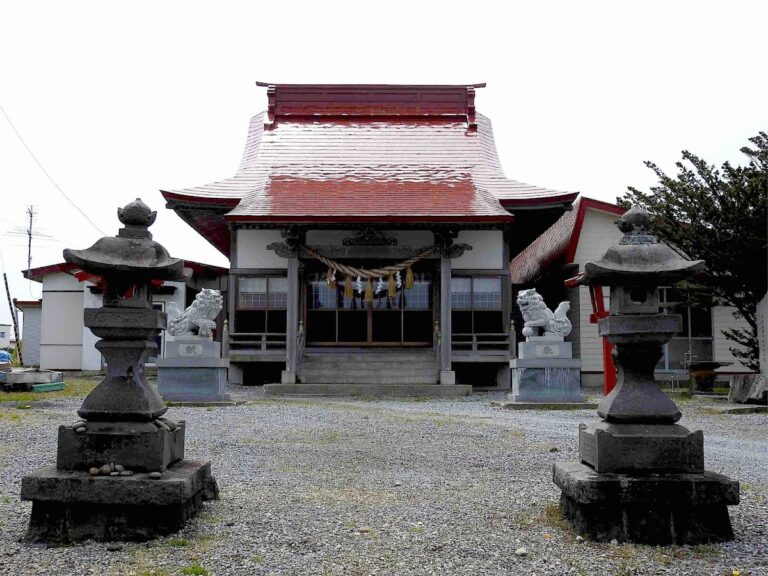
Complete Guide to Shikabe Inari Shrine: History, Blessings, Access, and Worship Methods Explained in Detail
Shikabe Inari Shrine, located in Shikabe-cho, Kayabe-gun, Hokkaido, is a historic shrine that has long been cherished by the local people. This article provides a detailed explanation of everything you need to know before visiting Shikabe Inari Shrine, including its history, origins, blessings, worship methods, and access information.
What is Shikabe Inari Shrine?
Shikabe Inari Shrine is located in Shikabe-cho, in the southeastern part of the Oshima Peninsula in Hokkaido. As an Inari shrine, it is known for its blessings of business prosperity, abundant harvests, and family safety, attracting many worshippers not only from the local area but also from neighboring towns.
Shikabe-cho is known as a fishing and hot spring town facing Funka Bay, and Shikabe Inari Shrine has played an important role as a spiritual center for this region.
Characteristics of Inari Shrines
There are said to be over 30,000 Inari shrines throughout Japan, making them the most numerous type of shrine in the country. The main deity enshrined here is Ukanomitama-no-kami, worshipped as the god who presides over grains and food. Characteristics of Inari shrines include:
- Vermilion Torii Gate: The symbolic vermilion torii gate of Inari shrines.
- Fox Statues: Stone or ceramic statues of foxes, considered messengers of the gods.
- Benefits of Business Prosperity: Worshipped as a guardian deity of commerce.
- Abundant Harvest: Prayers for bountiful harvests in agriculture and fishing.
History and Origins of Shikabe Inari Shrine
Background of Founding
The founding period of Shikabe Inari Shrine is deeply intertwined with the history of regional development. Many shrines in Hokkaido were established with the full-scale development of the area from the Meiji era onward. Shikabe Town also underwent full-scale development from the late Edo period to the Meiji era, and it is believed that the shrine was founded as settlers brought their local beliefs with them.
Inari worship was an important religious practice for people engaged in agriculture and fishing, who prayed for bountiful harvests and abundant catches. As Shikabe Town developed as a fishing town, Shikabe Inari Shrine became a guardian deity of the community, attracting the faith of its people.
The Development of Shikabe Town and the Shrine
Shikabe Town has long been known as a place where hot springs gush forth, and is also blessed with the rich fishing grounds of Funka Bay. In particular, it is rich in marine products such as kelp and scallops, and has developed around fishing.
Shikabe Inari Shrine has grown alongside this industrial development of the region, attracting the faith of those involved in fishing and shop owners. People praying for bountiful catches and business prosperity visit the shrine, and it has functioned as a central presence in the local community.
The Benefits of Shikabe Inari Shrine
In addition to the benefits common to Inari shrines in general, Shikabe Inari Shrine is believed to offer benefits that reflect the unique characteristics of the region.
Main Benefits
Business Prosperity
This is a representative benefit of Inari shrines. Shop owners and business managers pray for the development of their businesses. Shop owners in Shikabe Town also regularly visit the shrine to pray for the prosperity of their businesses.
Prayers for Abundant Harvests and Bountiful Catch
This benefit is for praying for bountiful harvests and abundant catches in agriculture and fishing. Since Shikabe Town is a region where fishing is thriving, it is common to see people involved in fishing praying for a good catch.
Family Safety
This benefit is for protecting the health and safety of the family. Local residents visit the shrine to pray for the happiness of their families.
Good Fortune and Prosperity
This benefit is for opening up good fortune and inviting blessings. Many people visit the shrine when they are at a turning point in their lives or starting something new.
Traffic Safety
In modern times, the benefit of traffic safety is also emphasized, and car blessings are sometimes performed.
Divine Virtues of Inari Shrine
The principal deity of Inari shrines, Ukanomitama-no-kami, is considered the god who presides over all aspects of food, as “uka” means “food.” Therefore, this deity is widely worshipped as a god who brings stability and prosperity to all aspects of life.
Highlights of the Shrine Grounds
There are several points of interest within the grounds of Shikabe Inari Shrine that visitors should pay attention to.
Main Hall
The main hall, the heart of the shrine, is the most sacred place where the gods are enshrined. Visitors clasp their hands together in the worship hall and offer prayers to the gods enshrined in the main hall.
Torii Gate
A vermilion torii gate, characteristic of Inari shrines, stands within the grounds. The torii gate marks the entrance to the sacred area, and passing through it signifies entering the sacred realm from the secular world.
Fox Statues
At Inari shrines, foxes are considered messengers of the gods. Fox statues are placed throughout the grounds, watching over visitors. Foxes are not considered Inari gods themselves, but rather important beings that serve the gods.
Water Basin
There is a water basin for purifying oneself before worship. It is important to purify your hands and mouth according to the correct procedure before worshipping.
Worship Methods and Manners
When visiting a shrine, it is important to know the correct worship methods and manners.
Basic Procedure for Worship
- Passing Through the Torii Gate
- Bow before passing through the torii gate.
- Walk along the edge of the path, as the center is considered the path of the gods.
- Purifying at the Water Basin
- Take the ladle with your right hand and purify your left hand.
- Switch the ladle to your left hand and purify your right hand.
- Switch the ladle back to your right hand, receive water in your left hand, and rinse your mouth.
- Finally, hold the ladle upright and purify the handle.
- Worship at the Main Hall
- Place your offering in the offering box.
- Ring the bell if there is one.
- Worship using the two bows, two claps, and one bow method.
- Bow deeply twice.
- Clap your hands twice.
- Bring your hands together and pray.
- Finally, bow deeply once.
Points to Note When Worshiping
- Attire: Please wear clean clothing when visiting the shrine. It is advisable to avoid overly casual attire.
- Photography: Photography is generally permitted within the shrine grounds, but please note that there are areas where photography is prohibited, such as inside the main hall.
- Quietness: Shrines are sacred places. Please refrain from speaking loudly or making noise.
- Pets: Pet policies vary by shrine, so it is recommended to check in advance.
Annual Events and Festivals
Shikabe Inari Shrine holds various festivals and events throughout the year.
New Year’s Visit
From January 1st to 3rd, many worshippers visit for their first shrine visit of the year. This is an important event to pray for safety and prosperity throughout the year.
Hatsuumasai Festival
The most important festival at Inari shrines is the Hatsuumasai Festival. Held on the first Day of the Horse in February, it is considered the day when Inari-sama descended upon Mount Inari. It is bustling with worshippers praying for business prosperity and a bountiful harvest. ### Annual Grand Festival
The annual grand festival, the most important annual event at the shrine, involves the procession of portable shrines and the gathering of local people to perform religious ceremonies. The timing varies depending on the shrine, but it is generally held from spring to autumn.
Other Events
- Setsubun Festival: Bean-throwing and other events may be held around February 3rd.
- Shichi-Go-San: Shichi-Go-San ceremonies celebrating children’s growth are held in November.
- Great Purification Ceremony: A Shinto ritual to purify oneself of the impurities accumulated over the past six months is held in June and December.
Access Information
Here’s how to access Shikabe Inari Shrine.
Location
Located in Shikabe-cho, Kayabe-gun, Hokkaido. For the specific address and detailed location, it is recommended to check the latest information before visiting.
Access by Car
From Hakodate
- Approximately 1 hour via National Routes 5 and 278
- Approximately 50 km from Hakodate city center
From Sapporo
- Approximately 3 hours 30 minutes via the Hokkaido Expressway and National Route 5
- Approximately 250 km
Parking
Parking is usually available on the temple grounds or nearby, but it can get crowded during festivals.
Access by Public Transportation
Using JR
- Transfer to a bus from JR Hakodate Main Line “Hakodate Station”
- Approximately 1 hour 30 minutes by Hakodate Bus bound for Shikabe
Using Bus
Hakodate Bus operates from Hakodate city to Shikabe town. It is accessible on foot from bus stops within Shikabe town.
Nearby Tourist Attractions
The following tourist attractions are located in and around Shikabe town:
Shikabe Onsen
Shikabe town is also known as a hot spring town. There are several day-trip bathing facilities and hot spring inns, allowing you to enjoy hot springs in conjunction with your visit to the shrine.
Shikabe Geyser Park Roadside Station
This park features a geyser that erupts approximately every 12 minutes. Footbaths are also available.
Onuma Quasi-National Park
A scenic spot located about 40 minutes by car from Shikabe Town. It boasts a beautiful lake with views of Mount Komagatake.
Hakodate City Sightseeing
Sightseeing spots in Hakodate City, such as the night view from Mount Hakodate, Goryokaku Fort, and the Red Brick Warehouses, are relatively close by.
About Shikabe Town
Let’s take a closer look at Shikabe Town, where Shikabe Inari Shrine is located.
Overview of Shikabe Town
Shikabe Town is a small town belonging to Kayabe District within the jurisdiction of the Oshima General Subprefectural Bureau of Hokkaido, with a population of approximately 3,500 (as of 2024). This area is rich in nature, facing Funka Bay (Uchiura Bay) and with Mount Komagatake in the background.
Local Products
Kelp
Shikabe Town is famous as a kelp producing area, and is particularly known for the high quality of its Makonbu (true kelp).
Scallops
Scallops farmed in Funka Bay are highly regarded for their large size and excellent taste.
Cod Roe
Cod roe, processed from the ovaries of Alaska pollock, is also a local specialty.
Hot Springs
Shikabe Town has several hot spring sources, affectionately known as “Shikabe Onsen.” It is famous for its geysers, where you can feel the power of nature.
History and Culture of Inari Faith
Understanding the background of Inari faith is important for understanding Shikabe Inari Shrine.
Origin of Inari Faith
Inari faith is a faith with Fushimi Inari Taisha in Kyoto as its head shrine. Fushimi Inari Taisha Shrine is said to have been founded in 711 during the Nara period, and has a history of over 1300 years.
Originally worshipped as a god of agriculture, its character as a god of commerce also grew stronger over time, and during the Edo period, it attracted the fervent devotion of merchants.
Foxes and Inari Faith
There are various theories as to why foxes are considered divine messengers at Inari shrines, but one reason is the deep connection between rice cultivation and foxes. Because foxes prey on mice that eat grain, they were considered important protectors of rice cultivation.
Another theory suggests that the Japanese word for fox, “kitsune,” is related to “kitsune” (coming and sleeping), meaning “food will come.”
Inari Faith in Hokkaido
In Hokkaido, people who migrated from Honshu during the Meiji era brought their homeland’s beliefs with them. Those engaged in commerce and fishing, in particular, cherished Inari faith, and Inari shrines were built throughout the region.
Shikabe Inari Shrine has also developed as a center of local faith within this historical context.
Mindset for Worship
Shrine visits are not merely sightseeing; they are an act of showing respect and gratitude to the gods.
A Heart of Gratitude
When visiting a shrine, it’s important not only to make requests but also to have a sense of gratitude for your daily life. Express your gratitude to the gods for things you might take for granted, such as “being able to get through today safely,” “being healthy,” and “having a healthy family.”
How to Make a Wish
When making a wish, it’s considered best to make it specific and positive. Furthermore, it’s desirable to make a wish that is based on your own efforts.
For example, instead of just saying, “Please let me pass my exam,” it’s important to have a mindset like, “I will do my best, so please lend me your strength.”
Continuous Worship
Your relationship with a shrine deepens not with a one-time visit, but with continuous worship. By visiting the shrine regularly, not just for New Year’s, you can feel a connection to the community and the gods.
About Goshuin (Shrine/Temple Seals)
Collecting Goshuin has become popular in recent years.
What is a Goshuin?
A Goshuin is a seal given as proof of visiting a shrine or temple. The name of the shrine and the date of visit are written in ink, and a red seal is stamped on it.
Manners for Receiving a Goshuin
- Pray First: Since a Goshuin is proof of worship, always pray before receiving one.
- Prepare a Goshuin Book: It is desirable to prepare a dedicated Goshuin book.
- Offering Fee: When receiving a Goshuin, an offering fee (approximately 300-500 yen) is required.
- Reception Hours: Reception hours vary depending on the shrine, so please check in advance.
- Consideration During Crowds: During crowded times such as festivals, the issuance of Goshuin may be suspended.
It is recommended to check the availability and details of Goshuin issuance at Shikabe Inari Shrine before visiting.
Summary: The Charm of Shikabe Inari Shrine
Shikabe Inari Shrine is a community-based shrine located in Shikabe Town, Hokkaido. It is beloved by local residents and worshippers alike, offering blessings for business prosperity, abundant harvests, and family safety.
While inheriting the tradition of Inari worship, a unique faith has developed that reflects the characteristics of Shikabe Town, a town known for its fishing and hot springs. When visiting, it is important to observe proper etiquette and manners, and to approach the deities with gratitude.
When visiting Shikabe Town, be sure to visit Shikabe Inari Shrine and experience the local history and culture. Combined with sightseeing such as hot springs, seafood, and geysers, you can enjoy a fulfilling time.
Shrines are the heart of local communities, places where history and tradition breathe life into. We hope that your visit to Shikabe Inari Shrine will allow you to rediscover traditional Japanese culture and the charm of the region.