Complete Guide to Shirahata Inari Shrine (Nihonbashi Honcho, Chuo-ku, Tokyo) | History, Deities, and Access Information
Shirahata Inari Shrine (also known as Shirahata Inari Jinja or Shirahata Inari Jinja), located in Nihonbashi Honcho, Chuo-ku, Tokyo, is a historically significant Inari shrine with roots in the legend of Minamoto no Yoshiie. Nestled quietly in a corner of the business district, this shrine has long been revered by local residents as the guardian deity of the area formerly known as Fukuda Village. This article comprehensively introduces all the information you need to know before visiting Shirahata Inari Shrine, including its detailed history, enshrined deities, grounds, and access methods.
Overview of Shirahata Inari Shrine
Shirahata Inari Shrine is an Inari shrine located at 4-5-16 Nihonbashi Honcho, Chuo-ku, Tokyo. Under the modern shrine ranking system, it is classified as an unranked shrine and is currently managed as a subsidiary shrine of Kanda Shrine (Kanda Myojin). Despite its location in the heart of the city’s business district, the well-maintained grounds maintain a tranquil atmosphere, providing a peaceful space for visitors.
Basic Information
- Location: 4-5-16 Nihonbashi Honcho, Chuo-ku, Tokyo
- Deity Enshrined: Ukanomitama-no-kami
- Shrine Rank: Unranked Shrine
- Management: Concurrently managed by Kanda Shrine
- Nearest Station: Mitsukoshimae Station (Tokyo Metro Ginza Line/Hanzomon Line), Shin-Nihonbashi Station (JR Sobu Rapid Line)
- Alternate Name: Shirahata Inari Shrine
History and Origins of Shirahata Inari Shrine
Origin of Founding and the Legend of Minamoto no Yoshiie
There are various theories regarding the founding date of Shirahata Inari Shrine, and the exact date is unknown. However, according to the “Shinpen Edo Shi” (New Compilation of Edo History), there is a record that the shrine was established in 711 AD (Wado 4), suggesting that its origins may date back to the early Nara period.
The most widely known origin story is a legend related to Minamoto no Yoshiie (1039-1106), a military commander of the late Heian period. It is said that the shrine originated when Minamoto no Yoshiie raised a white flag in this area and prayed for victory before heading to conquer Oshu (the Later Three Years’ War). This white flag legend became the origin of the shrine’s name, and since then it has been worshipped as “Shirahata Inari Shrine” or “Shirahata Inari Shrine.”
As the Guardian Shrine of Fukuda Village
Before the Edo period, the area from present-day Nihonbashi Honcho 3-chome to Gincho was called “Fukuda Village.” Shirahata Inari Shrine served as the guardian shrine of Fukuda Village, becoming a spiritual pillar for the local residents. As the guardian deity of the village, prayers were offered for abundant harvests, business prosperity, and family safety, and the shrine played a central role in the local community.
Records from the Meiji Era
According to the “Tokyo Metropolitan Shrine Directory” and the “History of Nihonbashi Ward,” records indicate that the shrine was located at “18, Hon-gincho 1-chome, Nihonbashi Ward” during the Meiji era. In January 1873 (Meiji 6), its official duties were established, and it was formally designated as a shrine concurrently serving Kanda Shrine. Records from that time refer to it as “Ukanomitama-no-kami, formerly Shirahata Inari Shrine,” indicating that ancient beliefs were being passed down.
Relocation after the Great Kanto Earthquake
The Great Kanto Earthquake of 1923 (Taisho 12) was a major disaster that drastically altered the landscape of Tokyo. Shirahata Inari Shrine was also damaged, and with the post-earthquake reconstruction, it was relocated to “Shirahata Bridge, government-owned land.” This relocation meant the shrine temporarily continued its worship in a new location.
Relocation to Current Location
In 1974 (Showa 49), due to the construction of the Tohoku and Joetsu Shinkansen lines, Shirahata Inari Shrine was relocated to its current location at 4-5-16 Nihonbashi Honcho. Some sources state the relocation occurred in 1976 (Showa 51), but in any case, it was certainly a move related to the major project of the time: the construction of the Shinkansen.
This relocation allowed the shrine to enter a new era, coexisting with modern urban development. Despite its location in a business district, the tranquil grounds convey the faith of the past.
About the Enshrined Deity
The enshrined deity of Shirahata Inari Shrine is Ukanomitama-no-kami.
About Ukanomitama-no-kami
Ukanomitama-no-kami is a god of grain and food appearing in Japanese mythology, and is widely worshipped throughout Japan as the principal deity of Inari shrines. In the Kojiki, he is described as the child of Susanoo-no-Mikoto and Kamu-Oichihime.
“Uka” is an archaic word meaning grain or food, and in Japanese society, which was based on agriculture, he was revered as a god who brought abundant harvests. From the Edo period onward, with the development of commerce, his worship also spread as a god of business prosperity, and he was a particularly important object of worship in Nihonbashi, a merchant town.
Divine Virtues
The following are some of the divine virtues you can expect from visiting Shirahata Inari Shrine:
- Business Prosperity: Located in Nihonbashi, a commercial center, many visitors come to pray for business prosperity.
- Abundant Harvest: The original divine virtue of Inari is the abundance of agriculture and food.
- Family Safety: As the guardian shrine of the region, it protects the safety and happiness of families.
- Good Fortune and Prosperity: Inspired by the legend of Minamoto no Yoshiie’s prayer for victory in battle, it brings good fortune and luck in competitions.
- Industrial Development: Located in a modern business district, it is a popular destination for prayers for corporate development and business success.
Shrine Grounds
Torii Gate and Approach
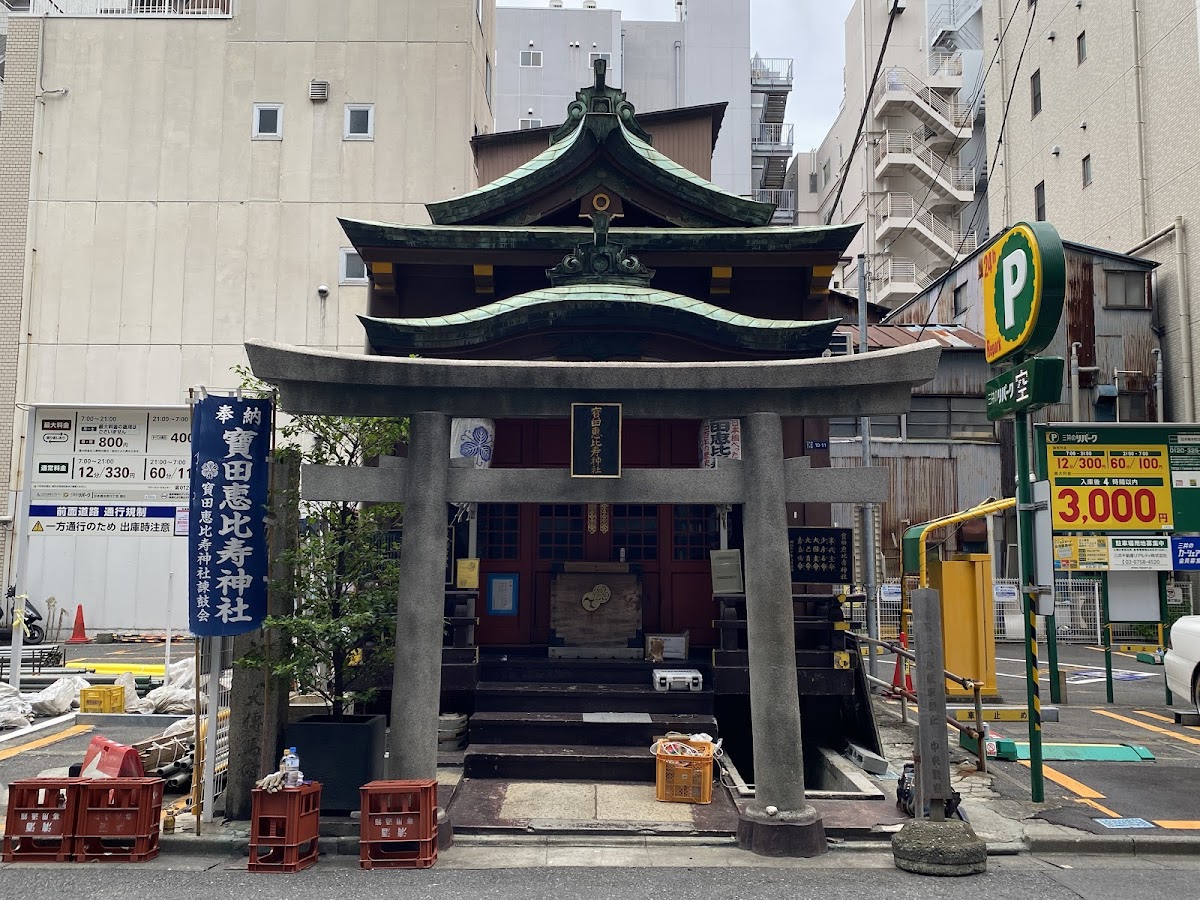
The grounds of Shirahata Inari Shrine are meticulously maintained despite being nestled amongst the buildings of central Tokyo. A vermilion torii gate stands at the entrance, welcoming visitors. Passing through the torii gate, a short path leads to the shrine building. The grounds are not particularly large, but they are meticulously maintained, creating a clean and pleasant atmosphere.
Shrine Building
The current shrine building was constructed in 1974 during the relocation of the deity. While compact, it retains the traditional style of shrine architecture. The vermilion-painted building exudes the atmosphere characteristic of an Inari shrine, creating a sacred space amidst the hustle and bustle of the city.
A donation box is placed in front of the shrine, allowing worshippers to pray according to standard etiquette. The deity is enshrined inside the building, but the doors are usually closed.
Water Basin
A water basin is also provided on the grounds, allowing worshippers to purify themselves before praying. The water basin is also kept clean, demonstrating consideration for worshippers.
Guardian Dogs and Stone Monument
Statues of foxes, messengers of Inari shrines, are placed on the grounds. Furthermore, stone monuments and markers are erected in the back of the shrine grounds, serving as valuable historical materials that convey the history and origins of the shrine. These stone structures convey to the present day the feelings of the local people who have preserved their faith throughout its long history.
Seasonal Flowers
Various flowers bloom in the shrine grounds throughout the seasons, delighting the eyes of visitors. In particular, peonies bloom beautifully in spring, making it a beloved oasis in the city. The maintenance of these plants is carefully carried out by local residents and parishioners.
How to Worship and Manners
Basic Worship Etiquette
Worship at Shirahata Inari Shrine follows the general etiquette for visiting shrines:
- Bow at the Torii Gate: Bow before passing through the torii gate to show respect for entering the sacred area.
- Watering Rituals: Cleanse your left hand, then your right hand, then your mouth at the water basin, and finally wash the handle of the ladle.
- Walking the Path: The center of the path is considered the path of the gods, so it is preferable to walk along the edges.
- Bow: Offer your donation, ring the bell if present, and bow using the two bows, two claps, and one bow ritual.
- Bow Upon Exit: When leaving the shrine grounds, turn around and bow after exiting the torii gate.
Visiting Hours
While Shirahata Inari Shrine is generally open for worship 24 hours a day, it is recommended to refrain from visiting at night out of consideration for others. Visiting during daylight hours is the most common practice.
Regarding Goshuin (Shrine Seals)
Since Shirahata Inari Shrine is a subsidiary shrine of Kanda Shrine, there are no resident priests. While Kanda Shrine (Kanda Myojin) may handle Goshuin, it is recommended to confirm in advance.
Access Methods
Access by Train
Shirahata Inari Shrine is easily accessible by public transportation:
Nearest Stations:
- Approximately 3 minutes on foot from Exit A1 of Mitsukoshimae Station (Tokyo Metro Ginza Line/Hanzomon Line)
- Approximately 5 minutes on foot from Kanda Station (Tokyo Metro Ginza Line)
- Approximately 2 minutes on foot from Exit 2 of Shin-Nihonbashi Station (JR Sobu Rapid Line)
- Approximately 6 minutes on foot from the South Exit of Kanda Station (JR Lines)
Shin-Nihonbashi Station is the closest, and the shrine is located right outside the station. It’s also close to Mitsukoshimae Station, making it convenient to visit after shopping at Nihonbashi Mitsukoshi Main Store.
Access on Foot
It’s also possible to incorporate it into a walking tour of the Nihonbashi area. It’s within walking distance of commercial facilities such as Nihonbashi, Mitsukoshi Main Store, and COREDO Muromachi, making it a convenient stop during business or sightseeing.
Location Details
Address: 4-5-16 Nihonbashi Honcho, Chuo-ku, Tokyo 103-0021
The surrounding area is a business district lined with high-rise buildings, but the shrine’s torii gate serves as a landmark. It’s located near the Nihonbashi Honcho intersection and is relatively easy to find.
Nearby Attractions
Shrines in the Nihonbashi Area
Near Shirahata Inari Shrine, there are several other historical shrines:
- Fukutoku Shrine (Mebuki Inari): An Inari shrine located in Nihonbashi Muromachi, also known as the birthplace of lotteries.
- Ryosha Inari Shrine: A small Inari shrine located in Nihonbashi Honcho.
- Kanda Shrine (Kanda Myojin): The main shrine of Shirahata Inari Shrine, a grand shrine known as the guardian shrine of Edo.
Commercial Facilities and Tourist Spots
- Nihonbashi Mitsukoshi Main Store: Japan’s oldest department store, the main building, a nationally important cultural property, is a must-see.
- COREDO Muromachi: A modern commercial facility with a wide variety of restaurants and shops.
- Nihonbashi: The starting point of Japan’s road network, dating back to the Edo period.
- Currency Museum: A museum operated by the Bank of Japan’s Institute for Monetary and Economic Studies, where you can learn about the history of currency.
The History of Shirahata Inari Shrine and Nihonbashi Honishicho
The Transformation of Nihonbashi Honishicho
Nihonbashi Honishicho has flourished as a commercial center since the Edo period. The name “Honishicho” is said to originate from the fact that many stone merchants dealing in stone materials for the Edo Castle’s stone walls were concentrated there. During the Meiji era, financial institutions swarmed the area, earning it the nickname “Japan’s Wall Street.”
Even today, it functions as a central area of the Japanese economy, with the Bank of Japan headquarters and the headquarters of many financial institutions and companies. Within this environment, Shirahata Inari Shrine has continued to exist as a spiritual pillar of the community for over a thousand years.
From Fukuda Village to the Present
The area formerly known as Fukuda Village developed as part of Nihonbashi during the urbanization of the Edo period. As it transformed from a rural area to a commercial district and then to a modern business district, Shirahata Inari Shrine has remained an important presence in maintaining the community’s identity.
Despite experiencing numerous turning points in history, including the Great Kanto Earthquake, World War II, redevelopment during the period of rapid economic growth, and the construction of the Shinkansen, the shrine has continued to protect the faith of the local residents.
Cultural Value of Shirahata Inari Shrine
Value as a Historical Document
Shirahata Inari Shrine is an important cultural heritage site for understanding the history of the Nihonbashi area. Records of the shrine remain in various historical documents, such as “Shinpen Edo-shi” (New Edition of Edo History), “Nihonbashi-ku Shi” (History of Nihonbashi Ward), “Tokyo Jinja Meikan” (Tokyo Shrine Directory), and “Tokyo Meisho Zue” (Illustrated Guide to Famous Places in Tokyo), making it a living witness to the local history spanning from the Edo period through the Meiji, Taisho, Showa, and Reiwa eras.
Coexistence of Urban Development and Faith
Preserving historical shrines is not easy amidst modern urban development. Shirahata Inari Shrine, despite experiencing relocation due to a national project—the construction of the Shinkansen (bullet train)—has survived as a place of worship. This is a prime example of cooperation between the local community, government, and developers in protecting cultural heritage.
The preservation of a traditional space of worship within the modern environment of a central business district symbolizes the “harmony of old and new” in Japanese cities.
Significance of Visiting Shirahata Inari Shrine
A Place of Relaxation for Business Professionals
For many people working in the business district of Nihonbashi Honcho, Shirahata Inari Shrine is a valuable space to escape the hustle and bustle of everyday life and find peace of mind. Many visit during their lunch break, spending quiet time there to recharge for their afternoon work.
A Destination for Historical Exploration
For those enjoying historical exploration in the Nihonbashi area, Shirahata Inari Shrine is an important destination. It attracts the interest of history enthusiasts as a place where stories from various eras are condensed, including the legend of Minamoto no Yoshiie, the history of Fukuda Village, the reconstruction after the Great Kanto Earthquake, and the construction of the Shinkansen.
A Place of Faith and Prayer
Above all, Shirahata Inari Shrine is a place of faith. Visitors with various wishes, such as business prosperity, family safety, and good fortune, come and quietly offer their prayers. The faith, passed down for over a thousand years, continues to be a source of spiritual support for people today.
Summary
Shirahata Inari Shrine (Nihonbashi Honcho, Chuo-ku, Tokyo) is an ancient shrine with a history possibly dating back to 711 AD, stemming from the legend of Minamoto no Yoshiie’s white flag. Rooted in the community as the guardian shrine of Fukuda Village, it has weathered the storms of the Great Kanto Earthquake and the construction of the Shinkansen, and now stands in its current location.
The enshrined deity, Ukanomitama-no-kami, is known for its divine blessings of business prosperity, abundant harvests, and family safety. Despite being in the heart of a business district, it maintains a tranquil space of worship. Managed as a subsidiary shrine of Kanda Shrine, it serves as a spiritual haven for local residents and those working nearby.
Its convenient location, just a few minutes’ walk from Mitsukoshimae Station and Shin-Nihonbashi Station, makes it easily accessible during a stroll through Nihonbashi. Spending time quietly offering prayers at this thousand-year-old shrine amidst the hustle and bustle of the city will be a valuable experience for modern people.
When you visit Nihonbashi, be sure to stop by Shirahata Inari Shrine and experience its history and faith that has continued since the time of Minamoto no Yoshiie.