-1024x768.png)
Complete Guide to Shorenji Temple (Kamakura City, Kanagawa Prefecture) | A Thorough Explanation of the History and Highlights of Kusari Daishi
Located in Tehiro, Kamakura City, Kanagawa Prefecture, Shorenji Temple is an ancient temple of the Koyasan Shingon sect, affectionately known as “Kusari Daishi.” Founded in 819 AD by Kobo Daishi Kukai, this temple boasts a history of over 1200 years, preserving important cultural property Buddhist statues and unique traditions.
This article comprehensively explains everything you need to know before visiting Shorenji Temple, including its history, highlights within the grounds, information on temple stamps, annual events, and access methods.
Basic Information about Shorenji Temple
Official Name: Hanjozan Niōin Shorenji Temple
Sect: Koyasan Shingon Buddhism
Principal Image: Statue of Kobo Daishi (Important Cultural Property)
Founder: Kobo Daishi Kukai
Established: Konin 10 (819)
Pilgrimage Site:
- 59th temple of the Kanto Eighty-Eight Temples Pilgrimage
- 88th and final temple of the Eastern Japan New Shikoku Eighty-Eight Temples Pilgrimage
- 19th temple of the Sagami Twenty-One Temples Pilgrimage
Address: 5-1-8 Tehiro, Kamakura City, Kanagawa Prefecture 248-0036
Phone Number: 0467-31-1352
FAX: 0467-32-5766
Shorenji Temple holds the status of a semi-special head temple of the Koyasan Shingon sect and is positioned as a branch temple of Koyasan Hojuin (Muryojuin). Although it is a temple nestled in a quiet residential area somewhat away from the center of Kamakura, its historical value and the importance of its cultural assets have made it a place visited by many worshippers and researchers.
History of Shorenji Temple
Founding Legend and Kobo Daishi Kukai
Shorenji Temple was founded in 819 (Kōnin 10), when Kobo Daishi Kukai stopped by this area during his pilgrimage through various provinces. According to legend, while Kukai was practicing asceticism in this area, a celestial maiden descended from heaven and bestowed upon him a lotus flower along with Buddhist relics.
Deeply moved by this mystical event, Kukai decided to build a temple in this place. It is said that the temple was given the name “Seirenji” (青蓮寺) because a celestial maiden appeared there holding a lotus flower. Seiren means blue lotus flower, a symbol of purity and enlightenment in Buddhism.
Transition from the Medieval to the Early Modern Period
Since its founding, Seirenji flourished as a training ground for Shingon Esoteric Buddhism. During the Kamakura period, it attracted the faith of samurai families and is said to have received the patronage of the Kamakura Shogunate. However, like many other temples, it experienced a period of decline during the turbulent wars of the medieval period.
In the Edo period, under the Tokugawa Shogunate’s policies regarding temples and shrines, efforts were made to revive the temple, and it developed while strengthening its ties with Mount Koya. During this period, the foundation of the current temple complex was laid, and it became established as a center of local faith.
Seirenji in the Modern Era
Despite the impact of the anti-Buddhist movement of the Meiji era, Seirenji managed to preserve its valuable cultural assets. In particular, the principal image, a statue of Kobo Daishi, has been recognized for its artistic and historical value and designated as an Important Cultural Property. Even today, Shorenji Temple maintains its status as a semi-special head temple of the Koyasan Shingon sect while cherishing its ties with the local community. It also serves as a pilgrimage site for several sacred places, welcoming pilgrims.
What is Kusari Daishi?
Important Cultural Property: Statue of Kobo Daishi
Shorenji Temple is widely known by the nickname “Kusari Daishi” (Chain Daishi) due to the unique structure of its principal image, a statue of Kobo Daishi. This statue is a type of nude-figure dressed statue, with the joints of both legs connected by chains, making it an extremely rare structure that allows for actual movement.
This statue of Kobo Daishi is designated as an Important Cultural Property and is known as a valuable example in the history of Japanese Buddhist sculpture. A nude-figure dressed statue is a type of Buddhist statue where a nude wooden figure is dressed in actual clothing, allowing for the clothing to be changed.
Why do the joints move?
There are several theories as to why the joints are movable, but the following are some of the commonly cited theories:
- Ritual Use Theory: Because it was necessary to change the posture of the Buddha statue during certain Buddhist ceremonies and rituals.
- Transportation Convenience Theory: To make it compact for transport and storage.
- Living Body Belief Theory: A technique to make it appear as if Kobo Daishi was alive.
In reality, this unique structure demonstrates the high level of Buddha statue making technology from the late Heian period to the Kamakura period, and speaks to the deep faith of the people at that time.
Public Viewing Days of the Kusari Daishi Statue
The Kusari Daishi statue is carefully protected as a hidden Buddha and is only publicly displayed a few times a year. The following are the dates on which the temple is open to the public:
- January 21st (First Kobo Daishi Day)
- Third Saturday of April (Spring Grand Festival)
- August 16th (Obon period)
- December 21st (Last Kobo Daishi Day)
- December 31st (New Year’s Eve)
On these special days, you can view important cultural properties that are not normally on public display up close. Many visitors come, especially during the Spring Grand Festival and on New Year’s Eve.
Highlights of the Temple Grounds
Main Gate
The main gate of Shorenji Temple is located slightly set back from the prefectural road. Its simple yet dignified appearance quietly welcomes visitors. Passing through the gate, you enter a tranquil space far removed from the hustle and bustle of the city.
Main Hall
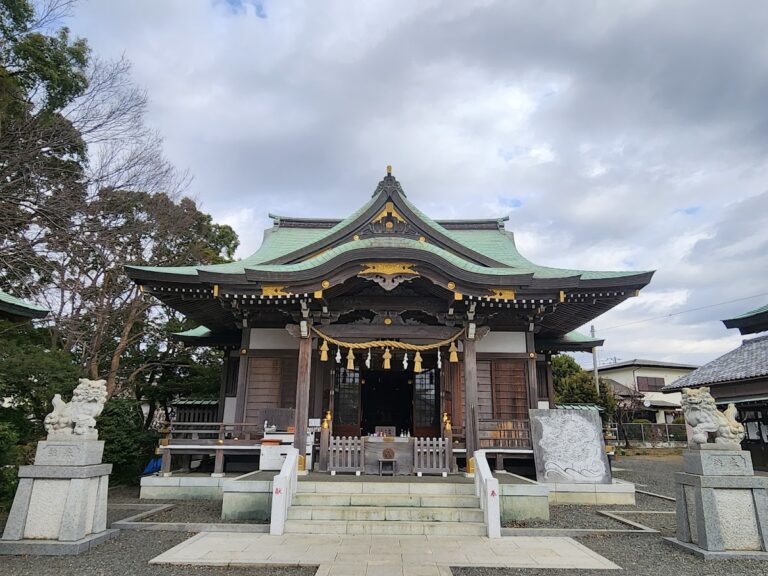
The main hall is the central building of Shorenji Temple and houses the important cultural property, a statue of Kobo Daishi. The temple grounds exude a solemn atmosphere characteristic of Shingon Esoteric Buddhism, featuring elements unique to Esoteric Buddhist temples, such as a goma altar and mandalas.
Regular goma prayer ceremonies are held in the main hall, and visitors can participate in these prayers. Experiences in sutra copying and Buddha image copying are also available (advance reservations required).
Five-Ring Pagoda Boy
Within the temple grounds stands the “Five-Ring Pagoda Boy,” a sculpture by contemporary sculptor Satoshi Yabuuchi. Satoshi Yabuuchi is a professor at Tokyo University of the Arts and a renowned sculptor also known as the designer of Sentokun (the local mascot).
The Five-Ring Pagoda Boy embodies a fusion of traditional Buddhist art and contemporary art, bringing a new breath of life to the tranquil grounds of Shorenji Temple. The acceptance of contemporary art by a temple with such a long history is one of Shorenji Temple’s distinctive features.
Cemetery/Burial Grounds
Shorenji Temple has a temple cemetery, and the general public can purchase a burial plot. With its tranquil environment and meticulous maintenance, it is trusted by local residents as a place where they can peacefully honor their ancestors.
For detailed information about the cemetery and to arrange a visit, please contact the temple directly.
Atmosphere of the Temple Grounds
The grounds of Shorenji Temple are located in a quiet residential area away from the hustle and bustle of central Kamakura, resulting in a very peaceful atmosphere. Seasonal flowers adorn the grounds, and particularly beautiful scenery can be enjoyed during the cherry blossom season in spring, the fresh greenery in early summer, and the autumn foliage season.
Because there are relatively few visitors, you can enjoy a peaceful visit and spend time quietly calming your mind.
Annual Events
As a Shingon Buddhist temple, Shorenji Temple holds various Buddhist services and events throughout the year.
January Events
Hatsumode (First Shrine Visit of the New Year, January 1st-3rd)
The temple is bustling with worshippers praying for happiness in the new year.
Hatsu-Kobo (January 21st)
A memorial service coinciding with the monthly anniversary of Kobo Daishi’s death. It is also a special public viewing day for the Kusari Daishi statue.
April Events
Spring Grand Festival (Third Saturday of April)
One of Shorenji Temple’s most important annual events. The Kusari Daishi statue is specially displayed, and memorial services such as Goma prayers are performed.
August Events
Obon Memorial Service (August 13th-16th)
A memorial service for ancestors is held. The Kusari Daishi statue is also specially displayed on the 16th.
December Events
Osame-no-Kobo (December 21st)
The last monthly memorial service for Kobo Daishi of the year. It is also a special public viewing day for the Kusari Daishi statue.
Joya no Kane (December 31st)
The Joya no Kane (New Year’s Eve Bell) is rung from around 10:40 PM on New Year’s Eve. The first 107 people can ring the bell (the first 107 times can be done within the year, the 108th time will be done in the new year). A special public viewing of the Kusari Daishi statue will also be held.
Monthly Events
Monthly Goma Prayer Ceremony (21st of each month)
A Goma prayer ceremony is held to coincide with the monthly anniversary of Kobo Daishi’s death.
Goshuin (Temple Seal) and Pilgrimage
About Goshuin
Shorenji Temple offers Goshuin (temple seals). The Goshuin will have the calligraphy of “Kusari Daishi” or “Shorenji” and the temple’s seal.
Goshuin Reception Hours: 9:00 AM – 5:00 PM (approximate)
Offering Fee: Approximately 300-500 yen
*Please note that the temple may be closed for events, etc. If you wish to receive a Goshuin, it is recommended to call in advance to confirm availability.
Shorenji Temple as a Pilgrimage Site
Shorenji Temple is a pilgrimage site for several sacred sites:
59th Temple of the Kanto Eighty-Eight Temples
A pilgrimage route in the Kanto region visiting sacred sites associated with Kobo Daishi.
88th Temple (Final Temple) of the Eastern Japan New Shikoku Eighty-Eight Temples
It holds an important position as the final temple (final pilgrimage site) of the Eastern Japan pilgrimage route modeled after the Shikoku Eighty-Eight Temples.
19th Temple of the Sagami Province Twenty-One Temples
A pilgrimage to sacred sites associated with Kobo Daishi in Sagami Province (Kanagawa Prefecture).
For those undertaking these pilgrimages, Shorenji Temple is an important pilgrimage site. In particular, as the final temple of the Eastern Japan New Shikoku Eighty-Eight Temples, many pilgrims visit it to conclude their long journey.
Access and Transportation
Access by Train and Monorail
Using the Shonan Monorail
The nearest stations are the following three:
- Approximately 10 minutes on foot (approx. 800m) from Shonan-Fukasawa Station
- Approximately 12 minutes on foot from Nishi-Kamakura Station
- Approximately 15 minutes on foot from Kataseyama Station
The Shonan Monorail is a suspended monorail connecting Ofuna Station and Enoshima (Shonan-Enoshima Station), offering a unique experience of riding through the air.
Access from JR Lines
It’s convenient to transfer to the Shonan Monorail at JR Ofuna Station. It takes approximately 5 minutes from Ofuna Station to Shonan-Fukasawa Station.
Access by Bus
Using Enoden Bus
Get off at the “Kusari-Daishi” bus stop. The bus stop name is the same as the common name of Shorenji Temple, making it very easy to find.
Main Routes:
- Enoden Bus from Ofuna Station towards “Kajiwara” or “Fujisawa Station”
- Enoden Bus from Fujisawa Station towards “Ofuna Station”
Access by Car
Route from Major Roads
Approximately 15 minutes from the Asahina Interchange on the Yokohama-Yokosuka Expressway
Via National Route 1 and Prefectural Route 32 (Kamakura-Hayama Line)
Parking
Parking at the temple is limited, so we recommend using public transportation. If you are visiting by car, we recommend checking with the temple in advance.
Nearby Tourist Attractions
The following are some of the tourist attractions near Shorenji Temple:
- Tsurugaoka Hachimangu Shrine (approx. 15 minutes by car): A representative shrine of Kamakura
- Hase-dera Temple (approx. 20 minutes by car): An ancient temple known for its beautiful seasonal flowers
- Ofuna Kannon (approx. 10 minutes by car): A symbolic landmark of Ofuna
- Enoshima Island (approx. 15 minutes by car): A representative tourist destination of Shonan
Manners and Precautions for Visiting
Attire for Visiting
There are no particularly strict dress code regulations, but please dress appropriately when visiting a temple. Especially on special public viewing days of the Kusari Daishi statue, it is recommended to avoid revealing clothing.
Photography
Photography of general scenery within the temple grounds is permitted, but photography inside the main hall and of Buddha statues is prohibited. Photography of the Kusari Daishi statue, a designated Important Cultural Property, is strictly prohibited. If you are unsure whether photography is permitted, please be sure to check with the temple staff.
Visiting Hours
While there are no strict restrictions on visiting hours, it is generally recommended to visit during the daytime (around 9:00 AM to 5:00 PM). If you wish to receive a Goshuin (temple stamp) or prayers, visiting during this time is recommended.
Maintaining Silence
Shorenji Temple is a quiet temple located in a residential area. Please refrain from loud conversations and maintain quiet during your visit.
Cultural Properties of Shorenji Temple
Important Cultural Property
Wooden Seated Statue of Kobo Daishi (Kusari Daishi)
- Designation Year: Early Showa Period
- Period: Estimated to be from the late Heian period to the Kamakura period
- Features: An extremely rare structure with a nude, clothed figure and movable ankle joints.
This Buddha statue occupies a unique position in the history of Japanese Buddhist sculpture. Buddha statues with movable joints are extremely rare nationwide, and its technical and artistic value is highly regarded.
Other Temple Treasures
Besides its Important Cultural Properties, Shorenji Temple possesses many other valuable temple treasures. Scriptures and ritual implements related to Shingon Esoteric Buddhism, as well as calligraphy by successive head priests, are carefully preserved, telling the story of over 1200 years of history.
Shorenji Temple and the History of Kamakura
The Position of Shingon Buddhist Temples in Kamakura
Kamakura, as the location of the Kamakura Shogunate, is known for the construction of many Zen Buddhist temples. Zen temples, including the Kamakura Five Mountains, played a central role in Kamakura’s Buddhist culture.
However, Shingon and Tendai Buddhist temples, which existed before this, also played important roles in Kamakura’s religious culture. Shorenji Temple has a history dating back to its founding by Kobo Daishi Kukai and has functioned as one of the centers of Shingon Esoteric Buddhism in Kamakura.
Connections with the Community
Shorenji Temple has been affectionately known by the local people as “Kusari Daishi.” Its use as a bus stop name demonstrates its role as a local landmark. Shorenji Temple plays a vital role not only as a place of worship for the local people, but also in the preservation of cultural properties and the transmission of local culture.
Experiences and Activities at Shorenji Temple
Goma Prayer Ceremony
At Shorenji Temple, you can receive a Goma prayer ceremony based on the traditions of Shingon Esoteric Buddhism. Goma prayer is a unique ritual of Esoteric Buddhism in which a fire is lit on a Goma altar and prayers are offered through the flames.
Prayers can be offered for various wishes, such as family safety, business prosperity, academic success, and recovery from illness. If you wish to receive a Goma prayer ceremony, it is recommended to contact the temple in advance to confirm the date and time.
Sutra Copying and Buddha Image Copying Experience
You can also experience sutra copying and Buddha image copying, which calms the mind and allows you to connect with the teachings of Buddhism (advance reservation required). The time spent carefully copying the sutras character by character in the quiet temple grounds will be a precious experience that allows you to forget the hustle and bustle of everyday life.
Zen Meditation
In Shingon Buddhism, meditation and mantra recitation are more central than Zen meditation, but it allows for time to quietly sit and calm the mind. Please contact the temple for details.
Nearby Dining and Rest Spots
The area around Shorenji Temple is a residential area, so restaurants are limited. If you wish to eat before or after your visit, the following areas are recommended:
Around Ofuna Station
There are many restaurants around Ofuna Station, the starting point of the Shonan Monorail. You can find restaurants using Kamakura vegetables, popular local ramen shops, and cafes.
Around Kamakura Station
The center of Kamakura has many restaurants catering to tourists. Komachi Street offers plenty of street food options.
Around Enoshima
Enoshima, within walking distance of Shonan-Enoshima Station, the terminal station of the Shonan Monorail, has many seafood restaurants and cafes.
Summary
Shorenji Temple (Kusari Daishi) is an ancient temple in Kamakura with a history of over 1200 years. Founded by Kobo Daishi Kukai, this temple houses the extremely rare Kusari Daishi statue, a designated Important Cultural Property, and holds an important position as a pilgrimage site for several temples.
Located in a quiet area slightly away from the center of Kamakura, it offers a peaceful atmosphere for worship. The special public viewing days of the Kusari Daishi statue, held a few times a year, provide an excellent opportunity to see this precious cultural artifact up close.
When sightseeing in Kamakura, why not visit not only the famous tourist temples, but also quiet temples like Shorenji Temple, which are rich in history and cultural treasures? You’re sure to discover a new side of Kamakura’s charm.
Access Information
- Approximately 10 minutes on foot from Shonan-Fukasawa Station on the Shonan Monorail
- Immediately after alighting at the “Kusari Daishi” bus stop on the Enoden Bus
- 5-1-8 Tehiro, Kamakura City, Kanagawa Prefecture 248-0036
- TEL: 0467-31-1352
When visiting, we recommend checking the latest information on the temple’s website or by phone.
-768x576.png)