Complete Guide to Shunnozan Manzoin Kokokuji Temple (Sakata City, Yamagata Prefecture) | History and Highlights of the 20th Temple of the Shonai Thirty-Three Kannon Pilgrimage
Located in Hiyoshi-cho, Sakata City, Yamagata Prefecture, Shunnozan Manzoin Kokokuji Temple is a historic temple belonging to the Daigo branch of the Shingon sect. It has a long history as the 20th temple of the Shonai Thirty-Three Kannon Pilgrimage and as an important base for Haguro Shugendo in the Sakata and Akumi areas.
This article will fully convey the charm of this ancient temple, including its historical background, architectural features, connection to Kannon worship, and information for visitors.
Basic Information about Kokokuji Temple
Temple Name: Shunnozan Manzoin Kokokuji
Sect: Shingon-shu Daigo-ha
Mountain Name: Shunnozan
Temple Name: Manzoin
Location: 1-4-38 Hiyoshi-cho, Sakata City, Yamagata Prefecture
Pilgrimage Site: 20th Temple of the Shonai Thirty-Three Kannon Pilgrimage
Principal Image: Holy Kannon Bodhisattva
Kokokuji Temple is located in Hiyoshi-cho, a historic area in the heart of Sakata City. During the Edo period, when Sakata Port flourished with Kitamae-bune trade, the surrounding area was also a bustling place.
History and Origin of Kokokuji Temple
Deep Connection with Kamegasaki Castle
An essential part of the history of Kokokuji Temple is its relationship with the lord of Kamegasaki Castle. The glittering “Ken-katabami” (sword-shaped wood sorrel) crest on the roof of the Kannon Hall is the family crest of the lord of Kamegasaki Castle, indicating the deep connection this temple had with the lord.
In fact, there is a special reason why the current Kōkoku-ji Temple is the 20th temple on the Shōnai Thirty-Three Kannon Pilgrimage. Originally, the 20th temple was located within Kamegasaki Castle. The Kannon worship of that temple, situated in a unique location within the castle, was passed down to Kōkoku-ji Temple as times changed. Therefore, the crest of the Kamegasaki Castle lord is displayed in the Kannon Hall, preserving this historical lineage.
Reverence from Successive Lords
Kōkoku-ji Temple received deep reverence not only from the lord of Kamegasaki Castle, but also from successive lords of the region. Given the characteristics of its Shingon-shu Daigo sect, esoteric Buddhist rituals and prayers were emphasized, suggesting that it also served as a place of prayer for the lords.
During the Edo period, Sakata flourished as a hub for Kitamae-bune (northern route) trade, boasting such economic power that it was called “Sakai in the west, Sakata in the east.” Along with the development of the port, the area around Kōkoku-ji Temple also became bustling with merchants and sailors, and the temple itself reached its peak of prosperity.
Role as a Center for Haguro Shugendō
Another important aspect of Kōkoku-ji Temple is its role as a center for Haguro Shugendō in the Sakata-Akumi area. Mount Haguro, one of the three sacred mountains of Dewa, is known as a sacred site of Shugendō. Haguro Shugendō is a unique religious form that fused mountain worship, esoteric Buddhism, and Shinto, and exerted a great influence throughout the Shōnai region.
Although Kōkoku-ji Temple belongs to the Shingon sect, an esoteric Buddhist sect, it maintained deep ties with Haguro Shugendō. Even today, the influence of Shugendō remains strong in temples throughout the Shōnai region, and Kōkoku-ji Temple is a valuable example of a temple that conveys its historical role.
The Shonai Thirty-Three Kannon Pilgrimage and Kōkoku-ji Temple
What is the Shonai Thirty-Three Kannon Pilgrimage?
The Shonai Thirty-Three Kannon Pilgrimage is a pilgrimage route to 33 Kannon temples scattered throughout the Shonai region of Yamagata Prefecture (Sakata City, Tsuruoka City, Shonai Town, Mikawa Town, and Yuza Town). The number 33 is significant, based on the belief that Kannon Bodhisattva transforms into 33 different forms to save sentient beings.
During the Edo period, Kannon pilgrimages became popular among common people, and the Shonai Thirty-Three Kannon pilgrimage was bustling with many pilgrims. Even today, many believers continue the pilgrimage, and it remains a part of the local religious culture.
Kōkoku-ji Temple as the 20th Temple
Kōkoku-ji Temple is designated as the 20th temple of the Shonai Thirty-Three Kannon Pilgrimage. Its principal image is the Holy Kannon Bodhisattva, and the Kannon Hall attracts many worshippers.
As mentioned earlier, the temple originally located within Kamegasaki Castle was the 20th pilgrimage site, but its Kannon worship was later transferred to Kōkoku-ji Temple. Therefore, the roof of the Kannon Hall is adorned with the sword-and-sorrel crest of the Kamegasaki Castle lord, visually representing its historical origins.
Pilgrims receive a temple stamp at Kōkoku-ji Temple and then proceed to the next pilgrimage site. It is believed that by visiting all 33 Kannon temples of Shōnai, one will be enveloped in Kannon’s compassion and their wishes will be fulfilled.
Highlights of Kōkoku-ji Temple
Kannon Hall and Sword-and-Sorrel Crest
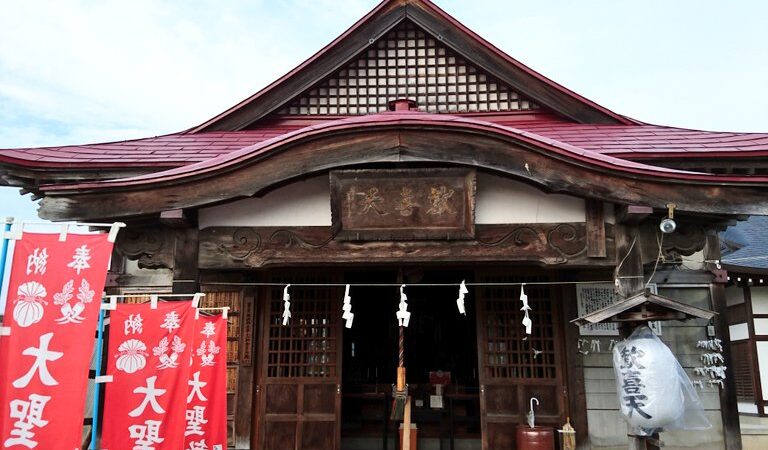
When visiting Kōkoku-ji Temple, the first thing to notice is the Kannon Hall. In particular, the sword-and-sorrel crest displayed on the roof is an important element symbolizing the temple’s historical background.
The sword-and-sorrel crest is known as the family crest of the Kamegasaki Castle lord, and is characterized by a design featuring a sword in the center of a three-leaf sorrel. The presence of this crest in the Kannon Hall is evidence that the Kannon worship at the 20th pilgrimage site within the castle grounds was carried on at Kōkoku-ji Temple, evoking a sense of historical romance for visitors.
The Main Hall
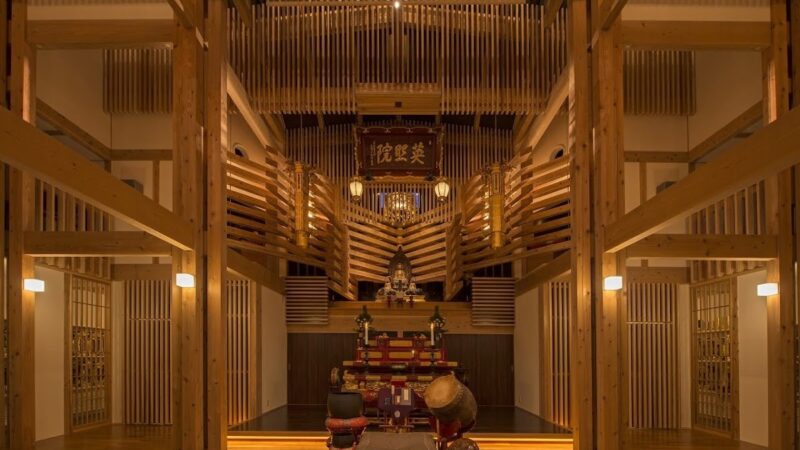
The main hall of Kōkoku-ji Temple exudes a solemn atmosphere befitting a Shingon Buddhist temple. It showcases the characteristics of religious architecture, such as the structure of the inner sanctuary unique to esoteric Buddhist temples and the altar where the principal image is enshrined.
Within the main hall, religious services and prayers based on the teachings of Shingon Buddhism are performed, and it continues to function as a center of faith in the region.
The Temple Grounds
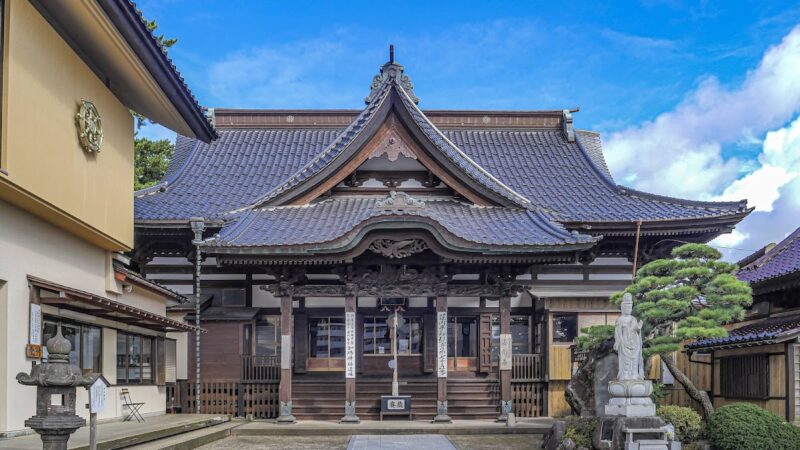
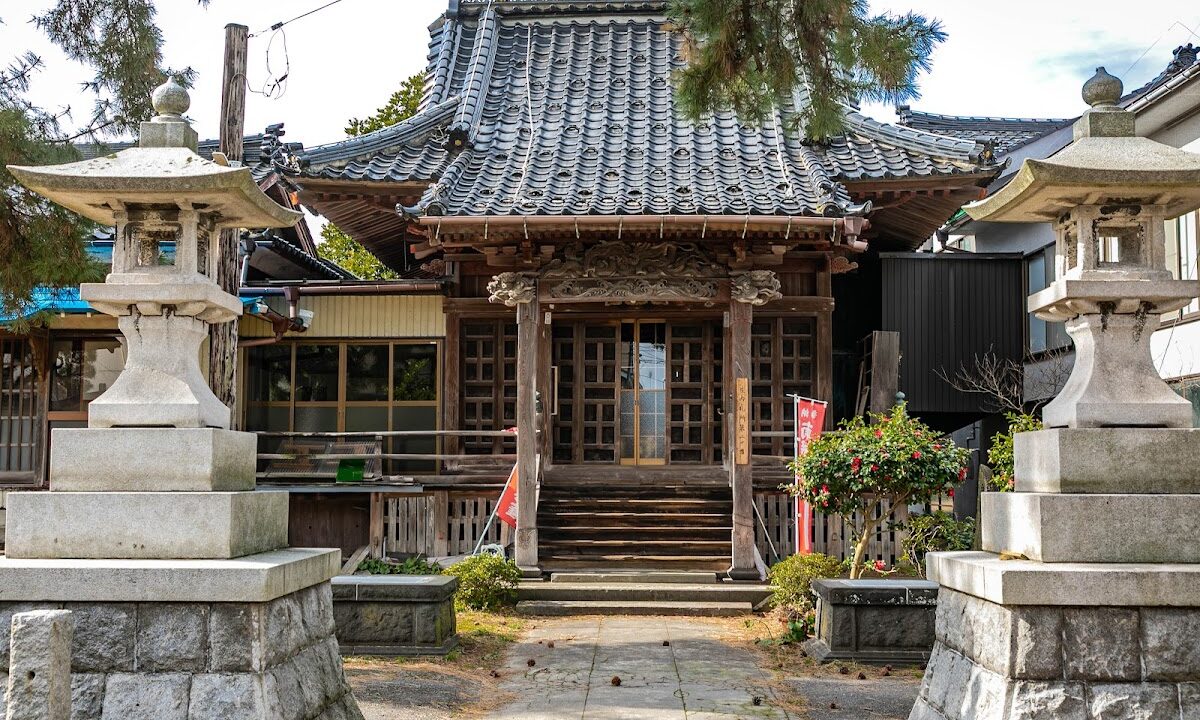
Despite being located in the urban area of Hiyoshi-cho, Sakata City, the grounds of Kōkoku-ji Temple are enveloped in a tranquil atmosphere. The stone-paved approach, well-maintained grounds, and historically significant buildings harmonize to provide peace of mind to visitors.
Especially from spring to summer, the greenery of the grounds is beautiful, and in autumn, the autumn leaves color the grounds. One of the charms of Kōkoku-ji Temple is that you can enjoy its ever-changing scenery throughout the seasons.
Access and Visiting Information for Kōkoku-ji Temple
Access Methods
Location: 1-4-38 Hiyoshi-cho, Sakata City, Yamagata Prefecture
Access by Car:
- Approximately 10 minutes from the Sakata Chuo Interchange on the Nihonkai Tohoku Expressway
- Approximately 5 minutes from the center of Sakata City
- Parking available (limited spaces, so caution is advised during long holidays)
Access by Public Transportation:
- Approximately 20 minutes on foot from Sakata Station on the JR Uetsu Main Line
- Approximately 5 minutes by taxi from Sakata Station
- If using a local bus, a few minutes on foot from the nearest bus stop
Notes for Visitors
Kōkoku-ji Temple is located in a residential area, and some people find its location somewhat difficult to find. When using a car navigation system or smartphone map app, it is recommended to enter the address accurately. Also, there are narrow roads in the surrounding area, so caution is required when driving.
While visiting hours are generally during the daytime, it is recommended to contact the temple in advance if you wish to receive a Goshuin (temple stamp). This is because the temple may be closed for religious services or other reasons.
Parking Information
Kokokuji Temple has a parking lot for visitors, but spaces are limited. It can get particularly crowded during the Shonai Thirty-Three Kannon pilgrimage season and long holidays, so it is recommended to visit with plenty of time to spare.
Nearby Tourist Attractions
Other Temples of the Shonai Thirty-Three Kannon Pilgrimage
After visiting Kokokuji Temple, why not visit the other temples of the Shonai Thirty-Three Kannon Pilgrimage? There are several temples within Sakata City, and the 19th temple, Jichiin, is located in Hiyoshi-cho. This allows for efficient visits to multiple temples.
Historical Sites of Sakata City
Sakata City, a port town that prospered from Kitamae-bune (northern route ship) trade, retains many historical buildings and cultural assets.
- Sankyo Warehouse: A historical building that was used as a rice storage warehouse, now a popular tourist attraction.
- Former Honma Residence: The residence of the wealthy Honma family, an architectural style that combines features of both samurai and merchant houses.
- Sakata City Museum: A facility where you can learn about the history and culture of Sakata.
- Hiyoriyama Park: A park overlooking Sakata Port, also known as a famous cherry blossom viewing spot.
Nature and Food Culture of the Shonai Region
After visiting Kokokuji Temple, we recommend enjoying the rich nature and food culture of the Shonai region.
- Mount Chokai: A sacred mountain also known as Dewa Fuji, offering opportunities for hiking and scenic drives.
- Shonai Plain: One of Japan’s leading rice-producing regions, known for producing delicious rice varieties such as Tsuyahime.
- Shonai Local Cuisine: A unique food culture has developed, including dishes like sasamaki (bamboo leaf-wrapped rice cakes), moso soup, and kandara soup (winter cod soup).
- Sakata Ramen: A culture of homemade noodles has taken root, and unique styles such as wonton ramen are popular.
Historical Background of Kokokuji Temple and Sakata
Prosperity of Sakata Port and Temple Culture
During the Edo period, Sakata Port flourished greatly as a base for Kitamae-bune (northern route ship) trade. Kitamae-bune, which traveled the Sea of Japan from Osaka to Hokkaido, brought much wealth and culture to Sakata.
This economic prosperity also greatly contributed to the development of temple culture. Wealthy merchants were deeply religious and generously donated to and supported temples. Kōkokuji Temple, along with the development of the port, became a bustling area, attracting many worshippers and believers.
Shingon Buddhism and the Shōnai Region
Shingon Buddhism is a sect of esoteric Buddhism founded by Kūkai (Kōbō Daishi), characterized by its emphasis on worldly benefits through practices such as incantations, prayers, and fire rituals. Many Shingon temples exist in the Shōnai region, deeply rooted in the local religious culture.
Kōkokuji Temple belongs to the Shingon Daigo sect, which has Daigoji Temple in Kyoto as its head temple. Daigoji Temple has deep ties to Shugendō, and this sectarian background is thought to have influenced Kōkokuji Temple becoming a center of Haguro Shugendō.
Shugendō and the Dewa Sanzan Mountains
Haguro Shugendō is a branch of Shugendō that considers the Dewa Sanzan Mountains (Mount Haguro, Mount Gassan, and Mount Yudono) as sacred sites. This unique form of worship, a fusion of mountain worship, esoteric Buddhism, and Shinto, wielded significant influence throughout the Shonai region during the Edo period.
The fact that Kōkoku-ji Temple was a base for Haguro Shugendō in the Sakata and Akumi areas demonstrates the importance of Shugendō in this region. It is believed that Shugendō practitioners used Kōkoku-ji Temple as a base to perform prayers and blessings for the local people and to prepare for pilgrimages to the Dewa Sanzan mountains.
Kōkoku-ji Temple Today
As a Center of Local Faith
Even today, Kōkoku-ji Temple functions as a center of faith for the local people. Regular memorial services and annual events are held, attracting parishioners and believers. Furthermore, pilgrims of the Shonai Thirty-Three Kannon continue to visit, preserving the tradition of Kannon worship.
Value as a Cultural Asset
Kōkoku-ji Temple is also a valuable cultural asset that conveys the history and culture of Sakata to the present day. With its connection to Kamegasaki Castle, its history as a center of Haguro Shugendo (mountain asceticism), and its prosperity during the Kitamae-bune (northern route trading) era, Kōkoku-ji Temple embodies a multifaceted history, attracting attention from researchers and history enthusiasts alike.
The sword-shaped katabami crest on the Kannon-do Hall is an important visual element that conveys history, stimulating visitors’ interest in Sakata’s history.
Utilization as a Tourism Resource
In recent years, Sakata City has been focusing on regional development utilizing its historical tourism resources. Kōkoku-ji Temple is also incorporated into tourist routes as one of the 33 Kannon pilgrimage sites in Shōnai.
The traditional form of pilgrimage has become popular with younger generations in the modern form of “Goshuin pilgrimage” (collecting temple stamps), and Kōkoku-ji Temple now attracts visitors of all ages.
Recommendation for Visiting Kōkoku-ji Temple
Seeking Peace of Mind
Modern society is busy, and it’s easy to lose sight of peace of mind. Visiting a historical temple like Kōkoku-ji Temple provides a valuable opportunity to escape from daily life and quiet your mind.
The time spent praying to Kannon in the tranquil temple grounds will be a precious moment for self-reflection.
A Journey Through History
Visiting Kōkoku-ji Temple is also a journey into the history of Sakata, the religious culture of the Shōnai region, and the history of Japanese religion. Various layers of history intertwine here, including its connection to the lord of Kamegasaki Castle, its role as a center of Haguro Shugendō, and its prosperity during the Kitamae-bune era.
Whether you’re a history buff or not, you’ll surely feel the weight of time this temple has witnessed.
A Step Towards Pilgrimage
If you’re interested in the Shōnai Thirty-Three Kannon Pilgrimage, why not start your journey at Kōkoku-ji Temple, either as a starting point or a stopover? Visiting all 33 locations takes time, but you don’t need to do it all at once.
By visiting the temples of the Shōnai region slowly over several visits, you can gain a deeper understanding of the region’s religious culture and local characteristics. Kōkoku-ji Temple will be an important first step on that journey.
Summary
Shun’ōzan Manzōin Kōkoku-ji Temple, located in Sakata City, Yamagata Prefecture, is an ancient temple of the Shingon Daigo sect and the 20th temple on the Shōnai Thirty-Three Kannon Pilgrimage, welcoming many worshippers.
With its deep connection to the lord of Kamegasaki Castle, its history as a center of Haguro Shugendō in the Sakata and Akumi areas, and its prosperity during the Kitamae-bune trade era, this temple boasts a multifaceted history and continues to shine as a center of Sakata’s culture and faith.
The sword-shaped katabami crest displayed on the roof of the Kannon Hall conveys the history of how the Kannon faith of the 20th pilgrimage site, originally located within the castle grounds, was passed down to Kōkoku-ji Temple, leaving a deep impression on visitors.
When visiting Sakata City, be sure to visit Kōkoku-ji Temple and experience its history and the spirit of faith. The time spent quieting your mind in the tranquil temple grounds and being enveloped in the compassion of Kannon will surely become an unforgettable memory.
Whether your purpose is a pilgrimage to the 33 Kannon temples of Shonai, a historical exploration of Sakata, or a journey seeking inner peace, Kōkoku-ji Temple will warmly welcome you.