Sugawara Shrine (Kokurakita Ward, Kitakyushu City, Fukuoka Prefecture) Complete Guide | The Guardian Deity of Kokura, the God of Learning and Protection from Evil
Located in the bustling downtown area of Kokurakita Ward, Kitakyushu City, Fukuoka Prefecture, Sugawara Shrine is a venerable shrine boasting a history of over 1100 years, dating back to the Heian period. It enshrines Sugawara no Michizane, nationally renowned as the god of learning, and is affectionately known locally as “Kokura’s Tenjin-sama.” This article provides detailed information useful for visitors, including the history of Sugawara Shrine, its blessings, highlights of the grounds, goshuin (shrine stamps), annual events, and access methods.
History and Origins of Sugawara Shrine
1100 Years from Founding to the Present
The founding of Sugawara Shrine dates back to the Heian period. It is believed to have begun approximately 1100 years ago when a shrine dedicated to Sugawara no Michizane was built on this site. Sugawara no Michizane was a prominent scholar and politician during the Heian period, known for his outstanding learning and sincere character. After his exile to Dazaifu, he was enshrined as Tenman Daijizai Tenjin after his death, and the Tenjin faith spread throughout Japan.
In Kokura, devotion to Michizane was strong, and the shrine was carefully preserved by the local people. During the Edo period, it received the patronage of the Kokura domain and served as the tutelary deity of Kokura Funai (the central part of present-day Kokura Kita Ward), becoming a spiritual pillar for the local residents.
Role as the tutelary deity of Kokura Funai
Sugawara Shrine is not merely a Tenmangu shrine; it has played a crucial role as the tutelary deity of the entire Kokura Funai area. A tutelary deity is a god who protects the people living in a particular area, and since ancient times, it has been a place of worship where people prayed for the prosperity of all local industries, including agriculture, fishing, and commerce.
Even today, it remains a special place for locals to visit at significant life events, where various life rituals such as first shrine visits for newborns, Shichi-Go-San (a traditional rite of passage for children), exorcisms, and prayers for success in exams are performed. Even in today’s increasingly urbanized world, it continues to function as a central hub for the local community.
Deities and Benefits
Main Deity: Sugawara no Michizane
The main deity enshrined at Sugawara Shrine is Sugawara no Michizane. Born in Kyoto in 845, Michizane displayed exceptional talent from a young age, dedicating himself to scholarship. He was appointed Professor of Literature at the age of 33 and rose to the position of Minister of the Right.
After being exiled to Dazaifu due to political intrigue, he died in 903 at the age of 59. Following this, various disasters occurred in Kyoto, leading to the construction of the Tenmangu shrine to appease Michizane’s vengeful spirit. Eventually, instead of being worshipped as a vengeful spirit, he came to be revered as the god of learning, culture, and integrity, and today he is worshipped throughout Japan as the “God of Learning.”
Diverse Blessings
At Sugawara Shrine, you can receive a variety of blessings, including the following:
Academic Achievement and Passing Exams
The most famous blessing is academic achievement. Students and those taking qualification exams visit the shrine to pray for success. It is believed that by drawing on Sugawara no Michizane’s outstanding learning, one can be granted wisdom and concentration.
Protection from Misfortune and Disaster
As the Tenjin-sama of Kokura, the shrine is also widely known for its blessing of protection from misfortune. People in their unlucky years visit to pray for protection from misfortune and for a safe year.
Business Prosperity and Industrial Development
As the guardian deity of Kokura, the shrine is deeply revered by local shop owners and business managers who pray for the prosperity of commerce, and is believed to bring blessings for business success.
Family Safety and Traffic Safety
As a guardian deity of the region, many prayers are offered for the health and safety of families, as well as traffic safety.
Matchmaking and Fertility
Because Sugawara no Michizane was a person who cherished his family, the shrine is also believed to grant blessings for successful matchmaking and fertility.
Highlights of the Shrine Grounds
Main Hall and Worship Hall
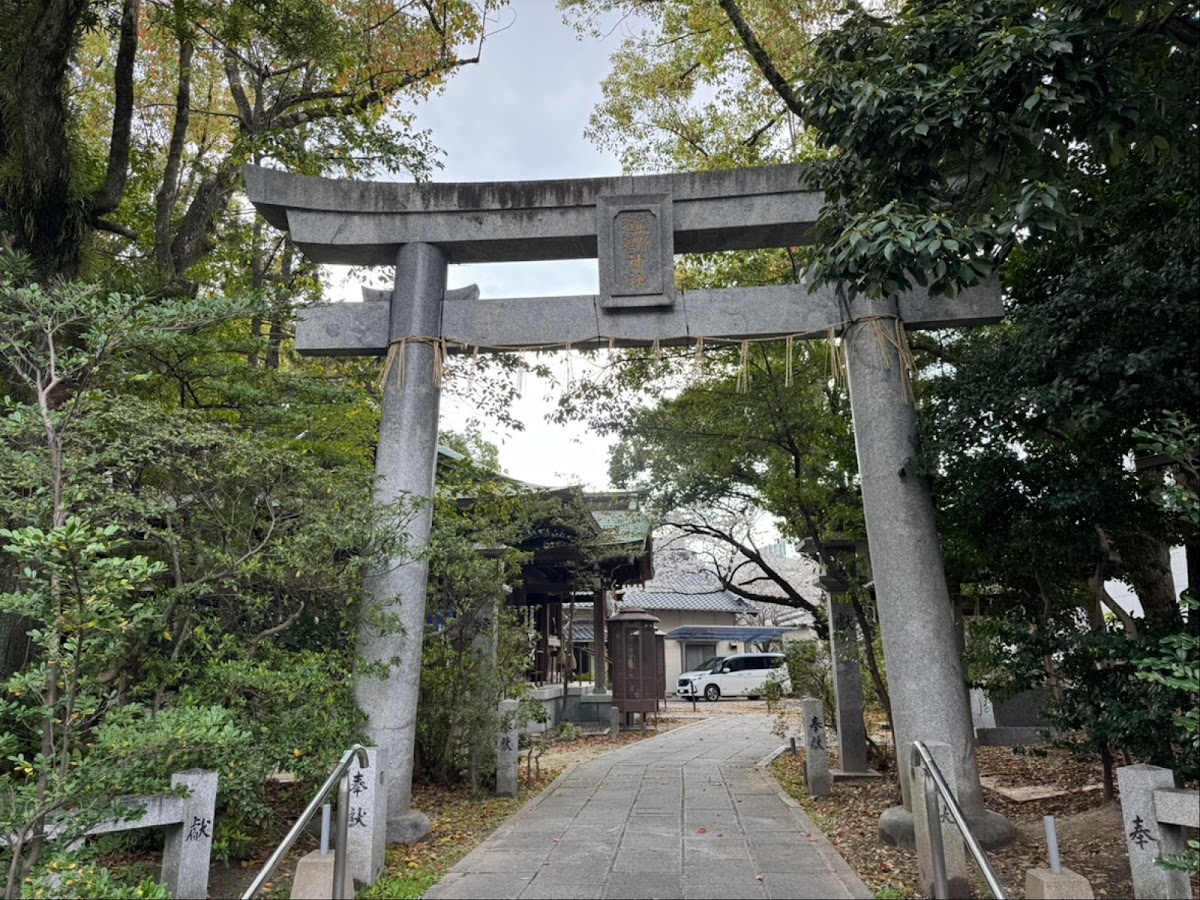
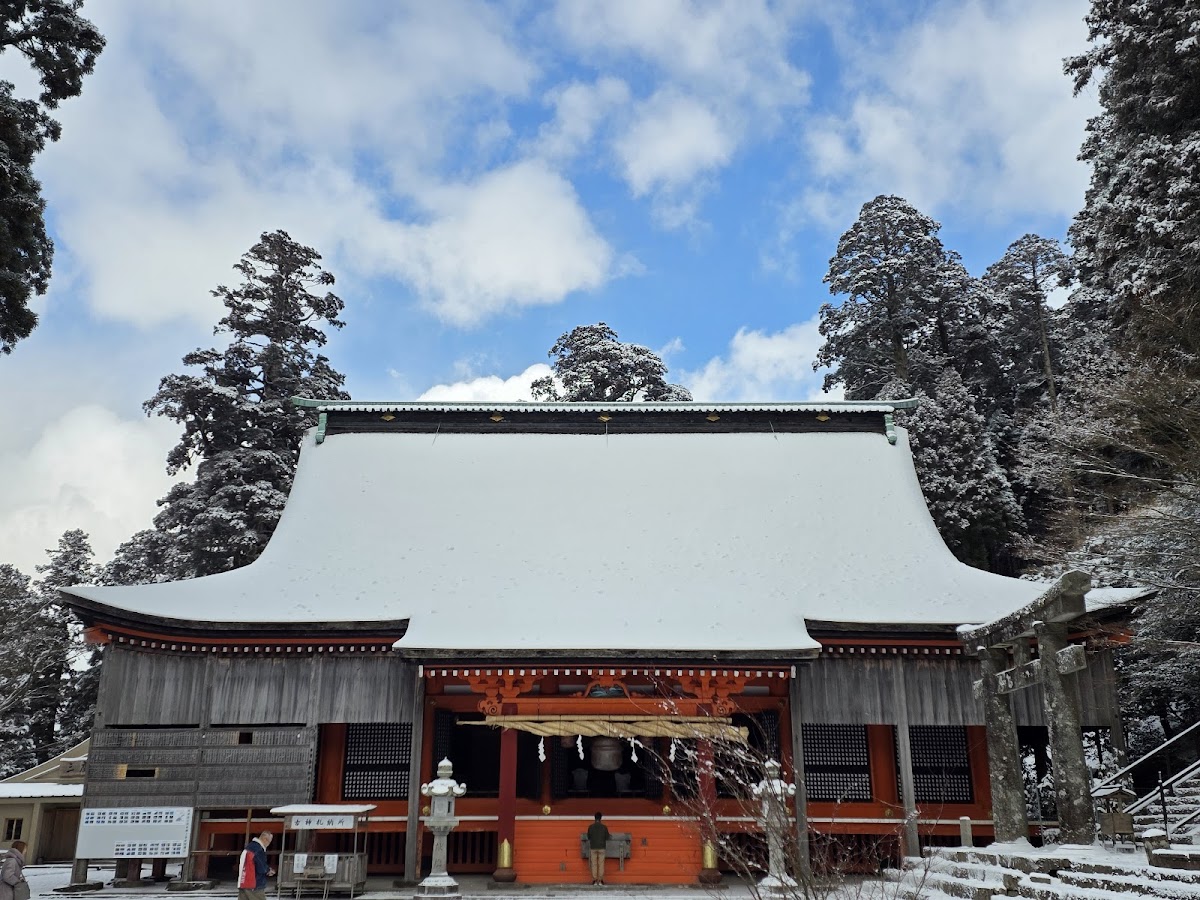
The main hall of Sugawara Shrine is built in the traditional style of shrine architecture, creating a solemn atmosphere. Worshippers visit the worship hall daily, offering prayers with their individual wishes. The decorations of the main hall feature intricate carvings, showcasing the high level of craftsmanship.
Nadeushi (Restful Cow) Statue
A Nadeushi (Restful Cow) statue, a symbol of Tenjin worship, is enshrined on the shrine grounds. Oxen have a deep connection to Sugawara no Michizane. Because Michizane was born in the Year of the Ox, and due to legends such as being buried at the spot where an ox collapsed on his way to Dazaifu, statues of oxen are almost always found at Tenmangu shrines.
The “Nade-ushi” (撫牛) statues are believed to cure illnesses if you stroke the same part of the statue as the part of your own body that is ailing. Many worshippers stroke them, so the surface is polished smooth. It is especially popular with students preparing for exams, as stroking the head is believed to bestow wisdom.
Plum Trees
Sugawara no Michizane is known for his love of plum blossoms, and left behind the famous waka poem: “When the east wind blows, send forth your fragrance, plum blossoms; do not forget spring, even though your master is gone.” Plum trees are planted on the grounds of Sugawara Shrine, and they bloom beautifully in early spring. During the plum blossom season, many worshippers visit the shrine to enjoy the fragrance of the blossoms.
Shrine Office and Gift Shop
The shrine office is where you can receive Goshuin (shrine stamps) and make various prayers. At the gift shop, you can receive various types of amulets and talismans, including those for academic success, protection from evil, traffic safety, and business prosperity.
Goshuin and Gift Items
About Goshuin
At Sugawara Shrine, you can receive a Goshuin as proof of your visit. The handwritten Goshuin are carefully inscribed by the shrine priests, and include the date of visit, the name of the shrine, and the name of the enshrined deity. The Goshuin bears the shrine’s seal, making it a special memento that can only be obtained there.
The offering fee is generally around 300 to 500 yen. Bringing your own Goshuincho (stamp book) is recommended, but pre-written Goshuin may also be available. They are available at the shrine office during visiting hours, but it is recommended to check in advance as they may not be available during festivals or events.
In recent years, the shrine has become an attractive destination for visitors who enjoy collecting goshuin (temple/shrine stamps), as it sometimes distributes special goshuin, including those exclusive to JR (Japan Railways).
Goshuincho (Goshuin Stamp Book)
Sugawara Shrine also offers its own original goshuincho. Featuring designs of plum blossoms and oxen, characteristic of Tenjin-sama (the deity of learning), it is a popular souvenir of a visit.
Amulets and Talismans
Amulet for Academic Success
The most popular amulet is for academic success. Various types are available for students taking exams, such as “Passing Exams Amulet” and “Academic Success Amulet.”
Amulet for Protection Against Misfortune
This amulet is given to those in their unlucky year and is believed to protect them from misfortune if worn for a year.
Amulet for Traffic Safety
Various types of amulets for traffic safety are available, including those that can be attached to cars or motorcycles, and those that can be carried around.
Amulet for Business Prosperity
This amulet prays for business development and prosperity and can be displayed in shops or offices. Amulets
Amulets for placing in household shrines are also available, allowing you to pray for the safety of your family.
Annual Events and Festivals
Spring Grand Festival
The Spring Grand Festival is one of the most important festivals in Sugawara Shrine’s annual events. It celebrates the arrival of spring and prays for a bountiful harvest and prosperity for the region. Many local parishioners and devotees attend, and a solemn Shinto ritual is performed.
Toka Ebisu Festival
The Toka Ebisu Festival, where prayers are offered for business prosperity, is also an important annual event at Sugawara Shrine. Held around January 10th each year, it attracts many shop owners and business representatives. Lucky charms such as bamboo branches and rakes are distributed, and the shrine grounds are bustling with activity.
Dondo Festival (Sagicho)
Held in mid-January, the Dondo Festival is a Shinto ritual in which New Year’s decorations, old amulets, and talismans are burned. It is said that eating mochi (rice cakes) roasted in this fire will bring good health and protection from illness for the entire year, and many local residents participate.
First Shrine Visit of the New Year
Many worshippers visit the shrine for the first shrine visit of the new year, including students praying for success in exams. Especially coinciding with exam season, many students and their parents pray to the god of learning for academic success throughout the year.
Monthly Festival
The monthly festival, held regularly each month, prays for the safety and prosperity of parishioners and worshippers. As a shrine deeply rooted in the community, we cherish daily prayers.
About Prayers and Supplications
Acceptance of Various Prayers
At Sugawara Shrine, you can receive formal prayers and supplications at various milestones in your life.
Prayers for Success in Exams and Academic Achievement
Prayers for success in exams are the most frequently performed prayers at Sugawara Shrine. We offer prayers for a wide range of exams, from university, high school, and junior high school entrance exams to qualification exams.
Prayers for Protection from Misfortune
Prayers for protection from misfortune are performed for those in their unlucky year, praying for peace and safety throughout the year.
First Shrine Visit
The first shrine visit for a newborn baby, often around 30 days after birth, is a prayer for the baby’s healthy growth.
Shichi-Go-San Celebration
Shichi-Go-San celebrations, marking the growth of children aged 3, 5, and 7, and praying for their future health and happiness, are also popular, with many families visiting, mainly in November.
Prayers for Safe Childbirth
Often performed on the Day of the Dog in the fifth month of pregnancy, prayers are offered for the health of both mother and child and a safe delivery.
Prayer for Business Prosperity
Many corporations and sole proprietors pray for the development and prosperity of their businesses. Prayers are often received at the time of new business opening or at the end of the fiscal year.
How to Apply for a Prayer
If you wish to request a prayer, please register at the shrine office. Advance reservations are recommended, but same-day registration may be possible. The prayer fee (offering) varies depending on the content of the prayer, so it is recommended to inquire with the shrine in advance.
During a formal visit, you can enter the main hall and receive Shinto rituals such as the recitation of prayers and the offering of sacred branches by the Shinto priest. After the prayer, you will be given a talisman or amulet.
Access and Transportation Information
Basic Information
Location
1-6 Furufunaba-cho, Kokurakita-ku, Kitakyushu City, Fukuoka Prefecture 802-0082
Phone Number
TEL: 093-521-9421
Access by Public Transportation
If using the Kitakyushu Monorail
Get off at Tanga Station on the Kitakyushu Monorail and it’s a very convenient 1-2 minute walk. It’s located right outside the station, so even first-time visitors won’t get lost.
Access from JR Kokura Station
It’s about a 10-15 minute walk from JR Kokura Station. It’s located near Tanga Market, after passing through the Kokura downtown area.
If using the Bus
Get off at the Nishitetsu Bus “Furufunaba” bus stop and it’s about a 3 minute walk.
Access by Car
From the Expressway
Approximately 10 minutes from the Kyushu Expressway “Kokura Kita IC”
Approximately 5 minutes from the Kitakyushu Urban Expressway “Otemachi Ramp”
Parking
Parking for the shrine is limited, so please use the surrounding coin-operated parking lots. There are several paid parking lots around Tanga Market. During busy times such as New Year’s visits and major festivals, we recommend using public transportation.
Nearby Tourist Attractions
Tanga Market
Located approximately 2 minutes on foot, this market is known as the kitchen of Kitakyushu. Fresh seafood, vegetables, and prepared foods are available, and you can also enjoy local specialties such as “Daigaku Don” (University Bowl).
Kokura Castle
Located approximately 15 minutes on foot, this is a symbol of Kokura. From the castle tower, you can enjoy a panoramic view of Kokura city, and there is also a historical museum.
Riverwalk Kitakyushu
A multi-purpose commercial complex located along the Murasaki River, where you can enjoy shopping, dining, and movie screenings.
Manners and Etiquette for Visiting Shrines
Basic Etiquette for Visiting Shrines
When visiting a shrine, please observe the following basic etiquette.
Bow Before Passing Through the Torii Gate
The torii gate is the entrance to the sacred area. Bow before passing through to show respect to the gods.
Purifying Your Body and Mind at the Water Basin
- Hold the ladle in your right hand and purify your left hand.
- Switch the ladle to your left hand and purify your right hand.
- Hold the ladle in your right hand again, receive water in your left hand, and rinse your mouth.
- Purify your left hand once more.
- Hold the ladle upright, purify the handle, and return it to its original position.
Worship at the Main Hall (Two Bows, Two Claps, One Bow)
- Place your offering in the offering box.
- Ring the bell if there is one.
- Bow deeply twice.
- Clasp your hands twice.
- Pray with your hands clasped together.
- Bow deeply once.
Attire for Worship
For regular worship, no special attire is required, but please dress neatly and modestly. For formal worship or prayers, a suit or formal attire is preferable.
Regarding Photography
Photography is generally permitted within the shrine grounds, but photography inside the main hall or during prayers may be prohibited. Please be considerate of other worshippers and check with the shrine priests if you have any questions.
The Charm and Characteristics of Sugawara Shrine
Excellent Accessibility in the City Center
One of the greatest features of Sugawara Shrine is its location in the heart of the city, in the bustling downtown area of Kokurakita Ward, Kitakyushu City. Its excellent accessibility, just a 1-minute walk from Tanga Monorail Station, makes it easy to visit on the way home from work or while shopping.
In today’s increasingly urbanized world, it is rare to find a shrine in such a location that maintains a tranquil atmosphere and offers a space for peace of mind.
A Local Guardian Deity
The history of Sugawara Shrine, which has been cherished by the local people as the guardian deity of Kokura for over 1100 years, is a major attraction. This shrine has garnered deep trust and affection from local residents, having accompanied them through significant life events and shared both their joys and sorrows.
It functions as a central hub for the local community, with many parishioners gathering for festivals and preserving traditions.
Diverse Blessings
Beyond its role as a deity of learning, the shrine offers a variety of blessings, including protection from misfortune, business prosperity, and family safety. Because one can pray for various wishes at a single shrine, it can be visited at different stages of life.
Seasonal Beauty
Plum trees are planted on the shrine grounds, and in early spring, beautiful plum blossoms bloom. Plum blossoms are a symbol of Sugawara no Michizane, and their fragrance and beauty soothe the hearts of visitors. Furthermore, one can feel the changing seasons, making it a space where one can enjoy the passage of time amidst the hustle and bustle of the city.
Visitor Feedback and Reputation
From Students and Their Families
Many visitors have commented, “We visited the shrine as a family before the exams and received a good luck charm for passing. My child successfully passed their first-choice school, and we returned to offer our thanks.” As a shrine dedicated to the god of learning, it attracts many students and parents, especially during exam season, and reports of success continue to pour in.
From Local Residents
“This shrine is one I’ve visited many times since childhood. We had our Shichi-Go-San (7-5-3) ceremony and our child’s first shrine visit here. It’s a spiritual haven that watches over important milestones in life,” a comment from a local resident that speaks to the shrine’s role as a guardian deity.
From Tourists
“I stopped by while sightseeing in Kokura. It’s conveniently located near Tanga Market. It’s a quiet space in the middle of the city, and it calmed my mind,” a comment from a tourist, indicating its value as part of a Kokura sightseeing trip.
Priest’s Diary and Blog Information
Sugawara Shrine publishes priest’s diaries and blogs through its official website. These sources provide information on the daily activities of the shrine, seasonal events, and the distribution of special goshuin (shrine stamps).
For example, timely information such as “JR Limited Edition Goshuin Distribution Begins!!”, “Spring is Just Around the Corner”, “Dondo Festival Successfully Held”, “Nationwide Common Test”, and “Toka Ebisu Festival” are updated regularly, making them useful when planning your visit.
In particular, information on limited-time goshuin and special events is often announced first on the blog, so we recommend checking it regularly.
Summary: Recommendation for Visiting Sugawara Shrine
Located in Kokurakita-ku, Kitakyushu City, Fukuoka Prefecture, Sugawara Shrine is a venerable shrine with a history of over 1100 years. It is deeply loved by the local people as Kokura’s Tenjin-sama, enshrining Sugawara no Michizane, the god of learning.
You can receive a variety of blessings, including academic success, passing exams, protection from evil, business prosperity, and family safety, making it a shrine worth visiting at various stages of life. Its excellent accessibility, just a one-minute walk from Tanga Monorail Station, is a major draw, making it easy to stop by during your Kokura sightseeing.
The shrine grounds offer many attractions, including a statue of a cow to be stroked and plum trees, allowing visitors to enjoy the beauty of each season. The shrine’s goshuin (stamped seal) and various amulets are also popular and can be received as a memento of your visit.
This shrine is open to everyone, from students preparing for exams and those reaching milestones in their lives to business owners praying for prosperity and tourists visiting Kokura. Why not visit Sugawara Shrine, the guardian shrine of Kokura, and receive the blessings of the god of learning?
Your heartfelt prayers will surely reach Sugawara no Michizane and help fulfill your wishes.