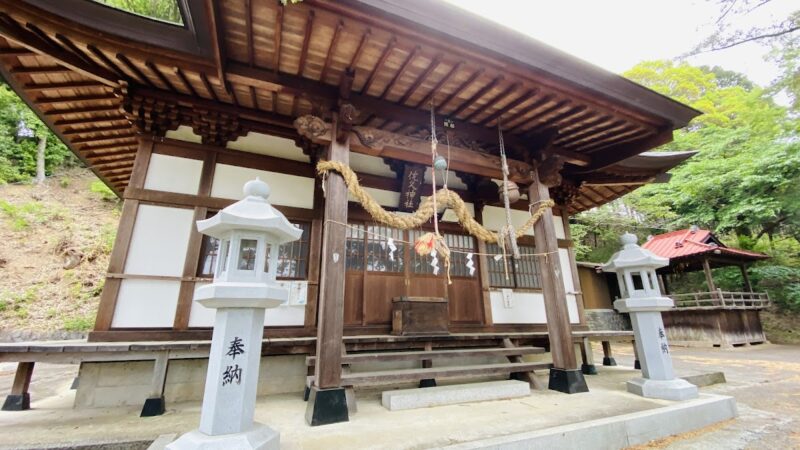
Sumiyoshi Shrine (Sumiyoshi, Kofu City, Yamanashi Prefecture) Complete Guide | The History of the Takeda Family and the Charm of the Rice Planting Ritual
Located in Sumiyoshi, Kofu City, Yamanashi Prefecture, Kai Province Sumiyoshi Shrine is a historic shrine founded during the reign of Emperor Shomu. It was revered as the guardian deity of successive generations of the Takeda family and remains a beloved place for local people today. This article provides a detailed introduction to Sumiyoshi Shrine, from its history and highlights to its traditional rice planting ritual and access information.
History and Origins of Sumiyoshi Shrine
From Founding to the Heian Period
The founding of Sumiyoshi Shrine dates back to the reign of Emperor Shomu, the 45th Emperor of Japan (724-749). Initially, it was located on the banks of the Arakawa River, in what is now Takahata Village, Kofu City. It is said to have been a shrine that attracted the faith of local people on the west bank of the Arakawa River as a god of water transport.
At the end of the Heian period, at the request of Takeda Taro Nobuyoshi, the ancestor of the Kai Minamoto clan, Sumiyoshi Shrine was relocated to Ichijo-go, Inazumi-sho (present-day Ichijo-koyama, where Maizuru Castle Park is located). This relocation elevated Sumiyoshi Shrine to a more important position as the guardian deity of Kai Province.
Deep Connections with the Takeda Family
After its relocation to Ichijo-koyama, Sumiyoshi Shrine was deeply revered as the tutelary deity of the Takeda clan. Records show that successive heads of the Takeda family worshipped Sumiyoshi Shrine as their guardian deity and offered numerous prayers.
It is said that successive heads of the Takeda family, including Takeda Shingen, frequently visited the shrine to pray for victory in battle and for the peace and security of their territory. Therefore, Sumiyoshi Shrine is an indispensable part of the history of the Takeda family.
Relocation Due to the Construction of Kofu Castle
After the fall of the Takeda family, Kofu came under the control of Toyotomi Hideyoshi. After 1590 (Tensho 18), Asano Nagamasa and his son Yukinaga, vassals of Tokugawa Ieyasu, began construction of Kofu Castle.
As the construction of Kofu Castle progressed, Sumiyoshi Shrine, which was located on Ichijo-Koyama, was relocated to its current location in Sumiyoshi, Kofu City. This relocation was a necessity of the era due to castle construction, but the shrine’s status and religious significance were preserved and continue to this day.
Deities and Divine Virtues
The following deities are enshrined at Sumiyoshi Shrine:
- Sokotsutsu-no-Mikoto
- Nakatsutsu-no-Mikoto
- Uwatsutsu-no-Mikoto
- Empress Jingu
These deities are known as the Three Sumiyoshi Gods and have been worshipped since ancient times as guardians of safe voyages and maritime traffic. Kofu is an inland area, but it is believed that the Sumiyoshi deity was enshrined there due to its connection with the Arakawa River’s water transport system.
Divine Virtues
The divine virtues of Sumiyoshi Shrine are wide-ranging.
- Traffic Safety: Protects the safety of all forms of transportation, from water transport to land transport.
- Business Prosperity: Facilitates the development of distribution and commerce.
- Family Safety: Protects the health and peaceful lives of families.
- Protection from Misfortune and Bringing Good Fortune: Wards off disasters and brings good fortune.
- Long-lasting Military Fortune: Due to its history as the guardian deity of the Takeda family.
Highlights of Sumiyoshi Shrine
Shrine Architecture
The current shrine buildings are valuable examples of Edo period architecture. The main hall adopts the nagare-zukuri style, a simple yet dignified structure. The worship hall is an open space welcoming visitors and functions as the center of local faith.
Atmosphere of the Shrine Grounds
Despite being located in the heart of Kofu city, the shrine grounds are enveloped in a tranquil atmosphere. As you walk along the approach to the shrine, a sacred air permeates the air, making you forget the hustle and bustle of the city and calming your mind. Ancient trees surround the grounds, allowing you to feel the changing seasons.
The Sacred Rice Field (Onda)
Within the shrine grounds is a sacred rice field called “Onda,” where a rice planting ceremony is held annually during the summer festival. It is rare for a shrine in an urban area to maintain a rice field, and this holds significant importance in terms of preserving traditional culture.
Stone Monuments and Memorials
Throughout the shrine grounds are stone monuments and memorials that tell the history of Sumiyoshi Shrine. These inscriptions reveal the shrine’s journey from the Edo period to the present day, and the deep faith of the local people.
Traditional Rice Planting Ritual
Highlight of the Summer Grand Festival
The biggest highlight of the Sumiyoshi Shrine’s Summer Grand Festival is the traditional rice planting ritual. This ritual has a long history as an important festival praying for a bountiful harvest.
Rice Planting by Young Women
In the rice planting ritual, elementary school children from the surrounding area dress up as young women in kimonos and flower hats, and actually plant rice in the rice field. Seeing the children in traditional costumes planting seedlings using time-honored methods evokes a quintessential image of Japanese agricultural culture.
Educational Significance for the Community
This ritual is not merely a religious event; it also has educational significance, teaching local children about the importance of agriculture and traditional culture. In today’s increasingly urbanized world, opportunities to experience rice planting are rare, making it an important event from a food education perspective.
Event Period and Visiting
The Rice Planting Ritual is held annually in the summer. The specific date varies each year, so those wishing to visit are advised to inquire with the shrine in advance. Tourists are welcome to attend, as well as local residents.
Goshuin (Shrine Seal) and Gifts
About Goshuin
Sumiyoshi Shrine offers goshuin as a memento of your visit. The goshuin features the calligraphy and red seal of “Kai no Kuni Sumiyoshi Shrine,” and the date of your visit is also recorded. You can receive your goshuin at the shrine office by bringing your goshuincho (seal book).
Gifts
The shrine offers a variety of gifts, including amulets and ema (votive tablets). The traffic safety amulet is a popular item, reflecting the divine virtues of Sumiyoshi-sama. Also, as befits a shrine associated with the Takeda family, victory amulets are also available.
Distribution Hours
The distribution hours for goshuin and gifts are the same as the shrine office’s opening hours. If you want to be sure to receive the blessing, we recommend calling ahead to confirm.
Annual Events and Festivals
Main Annual Events
Sumiyoshi Shrine holds various festivals and events throughout the year.
New Year’s Day Festival (January 1st)
A festival to celebrate the New Year and pray for peace throughout the year. It is bustling with many visitors making their first shrine visit of the year.
Setsubun Festival (around February 3rd)
Bean-throwing is performed, and prayers are offered for protection against evil and for good fortune.
Summer Grand Festival (Summer)
This is Sumiyoshi Shrine’s largest festival, where the aforementioned rice-planting ritual takes place.
Autumn Grand Festival (Autumn)
A festival to give thanks for the harvest and celebrate a bountiful harvest.
Great Purification Ceremony (June and December)
A Shinto ritual to purify oneself of sins and impurities accumulated over the past six months.
Participation in Festivals
Even those who are not local residents can participate in these festivals. The annual grand festival, in particular, is a valuable opportunity to experience the history and traditions of the shrine firsthand.
Basic Information and Access
Basic Information
Official Name: Kai-no-kuni Sumiyoshi Shrine
Location: 1-13-10 Sumiyoshi, Kofu City, Yamanashi Prefecture
Phone Number: 055-233-2479
Parking: Available (limited spaces)
Visiting Hours: Open all day (Shrine office has limited hours)
Official Website: http://www.kai-sumiyoshijinja.jp/
Access by Train
From JR Minobu Line “Kai-Sumiyoshi Station”
- Approximately 6 minutes on foot
- Proceed straight southwest from the station exit
From JR Chuo Main Line “Kofu Station”
- Approximately 20 minutes on foot
- Bus access is also available (approximately 10 minutes)
Access by Car
From Chuo Expressway “Kofu-Minami Interchange”
- Approximately 15 minutes
- Via National Route 358
From the Chuo Expressway “Kofu-Showa Interchange”
- Approximately 20 minutes
- Via National Route 20
Car Navigation Settings
Please search using the address “1-13-10 Sumiyoshi, Kofu City, Yamanashi Prefecture” or the phone number “055-233-2479”.
Parking Information
There is a parking lot for visitors on the shrine grounds, but the number of spaces is limited. On days when congestion is expected, such as during the annual festival, we recommend using public transportation. There are also coin-operated parking lots nearby.
Nearby Tourist Attractions
Maizuru Castle Park (Kofu Castle Ruins)
The Ichijo-Koyama hill where Sumiyoshi Shrine once stood is now Maizuru Castle Park. The stone walls and turrets of Kofu Castle have been restored, and it is an observation spot offering a panoramic view of Kofu city. It is within walking distance of Sumiyoshi Shrine, so we recommend visiting both.
Takeda Shrine
Takeda Shrine, dedicated to Takeda Shingen, is also a shrine associated with the Takeda family, just like Sumiyoshi Shrine. Built on the site of the Tsutsujigasaki Mansion, it offers a glimpse into the history of the Takeda family.
Kofu City Center
Sumiyoshi Shrine is located in the city center of Kofu, making it convenient for sightseeing and shopping. Around Kofu Station, there are many restaurants where you can enjoy Yamanashi’s local cuisine, such as Hoto noodles.
Manners and Points for Visiting a Shrine
Etiquette for Visiting a Shrine
- Bow before the Torii Gate: Before entering the shrine grounds, bow before the torii gate.
- Purify yourself at the Water Basin: Purify your left hand, then your right hand, then your mouth.
- Walk along the edge of the path: The center is considered the path of the gods.
- Etiquette at the Main Hall: The basic procedure is two bows, two claps, and one bow.
Photography
Photography is generally permitted on the shrine grounds, but consideration should be given to avoiding disturbing religious ceremonies or other visitors. Photography inside the shrine building may be prohibited, so please check before taking pictures.
Attire
There are no specific dress code requirements, but it is desirable to wear clothing appropriate for a sacred place. Avoid extremely light clothing, even in summer.
Cultural Properties and Historical Value of Sumiyoshi Shrine
Value as a Historical Document
Sumiyoshi Shrine is an important historical site for understanding the history of Kai Province, particularly the history of the Takeda family. With a history of nearly 1300 years since its founding, it is a valuable presence that tells the story of Kofu’s regional history.
The Rice Planting Ritual as an Intangible Cultural Property
The Rice Planting Ritual is a valuable intangible cultural property that conveys traditional Japanese agricultural rituals to the present day. Continuing such traditional events amidst increasing urbanization has great cultural significance.
Center of the Local Community
Sumiyoshi Shrine is not merely a tourist spot; it continues to function as the center of faith and life for local residents. Through festivals, the local community is united, and traditions are passed down to future generations.
Summary
Sumiyoshi Shrine, located in Sumiyoshi, Kofu City, Yamanashi Prefecture, is a historical shrine founded during the reign of Emperor Shomu and revered as the guardian deity of successive generations of the Takeda family. Even after relocating to its current location following the construction of Kofu Castle, Sumiyoshi Shrine remains a beloved center of local faith.
The traditional rice planting ritual held during the summer festival is a precious cultural event where children, dressed as rice planters, participate in planting rice, praying for a bountiful harvest and serving as a place for passing on culture to future generations.
The shrine is easily accessible, located about a 6-minute walk from Kai-Sumiyoshi Station on the JR Minobu Line and about a 15-minute drive from the Kofu-Minami Interchange on the Chuo Expressway. The shrine also offers Goshuin (stamped seals), and is a power spot where visitors can quietly pray while feeling the history associated with the Takeda family. It is recommended not only for locals but also for tourists.
When you visit Kofu, be sure to visit Sumiyoshi Shrine and experience its 1300 years of history and tradition.