Sumiyoshi Shrine (Tsukuda, Chuo-ku, Tokyo) Complete Guide | History, Goshuin (Shrine Seals), and Highlights of the Grounds
Sumiyoshi Shrine, located in Tsukuda, Chuo-ku, Tokyo, is a historic shrine that has watched over the area as the guardian shrine of Tsukudajima since the early Edo period. With deep ties to Tokugawa Ieyasu, Sumiyoshi Shrine was founded by fishermen who migrated from Tsukuda Village in Osaka. It has attracted the faith of those involved in the shipping and fishing industries and remains a beloved tutelary shrine for the Tsukuda, Tsukishima, Toyomi, and Harumi areas.
This article comprehensively covers everything you need to know before visiting Sumiyoshi Shrine, including its detailed history, highlights of the grounds, goshuin information, and access methods.
Overview and Basic Information of Sumiyoshi Shrine
Sumiyoshi Shrine is located in Tsukuda 1-chome, Chuo-ku, Tokyo, and its former shrine rank was Gosha (village shrine). Founded in 1646 (Shoho 3), it boasts a history of over 370 years.
Basic Information
Location: 1-1-14 Tsukuda, Chuo-ku, Tokyo
Phone Number: 03-3531-3500
Visiting Hours: 8:00 AM – 4:30 PM (Shrine office hours)
Nearest Station: Approximately 5-minute walk from Exit 6 of Tsukishima Station (Tokyo Metro Yurakucho Line/Toei Oedo Line)
Parking: None (Use nearby coin parking)
Deities Enshrined
Sumiyoshi Shrine enshrines the three Sumiyoshi deities and Empress Jingu as its main deities.
- Sokotsutsu-no-Mikoto
- Nakatsutsu-no-Mikoto
- Uwatsutsu-no-Mikoto
- Okinagatarashihime-no-Mikoto (Empress Jingu)
These deities have been worshipped since ancient times as gods of safe voyages and protection at sea, and have been revered as guardian deities of those involved in fishing and shipping.
History and Origins of Sumiyoshi Shrine
Tokugawa Ieyasu and the Fishermen of Tsukuda Village, Settsu Province
The history of Sumiyoshi Shrine dates back to the Tensho era (1573-1592) of the Sengoku period. When Tokugawa Ieyasu visited Kyoto, he paid his respects at Tamino Shrine in Tsukuda Village, Nishinari District, Settsu Province (present-day Tsukuda, Nishiyodogawa Ward, Osaka City). At this time, fishermen from Tsukuda Village and the neighboring Owada Village provided ferry boats across the Kanzaki River to transport Ieyasu and his entourage, and presented them with fresh fish such as whitebait.
Because of this service, Ieyasu bestowed special favors upon the fishermen of Tsukuda Village, and a deep relationship of trust was forged. This event laid the foundation for the later establishment of Sumiyoshi Shrine in Edo.
Migration to Edo and the Construction of Tsukuda Island
In 1590, when Tokugawa Ieyasu entered Edo, he ordered the fishermen of Tsukuda Village to relocate to Edo. The fishermen carried a divided spirit of Tamino Shrine, the guardian shrine of Tsukuda Village in Settsu Province, to Edo, and initially established their residences in Teppōzu (the area around present-day Minato-machi).
In 1644, during the first year of the Shoho era, fishermen who received permission from the shogunate to reclaim the tidal flats off the coast of Teppozu created an artificial island, which they named “Tsukudajima” after the name of their hometown. This reclamation work was completed in about two years, and on June 29, 1646, during the third year of the Shoho era, a divided spirit was formally enshrined from the Tamino Shrine in Settsu Province, and Sumiyoshi Shrine was founded at its current location.
Development and Spread of Faith in the Edo Period
Tsukudajima is located at the entrance to Edo Bay, and the area in front of the shrine was a port where many trading ships from various provinces passed through. Therefore, Sumiyoshi Shrine came to attract deep devotion not only from the fishermen of Tsukudajima, but also from shipping companies and various wholesale associations, as a god of safe voyages and business prosperity.
Throughout the Edo period, Sumiyoshi Shrine supported the local community as a central presence in Tsukudajima and became a spiritual pillar for the fishermen of Tsukudajima, who held fishing rights and privileges. During the Meiji era, it was designated a local shrine, establishing its position as an important shrine in the region.
Post-War History and the Present
After World War II, due to the GHQ’s Shinto Directive, the characters for “local shrine” inscribed on the shrine’s nameplate were temporarily buried. However, the characters “Local Shrine Sumiyoshi Shrine” can now be seen.
In 1964 (Showa 39), the Tsukuda Bridge was completed, and the ferry service that had been in operation for approximately 320 years was discontinued. This ferry was also used for visiting Sumiyoshi Shrine and was a symbolic means of transportation in the history of Tsukudajima.
Even today, Sumiyoshi Shrine continues to receive unwavering devotion from local residents as the tutelary shrine of the Tsukuda, Tsukishima, Toyomi, and Harumi areas.
Highlights and Cultural Assets on the Shrine Grounds
The grounds of Sumiyoshi Shrine contain numerous buildings and cultural assets of high historical value.
Shrine Name Monument and Approach
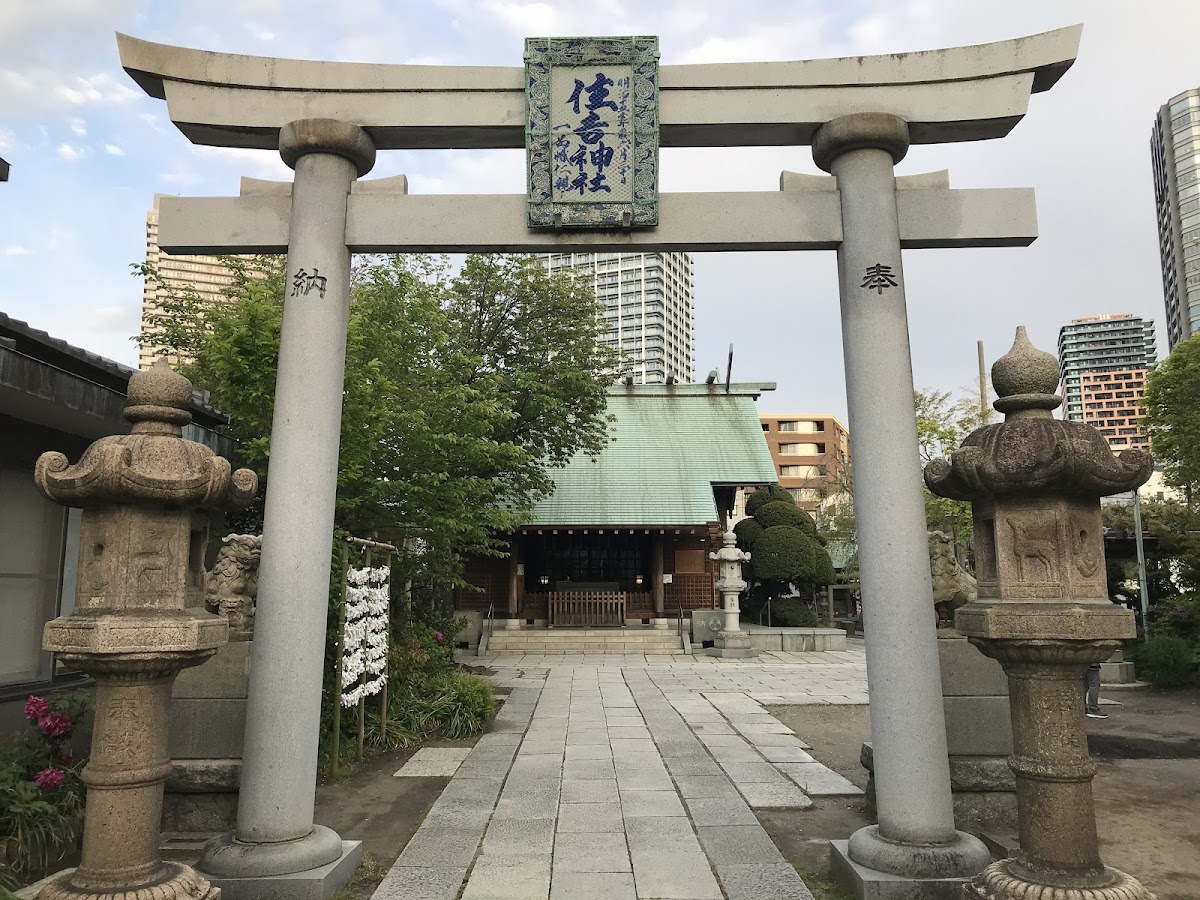
As you proceed along the approach through the residential area, you will find the shrine name monument on the right at the entrance to the shrine grounds. This monument is inscribed with “Gōsha Sumiyoshi Shrine,” and as mentioned earlier, the words “Gōsha” (village shrine) were temporarily buried to avoid scrutiny from GHQ after the war.
Water Basin Pavilion (Water Basin Pavilion)
The water basin pavilion, located immediately to the right upon entering the shrine grounds, was rebuilt in 1869 (Meiji 2) and renovated in 1911 (Meiji 44). It was designated a Chuo Ward cultural property in 1990 (Heisei 2), recognizing its historical and architectural value.
The water basin, adorned with a dragon carving, is a magnificent work of art and an important facility welcoming visitors.
Main Hall and Worship Hall
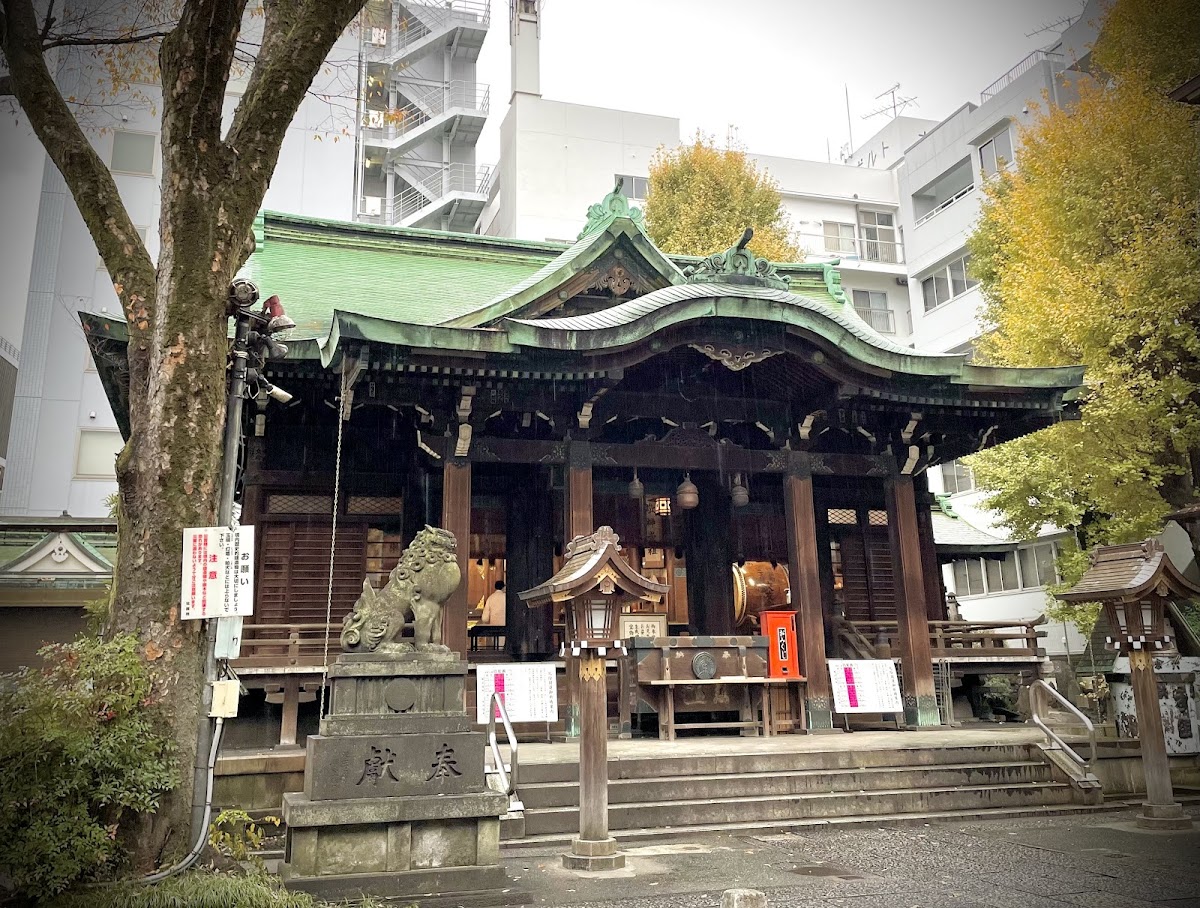
The current shrine buildings are valuable structures that convey the architectural style of the Edo period. Inside the main hall hangs a ceramic plaque inscribed by Prince Arisugawa Takahito, which is also a designated tangible cultural property of Chuo Ward.
Ceramic plaques are rare, and this cultural property attracts the attention of many visitors due to its artistic merit and historical value.
Katsuozuka (Bonito Mound)
Behind the water basin is the Katsuozuka (Bonito Mound). This was donated in 1953 by the Tokyo Katsuobushi Wholesale Commercial Cooperative Association, erected to express gratitude and respect for bonito. It is a monument that tells the story of Tsukudajima being a center of fishing since the Edo period.
Octagonal Mikoshi (Portable Shrine)
The greatest treasure of Sumiyoshi Shrine is the octagonal mikoshi, which has been passed down since the Edo period. This mikoshi has a very rare octagonal shape and is carried in a procession during the “Tsukuda Festival” (Sumiyoshi Shrine’s annual festival), held once every three years.
The octagonal portable shrine is a masterpiece showcasing the finest craftsmanship of the Edo period, adorned with gold leaf and intricate carvings. While normally stored inside the shrine, many people gather during the Tsukuda Festival to catch a glimpse of its magnificent form.
Seasonal Flowers on the Shrine Grounds
The shrine grounds offer a variety of seasonal flowers. Cherry blossoms in spring, hydrangeas in early summer, and autumn leaves in fall—the grounds display different expressions with each season, soothing the hearts of visitors.
Tsukuda Festival (Sumiyoshi Shrine Grand Festival)
The Tsukuda Festival, the grand festival of Sumiyoshi Shrine, is a magnificent festival held every three years in early August. It is sometimes counted as one of the three great Edo festivals and is known as a summer tradition in Tokyo.
History of the Tsukuda Festival
The origins of the Tsukuda Festival date back to the early Edo period, boasting a tradition of over 370 years. From its inception, the Tsukuda Festival has been an important event demonstrating the unity of the fishermen of Tsukudajima, and has developed as a festival praying for safety at sea and a bountiful catch.
Festival Highlights
The biggest highlight of the Tsukuda Festival is the procession of the octagonal portable shrine mentioned above. The shrine, weighing approximately 1 ton, is vigorously carried by the bearers as they parade through the Tsukuda and Tsukishima areas.
Also, the procession of the portable shrine by boat is a traditional event. The sight of the shrine being carried across the Sumida River by boat is a precious scene that reminds us of Tsukudajima’s past as an island.
Dates
The main festival is held once every three years (the next ones are in 2024, 2027, etc.), but in years without the main festival, a smaller-scale festival is held as a “shadow festival.” It is recommended to check the official information of Sumiyoshi Shrine for the exact dates.
Goshuin (Shrine Seal) Information
Sumiyoshi Shrine offers Goshuin (shrine seals). ### Types of Goshuin (Shrine Seals) and Offering Fees
A standard goshuin features the name of Sumiyoshi Shrine and the date of visit written in ink, followed by a red seal. The offering fee is approximately 300 to 500 yen.
During special periods such as the Tsukuda Festival, limited-edition goshuin may be offered. Special goshuin featuring the design of the octagonal mikoshi (portable shrine) are popular among collectors.
Goshuin Reception Hours
Goshuin are issued at the shrine office. Reception hours are generally 8:00 AM to 4:30 PM, but may change during Shinto rituals and festivals. To ensure you receive one, it is recommended to call ahead.
Goshuin Notebooks
Original goshuin notebooks are also available. Featuring designs inspired by Tsukudajima and the octagonal mikoshi, they are valuable as souvenirs.
Access Methods
Access by Train
Nearest Station: Tsukishima Station (Tokyo Metro Yurakucho Line/Toei Oedo Line)
Exit: Exit 6
Travel Time: Approximately 5 minutes on foot
Exit Tsukishima Station Exit 6, head south along Kiyosumi Street towards Tsukuda Ohashi Bridge. You will see signs once you enter the residential area of Tsukuda 1-chome.
Alternative Route:
- Approximately 15 minutes on foot from Ningyocho Station (Tokyo Metro Hibiya Line/Toei Asakusa Line)
- Approximately 12 minutes on foot from Etchujima Station (JR Keiyo Line)
Access by Bus
Get off at the Tsukuda 2-chome bus stop (Toei Bus), approximately 3 minutes on foot. There are also buses from Tokyo Station Yaesu Exit.
Access by Car
Approximately 10 minutes from the Ginza or Shintomicho exits of the Metropolitan Expressway Inner Circular Route. However, there is no dedicated parking lot for the shrine, so you will need to use nearby coin-operated parking lots.
The roads in the Tsukuda and Tsukishima areas are narrow and can get crowded on weekends, so using public transportation is recommended.
Nearby Tourist Attractions
When visiting Sumiyoshi Shrine, we recommend also exploring the attractive spots in the surrounding area.
Tsukudajima Townscape
The Tsukuda 1-chome area around Sumiyoshi Shrine retains the atmosphere of the Edo period. Narrow alleys and traditional buildings create a unique landscape in contrast to the towering condominiums.
Tsukishima Monja Street
Near Tsukishima Station is “Tsukishima Monja Street,” lined with famous monjayaki restaurants. Enjoying Tokyo’s specialty monjayaki after visiting the shrine is a great idea.
Tsukuda Park
Tsukuda Park, located along the Sumida River, offers views of the Chuo Ohashi Bridge and the cluster of skyscrapers. The view at sunset is particularly beautiful and it is a popular spot for photography.
Ishikawajima Lighthouse Ruins
At the southern tip of Tsukudajima Island lie the ruins of the Ishikawajima Lighthouse, which once served as a landmark for navigation on the Sumida River. A monument now stands there, allowing visitors to reflect on the history of maritime transport.
Annual Events at Sumiyoshi Shrine
Sumiyoshi Shrine holds various festivals throughout the year.
Main Annual Events
- January 1st: Saitansai (New Year’s Festival)
- February 3rd: Setsubun Festival (Bean-throwing Ceremony)
- June 29th: Reisai (Anniversary of Founding)
- Early August: Tsukuda Festival (Main Festival held once every three years; other years are minor festivals)
- November: Shichi-Go-San Festival
- December 31st: Oharai Ceremony and Joya Festival
These events see significant participation from local residents, demonstrating the strong connection between the shrine and the community.
Sumiyoshi Shrine Documents and Historical Materials
Sumiyoshi Shrine houses a valuable collection of ancient documents known as the “Sumiyoshi Shrine Documents.” These are primary sources recording the history of Tsukudajima during the Edo period, fishing rights, and relations with the shogunate, making them indispensable historical materials for studying the history of Chuo Ward.
Some of the documents are designated as cultural properties of Chuo Ward and hold significant value for understanding the origins of Tsukudajima and the Edo period fishing system.
Manners and Points for Visiting the Shrine
Etiquette for Visiting the Shrine
- Bow before passing through the torii gate
- Cleanse your hands and mouth at the water basin
- Place your offering in front of the main hall
- Bow twice, clap twice, and bow once
- Quietly observe the shrine grounds
- Bow once again at the torii gate when leaving
Photography
Photography is generally permitted on the shrine grounds, but consideration should be given to avoiding disturbing festivals or other visitors. Photography may be prohibited inside the main hall, so please check before taking pictures.
Best Time to Visit
The early morning hours (around 8:00-9:00 AM) offer fewer visitors, allowing for a peaceful visit. If you want to be sure to receive a Goshuin (temple/shrine stamp), it’s recommended to visit after 9:00 AM when the shrine office is open.
Summary
Sumiyoshi Shrine, located in Tsukuda, Chuo-ku, Tokyo, is a venerable shrine with a history of over 370 years, dating back to the time of Tokugawa Ieyasu. Founded by fishermen who migrated from Tsukuda Village in Osaka, it attracted the faith of those involved in the shipping and fishing industries throughout the Edo period.
The shrine grounds contain numerous culturally valuable artifacts, including a water basin (a Chuo-ku designated cultural property), a ceramic plaque, and a precious octagonal portable shrine used in the Tsukuda Festival held every three years. Even today, it continues to be cherished by the local community as the tutelary shrine of the Tsukuda, Tsukishima, Toyomi, and Harumi areas.
Located in a prime location just a 5-minute walk from Tsukishima Station, Sumiyoshi Shrine is surrounded by numerous attractions, including Monja Street and the historic townscape of Tsukudajima. Why not visit Sumiyoshi Shrine and experience Tokyo’s history and culture?
For information regarding the issuance of Goshuin (shrine stamps) and detailed festival schedules, we recommend contacting Sumiyoshi Shrine (03-3531-3500) before your visit.