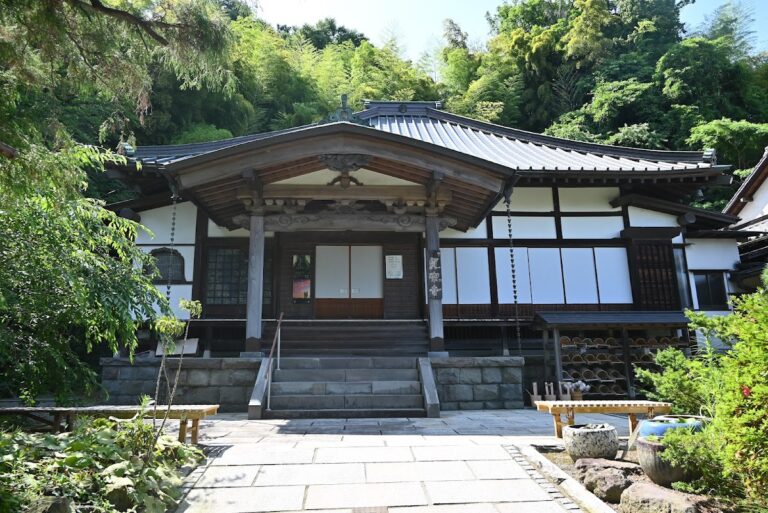
Teisoji Temple Complete Guide | A Hidden Plum Blossom Spot in Kamakura with Ties to the Tokugawa Family
Teisoji Temple, nestled in a tranquil location surrounded by lush greenery and bamboo groves in the northwestern part of Kamakura City, Kanagawa Prefecture, is a historic Jodo sect temple with ties to the Tokugawa shogunate. Founded by Teisoin, the mother of Tokugawa Ieyasu’s concubine, Oai-no-kata (Hodai-in), the temple is known for its beautiful plum blossoms and is often referred to as “Kamakura’s Hidden Flower Temple.”
This article comprehensively introduces everything you need to know before visiting Teisoji Temple, from its historical background and highlights to access information and visiting details.
Basic Information about Teisoji Temple
Official Name: Gyokujozan Shukoin Teisoji Temple
Sect: Jodo Sect
Mountain Name: Gyokujozan
Temple Name: Shukoin
Principal Image: Amida Triad
Founder: Teisoin (Mother of Lady Oai, Grandmother of Tokugawa Hidetada)
Founding Priest: Gyoyo Gen’ei (Chief Priest of Daichoji Temple)
Established: Keicho 16 (1611)
Location: 656 Ueki, Kamakura City, Kanagawa Prefecture
Temple Rank: Former branch temple of Shiba Zojoji Temple
Teisoji Temple is registered as Kanagawa Diocese No. 124 and has existed throughout the Edo period as a special temple that mourned only the Shogun family without having any parishioners.
History and Origins of Teisoji Temple
Relationship between Teisoin and the Tokugawa Family
To understand the history of Teisoji Temple, it is essential to know the life of its founder, Teisoin. Teisoin (Teiso-ni) was the mother of Oai-no-kata (Saigo-no-Tsubone, later Hodai-in), a well-known concubine of Tokugawa Ieyasu. In other words, she was the grandmother of Tokugawa Hidetada, the second shogun of the Edo shogunate.
Teisoin held the important position of Otoshiyori (Chief Administrator) in the Ooku (women’s quarters) of Edo Castle. The Otoshiyori was the highest-ranking woman in the Ooku, overseeing the entire palace and holding authority second only to the shogun’s mother and principal wife. Given this position, it is believed that Teisoin wielded considerable influence over the politics of the Tokugawa shogunate.
Circumstances of the Temple’s Founding
In her later years, Teisoin was granted a stipend of 210 koku by the Edo shogunate and retired to Ueki in Kamakura. It is presumed that the selection of this retirement location was related to the fact that Kamakura was an ancient samurai capital and offered a quiet environment suitable for ascetic practice.
During his retirement, Teisoin became deeply devoted to and received precepts from Gyōyo Gen’ei, the restorer of Daichōji Temple in Iwase. Gen’ei was a highly respected priest known as Seirensha Gyōyo Gen’ei, and Teisoin had been a devout disciple of him since his lifetime.
In 1609, when Teisoin died in this area, his will stipulated that his residence be converted into a temple. Following his wishes, in 1611, Gyōyo Gen’ei was invited as the founding abbot, and Teisoji Temple was officially established.
The temple’s name, “Teisoji,” originates from the posthumous Buddhist name of the founder, Teisoin, and the mountain name, “Tamanawa-san,” indicates its geographical connection to the nearby Tamanawa Castle (present-day Ōfuna district).
Teisoji Temple in the Edo Period
A copy of the inscription on a small bell, created in 1685 (Jōkyō 2) (held by the temple), details the temple’s history, clearly stating that Teisoji Temple was built on the site of the retirement residence of the mother of Tokugawa Hidetada’s mother, Oai-no-kata.
Teisoji Temple was positioned as a branch temple of Daichōji Temple and also a branch temple of Shiba Zōjōji Temple (the Tokugawa family’s ancestral temple in Edo), maintaining deep ties with the shogunate. Notably, this temple did not accept ordinary parishioners, but functioned solely as a temple for mourning the shogunate. This is an extremely unique form of temple, demonstrating the high status of Teisoji Temple.
Within the temple grounds, the Teisoin Mausoleum was established, and the shogunate continued to provide elaborate memorial services. The Tokugawa family crest, the three-leaf hollyhock, is displayed on the main ridge of the main hall, indicating that this temple remains associated with the Tokugawa family even today.
Teishoji Temple in Modern Times
After the Meiji Restoration, Teishoji Temple, having lost the patronage of the shogunate, faced difficult times like many other temples. However, due to its historical value and importance as a cultural asset, it has been maintained with the support of the local community.
Today, Teishoji Temple is a beloved temple for many worshippers and tourists, serving as an important temple that conveys the history of Kamakura and as a famous spot for plum blossoms. Its quiet environment, nestled deep within a residential area, still conveys the atmosphere of its original secluded retreat.
Highlights of Teishoji Temple
Main Hall and the Three-Leaf Aoi Family Crest
As you proceed along the approach to the temple, you will see the main hall straight ahead. The main ridge of the main hall is adorned with the three-leaf hollyhock crest, the family crest of the Tokugawa family, immediately indicating the temple’s connection to the shogunate.
Inside the main hall, the principal image, the Amida Triad, is enshrined, allowing for worship in a serene atmosphere. As befits a Jodo sect temple, the worldview of Pure Land Buddhism centered on Amida Buddha is expressed.
Teisoin Mausoleum
Within the temple grounds’ cemetery area is a mausoleum dedicated to Teisoin, the temple’s founder. This mausoleum reflects Teisoin’s status as the grandmother of Tokugawa Hidetada, and is of high standing.
It has a history of receiving generous memorial services from the Shogunate throughout the Edo period and is still carefully maintained today. The area around the mausoleum is quiet, creating a space that evokes a sense of historical weight.
Wart-Removing Jizo
Upon entering through the gateposts, there is a Jizo hall to the side, housing a Jizo statue known as the “wart-removing Jizo.” This Jizo has long been worshipped by local people and is believed to have the power to remove warts.
This Jizo hall, linked to folk belief, demonstrates that despite being a prestigious temple of the Shogunate, it was also a place of popular faith rooted in the local community.
Teisoji Temple as a Plum Blossom Spot
The main reason Teisoji Temple is called “Kamakura’s hidden flower temple” is the abundance of plum trees blooming within its grounds. From February to March in early spring, the temple grounds are adorned with red and white plum blossoms, captivating visitors.
While Kamakura boasts many famous plum blossom viewing spots, Teishoji Temple is unique for its tranquil, unspoiled environment. Located deep within a residential area, it’s a hidden gem, a little-known spot for plum blossom viewing.
During plum blossom season, sunlight filtering through the trees and the fragrance of the blossoms envelop the grounds, offering visitors a peaceful experience. It’s also a popular photography spot, with beautiful photos of the plum blossoms frequently shared on social media.
Bamboo Grove and Lush Green Grounds
The grounds of Teishoji Temple are surrounded by lush green trees and a bamboo grove, allowing visitors to experience the richness of Kamakura’s nature. The bamboo grove, in particular, exudes a distinctly Japanese temple atmosphere, providing visitors with tranquility and peace.
With its spring plum blossoms, early summer greenery, autumn foliage, and winter tranquility, the temple grounds display different expressions throughout the seasons, offering new discoveries with every visit.
Bamboo Grove and Lush Green Grounds
The grounds of Teishoji Temple are surrounded by lush green trees and a bamboo grove, allowing visitors to experience the richness of Kamakura’s nature. The bamboo grove, in particular, evokes a distinctly Japanese temple atmosphere, providing visitors with a sense of serenity and tranquility.
From the plum blossoms of spring, the fresh greenery of early summer, the vibrant autumn leaves, to the silence of winter, the temple grounds display ever-changing beauty, offering new discoveries with each visit. ### Cemetery and Historical Atmosphere
The temple grounds include a cemetery, lined with old tombstones. Some of these tombstones tell the story of a history dating back to the Edo period.
Walking through the cemetery allows you to feel firsthand the long history this temple has shared with the local community.
How to Access Teishoji Temple
Access by Train
Nearest Station: JR Tokaido Line/Yokosuka Line “Ofuna Station”
Teishoji Temple is approximately a 20-25 minute walk from Ofuna Station. Exit from the west exit of the station and head northwest through the residential area.
Directions:
- Exit Ofuna Station West Exit
- Head north on Prefectural Road 21 (Kamakura Kaido)
- Enter the residential area near the Ueki intersection
- Follow the signs
Because it is located deep within a residential area, first-time visitors are advised to use a map app or navigation system. It’s located in a quiet, secluded mountain setting, a place you might find surprisingly peaceful.
Access by Bus
You can also take a bus from Ofuna Station. However, you’ll need to walk a short distance from the nearest bus stop.
Route: Keihin Kyuko Bus
Boarding Point: Ofuna Station West Exit Bus Terminal
Alighting Point: “Ueki” or “Imaizumi Fudo” bus stop
Travel Time: Approximately 5-7 minutes by bus + 10-15 minutes on foot
Access by Car
From Yokohama-Yokosuka Expressway “Hino IC”: Approximately 10 minutes
From Yokohama-Yokosuka Expressway “Asahina IC”: Approximately 15 minutes
Parking: Teisouji Temple does not have its own parking lot. Parking spaces are limited in the surrounding area, so using public transportation is recommended. If you are visiting by car, consider using a paid parking lot near Ofuna Station and walking or taking a bus to the temple.
Combining with Nearby Temples
Around Teisoji Temple, there are many other representative temples of Kamakura, such as Joryu-ji, Shoren-ji, Sugimoto-dera, Kakuen-ji, Jokomyo-ji, and Myooin. If you have time, a “Kamakura Temple and Shrine Pilgrimage” combining visits to these temples is highly recommended.
In particular, Joryu-ji Temple, like Teisoji Temple, is known as a famous spot for plum blossoms, and visiting both temples during plum blossom season will allow you to enjoy a more fulfilling Kamakura stroll.
Teisoji Temple Visiting Information
Visiting Hours
Teisoji Temple is generally open for daytime visits, but specific visiting hours may not be officially stated. Generally, the hours are from around 9:00 AM to 4:00 PM.
Recommended Visiting Time: 10:00 AM – 3:00 PM
The plum blossom season (February-March) is especially beautiful, but the gates may be closed in the early morning or late afternoon, so visiting during the daytime is recommended.
Admission Fee
Admission to the grounds of Teishoji Temple is generally free. However, a separate admission fee may be required for special viewings, such as those of the interior of the main hall.
Notes for Visitors
- Maintaining Silence: As the temple is adjacent to a residential area, please refrain from loud conversations and noise.
- Photography: Photography is generally permitted on the temple grounds, but there are areas where photography is prohibited, such as the interior of the main hall and the mausoleum.
- Respect for the Cemetery: Please behave quietly and respectfully in the cemetery area.
- Entry onto Private Property: As the surrounding area is a residential neighborhood, please refrain from entering areas outside the temple grounds.
- Take Your Trash Home: There are no trash cans on the temple grounds, so please be sure to take your trash home with you.
Events and Festivals
As a Jodo sect temple, Teishoji Temple holds regular memorial services and events. Special services are sometimes held, especially during the spring and autumn equinoxes and Obon (Buddhist festival).
For specific event dates, we recommend contacting the temple in advance.
Information on Teishoji Temple’s Goshuin (Temple Seal)
You can receive a Goshuin at Teishoji Temple. Goshuin are popular among many visitors as proof of worship and as a memento of their connection with the temple.
Contents of the Goshuin
The Goshuin at Teishoji Temple features the temple name “Teishoji” and the principal image “Amida Nyorai” written in ink. As it is a Jodo sect temple, it may also include the phrase “Namu Amida Butsu” (Homage to Amida Buddha).
Receiving the Goshuin
Goshuin can be obtained at the main hall or the temple’s living quarters (kuri). However, there may be times when no one is permanently stationed there, so if you want to be sure to receive a Goshuin, we recommend calling in advance.
Goshuin Fee: Generally around 300-500 yen
About Goshuin Books
Bringing your own Goshuin book is recommended, but pre-printed Goshuin may also be available. When visiting temples and shrines in Kamakura, it’s convenient to bring a goshuincho (stamp book).
Teishoji Temple and surrounding attractions
Joryu-ji Temple
This is a Nichiren Buddhist temple located near Teishoji Temple. It’s also known as a famous spot for plum blossoms, and many people visit it along with Teishoji Temple during the plum blossom season. Located in a quiet residential area, it’s affectionately known as a “hidden flower temple.”
Ofuna Kannon
This is a giant white-robed Kannon statue within walking distance of Ofuna Station. The approximately 25-meter-tall Kannon statue is known as a symbol of Ofuna and is perfect to visit before or after visiting Teishoji Temple.
Sugimoto-dera Temple
This is an ancient Tendai Buddhist temple considered to be the oldest temple in Kamakura. The moss-covered stone steps are beautiful, and it has a historical atmosphere. It’s about a 10-minute drive from Teishoji Temple.
Kakuenji Temple
This is a Shingon Buddhist temple founded by Hojo Yoshitoki, the second regent of the Kamakura Shogunate. The temple grounds are designated a national historical site and retain a strong atmosphere of the Kamakura period.
Jokomyo-ji Temple
This is a Shingon Buddhist temple of the Sennyu-ji branch, housing the Amida Triad, a nationally designated important cultural property. It is one of the temples where you can feel the profound history of Kamakura.
Best Season to Visit Teisoji Temple
Plum Blossom Season (February-March)
The best time to visit Teisoji Temple is from February to March, when the plum blossoms are in bloom. The red and white plum blossoms adorn the temple grounds, giving a sense of the arrival of spring. The peak blooming season is often from mid- to late February.
The fragrance of the plum blossoms and the tranquil atmosphere of the temple grounds combine to provide a special time that allows you to forget the hustle and bustle of the city.
Season of Fresh Greenery (April-May)
After the plum blossom season ends, the fresh greenery of early summer is also beautiful. The lush green of the bamboo grove and the green covering the temple grounds create a refreshing atmosphere.
Autumn Season (November-December)
The autumn foliage season is also a time when the charm of Teishoji Temple shines. While famous autumn foliage spots in Kamakura are often crowded, Teishoji Temple is a hidden gem where you can enjoy the autumn leaves in relative peace.
Winter Silence (January)
During the winter months, when there are fewer tourists, you can experience the true essence of Teishoji Temple, enveloped in silence. Visiting the temple in the crisp air brings peace to the mind.
Cultural Assets and Historical Value of Teishoji Temple
Copy of the Bell Inscription
The copy of the bell inscription from the second year of the Jōkyō era (1685), which is preserved at the temple, is an important historical document that records the circumstances of the founding of Teishoji Temple. This document confirms that Teisoji Temple was built on the site of the retirement residence of Teisoin, the grandmother of Tokugawa Hidetada.
Documents Showing the Relationship with the Tokugawa Family
Various elements remain within the temple grounds that demonstrate a deep connection with the Tokugawa family. The three-leaf hollyhock crest on the main hall, the mausoleum of Teisoin, and the temple’s history itself are valuable evidence that tells the story of the historical connection between the Edo shogunate and Kamakura.
Value as a Jodo Sect Temple
Teisoji Temple, as a Jodo sect temple, is important for studying the organization and faith of Jodo sect groups during the Edo period. Its position as a branch temple of Shiba Zojoji Temple and its unique character as a temple exclusively for the shogun’s family make it an interesting case study for considering the relationship between religion and politics during the Edo period.
Teisoji Temple Visit Report/Experience
Many visitors highly appreciate the quiet and peaceful atmosphere of Teisoji Temple. The following comments are frequently heard:
“The Charm of a Hidden Gem”
The temple’s location deep within a residential area allows for a quiet, unspoiled environment for worship, which is highly valued. Many visitors express surprise at its unexpected location and the joy of discovering a historical temple.
“The Beauty of the Plum Blossoms”
Visitors during plum blossom season have expressed their awe at the beauty of the plum blossoms adorning the temple grounds. The lack of crowds compared to famous plum blossom spots, allowing for leisurely appreciation, is also a major draw.
“Experiencing the History of the Tokugawa Family”
Many visitors have commented on the deep connection to the Tokugawa shogunate upon seeing the three-leaf hollyhock crest on the main hall and the Teisoin Mausoleum. For history buffs, it’s a valuable place to experience living history that can’t be learned from textbooks.
“Tranquility and Healing”
Many visitors have said they were able to forget the hustle and bustle of the city and find peace of mind in the quiet temple grounds surrounded by a bamboo grove. It is highly regarded as a suitable place for meditation and introspection.
About the Cemetery at Teishoji Temple
Teishoji Temple has a cemetery where the graves of local residents are lined up. During the Edo period, Teishoji Temple was a temple exclusively for the Shogun’s family and did not have parishioners. However, since the Meiji era, it has also functioned as a cemetery for the general public.
The cemetery area also contains the Teishoin Mausoleum, where memorial services for Teishoin, the temple’s founder, continue to this day. When visiting the cemetery, it is expected that visitors will behave quietly and respectfully towards the deceased.
Frequently Asked Questions about Teishoji Temple
Q: Is there an entrance fee to Teishoji Temple?
A: Visiting the temple grounds is generally free. However, there may be additional charges for special viewings.
Q: Can I get a Goshuin (temple stamp)?
A: Yes, you can get a Goshuin. However, there are times when there is no staff present, so if you want to be sure to get one, it is recommended to inquire in advance.
Q: When is the best time to see the plum blossoms?
A: The best time to see them is usually from mid-February to early March. The blooming period varies from year to year, so we recommend checking the latest information before your visit.
Q: Is there parking available?
A: Teishoji Temple does not have its own parking lot. We recommend using public transportation.
Q: Who founded Teishoji Temple?
A: It was founded by Teishoin, the mother of Tokugawa Ieyasu’s concubine, Lady Oai (Hōdaiin). In other words, she was the grandmother of Tokugawa Hidetada.
Q: Is photography allowed?
A: Photography is generally permitted within the temple grounds, but there are areas where photography is prohibited, such as inside the main hall and the mausoleum. Also, consideration is needed when taking photos in the cemetery.
Q: Are there any recommended temples in the surrounding area?
A: There are temples such as Jōryūji, Sugimotoji, Kakuenji, Jōkōmyōji, and Myōōin. Jōryūji, in particular, is known as a famous spot for plum blossoms, similar to Teishoji Temple.
Summary
Teishoji Temple is a historic Jodo sect temple with ties to the Tokugawa shogunate, founded by Teisoin, the mother of Lady Oai, a concubine of Tokugawa Ieyasu. Since its founding in 1611, it has maintained its status as a temple exclusively for the shogunate, and is now a popular hidden gem for plum blossoms in Kamakura.
Teishoji Temple is full of charm, with its quiet location deep within a residential area, grounds surrounded by lush bamboo groves, beautiful plum blossoms that herald the arrival of spring, and the Tokugawa family crest (three-leaf hollyhock) and the Teisoin mausoleum, all of which convey the history of the Tokugawa family.
Unlike Kamakura’s famous tourist spots, it is a precious place where you can slowly reflect on history in a tranquil atmosphere that is not commercialized. It is especially beautiful during plum blossom season and is a popular spot for photography.
It is easily accessible, about a 20-minute walk from Ofuna Station, making it an ideal temple to visit as part of a Kamakura temple tour or when you want to spend some quiet time. Teishoji Temple is a hidden gem that I would recommend to anyone who loves history, flowers, or tranquility.
When you visit Kamakura, be sure to stop by Teishoji Temple. A special time away from the hustle and bustle, and a valuable experience of feeling the history of the Tokugawa family, awaits you.