Tennoji Temple Complete Guide | History, Access, and Highlights Explained in Detail
Tennoji is the name of several temples located throughout Japan, but the most representative are the Tennoji Temple in Sakaide City, Kagawa Prefecture, known as the 79th temple of the Shikoku 88 Temple Pilgrimage, and the Tennoji Temple located in Yamato Town, Miyagi Prefecture. This article provides a comprehensive explanation of these Tennoji Temples, from their historical background to the highlights of their grounds and access information.
What is Tennoji Temple?
The name Tennoji is often given to temples with deep ties to emperors and the imperial family, and each temple possesses its own unique history and cultural value. Currently, there are mainly two temples widely known as “Tennoji” in Japan, each playing an important role in a different region.
Tennoji Temple in Sakaide City, Kagawa Prefecture (Kinkazan Koshōin Tennoji)
Its official name is “Kinkazan Koshōin Tennoji,” and it is the 79th temple of the Shikoku 88 Temple Pilgrimage, visited by many pilgrims. Named “Tennoji” (Emperor Temple) due to its deep connection with Emperor Sutoku, it is known as a temple that strongly reflects the history of syncretism between Shinto and Buddhism.
Tennoji Temple in Yamato-cho, Miyagi Prefecture
Tennoji Temple, located in Yamato-cho, Kurokawa-gun, Miyagi Prefecture, is known as the family temple of the Iizaka clan and was originally located in Iizaka-cho, Fukushima City, Fukushima Prefecture. It was moved to its current location in 1616 (Genna 2) during the early Edo period and is carefully preserved as a local cultural asset.
History of Tennoji Temple in Sakaide City, Kagawa Prefecture
Founding and Early History
There are several traditions regarding the founding of Tennoji Temple. According to temple tradition, it was founded in 742 (Tenpyo 17) by Gyoki Bodhisattva. When Gyōki traveled around Shikoku, he discovered a mountain rich in ore in this area and named it “Kanayama” (Golden Mountain), believing it to be the dwelling place of Kanayama-hime and Kanayama-hiko.
Later, Gyōki built the Kanayama Manijuin temple on the mountainside of Kanayama, with Yakushi Nyorai (Medicine Buddha) as its principal deity, demonstrating that this area was a sacred site of syncretism between Shinto and Buddhism. Even then, this region was blessed with abundant mining resources and flourished as a center of Kanayama Gongen worship.
Connection with Kōbō Daishi Kūkai
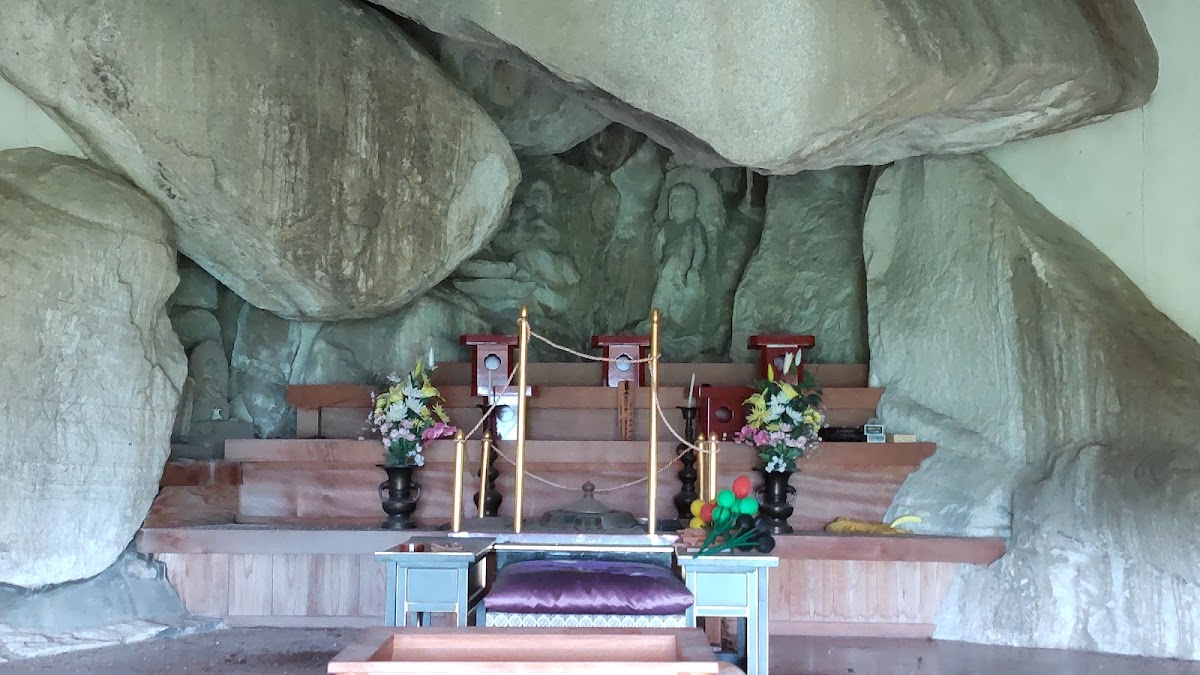
During the Kōnin era (810-823), Kōbō Daishi Kūkai visited this area and practiced asceticism in a cave on Kanayama. It is said that during his training, the Great Master felt a spiritual power and, using a sacred tree found by the Yasoba spring, carved three Buddhist statues: Eleven-faced Kannon Bodhisattva, Amida Nyorai, and Aizen Myōō.
At this time, the temple was called “Myojoju-ji Maniju-in.” A legend remains that Kobo Daishi received a sacred jewel from Kinzan Gongen, indicating the importance of this place as a sacred site.
Emperor Sutoku and Tennoji Temple
The most important event in the history of Tennoji Temple is its connection to Emperor Sutoku. After his defeat in the Hogen Rebellion (1156), Emperor Sutoku was exiled to Sanuki Province (present-day Kagawa Prefecture).
He spent the first three years at the Kumoi Palace, but later, due to changing circumstances and the need for stricter control, he was moved to the current site of Tennoji Temple. The Emperor was confined here for over six years before passing away on August 26th, 1164 (according to the old lunar calendar).
After the death of Emperor Sutoku, the Sutoku Tenno Shrine was built to pray for his soul, and because it was the place where the Emperor resided, the temple’s name was changed to “Tennoji” (Emperor Temple). Since then, this temple has attracted many worshippers as a sacred site associated with Emperor Sutoku.
Syncretism of Shinto and Buddhism and Ryobu Shinto
Tennoji Temple is known as a typical example of syncretism of Shinto and Buddhism. It was strongly influenced by Miwa Shinto, which is based on Ryobu Shinto, created by Emperor Saga and Kukai, and both a shrine and a temple coexisted within its grounds.
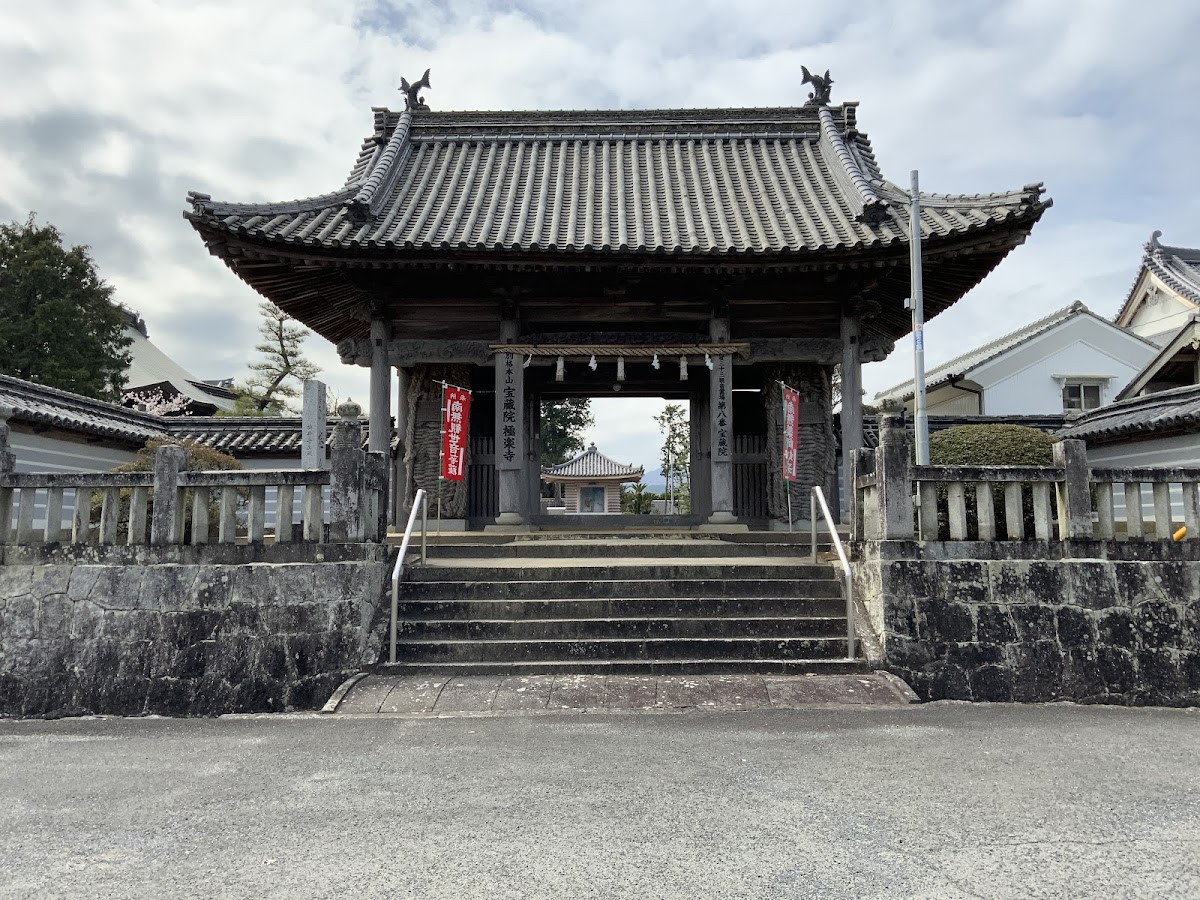
Before the Meiji-era separation of Shinto and Buddhism, the shrine and temple sections were operated as a single entity, and worshippers could offer prayers to both Shinto and Buddhism. Even today, a Miwa torii gate stands at the entrance to the temple grounds as a remnant of this history, conveying the history of syncretism of Shinto and Buddhism.
Highlights of the Temple Grounds
Miwa Torii Gate
At the entrance to the approach to Tennoji Temple stands a beautiful vermilion-painted Miwa Torii gate. This gate is an important structure symbolizing Ryobu Shinto, and has a unique shape with a large main gate flanked by smaller gates.
It is considered important to pass through the Miwa Torii gate before entering the temple grounds, and this worship ritual, embodying the spirit of Shinto-Buddhist syncretism, is still observed today. The path leading from the torii gate to the temple grounds is spacious, welcoming visitors with a solemn atmosphere.
Main Hall
The main hall houses the Eleven-Faced Kannon Bodhisattva, said to have been carved by Kobo Daishi, as the principal image. Although the current main hall was rebuilt after the Edo period, it is an important building that conveys the ancient faith to the present day.
Inside the main hall, pilgrims perform sutra copying and chanting, visiting as part of their Shikoku pilgrimage. The temple is especially bustling with visitors during the spring and autumn pilgrimage seasons.
Emperor Sutoku Shrine
Within the temple grounds is the Emperor Sutoku Shrine, dedicated to Emperor Sutoku. Built to appease the spirit of the Emperor after his death, this shrine is one of the most important sacred sites at Tennoji Temple.
Nearby is the Shiramine Shrine, a historical site associated with Emperor Sutoku, and many people visit it along with Tennoji Temple. Shiramine Shrine is adjacent to Emperor Sutoku’s mausoleum and is an important place to show reverence for the Emperor.
Yasoba Spring
The Yasoba Spring, where Kobo Daishi is said to have obtained a sacred tree, still remains near the temple grounds. This spring has long been known as a source of sacred water and has been used by ascetics to purify themselves.
This spring, which gushes forth at the foot of Mt. Kanayama, maintains its pure water quality and is an important water source for the local people.
Kanayama and the Cave
Kanayama, towering behind Tennoji Temple, is known for the cave where Kobo Daishi is said to have practiced asceticism. This mountain is rich in mineral resources and has been revered since ancient times as a sacred mountain where Kanayama Gongen is enshrined.
Even today, traces of ascetic practice remain on the mountain, allowing visitors to feel the history of faith. However, access to the cave may be restricted, so please follow the temple’s instructions when visiting.
History and Cultural Assets of Tennoji Temple, Yamato-cho, Miyagi Prefecture
Connection with the Iizaka Clan
Tennoji Temple in Yamato-cho, Miyagi Prefecture, has played an important role as the family temple of the Iizaka clan. Originally located in Iizaka-machi, Fukushima City, Fukushima Prefecture, it was called “Tennoji” at the time.
The Iizaka clan was a samurai family serving the Date clan, and the temple moved repeatedly along with the clan’s relocations. In 1616, during the early Edo period, when the Iizaka clan moved to what is now Yamato-cho, Tennoji Temple also relocated with them, settling in its current location.
Relationship with the Date Family
At that time, the Iizaka clan was headed by Munekiyo, the third son of Date Masamune, and was a high-ranking retainer, even granted the use of the Date surname. Therefore, Tennoji Temple had deep ties with the Date family and developed under the patronage of the domain.
The temple’s buildings and cultural properties bear the Date family crest and designs, strongly reflecting the influence of samurai culture.
Yamato-cho Designated Tangible Cultural Property: Tennoji Temple’s Priest’s Quarters
On March 3, 2014, the priest’s quarters (kuri) of Tennoji Temple were designated as a Yamato-cho Designated Tangible Cultural Property. A priest’s quarters is the living space for the head priest and monks, as well as the building where temple affairs are conducted.
The living quarters of Tennoji Temple retain many features of Edo period architecture, making it a valuable resource for understanding the characteristics of temple architecture at that time. The building’s structure and design exhibit architectural techniques unique to the Tohoku region, making it an important cultural asset that demonstrates the region’s cultural value.
Facility Information and Location
Tennoji Temple in Yamato-cho, Miyagi Prefecture, remains a beloved temple for locals, serving as an important historical site for the region. The temple grounds include the main hall, living quarters, and a cemetery, offering a peaceful environment for worship.
The temple is located in Yamato-cho, Kurokawa-gun, Miyagi Prefecture. Detailed address and telephone number can be found on the Yamato-cho official website and in the cultural property information section.
Access Information
Access to Tennoji Temple, Sakaide City, Kagawa Prefecture
Access by Train
- Approximately 15 minutes by car from JR Yosan Line “Sakaide Station”
- Approximately 25 minutes on foot from JR Yosan Line “Kamogawa Station”
Access by Car
- Approximately 10 minutes from Takamatsu Expressway “Sakaide IC”
- Parking available (free)
Access by Bus
- Local buses are available from Sakaide Station (Since the number of buses is limited, it is recommended to check the timetable in advance)
Location
Tennoji, Nishisho-cho, Sakaide City, Kagawa Prefecture
Access to Tennoji Temple, Yamato-cho, Miyagi Prefecture
Access by Car
- Approximately 10 minutes from Tohoku Expressway “Yamato IC”
- Approximately 30 minutes by car from central Sendai
Access by Public Transportation
- Take a bus from Sendai City Subway Namboku Line “Izumi-Chuo Station”
- For detailed bus routes, please contact the Yamato Town Hall or a local tourist information center.
Location
Yamato Town, Kurokawa District, Miyagi Prefecture
(Please check the Yamato Town official website for detailed addresses)
Etiquette and Manners for Worship
Worship as part of the Shikoku Pilgrimage
When visiting Tennoji Temple in Sakaide City, Kagawa Prefecture, as part of the Shikoku 88 Temple Pilgrimage, it is recommended to observe the following etiquette.
- Bow at the Temple Gate: Before entering the temple grounds, clasp your hands together and bow in front of the Miwa Torii gate.
- Purify at the Water Basin: Purify your hands and mouth before proceeding to the main hall.
- Worship at the Main Hall: Chant sutras and offer your sutras to the principal image, the Eleven-Faced Kannon Bodhisattva.
- Worship at the Daishi Hall: Also worship at the Daishi Hall, which enshrines Kobo Daishi.
- Receive a Goshuin (temple stamp) at the Sutra Office: Receive a Goshuin in your sutra book as proof of your visit.
Manners for General Worshippers
General worshippers other than pilgrims are welcome, but please observe the following manners.
- Please be quiet within the temple grounds and avoid disturbing other visitors.
- Photography is only permitted in designated areas (photography is often prohibited inside the main hall).
- Please wear clean, modest clothing.
- Please take all your trash with you.
- Please refrain from entering areas other than those designated.
Nearby Tourist Attractions
Shiramine Shrine
Shiramine Shrine, located near Tennoji Temple, is adjacent to the mausoleum of Emperor Sutoku. Built to comfort the spirit of the Emperor, it continues to attract many visitors. Visiting both Tennoji Temple and Shiramine Shrine allows for a deeper understanding of Emperor Sutoku’s life.
Kanayama
Kanayama, towering behind Tennoji Temple, is a popular hiking destination. From the summit, you can enjoy a panoramic view of the Seto Inland Sea, and on clear days, the scenery is magnificent.
Ohenro no Eki Kokubu
Ohenro no Eki Kokubu, a rest stop for those undertaking the Shikoku Pilgrimage, is located near Tennoji Temple. This temple serves as a beloved hospitality center for pilgrims and locals alike, offering daily specials and other meals. It’s a valuable place to experience pilgrimage culture.
Sightseeing in Sakaide City
Sakaide City boasts numerous tourist attractions where you can enjoy the beautiful scenery of the Seto Inland Sea, including the Seto Ohashi Bridge and Shamijima Island. Visiting these spots before or after your visit to Tennoji Temple is highly recommended.
Annual Events and Special Days
Memorial Service for Emperor Sutoku
Every year, around the 26th day of the 8th month of the lunar calendar (late September to early October in the Gregorian calendar), the anniversary of Emperor Sutoku’s death, a memorial service is held. A special service takes place on this day, and many worshippers pray for the repose of the Emperor’s soul.
Spring and Autumn Grand Festivals
Grand festivals are held in spring and autumn, with various events taking place on the temple grounds. The autumn festival, in particular, coincides with the pilgrimage season, creating a lively atmosphere.
New Year’s Visit and the Year-End/New Year Period
Many worshippers visit the temple for their first shrine visit of the year. As a temple associated with Emperor Sutoku, it is bustling with people praying for peace and tranquility throughout the year.
Cultural Value of Tennoji Temple
Historical Witness to the Syncretism of Shinto and Buddhism
Tennoji Temple is a temple that demonstrates an important example of the syncretism of Shinto and Buddhism in the history of Japanese religion. While many temples and shrines were separated into Shinto shrines and Buddhist temples by the Meiji-era decree separating Shinto and Buddhism, traces of this separation remain strongly present at Tennoji Temple.
The presence of the Miwa Torii gate and the layout of the temple grounds, where the Emperor Sutoku Shrine and the Buddhist temple coexist, speak to the complexity and richness of Japanese religious culture.
A Part of the Shikoku Pilgrimage Culture
As the 79th temple of the Shikoku 88 Temple Pilgrimage, Tennoji Temple plays an important role in the culture of the Shikoku Pilgrimage. As a sacred site associated with Kobo Daishi, it has attracted the faith of people for over 1200 years.
Even today, pilgrims clad in white robes visit from all over Japan, continuing their pilgrimage in search of inner peace. This culture was designated a Japan Heritage site in 2015 as the “Shikoku Pilgrimage,” and has attracted international attention.
Historical Significance of Emperor Sutoku
Emperor Sutoku, who was defeated in the Hogen Rebellion, a significant event in Japanese history, and exiled to Sanuki, had a tragic life that has been the subject of many literary works and legends.
Tennoji Temple is a historical site indispensable for understanding Japanese medieval history, as it is where the emperor spent his final days. The legend of the emperor’s vengeful spirit had a great influence on later generations and contributed to the formation of Japanese belief in vengeful spirits.
Precautions for Visiting
Visiting Hours
The temple grounds are generally open during the day, but the reception hours for receiving sutra copies are limited. Generally, the appropriate time for visiting and receiving sutra copies is from 7:00 AM to around 5:00 PM. Hours may vary depending on the season, so it is recommended to check in advance.
Parking Information
Tennoji Temple in Sakaide City, Kagawa Prefecture, has a parking lot for visitors, but it can get crowded during pilgrimage seasons and events. Especially during the spring and autumn pilgrimage seasons, it is recommended to visit earlier in the day.
About Goshuin (Temple Seals)
Goshuin (temple seals) for the Shikoku Pilgrimage can be obtained at the temple office by paying a donation fee. Bring your pilgrimage notebook and make a polite request. It’s important to remember that goshuin are proof of your visit, not a collection item.
Accessibility Information
Some parts of the temple grounds have stairs and steps, so wheelchair access may be limited. Inquiring with the temple in advance may allow for possible accommodations.
The Significance of Visiting Tennoji Temple
Visiting Tennoji Temple has a deeper meaning than mere sightseeing or temple visits. This temple encapsulates Japanese history, religion, and culture, offering many insights to visitors.
Reflecting on the tragic life of Emperor Sutoku allows us to feel the impermanence of power and the transience of life. Furthermore, following in the footsteps of Kobo Daishi provides an opportunity to consider the power of faith and the significance of ascetic practice.
As a place where we can experience the unique Japanese religious culture of Shinto-Buddhist syncretism, Tennoji Temple teaches us, living in the modern age, the spirit of tolerance and harmony.
Visiting it as part of the Shikoku Pilgrimage will be an important step in a pilgrimage of self-reflection and seeking inner peace. Even for general visitors, it offers a precious time to escape from daily life and quiet the mind.
Tennoji Temple in Yamato-cho, Miyagi Prefecture, is a temple worth visiting as an important cultural asset that conveys the history and culture of the region to the present day. Through its connections with the Iizaka clan and the Date family, we can learn about the characteristics of samurai culture and temple architecture in the Tohoku region.
Summary
As its name suggests, Tennoji Temple is a historically important temple with deep connections to the Emperor and the Imperial family. Tennoji Temple in Sakaide City, Kagawa Prefecture, is the 79th temple on the Shikoku 88 Temple Pilgrimage, a sacred site associated with Emperor Sutoku, and a cultural asset that strongly reflects the history of syncretism between Shinto and Buddhism.
Tennoji Temple in Yamato Town, Miyagi Prefecture, is the family temple of the Iizaka clan and developed through its connection with the Date family. Its temple building, which retains Edo period architectural style, is designated as a cultural asset.
By understanding the unique history and cultural value of each Tennoji Temple and actually visiting them, you can experience the rich religious culture and depth of history in Japan. When visiting, please observe appropriate manners, respect the weight of history and faith held by the temple, and cherish the time spent in quiet contemplation.
Whether you are undertaking the Shikoku pilgrimage, seeking historical exploration, or simply seeking peace of mind, Tennoji Temple is open to all visitors. As a place of continued faith and a cultural asset that conveys history, Tennoji Temple is a valuable place that teaches us many things.