The History and Beliefs of Nyotai Shrines: A Thorough Explanation of the Origins of Goddess Worship in the Kanto Region and Nyotai Shrines Across Japan
Nyotai shrines are a general term for shrines dedicated to goddesses, widely distributed mainly in the Kanto region. In particular, several Nyotai shrines exist in the area centered around Saitama Prefecture, each with its own unique history and beliefs. This article will provide a detailed explanation of the characteristics, enshrined deities, history, and current forms of belief of various Nyotai shrines, focusing on Hikawa Nyotai Shrine.
What are Nyotai Shrines?: The Basic Concepts of Goddess Worship
As the name suggests, Nyotai shrines are shrines that enshrine goddesses as their principal deities. In the Kanto region, a form of worship where male and female deities are worshipped facing each other has been observed since ancient times, and the custom of venerating male and female shrines together has taken root.
The following are some of the characteristics of Nyotai Shrines:
- Dedicated to a goddess: Often enshrines Kushinadahime-no-Mikoto.
- Paired relationship: Forms a pair with Nantai Shrines and is worshipped as a married couple.
- Connection to water: Often distributed along rivers and irrigation canals.
- Belief for safe childbirth and fertility: Believed to grant women’s wishes.
Hikawa Nyotai Shrine: An ancient shrine claiming to be the Ichinomiya (first-ranked shrine) of Musashi Province
Overview and History of Hikawa Nyotai Shrine
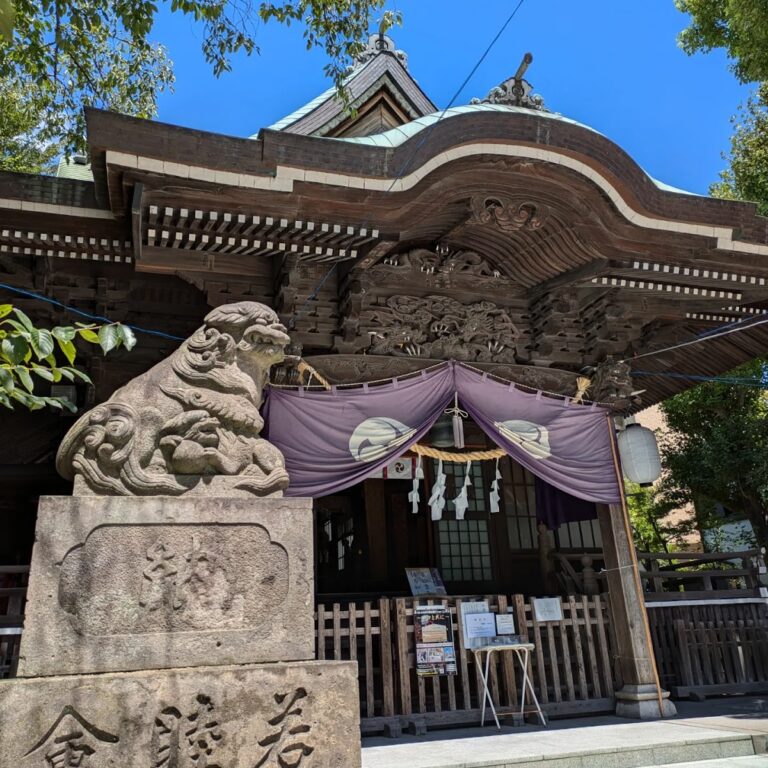
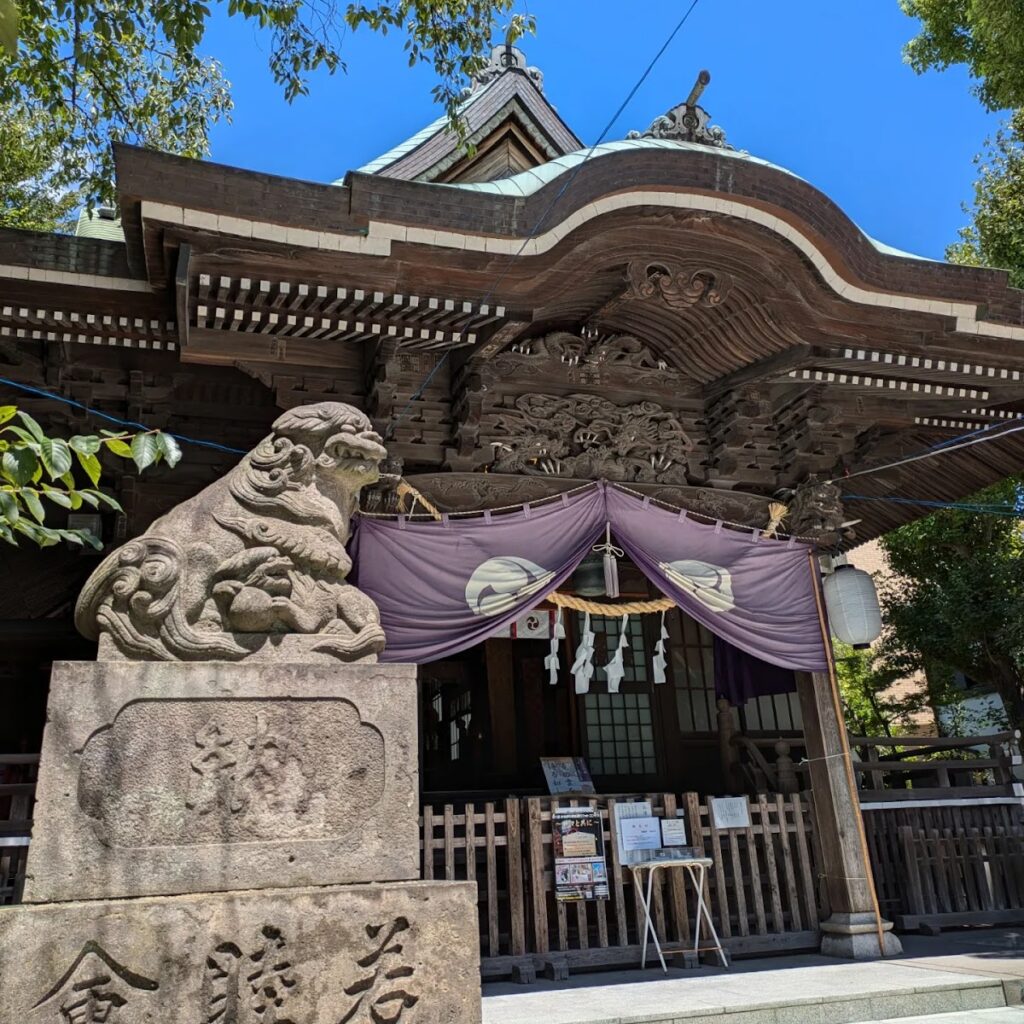
Located in Miyamoto, Midori-ku, Saitama City, Saitama Prefecture, Hikawa Nyotai Shrine is known as one of the most ancient shrines in Musashi Province. It is a prestigious shrine claiming to be the Ichinomiya of Musashi Province and a member of the National Association of Ichinomiya. Its former shrine rank was Gosha (village shrine), and it has gathered local faith as the guardian shrine of the former Mimuro Village.
According to shrine tradition, the shrine was founded during the reign of Emperor Sujin, with the deity invited from Izumo. Located on a small, tongue-shaped plateau jutting out into the Minuma Valley, it has been revered alongside the people’s deep affection for the waters of Minuma. The existing Gion Iwafune Ryujin Festival is an important festival that vividly illustrates its history.
Deities of Hikawa Nyotai Shrine
The principal deity of Hikawa Nyotai Shrine is Kushinadahime-no-Mikoto. In Japanese mythology, she is known as the wife of Susanoo-no-Mikoto and appears in the legend of the slaying of the Yamata no Orochi (eight-headed serpent).
While the Hikawa Shrine in Omiya is considered a male shrine dedicated to Susanoo-no-Mikoto, Hikawa Nyotai Shrine is positioned as a female shrine. This paired male-female worship is a characteristic form of shrine worship in the Kanto region.
The Three Hikawa Shrines Around Minuma
Around Minuma, there are three shrines: Hikawa Shrine, Hikawa Nyotai Shrine, and Nakayama Shrine (Hiko-oji Shrine). These three shrines have formed a unified religious sphere known as the “Three Hikawa Shrines.”
- Hikawa Shrine (Omiya): Male deity shrine, dedicated to Susanoo-no-Mikoto
- Hikawa Nyotai Shrine (Midori Ward): Female deity shrine, dedicated to Kushinadahime-no-Mikoto
- Nakayama Shrine (Minuma Ward): Hiko-oji Shrine, dedicated to Ōkuninushi-no-Mikoto
The arrangement of these three shrines is historically significant as it represents the ancient religious sphere centered around Minuma.
Grounds and Highlights of Hikawa Nyotai Shrine
The grounds of Hikawa Nyotai Shrine are home to a grove of warm-climate plants such as camphor trees, holly trees, and Japanese evergreen oaks, which is designated a natural monument by Saitama City. Furthermore, it is designated as a “Hometown Forest” by Saitama Prefecture, making it an important location from the perspective of preserving the natural environment.
The main hall is a valuable building that conveys the architectural style of the early modern period, and several subsidiary shrines are also enshrined within the grounds. Even today, many worshippers visit, and it is particularly revered for its blessings related to women’s wishes and prayers for safe childbirth.
Nyotai Shrine in Soka City: A North-Facing Shrine Facing Mount Tsukuba
Characteristics of Nyotai Shrine in Kakigi-cho
Nyotai Shrine, located in Kakigi-cho, Soka City, Saitama Prefecture, is a shrine with a distinctive layout, facing north towards Mount Tsukuba. Mount Tsukuba is a sacred mountain towering over Ibaraki Prefecture and has been an object of mountain worship since ancient times.
Until the Showa era, on clear winter days, the surrounding mountains could be seen from within Soka City. In particular, Mount Fuji, Japan’s highest mountain, and Mount Tsukuba, towering over the Kanto Plain, were familiar landscapes for the local people. In recent years, with the construction of many high-rise buildings in the city, opportunities to see the mountains have decreased, but Mount Tsukuba can still be seen.
Connection to Tsukuba Mountain Worship
The reason why Nyotai Shrine is built facing Mount Tsukuba suggests a religious connection to Mount Tsukuba’s Nyotai-san (Tsukuba Nyotai Shrine). Mount Tsukuba has both Nantai-san and Nyotai-san, each with its own shrine. It is highly likely that Soka City’s Nyotai Shrine was built in connection with this Tsukuba Mountain worship.
Ushijima Nyotai Shrine: Nyotai-sama in Kasukabe City
Ushijima Nyotai Shrine is located in Kasukabe City, Saitama Prefecture (formerly Ushijima Village). It is a shrine affectionately known locally as “Nyotai-sama.” The exact date of its founding is unknown, but records indicate it was rebuilt on an auspicious day in July of Genroku 4 (1691).
Like Hikawa Nyotai Shrine, this shrine also enshrines a goddess and has attracted the faith of the local community. The historical fact of its reconstruction during the Edo period speaks to the deep faith the local community had in Nyotai Shrine at that time.
Nyotai Shrine in Kawasaki City: The Legend of the Woman Who Calmed Floods
History and Legend of Nyotai Shrine
Nyotai Shrine (Nyotai-Okami), located in Kawasaki City, Kanagawa Prefecture, is a shrine situated near JR Kawasaki Station. The exact founding date is unknown, but according to oral tradition, it is said to have been established during the Eiroku era (1558-1570).
A moving legend surrounds the founding of this shrine. In ancient times, when the villagers along the Tama River suffered disaster due to flooding, a female courtesan is said to have thrown herself into the water, sacrificing herself. It is believed that the villagers, in praise of this woman’s self-sacrificing spirit, enshrined her as Nyotai Gongen, marking the beginning of the shrine.
Benefits for Fulfilling Women’s Wishes
Kawasaki’s Nyotai Shrine, as its name suggests, is believed to grant the relief of women’s worries and fulfill their wishes. In particular, due to a legend of a woman protecting people from floods, it is revered as a shrine that bestows the strength to overcome difficult situations.
Distribution and Characteristics of Nyotai Shrines
Connection to Rivers and Irrigation Canals
Nyotai Shrines tend to be distributed along rivers and irrigation canals. This suggests a connection to “Funadama worship.” Funadama is the guardian deity of ships, worshipped for safe voyages and abundant catches. In many regions, it is considered a goddess, and the belief in likening ships to women is the underlying background.
The presence of Nyotai Shrines in locations deeply connected to water, such as the Hikawa Nyotai Shrine around Minuma and the Kawasaki Nyotai Shrine along the Tama River, is thought to be a result of the fusion of ancient water deity worship and goddess worship.
Positioning as a Candidate for a Shikinaisha Shrine
Hikawa Nyotai Shrine is considered one of the candidate shrines for the Shikinaisha “Takehime Shrine” listed in the Engishiki Jinmyocho (a list of shrines compiled in the Heian period). A Shikinaisha is a historically significant shrine listed in the Engishiki Jinmyocho, compiled during the Heian period, indicating its high status and recognition by the imperial court since ancient times.
A candidate shrine refers to a shrine that is a candidate for a Shikinaisha when multiple locations exist. The fact that Hikawa Nyotai Shrine is considered a candidate for a Shikinaisha demonstrates its historical antiquity and importance.
The Paired Worship of Male and Female Deities
In the Kanto region, a characteristic form of worship involves the worship of male and female deities facing each other. This is thought to have the following meanings:
- Influence of Yin-Yang Philosophy: The belief that the order of the universe is maintained through the harmony of male and female.
- Belief in Married Deities: The belief that the union of male and female deities as husband and wife brings prosperity of descendants and abundant harvests.
- Regional Integration: A form of integration of deities from different clans or groups.
The relationship between Hikawa Shrine and Hikawa Nyotai Shrine in Omiya is a typical example of this male and female deity worship.
The Current State of Nyotai Shrine: Inheritance and Transformation of Beliefs
Changes from the Showa Era to the Present
The environment surrounding Nyotai Shrine has changed significantly between the Showa era and the present day. Due to urbanization, the mountain scenery that was once visible has been lost, and the natural environment surrounding the shrine’s grove has also changed.
However, faith in Nyotai Shrine continues uninterrupted. Many people visit the shrine, especially for prayers related to women, such as safe childbirth, fertility, and women’s health.
Connection with the Local Community
Nyotai Shrine continues to play an important role as the guardian shrine of the region. Through annual events and festivals, it serves as a place to strengthen the bonds of the local community.
Traditional festivals such as the Gion Iwafune Ryujin Festival at Hikawa Nyotai Shrine are preserved as valuable cultural heritage that conveys ancient beliefs to the present day.
Value as a Cultural Property
Many Nyotai Shrines are also important from the perspective of preserving the natural environment, with their shrine grounds designated as natural monuments. Furthermore, many of the shrine buildings and sacred treasures possess historical value and are protected as cultural properties.
Points to Note When Visiting Nyotai Shrine
Etiquette for Worship
When visiting Nyotai Shrine, follow the general etiquette for visiting a shrine:
- Bow before passing through the torii gate
- Cleanse your hands and mouth at the water basin
- Bow twice, clap twice, and bow once in front of the main hall
- Worship with a feeling of gratitude
Benefits and Prayers
Benefits particularly worshipped at Nyotai Shrine:
- Prayer for Safe Childbirth: Praying for a safe delivery
- Prayer for Conception: Praying for being blessed with children
- Women’s Health: Healing from gynecological diseases, etc.
- Matchmaking: Praying for being blessed with a good match
- Family Safety: Praying for the happiness of the family
Access and Visiting Hours
Access to each Nyotai Shrine varies, but here is information on major shrines:
Hikawa Nyotai Shrine (Midori Ward, Saitama City):
- Take a bus from JR Urawa Station or Higashi-Urawa Station
- Lush green environment along the Minuma-dai Canal
Nyotai Shrine in Soka City (Kakinoki-cho):
- Accessible from Soka Station on the Tobu Skytree Line
- Quietly situated within a residential area
Festivals and Annual Events of Nyotai Shrine
Major Festivals
Nyotai Shrine holds various festivals throughout the year. In particular, the Gion Iwafune Ryujin Festival at Hikawa Nyotai Shrine is an important festival that preserves the water deity worship of Minuma.
Seasonal Events
- New Year’s Day Festival: Praying for peace in the new year
- Spring Grand Festival: Praying for a bountiful harvest
- Summer Purification Ceremony: Purifying oneself of the impurities accumulated over the past six months
- Autumn Grand Festival: Expressing gratitude for the harvest
- Year-End Purification Ceremony: Purifying oneself of the impurities accumulated over the past year
These events are deeply intertwined with the daily lives of the local people and continue to attract many worshippers.
Significance of Research on Nyotai Shrine
Folkloric Perspective
Research on Nyotai Shrine is important for understanding folk beliefs in the Kanto region. It provides clues to elucidating the multi-layered forms of belief, such as the paired beliefs of Nantai Shrine and Nyotai Shrine, their connection to water deity worship, and their link to ship spirit worship.
Historical Perspective
The position of Hikawa Nyotai Shrine as a Shikinaisha (a shrine listed in the Engishiki, an ancient Japanese legal code) is an important historical source for understanding the establishment and development of ancient Musashi Province. Furthermore, records of the construction and reconstruction dates of various Nyotai Shrines are valuable resources for studying local history.
Environmental Conservation Perspective
The sacred groves of Nyotai Shrines are a valuable natural environment preserved amidst increasing urbanization. The preservation of these groves, designated as natural monuments, is of significant importance from the perspective of maintaining biodiversity.
Summary: The Modern Significance of Nyotai Shrine Worship
Nyotai Shrines are important cultural heritage sites that convey the goddess worship that has continued since ancient times to the present day. Each of the Nyotai Shrines in Musashi Province, centered around Hikawa Nyotai Shrine, the Nyotai Shrine facing Mt. Tsukuba in Soka City, and the Nyotai Shrine in Kawasaki City with its flood legend, each has its own unique history and form of worship.
Even today, many people visit Nyotai Shrines, and they continue to attract worshippers as shrines that grant women’s wishes and as guardian shrines of their communities. Even amidst increasing urbanization, the greenery of the shrine’s grove has been preserved, and traditional festivals continue to be passed down.
The faith in Nyotai Shrine is not merely a legacy of the past; it will continue to play an important role as a spiritual anchor for people living today and as a place to strengthen the bonds of the local community. By visiting with gratitude, one can connect with the lineage of faith that has continued since ancient times.