Tokuryuji Temple (Kanazawa City, Ishikawa Prefecture) Complete Guide | History, Access, and Highlights Explained in Detail
Tokuryuji Temple, located in Nomachi, Kanazawa City, Ishikawa Prefecture, is a historic temple belonging to the Shinshu Otani sect. Founded as a Tendai sect temple during the Kamakura period, it later converted to Jodo Shinshu Buddhism and boasts a long history, playing an important role in Kanazawa’s temple district. It is also known as the family temple of the renowned architect Yoshiro Taniguchi, occupying a special place in Kanazawa’s cultural history.
This article comprehensively introduces information you should know before visiting Tokuryuji Temple, including its history, highlights within the temple grounds, access methods, and surrounding tourist information.
History of Tokuryuji Temple
Founding in the Kamakura Period and the Tendai Sect Era
The history of Tokuryuji Temple dates back to the Kamakura period. Initially founded as a Tendai sect temple, it was established on Utatsuyama Mountain in Kanazawa. Mount Utatsuyama, located east of Kanazawa Castle, is a 141-meter-high mountain known as a sacred mountain where many temples and shrines have been built since ancient times.
The Tendai sect is one of the major Buddhist sects in Japan, founded by Saichō in the early Heian period, with Enryaku-ji Temple on Mount Hiei as its head temple. During the Kamakura period, Tendai temples were built throughout the country, and Tokuryū-ji Temple was established within this trend.
Conversion to Jōdo Shinshū
Later, Tokuryū-ji Temple converted to Jōdo Shinshū (Shinshū). Jōdo Shinshū considers Shinran Shōnin as its founder and preaches salvation through the power of Amida Buddha’s vow. The Hokuriku region has long been a region where Jōdo Shinshū faith flourished, and Kaga (present-day southern Ishikawa Prefecture) in particular had a large number of followers, earning it the nickname “Shinshū Kingdom.”
The exact timing of Tokuryuji Temple’s conversion is unclear, but it is thought to be deeply connected to the spread of Jodo Shinshu Buddhism in this region. Currently, it belongs to the Shinshu Otani sect (Higashi Honganji sect), with Higashi Honganji Temple in Kyoto as its head temple.
Relocation in 1616 and its Relationship with the Maeda Family
A significant turning point in Tokuryuji Temple’s history was its relocation in 1616 (Genna 2). In that year, by order of the Maeda family, the lords of the Kaga Domain, the temple moved from Utatsuyama to its current location in Nomachi.
Genna 2 was the year after the death of Tokugawa Ieyasu, a period when the Edo Shogunate system was being established. In the Kaga Domain, this was during the reigns of the second lord, Maeda Toshinaga, and the third lord, Toshitsune, who succeeded the first lord, Maeda Toshiie. During this period, urban planning for Kanazawa Castle town progressed, and the placement of temples was strategically implemented.
The Teramachi temple district is located southwest of Kanazawa Castle, and temples were concentrated there as a strategic defensive point. The relocation of Tokuryuji Temple is also thought to have been carried out as part of this urban planning. The relationship between the Maeda family and Tokuryuji Temple indicates that it played an important role not only as a religious institution but also in the management of the castle town.
Deep Connection with Kanazawa Betsuin
An essential aspect of discussing the history of Tokuryuji Temple is its relationship with Kanazawa Betsuin (Kanazawa Betsuin of the Shinshu Otani sect). Kanazawa Betsuin is a branch temple of the Shinshu Otani sect located in Yasue-cho, Kanazawa City, and is an important base temple in the Hokuriku region.
Notably, the principal image of Kanazawa Betsuin was relocated from Tokuryuji Temple. This is evidence that Tokuryuji Temple held an extremely important position in the history of the Shinshu Otani sect in Kanazawa. The relocation of the principal image is one of the most important events for a temple, illustrating the deep connection between Tokuryuji Temple and Kanazawa Betsuin.
Highlights of the Temple Grounds
Main Hall Preserving the Style of the Kyoho Period
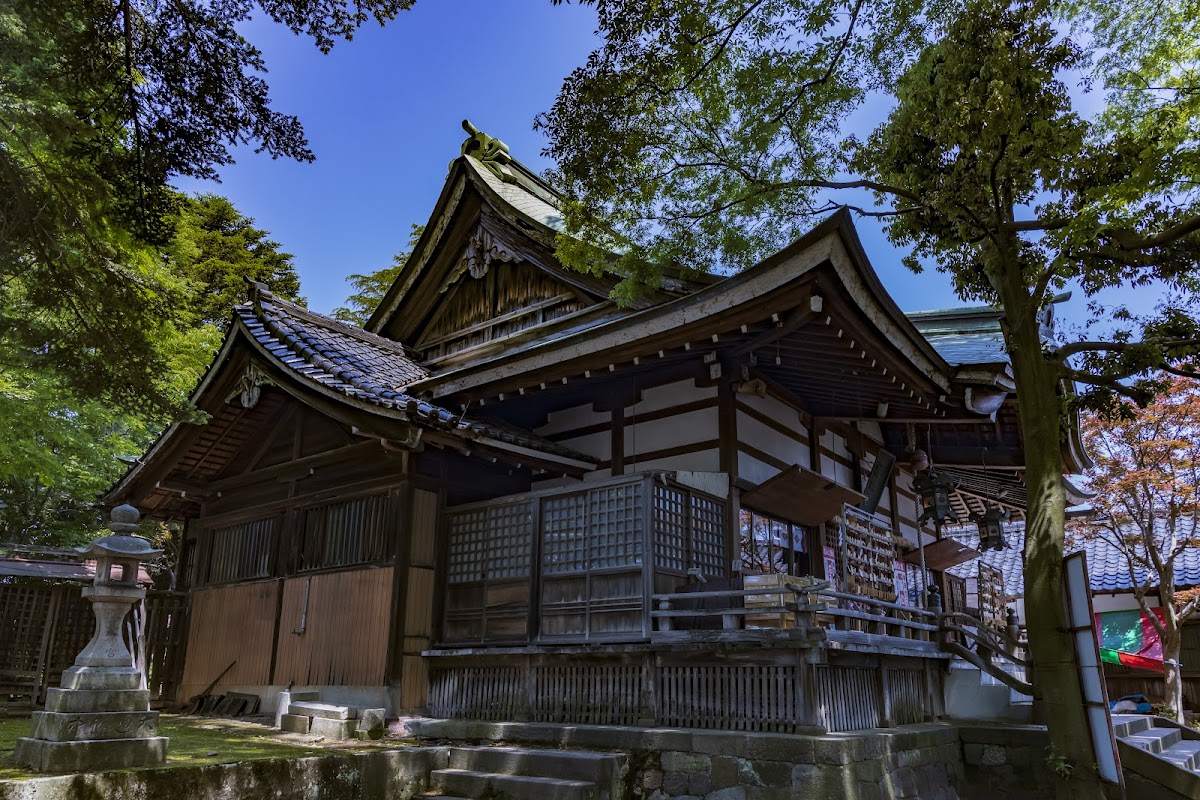
The greatest highlight of Tokuryuji Temple is its main hall, which preserves the style of the Kyoho period (1716-1736). The Kyoho period was the time of the 8th Shogun, Tokugawa Yoshimune, and is known as the period when the “Kyoho Reforms” were carried out.
The main hall has a structure unique to Shinshu Buddhist temples, and the inner sanctuary houses Amida Buddha as the principal image. The architectural style of the Kyoho period is characteristic of the mid-Edo period, characterized by its solid and simple construction. With a history of approximately 300 years, this main hall is a valuable legacy in the history of temple architecture in Kanazawa.
The architectural style of the main hall exhibits the open spatial configuration characteristic of Shinshu Buddhist temples. A large inner and outer sanctuary is provided, functioning as a place for parishioners to gather to listen to sermons and perform Buddhist ceremonies.
Atmosphere and Environment of the Temple Grounds
The grounds of Tokuryuji Temple are located in a quiet residential area of Nomachi, Kanazawa City. Located in a corner of the Teramachi temple district, surrounded by numerous other temples, Tokuryuji Temple is open to the public, allowing visitors to freely pay their respects.
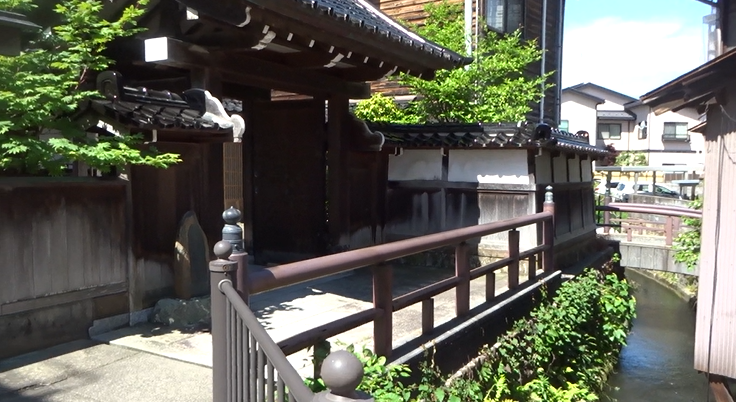
Besides the main hall, the temple grounds include the priest’s quarters (kuri) and the main gate. Despite its urban location, it maintains a tranquil atmosphere, offering a peaceful space for worship away from the hustle and bustle of everyday life.
Within the historical atmosphere of the entire Teramachi temple district, Tokuryuji Temple exudes a modest yet undeniable presence. It harmonizes with the surrounding environment, with its cobblestone streets and old buildings, creating a distinctly Kanazawa charm.
As the Family Temple of Yoshiro Taniguchi
Tokuryuji Temple is also known as the family temple of the renowned architect Yoshiro Taniguchi (1904-1979). Born in Kanazawa, Yoshiro Taniguchi was one of Japan’s leading architects, having designed the Tokyo National Museum’s Oriental Gallery, the Imperial Theatre, and the Crown Prince’s Palace, among others.
Mr. Taniguchi pursued “Japanese identity,” leaving behind numerous architectural works that blended tradition and modernity. The Yoshiro and Yoshio Taniguchi Memorial Kanazawa Architecture Museum is located in Kanazawa City, where his achievements can be learned.
The fact that Tokuryuji Temple is Mr. Taniguchi’s family temple is an example of the role of temples in Kanazawa’s cultural history. It functioned not merely as a religious institution, but also as a cultural hub, maintaining connections with local cultural figures and prominent individuals.
Basic Information
Location and Contact Information
- Address: 2-33-1 Nomachi, Kanazawa City, Ishikawa Prefecture 921-8031
- Sect: Shinshu Otani-ha (Jodo Shinshu)
- Principal Image: Amida Buddha
About Visiting
- Visiting Hours: Only the temple grounds are open to visitors (the interior of the main hall is usually closed to the public)
- Admission Fee: Free
- Parking: Due to limited space, the use of public transportation is recommended.
Tokuryuji Temple is a temple for temple parishioners, therefore, the interior of the main hall is not usually open to visitors. Visiting the temple grounds is free, but consideration is needed if religious services are being held.
About Goshuin (Temple Seals)
Shinshu Otani-ha temples generally do not issue Goshuin. This is based on the doctrines of Jodo Shinshu Buddhism, which teaches that salvation is attained solely through faith in Amida Buddha’s original vow, and therefore does not emphasize “marks” like temple stamps (Goshuin).
Please note that we cannot accommodate visits solely for the purpose of collecting temple stamps. We recommend that your visit to Tokuryuji Temple focus on quietly offering prayers and experiencing the atmosphere of this historic temple.
Access
Access by Train
The nearest station to Tokuryuji Temple is Nomachi Station on the Hokuriku Railway Ishikawa Line.
- Walking distance from Nomachi Station: Approximately 7-10 minutes
Nomachi Station is about 15 minutes from Kanazawa Station on the Hokuriku Railway Ishikawa Line. Exit the station and head southwest; you will arrive at Tokuryuji Temple in the Teramachi temple district.
Access by Bus
Kanazawa city buses are also convenient.
- Nomachi Hirokoji Bus Stop: Approximately 1 minute walk (closest)
- Hirokoji Bus Stop: Approximately 2 minutes walk
- Nishi Chaya-gai Bus Stop: Approximately 3 minutes walk
From Kanazawa Station, take a Hokuriku Railway bus or JR West Japan bus bound for “Nomachi Hirokoji” and arrive in approximately 15-20 minutes. The bus stop is within walking distance, making access very convenient.
Access by Car
- From Kanazawa Station: Approximately 10 minutes
- From Kanazawa East IC (Hokuriku Expressway): Approximately 20 minutes
- From Kanazawa West IC (Hokuriku Expressway): Approximately 15 minutes
Parking is limited, so we recommend using public transportation whenever possible. There are coin-operated parking lots nearby, but the Teramachi temple district has many narrow streets, making walking the best way to explore.
Nearby Tourist Attractions
Teramachi Temple District
The Teramachi area, where Tokuryuji Temple is located, is home to approximately 70 temples. This is a result of the Maeda family gathering temples as defensive strongholds for their castle town, and it has now become one of Kanazawa’s leading tourist areas.
Main Nearby Temples:
- Myoryu-ji Temple (Ninja Temple): A Nichiren Buddhist temple famous as the “Ninja Temple” with its elaborate traps.
- Dairen-ji Temple: A Jodo Shinshu Buddhist temple, notable for its beautiful garden.
- Uho-in Temple: A Shingon Buddhist temple, one of Kanazawa’s three Monju temples.
- Myokei-ji Temple: A Nichiren Buddhist temple, known for its tranquil grounds.
Strolling through the Teramachi temple district allows you to feel the unique character and history of each temple. A “Teramachi tour,” visiting multiple temples while walking along the cobblestone streets, is a classic Kanazawa sightseeing route.
Nishi Chaya District
Located about a 5-minute walk from Tokuryuji Temple, Nishi Chaya District is one of Kanazawa’s three main geisha districts, alongside Higashi Chaya District and Kazue-machi Chaya District. It features a charming streetscape that retains the atmosphere of the Edo period.
Compared to the other two districts, Nishi Chaya District has fewer tourists, allowing for a more relaxed stroll. The area is lined with traditional geisha buildings, now housing cafes, Japanese confectionery shops, and craft stores.
21st Century Museum of Contemporary Art, Kanazawa
Located about 2km northeast of Tokuryuji Temple, the 21st Century Museum of Contemporary Art, Kanazawa, is highly acclaimed both domestically and internationally as a contemporary art museum. Interactive works such as Leandro Erlich’s “Swimming Pool” are particularly popular.
By enjoying the world of contemporary art, which contrasts sharply with the historical atmosphere of the Teramachi area, you can experience the diverse charms of Kanazawa.
Kenrokuen Garden and Kanazawa Castle Park
Kenrokuen Garden and Kanazawa Castle Park, both iconic Kanazawa tourist attractions, are located within approximately 2.5 km of Tokuryuji Temple.
Kenrokuen Garden is one of Japan’s three most famous gardens, a daimyo garden built by successive lords of the Kaga Domain. It offers beautiful scenery throughout the seasons, and the winter view, especially with its snow-covered trees, is exceptional.
Kanazawa Castle Park is a park developed on the site of Kanazawa Castle, the former residence of the Maeda family. Historical buildings such as the Ishikawa Gate, Hishiyagura Tower, and Gojukkengaya (Fifty-Ken Long House) have been restored.
Model Course for Touring Kanazawa’s Temple District
Here is a model course for efficiently touring the temple district, including Tokuryuji Temple.
Half-Day Course (Duration: Approx. 3 Hours)
- Start from Nomachi Station (10:00)
- Visit Tokuryuji Temple (10:10-10:30) – Stroll through the temple grounds and view the exterior of the main hall
- Stroll through the Teramachi Temple District (10:30-12:00) – Visit Myoryuji Temple, Dairenji Temple, Uhoin Temple, and others
- Lunch in Nishi Chaya District (12:00-13:00) – Lunch at a traditional townhouse cafe or Japanese restaurant
- Stroll through Nishi Chaya District (13:00-13:30) – Enjoy the streetscape of teahouse architecture
This course, starting from Tokuryuji Temple, offers a condensed experience of the charm of the Teramachi area.
Full-Day Course (Duration: Approx. 6 Hours)
By adding the following to the half-day course, you can fully enjoy the diverse charms of Kanazawa.
- Kanazawa 21st Century Museum (14:00-16:00) – Enjoy contemporary art
- Kenrokuen Garden (16:30-17:30) – Savor the beauty of a Japanese garden
- Kanazawa Castle Park (17:30-18:00) – Enjoy the night view during the illumination period
Manners and Precautions for Visiting Tokuryuji Temple
Basic Manners for Visiting Temples
When visiting temples, please observe the following basic manners.
- Bow at the Temple Gate: When entering the temple grounds, bow at the temple gate before entering.
- Be Quiet: Please be quiet on the temple grounds and refrain from loud conversations.
- Photography: Photography is generally permitted on the temple grounds, but please avoid taking pictures inside the main hall or during religious services.
- Attire: Please avoid revealing clothing and wear modest attire when visiting.
- Smoking and Eating: Smoking and eating are strictly prohibited on the temple grounds.
Specific Worship Etiquette for Shinshu Temples
Jodo Shinshu temples have different worship etiquette than other sects.
- Only Clasped Hands: Do not clap your hands. Quietly join your hands in prayer and bow.
- Nembutsu: Chant “Namu Amida Butsu” silently or softly.
- Incense Offering: When offering incense during a memorial service, in the Shinshu Otani sect, do not press the incense to your forehead; place it directly into the incense burner.
Precautions for Visitors
- Consideration During Memorial Services: If a funeral or memorial service is taking place, quietly leave or wait for it to finish.
- Being a Family Temple: Tokuryuji Temple is a family temple, not a tourist temple. Please be mindful of appropriate behavior.
- Visiting Hours: There are no specific visiting hours, but it is best to avoid visiting early in the morning or after sunset.
Shinshu Culture in Kanazawa and Tokuryuji Temple
History of Jodo Shinshu in Kaga
Ishikawa Prefecture, especially the Kaga region, is known as the “Kingdom of Shinshu” due to the strong faith in Jodo Shinshu Buddhism. This is rooted in the history of the Ikko-ikki uprisings in the Middle Ages. In the late 15th century, when Rennyo Shonin, the 8th head of Honganji Temple, expanded his influence to the Hokuriku region, the number of Ikkō-shū (Jōdo Shinshū) followers in Kaga rapidly increased. In 1475, the followers overthrew the daimyo Togashi Masachika, achieving a period of autonomy known as “a country owned by the peasants” for approximately 100 years.
This historical background is one reason why many Shinshū temples still exist in Ishikawa Prefecture today. Tokuryūji Temple can also be understood within this context.
Characteristics of the Shinshū Ōtani School
The Shinshū Ōtani school, to which Tokuryūji Temple belongs, is a branch of Jōdo Shinshū Buddhism, with Higashi Honganji Temple as its head temple. It was established in the early Edo period when Honganji Temple split into East and West.
The characteristics of the Shinshū Ōtani school’s teachings are as follows:
- Reliance on Other Power: The teaching that salvation is achieved solely through the power of Amida Buddha’s original vow.
- The Wicked Are the Righteous: The idea that ordinary people who cannot attain enlightenment through their own efforts are precisely the ones who are eligible for Amida Buddha’s salvation.
- Rejection of Worldly Benefits: Aiming for rebirth in the Pure Land rather than seeking happiness in this world.
- Layism: Emphasizing deepening one’s faith in daily life without becoming a monk or nun.
These teachings were easy for ordinary people to understand and were widely accepted.
Annual Events at Tokuryuji Temple
Tokuryuji Temple, a Shinshu Buddhist temple, holds various Buddhist ceremonies throughout the year. Here are some of the main events:
Shushō-e (New Year’s Ceremony)
This is a New Year’s service held from January 1st to 3rd. Prayers are offered for safety and peace throughout the year.
Spring Equinox Ceremony
This is a seven-day service centered around the spring equinox in March. A time to remember ancestors and express gratitude.
Gōtan-e (Birth Celebration)
A Buddhist service held around May 21st to celebrate the birth of Shinran Shonin. Also known as “Hanamatsuri” (Flower Festival).
Autumn Equinox Service
A Buddhist service held over seven days centered around the autumnal equinox in September.
Hōon-kō (Memorial Service)
A Buddhist service held in late November to commemorate the anniversary of Shinran Shonin’s death. One of the most important events for Shinshu temples.
These events are primarily for temple parishioners, but those interested may be able to participate by contacting the temple in advance.
Summary
Tokuryūji Temple, located in Nomachi, Kanazawa City, Ishikawa Prefecture, is a Shinshu Ōtani sect temple with a history of nearly 800 years since its founding in the Kamakura period. It has played an important role in the religious history of Kanazawa, including its conversion from Tendai sect to Jōdo Shinshū, its relocation by the Maeda family in 1616 (Genna 2), and the transfer of its principal image to the Kanazawa branch temple.
With its main hall retaining the architectural style of the Kyoho period and its role as the family temple of architect Yoshiro Taniguchi, Tokuryuji Temple continues to be a temple of high historical and cultural value, deeply rooted in the local community.
Located in a corner of the Teramachi temple district, it offers excellent access to tourist attractions such as Nishi Chaya District, the 21st Century Museum of Contemporary Art, Kanazawa, and Kenrokuen Garden. When visiting Kanazawa, why not explore the temple district, including Tokuryuji Temple, and experience the rich religious culture and history nurtured by the castle town of Kaga, a region with a million koku of rice production?
By offering prayers in the tranquil temple grounds and soaking up the atmosphere of Tokuryuji Temple, which has attracted the faith of many people throughout its long history, you will gain a deeper appreciation for the profound character of Kanazawa.