Complete Guide to Tokushima Bizan Tenjin Shrine | A Thorough Explanation of the Charm and History of Learning, Matchmaking, and Goshuin (Shrine Seals)
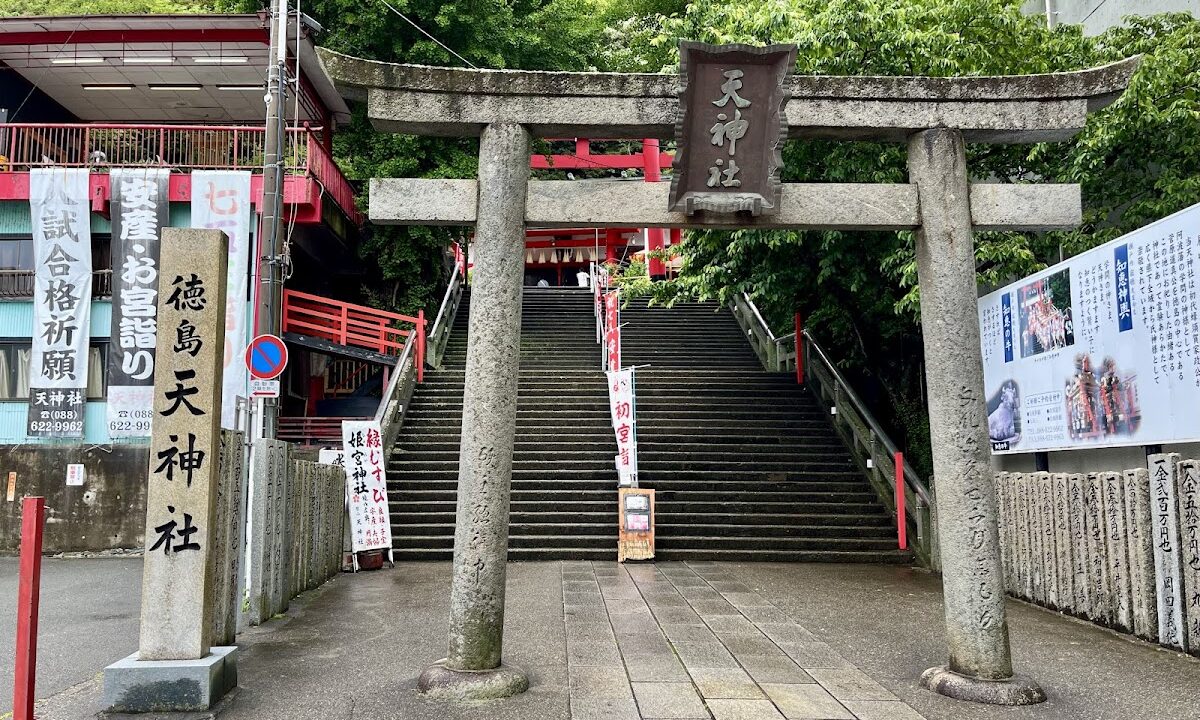
Nestled at the foot of Mount Bizan, a symbol of Tokushima City, Tokushima Bizan Tenjin Shrine is a historic shrine dedicated to Sugawara no Michizane, known as the god of learning. Since its founding in 1809, it has been revered as a center of culture and education in Tokushima for over 200 years. Despite its convenient location next to the Awa Odori Hall, the shrine grounds are enveloped in a tranquil atmosphere, offering peace of mind to visitors.
This article comprehensively introduces information you should know before visiting Tokushima Bizan Tenjin Shrine, from its historical background and blessings to its highlights, popular goshuin, seasonal events, and access methods.
History and Origins of Tokushima Bizan Tenjin Shrine
Origin as the Guardian Shrine of Chōonji Temple
The origins of Tokushima Bizan Tenjin Shrine began as the guardian shrine of Chōonji Temple. It is said that the shrine’s origins lie in the enshrinement of a six-inch tall wooden statue of Tenjin, brought from Erinji Temple in Kai Province (present-day Yamanashi Prefecture) by the monk Ichigo of Zuiganji Temple. This wooden statue depicts Sugawara no Michizane as he appeared when he traveled to Tang China, and was an extremely valuable object of worship.
Initially, it was housed within Chōonji Temple, but in 1809 (Bunka 6), a shrine was built on the current site of Tenjin-yama in Bizan-cho, and the statue was formally enshrined there. This location at the foot of Mount Bizan is considered auspicious from a feng shui perspective, and the shrine stands overlooking the city of Tokushima.
Protection by the Former Lord Hachisuka and the Development of Education
Throughout the Edo period, the Hachisuka family, the lords of the Tokushima domain, protected the Tenjin Shrine for generations. The former lord Hachisuka valued learning and encouraged reverence for the Tenjin Shrine to promote education among the samurai and common people of the domain. Therefore, Tenjin Shrine came to be seen not merely as an ordinary shrine, but as a symbol of education and culture in Awa Province.
Under the protection of the Hachisuka family, many people visited Tenjin Shrine to pray for academic success, and children studying at the domain school and temple schools also regularly visited. This tradition continued even after the Meiji Restoration, and to this day, it remains a sacred place where students and those preparing for exams visit to pray for success.
The History Since the Meiji Era and its Continuation to the Present
Although the relationship with Chōonji Temple was formally separated by the Meiji-era decree separating Shinto and Buddhism, Tenjin Shrine continued to attract local faith as an independent shrine. From the Showa and Heisei eras to the present day of Reiwa, Tokushima Bizan Tenjin Shrine has maintained its reputation as a deity of learning.
In recent years, Himemiya Shrine has been established within the grounds, and it has also gained attention as a power spot for matchmaking and safe childbirth. Its flexible approach to meeting the needs of the times while preserving tradition is the reason why it attracts so many visitors.
Deities and Benefits
Sugawara no Michizane – God of Learning
The principal deity of Tokushima Bizan Tenjin Shrine is Sugawara no Michizane. Michizane was a scholar and politician who flourished during the Heian period. Due to his exceptional learning and sincere character, he is revered nationwide as the “God of Learning.”
It is said that Michizane displayed prodigious talent from a young age, composing waka poetry at just 5 years old and Chinese poetry at 11. He rose to the position of Minister of the Right in the imperial court, but was demoted to Dazaifu due to political intrigue, where he spent the rest of his life. After his death, Tenmangu and Tenjin shrines were built throughout the country to appease his vengeful spirit, and he eventually came to be worshipped as the God of Learning.
Benefits for Passing Exams and Academic Success
Tokushima Bizan Tenjin Shrine is particularly famous for the following academic benefits:
- Prayer for Passing Entrance Exams: Prayers for success in all exams, including junior high school, high school, and university entrance exams.
- Academic Success: Prayers for academic improvement, so that daily studies bear fruit.
- Passing Qualification Exams: Prayers for success in national qualifications and various certification exams.
- Job Hunting Success: Prayers for success in job interviews and exams.
During exam season, many students and their parents from within and outside the prefecture visit the shrine to offer votive tablets praying for success. Within the shrine grounds is a statue of a cow called the “Cow of Wisdom,” and it is said that stroking it will bring even more wisdom.
Other Diverse Blessings
Besides academic success, Tokushima Bizan Tenjin Shrine is believed to offer the following blessings:
- Business Prosperity: Prayers for the success of honest business.
- Traffic Safety: Protection for safe travel and movement.
- Family Safety: Prayers for the health and peaceful life of the family.
- Prayers for Recovery from Illness: Prayers for recovery from illness and maintenance of good health.
Sugawara no Michizane is known for his honest and sincere character, and a wide range of blessings based on his spirit are believed to be offered.
Shrine Grounds Highlights and Power Spots
Koimusubi Himemiya Shrine – A Sacred Place for Matchmaking
Himemiya Shrine, located within the shrine grounds, is a power spot for matchmaking that has been attracting attention in recent years. As a guardian deity for women, it is believed to offer the following blessings:
- Matchmaking: Encounters with good partners and successful romance
- Marital Harmony: Harmonious relationships for married couples
- Childbearing: Prayers for being blessed with children
- Safe Childbirth: Prayers for a healthy delivery for both mother and child
The most distinctive feature of Himemiya Shrine is the enshrined giant genital stone, which has been passed down since ancient times. This stone symbolizes the vitality and fertility of women, and it is believed that touching it brings blessings for conception and safe childbirth. Many female worshippers offer prayers to this stone, wishing for good relationships and safe childbirth.
Himemiya Shrine is located next to the main hall of Tenjin Shrine, and is marked by a vermilion torii gate. The charming shrine building is also a popular spot for taking photos.
The Cow of Wisdom – Wisdom Received by Stroking It
The “Cow of Wisdom” is particularly popular within the grounds of Tenjin Shrine. Due to the deep connection between Sugawara no Michizane and oxen, statues of oxen are almost always found at Tenjin shrines.
The ox of wisdom at Tokushima’s Bizan Tenjin Shrine is said to grant wisdom the more you stroke it, and its head, in particular, shines from being stroked by many worshippers. Students preparing for exams try to receive blessings in various ways, such as stroking their own heads before the ox’s, or vice versa.
Oxen are associated with various legends, including the fact that Michizane was born in the Year of the Ox, that an ox protected him on his journey to Dazaifu, and that the ox-drawn cart carrying his remains became immobile at a specific location, leading to the establishment of his burial site there.
Architectural Beauty of the Main Hall and Worship Hall
The main hall of Tokushima’s Bizan Tenjin Shrine is a valuable structure that preserves the architectural style of the late Edo period. While retaining the appearance of its original construction in 1809, it has undergone appropriate restoration.
The main hall is kept clean as a place for worshippers to offer prayers. While it is particularly crowded with worshippers during New Year’s and exam season, it is usually a quiet and peaceful place to pray.
The intricate details of the architecture showcase the craftsmanship of Tokushima artisans, and the carvings and decorations are well worth paying attention to. The shrine’s presence against the backdrop of Mount Bizan creates a beautiful landscape that harmonizes with the changing seasons.
A Stunning Location with Mount Bizan as a Backdrop
One of the greatest attractions of Tokushima Bizan Tenjin Shrine is its location. Situated at the foot of Mount Bizan, the shrine grounds offer a panoramic view of Tokushima city. Mount Bizan is a beloved symbol of Tokushima, and the Tenjin Shrine, nestled at its base, is truly like a guardian deity watching over the city.
In spring, you can enjoy the cherry blossoms; in early summer, the fresh greenery; in autumn, the vibrant autumn leaves; and in winter, the crisp, clean air—allowing you to appreciate the ever-changing beauty of Mount Bizan throughout the seasons. Because it is adjacent to the Awa Odori Hall, many people visit as part of their sightseeing, making it one of the highlights of Tokushima tourism.
Goshuin (Shrine Seals) and Amulets
The Charm of Goshuin that Changes with the Seasons
The goshuin of Tokushima Bizan Tenjin Shrine have attracted attention nationwide for their design and seasonal themes. The goshuin changes monthly, offering new discoveries with each visit, making it a popular shrine among goshuin collectors.
The goshuin have the following characteristics:
- Monthly Design: Different designs each month, often featuring seasonal flowers and events.
- Colorful Design: In addition to traditional ink calligraphy, vibrant stamps and decorations are used.
- Limited Edition Goshuin: Limited edition designs appear during special periods such as New Year’s, Tanabata (Star Festival), and Shichi-Go-San (Children’s Festival).
- Himegumi Shrine Goshuin: In addition to the Tenjin Shrine goshuin, Himegumi Shrine goshuin are also available.
Goshuin can be obtained at the shrine office, and each one is carefully written by the calligrapher. While waiting, you can spend your time strolling around the temple grounds or choosing amulets.
On social media platforms like Instagram, numerous posts showcasing the beautiful goshuin (temple/shrine stamps) of Tokushima Bizan Tenjin Shrine can be found, and their beauty has become a popular topic. The official Instagram account (@bizan_tenjinsha) features the latest goshuin information and showcases the four seasons of Mount Bizan, so it’s a good idea to check it before your visit.
Popular Amulets and Souvenirs
Tokushima Bizan Tenjin Shrine offers a variety of amulets and souvenirs:
Academic Achievements
- Passing Exam Amulet: The most popular amulet for students taking exams
- Academic Success Amulet: An amulet for wishing for success in daily studies
- Pencil: A pencil blessed before taking exams
- Ema (votive tablet): A votive tablet for praying for success in exams, on which you write your wish
Relationship and Romance Amulets
- Relationship Amulet: An amulet to attract good relationships
- Romantic Fulfillment Amulet: An amulet for wishing for success in love
- Hime Amulet: An amulet for women from Himemiya Shrine
Other
- Traffic Safety Amulet
- Family Safety Amulet
- Health Amulet
- Exorcism Amulet
Each amulet is carefully crafted, and many have cute designs, making them popular souvenirs.
Seasonal Events and Festivals
New Year’s Visit – Prayers for the New Year
Tokushima Bizan Tenjin Shrine is bustling with many worshippers every year for its New Year’s visit. From New Year’s Day to the third day, people line up to pray for good health, safety for their families, and academic success throughout the year.
During the New Year period, special goshuin (shrine stamps) are given out, and hama-ya (demon-repelling arrows) and amulets are available in limited New Year’s designs. Due to its location at the foot of Mount Bizan, many people visit after watching the first sunrise of the year, allowing for a refreshing start to the new year.
Shichi-Go-San Ceremony – Celebrating Children’s Growth
November marks the Shichi-Go-San season. Tokushima Bizan Tenjin Shrine accepts Shichi-Go-San prayers, and many families visit.
Shichi-Go-San is an important ceremony to give thanks for children’s healthy growth and to pray for their future health and happiness. At Tenjin Shrine, in addition to formal prayers, they also provide support for commemorative photography, making it a place to create precious family memories.
Commemorative photos taken against the backdrop of the beautiful scenery of the shrine grounds and the shrine buildings will surely become lifelong treasures.
Exam Success Season – A Sacred Place for Students
During the exam season from January to March, Tokushima Bizan Tenjin Shrine is especially bustling with students and their families. Many students visit to pray for success before important exams such as the National Center Test (Common Test), private university entrance exams, and national/public university second-stage exams.
Special prayer ceremonies for success are sometimes held during this period, and students receive prayers before taking their exams. The shrine grounds are covered with ema (votive tablets) praying for success, each bearing words expressing dreams and hopes.
After the exams, many people visit to give thanks for their success, and in the spring, the shrine receives reports of joy.
Other Annual Events
- Setsubun Festival (February): Bean-throwing to ward off evil spirits and invite good fortune
- Tanabata Festival (July): Hanging strips of paper with wishes written on them on bamboo branches
- Summer Purification Ceremony (June): Cleansing away the impurities accumulated over the past six months
- Year-End Purification Ceremony (December): Cleansing away the impurities of the past year and preparing for the New Year
These events are valuable opportunities to experience traditional Japanese culture and serve as places for interaction with local people.
Access and Visiting Information
How to Access Tokushima Bizan Tenjin Shrine
Location
1 Tenjin-yama, Bizan-cho, Tokushima City, Tokushima Prefecture 770-0908
*Some documents list the address as “2-21 Shinmachi-bashi, Tokushima City,” but this is due to an address change.
Access by Train
- Approximately 10 minutes on foot from JR Tokushima Station
- Easily accessible by walking southeast along the Shinmachi River after exiting the station
- It’s easy to find if you aim for the Awa Odori Hall (Tenjin Shrine is next to the hall)
Access by Car
- Approximately 15 minutes from the Tokushima IC on the Tokushima Expressway
- Paid parking is available around the shrine (parking at the Awa Odori Hall is also available)
- For car navigation, searching for “Awa Odori Hall” is convenient
Access by Bus
- Approximately 3 minutes on foot from the Shinmachibashi bus stop on the Tokushima City Bus
Visiting Hours and Shrine Office Hours
- Visiting Hours: Generally open all day (daytime visits are recommended due to limited lighting at night)
- Shrine Office Hours: 9:00 AM to 5:00 PM (may vary depending on the season and events)
- Goshuin (Shrine Seal) Issuance Hours: Same as the shrine office reception hours
- Prayer Request Reception: Prior contact is recommended
Contact Information
- Phone: 088-622-9962
- Email: info@bizan-tenjinsha.org
- Official Website: https://www.bizan-tenjinsha.org/
Manners and Precautions When Visiting
Basic Worship Etiquette
- Bow before passing through the torii gate
- Cleanse your hands and mouth at the water basin
- Bow twice, clap twice, and bow once in front of the main hall
- Make your wish quietly in your heart
Regarding Photography
- Photography is generally permitted within the shrine grounds
- Please be considerate of other worshippers
- Please note that there are times when photography should be refrained from, such as during prayers
Regarding Attire
- Casual clothing is acceptable, but clean attire is preferred
- If receiving a prayer, slightly more formal attire is preferable
Nearby Tourist Attractions
Awa Odori Hall
Located right next to Tokushima Bizan Tenjin Shrine, the Awa Odori Hall is a facility where you can experience Awa Odori, Tokushima’s traditional performing art, all year round. Awa Odori performances are held daily in the hall on the first floor, both during the day and at night, and tourists can even participate in the dancing.
From the observation room on the fifth floor, you can enjoy a 360-degree panoramic view of Tokushima city, making it an ideal place to visit in conjunction with a visit to the Tenjin Shrine.
Bizan Ropeway
You can board the Bizan Ropeway from the fifth floor of the Awa Odori Hall, reaching the summit of Mount Bizan in approximately 6 minutes. From the observation deck at the summit, you can enjoy a spectacular view of Tokushima city, the Yoshino River, the Kii Channel, and, on a clear day, even Awaji Island.
The night view, in particular, has been selected as one of “Japan’s Top 100 Night Views,” making it a popular romantic date spot.
Shinmachi River Waterfront Park
Located within walking distance of Tenjin Shrine, this park along the Shinmachi River is a popular recreational spot for locals. Visitors can stroll along the riverside promenade or relax on the boardwalk. In spring, the park is known for its beautiful cherry blossoms, making it a popular spot for cherry blossom viewing.
Tokushima Castle Ruins & Tokushima Central Park
Located about a 10-minute walk from Tokushima Station, the Tokushima Castle Ruins were the residence of the Hachisuka family. Now a park, the stone walls and moats retain traces of the past. The park also houses the Tokushima Castle Museum, where visitors can learn about Tokushima’s history.
Considering the history of Tenjin Shrine being under the protection of the Hachisuka family, visiting both the Tokushima Castle Ruins and the Tokushima Central Park will provide a deeper understanding of Tokushima’s history.
Visitor Voices and Reviews
The following are comments from people who have visited Tokushima Bizan Tenjin Shrine:
Regarding Academic Success and Passing Exams
- “My family and I visited before the exams, and I successfully passed my first-choice school. We also returned to offer our thanks.”
- “I was able to concentrate on my prayers in a quiet and peaceful atmosphere.”
- “Stroking the Wisdom Cow strangely calmed my mind.”
Regarding Matchmaking and Himemiya Shrine
- “After praying for a good match at Himemiya Shrine, I met a wonderful person six months later.”
- “I prayed for a safe delivery, and I was blessed with a healthy baby.”
- “The atmosphere of this power spot, which is gentle on women, was wonderful.”
Regarding Goshuin (Shrine Seals)
- “The design changes every month, so I want to visit again and again.”
- “I was impressed by the colorful and cute goshuin.”
- “They wrote it so carefully, and it became a precious memory.”
Regarding Access and Location
- “It was convenient as it was within walking distance from Tokushima Station.”
- “It’s right next to the Awa Odori Hall, so I arrived without getting lost.”
- “I was able to visit the shrine in conjunction with sightseeing at Mount Bizan, making for efficient sightseeing.”
Summary of the Charms of Tokushima Bizan Tenjin Shrine
Tokushima Bizan Tenjin Shrine is a multifaceted shrine with over 200 years of history, serving as a sacred site for learning, while also attracting attention as a power spot for matchmaking and safe childbirth.
At the main hall, which enshrines Sugawara no Michizane, visitors can receive blessings for academic success and passing exams, while at Himemiya Shrine, they can receive blessings for romantic success and safe childbirth. Unique objects of worship within the shrine grounds, such as the Wisdom Cow and the giant Vagina Stone, also attract visitors.
The beautiful monthly changing goshuin (shrine stamps) are highly regarded nationwide, making it a worthwhile shrine visit for goshuin collectors. Seasonal events and festivals are also abundant, offering new discoveries with each visit.
Located within walking distance of Tokushima Station, and surrounded by numerous tourist attractions such as the Awa Odori Hall and the Bizan Ropeway, Tokushima Bizan Tenjin Shrine is considered an important spot for sightseeing in Tokushima.
Visitors come to Tokushima Bizan Tenjin Shrine with a variety of wishes, including prayers for success in exams, good fortune in relationships, and the health of their families. Situated at the foot of Mount Bizan, in a naturally rich environment, it is a precious place where one can offer prayers in peace.
When visiting Tokushima, be sure to visit Tokushima Bizan Tenjin Shrine and experience the divine virtues of Sugawara no Michizane and the pure energy of Mount Bizan. It will surely be a memorable pilgrimage experience.