Complete Guide to Toyoiwa Inari Shrine | Access and Benefits of a Ginza Power Spot for Matchmaking
Behind the glamorous Ginza shopping district in Tokyo lies a small, unassuming shrine. Toyoiwa Inari Shrine has been located here since the early Edo period and is a historical shrine deeply revered by locals and Kabuki actors. In recent years, its blessings for matchmaking have attracted particular attention, making it a well-known power spot visited by worshippers from all over Japan.
This article will comprehensively cover the charm of Toyoiwa Inari Shrine, including its history, benefits, access methods, worship etiquette, offerings, and surrounding attractions.
What is Toyoiwa Inari Shrine? | A Historic Inari Shrine in Ginza
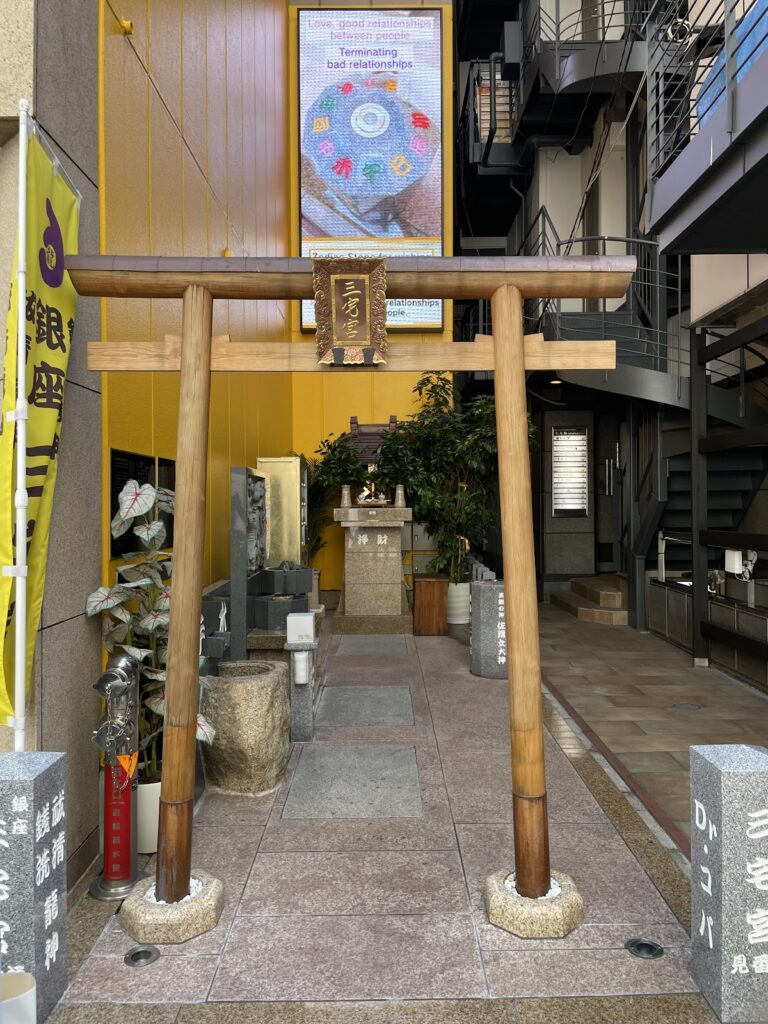
Toyoiwa Inari Shrine is an Inari shrine located at 7-8-14 Ginza, Chuo-ku, Tokyo. Just a short walk from the heart of Ginza, lined with luxury brand stores and long-established department stores, lies a secluded alleyway where a unique space unfolds, adorned with rows of vermilion banners and lanterns.
Deity and Shrine History
The deity enshrined at Toyoiwa Inari Shrine is Ukemochi-no-kami. Ukemochi-no-kami is the goddess of food and a central figure in Inari worship, believed to bring blessings of abundant harvests, business prosperity, and family safety.
The exact date of its founding is unknown, but according to local tradition, it was established in this location by Yasuda Sakubei, a retainer of Akechi Mitsuhide. From the early Edo period through the Tokugawa era, it attracted the faith of local people as a deity of fire prevention and matchmaking.
A Historic Shrine Founded in the Edo Period
The history of Toyoiwa Inari Shrine dates back to the early Edo period. Ginza at that time was a mixed area of samurai residences and merchant houses, and in Edo, a city prone to frequent fires, the worship of a god of fire prevention was extremely important.
Throughout the Edo period, this shrine was carefully protected by the local people. It is particularly known for being deeply revered by the Kabuki actor Ichimura Uzaemon, and has become known as a shrine with strong veneration among those in the entertainment industry. It has remained in this location since the Meiji era and continues to be cherished as the guardian deity of Ginza to this day.
Benefits of Toyoiwa Inari Shrine | Matchmaking, Fire Prevention, and Business Prosperity
Toyoiwa Inari Shrine is said to offer three main benefits.
Benefits of Matchmaking
The most famous benefit of Toyoiwa Inari Shrine is matchmaking. In recent years, it has attracted particular attention, with worshippers from all over the country visiting seeking romantic success and good relationships. Many female worshippers visit, and word of mouth has spread that “you will receive good fortune in love if you visit,” making it a popular power spot known to those in the know.
The meaning of “matchmaking” here includes not only romantic relationships but also forging good connections in work and all kinds of relationships. This shrine is recommended for those seeking new encounters and those who want to improve their relationships.
Protection from Fire
Protection from Fire is a traditional benefit that has continued since the Edo period. In the Edo period, when wooden buildings were prevalent, fire was one of the most feared disasters. Toyoiwa Inari Shrine was worshipped as a deity that protected people from fire, and even today, worshippers visit to pray for family safety and protection from fire.
Prosperity in Business
Prosperity in Business, a representative benefit of Inari shrines, is also an important benefit of Toyoiwa Inari Shrine. Located in Ginza, one of Japan’s leading commercial areas, it enjoys strong faith from local shop owners and business managers, and many worshippers visit to pray for business success and prosperity.
Access to Toyoiwa Inari Shrine | A 5-minute walk from Ginza Station, down a back alley
Toyoiwa Inari Shrine is located in the heart of Ginza, but because it’s tucked away in a back alley, first-time visitors might get a little lost. However, this hidden, secluded atmosphere is one of the shrine’s charms.
Basic Information
- Address: 7-8-14 Ginza, Chuo-ku, Tokyo 104-0061
- Phone Number: 03-6264-5639 (Shrine Office)
- Nearest Station:
- Approximately 5 minutes on foot from Exit A2 of Ginza Station (Tokyo Metro Ginza Line, Hibiya Line, Marunouchi Line)
- Approximately 5 minutes on foot from Higashi-Ginza Station (Tokyo Metro Hibiya Line, Toei Asakusa Line)
- Annual Festival Date: April 15th
- Visiting Hours: Open 24 hours (Shrine office has limited hours)
Proceed down a narrow alley
The path to Toyoiwa Inari Shrine takes you away from the hustle and bustle of Ginza to a quiet back alley. Exit from Exit A2 of Ginza Station and head towards Shimbashi along Suzuran Street. Upon entering Ginza 7-chome, you’ll see a stone pillar inscribed with “Toyoiwa Inari Shrine” and a vermilion banner facing the street.
This stone pillar is your landmark. Entering the narrow alleyway from there, you’ll find yourself lined with vermilion lanterns on both sides, creating an atmosphere like an entrance to another world. Locals say that “most pedestrians don’t even notice it,” highlighting the tranquil, otherworldly space within the bustling Ginza district.
After walking a few dozen meters down the alley, a small shrine suddenly appears. Despite being in the heart of the city surrounded by buildings, it’s a space enveloped in a sacred atmosphere.
Etiquette and Highlights of Worship | Two Fox Statues Welcome You
The grounds of Toyoiwa Inari Shrine are not particularly large, but they are packed with highlights.
Two Fox Statues Welcome You
Fox statues, symbols of Inari shrines, welcome visitors. Toyoiwa Inari Shrine houses two fox statues, each acting as a messenger of the gods and guarding the shrine grounds. In Inari worship, foxes are considered messengers of the gods, believed to carry the wishes of worshippers to the deities.
It is customary to bow before the fox statues before offering your prayers.
Etiquette for Worship
Worship at Toyoiwa Inari Shrine follows the general etiquette for visiting a shrine.
- Bow before the Torii Gate: Bow before the torii gate at the entrance to the alley or in front of the shrine building before entering the grounds.
- Purify yourself at the water basin: If there is a water basin, purify your hands and mouth.
- Offer your donation: Quietly place your donation into the offering box.
- Two Bows, Two Claps, One Bow: Bow deeply twice, clap your hands twice, silently recite your wish, and then bow deeply once more.
- One Bow Before Leaving the Torii Gate: When leaving the shrine grounds, turn back and bow towards the shrine building.
Features of the Shrine Building
Although small, the shrine building of Toyoiwa Inari Shrine is meticulously maintained, and its beautiful vermilion appearance is impressive. Despite being in a city surrounded by buildings, it evokes a sense of tradition dating back to the Edo period.
Lanterns line the grounds, and when lit at night, they create a magical atmosphere.
Items Available at the Shrine Office on the Basement Floor | Amulets and Goshuin (Shrine Seals)
At Toyoiwa Inari Shrine, you can obtain items such as amulets and goshuin (shrine seals).
Purchase Souvenirs at the Shrine Office on the Basement Floor
A distinctive feature of Toyoiwa Inari Shrine is that the shrine office is located on the basement floor. After completing your prayers at the main shrine, if you wish to purchase souvenirs, look for the stairs leading down to the basement. There are signs at the entrance to the shrine office, but first-time visitors may be a little confused.
The shrine office’s operating hours may be limited, so if you want to be sure to receive souvenirs, it is recommended to call ahead or visit during weekday daytime hours.
Charms for Finding Love
The most popular item at Toyoiwa Inari Shrine is the charm for finding love. It is especially recommended for those wishing for a good match or success in love. The design is also cute, making it a popular souvenir.
Other charms such as charms for business prosperity and fire prevention are also available.
Goshuin (Shrine Seal)
Goshuin (shrine seals) are also available at Toyoiwa Inari Shrine. Bring your goshuincho (seal book) and request one at the shrine office. For those who collect Goshuin (temple/shrine stamps) and as a memento of their visit, a Goshuin from a shrine in the special location of Ginza will be a valuable item.
The offering fee for a Goshuin is generally around 300 to 500 yen.
Annual Events at Toyoiwa Inari Shrine
Toyoiwa Inari Shrine holds several events throughout the year.
Annual Festival (April 15th)
The most important event at Toyoiwa Inari Shrine is the Annual Festival held every year on April 15th. The Annual Festival is the most important festival for the shrine, where gratitude is offered to the enshrined deity and prayers are offered for the safety and prosperity of the community.
On the day of the Annual Festival, local parishioners and devotees gather for the Shinto rituals. General visitors can also participate, so visiting on this day is recommended.
New Year’s Visit
The shrine is bustling with visitors for the New Year’s visit. Given its location in Ginza, many people enjoy shopping and dining in Ginza after their New Year’s visit to the shrine. Although it’s a small shrine, it’s well worth visiting to offer your New Year’s wishes.
Trying the Ginza Eight-Chome Shrine Pilgrimage is Recommended
After visiting Toyoiwa Inari Shrine, be sure to try the Ginza Eight-Chome Shrine Pilgrimage. Several shrines, including Toyoiwa Inari Shrine, are scattered throughout the area from Ginza 1-chome to 8-chome.
What is the Ginza Eight-Chome Shrine Pilgrimage?
The Ginza Eight-Chome Shrine Pilgrimage is a popular walking course that visits shrines located in the Ginza area. Each shrine has different blessings and history, allowing you to enjoy shrine hopping while strolling through the streets of Ginza.
The main shrines in the area include:
- Toyoiwa Inari Shrine (Ginza 7-chome) – Matchmaking, fire prevention, business prosperity
- Asahi Inari Shrine (Ginza 3-chome) – Business prosperity
- Success Inari Shrine (Ginza 8-chome) – Career advancement and good fortune
- Hodo Inari Shrine (Ginza 1-chome) – Increased financial luck
- Azuma Inari Shrine (Ginza 4-chome) – Matchmaking
By visiting these shrines, you can receive various blessings and experience the history and culture of Ginza. The estimated time required is 2-3 hours on foot.
Tips for Shrine Pilgrimage
- Prepare a map: Check the location of each shrine beforehand. A smartphone map app is convenient.
- Bring a Goshuincho (stamp book): You can receive Goshuin (stamps) at each shrine.
- Allow plenty of time: Take your time to pray at each shrine and enjoy the surrounding streetscape. – Secure a rest stop: Ginza has many cafes and restaurants, so it’s recommended to take breaks along the way.
Attractions around Toyoiwa Inari Shrine
There are various attractions around Ginza 7-chome, where Toyoiwa Inari Shrine is located.
Ginza Suzuran Street
Ginza Suzuran Street, the starting point for accessing Toyoiwa Inari Shrine, is a lively shopping street lined with restaurants and retail stores. A diverse range of shops, from long-established businesses to new shops, line the street.
Kabuki-za Theatre
The Kabuki-za Theatre, within walking distance of Toyoiwa Inari Shrine, is a theater where you can enjoy Kabuki, a traditional Japanese performing art. Considering the history of Toyoiwa Inari Shrine being revered by Kabuki actors, watching Kabuki after visiting the shrine is a unique experience.
Ginza’s Long-Established Department Stores
Ginza’s leading long-established department stores, such as Mitsukoshi, Matsuya, and Wako, are also within walking distance. Perfect for shopping and dining after visiting the shrine.
Tsukiji Outer Market
A short walk away is the Tsukiji Outer Market. You can enjoy fresh seafood and street food.
Best Season and Points to Note for Visiting Toyoiwa Inari Shrine
Recommended Time to Visit
Toyoiwa Inari Shrine can be visited year-round, but the following times are especially recommended:
- Spring (March-May): This is the time of the annual festival (April 15th), and the weather is mild.
- Autumn (September-November): The weather is pleasant, and it’s perfect for strolling around Ginza.
- New Year’s Visit (January): Many people visit to pray for their wishes in the new year.
Points to Note When Visiting
- Narrow Alleys: The alleys leading to the shrine grounds are very narrow, so caution is advised if you are carrying large luggage. – Shrine Office Hours: The shrine office is not always open, so please check in advance if you wish to purchase any items.
- Quiet Worship: As this is a small shrine located next to a residential area, please worship quietly.
- Photography: Photography is permitted, but please be considerate of other worshippers.
Reviews and Reputation of Toyoiwa Inari Shrine
Visitors to Toyoiwa Inari Shrine have shared the following comments:
- “A quiet space away from the hustle and bustle of Ginza, where you can find peace of mind.”
- “I visited seeking blessings for finding love, and I was truly blessed with a wonderful relationship.”
- “The hidden-away atmosphere in the back alley is lovely.”
- “Although small, it is carefully maintained, and you can feel the love of the local people.”
- “It’s just right to stop by during a stroll through Ginza.”
In particular, many worshippers have expressed gratitude for the blessings related to finding love, and its reputation is spreading through word of mouth.
Summary | Finding a Special Connection at Toyoiwa Inari Shrine
Toyoiwa Inari Shrine is a small shrine that has stood quietly since the Edo period, nestled in an alleyway in Ginza, one of Japan’s leading shopping districts. It is believed to bring blessings for matchmaking, fire prevention, and business prosperity, and is particularly popular as a power spot for finding love, attracting visitors from all over Japan.
With a history of being revered by Kabuki actors, traditions preserved by local people, and a sacred atmosphere despite the hustle and bustle of the city, Toyoiwa Inari Shrine is filled with many elements that captivate visitors.
When enjoying shopping and dining in Ginza, be sure to take a short detour and visit Toyoiwa Inari Shrine. At this small shrine tucked away in an alley, you too may be blessed with a special connection.
We also recommend picking up amulets at the underground shrine office and trying the Ginza Eight Shrine Pilgrimage. A journey to discover the new charms of Tokyo’s Ginza begins at Toyoiwa Inari Shrine.