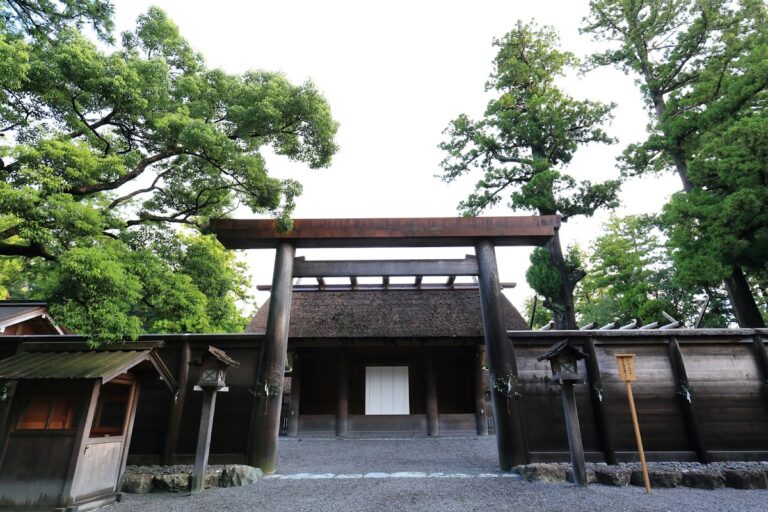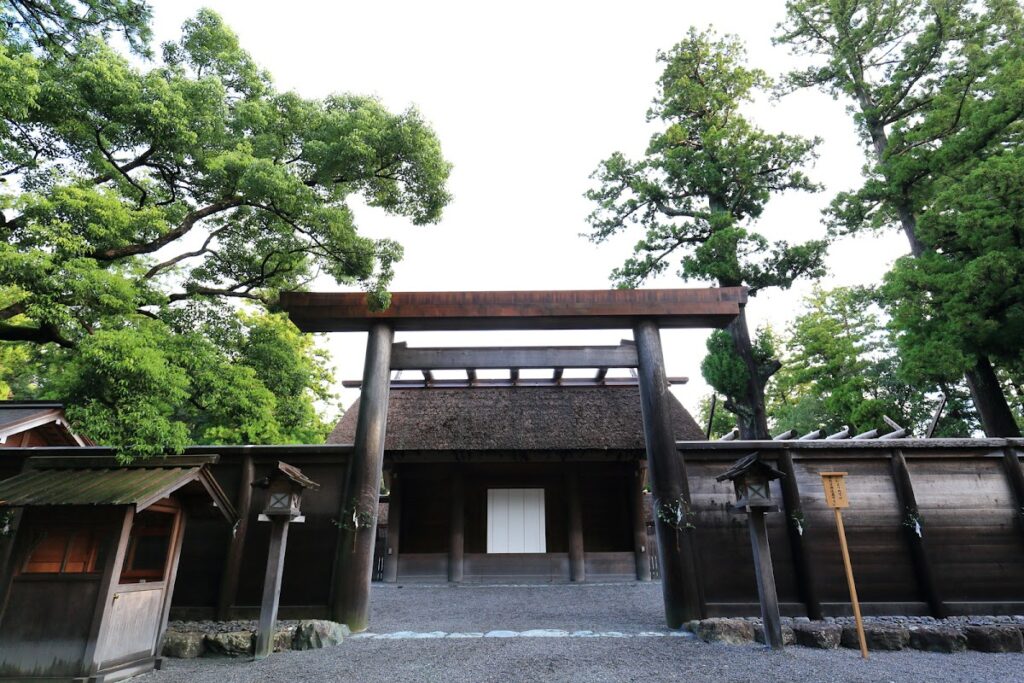
What is Toyouke Daijingu (Ise Grand Shrine Outer Shrine)?
Toyouke Daijingu is one of the two main shrines of Ise Grand Shrine, commonly known as “Geku” (Outer Shrine). Its principal deity is Toyouke-no-Omikami, who presides over the meals of Amaterasu-Omikami, enshrined in Naiku (Inner Shrine). It is revered as the guardian deity of industries, including clothing, food, and shelter.
It was founded approximately 1500 years ago, in the 22nd year of Emperor Yuryaku’s reign (478 AD). It is believed that Toyouke-no-Omikami was brought from Tanba Province (present-day Kyoto Prefecture) by an oracle from Amaterasu-Omikami, approximately 500 years after the establishment of Naiku.
Characteristics of the Outer Shrine
- Area: A vast sacred area of approximately 90 hectares
- Shrine Buildings: The Yuitsu Shinmei-zukuri style, the oldest architectural style in Japan
- Shikinen Sengu: A tradition of rebuilding the shrine buildings every 20 years (continued for over 1300 years)
- Nature of the Sacred Area: Cedar and cypress trees hundreds of years old flourish, and a tributary of the Isuzu River flows through the area.
Points to Note When Visiting
Order of Worship
At Ise Grand Shrine, there is a custom called “Geku-Sensai” (Outer Shrine First), and it is considered proper to visit the Outer Shrine → Inner Shrine in that order. This is because Toyouke-Ōmikami is responsible for offering daily meals to Amaterasu-Ōmikami.
Pilgrimage Route and Estimated Time
Basic Route (Estimated Time: Approx. 40 minutes)
- Hiyokebashi (Fire Prevention Bridge) – Entrance to the sacred area
- Temizuya (Water Purification Pavilion) – Purify your mind and body
- Daiichi Torii (First Torii Gate) – Bow before proceeding
- Shogu (Toyouke Daijingu) – The most important place of worship
- Takanomiya – The first of the auxiliary shrines
- Tsuchinomiya – Dedicated to the local guardian deity
- Kazenomiya – Dedicated to the god who controls wind and rain
In-depth Route (Estimated Time: Approx. 60 minutes)
In addition to the basic route, visit the following:
- Miumaya (Sacred Stable) – View the sacred horses
- Sengukan (Sengu Museum) – Learn about the history of the Shikinen Sengu (periodic rebuilding of the shrine)
- Magatama Pond – Beautiful seasonal irises
Manners for Visiting the Shrine
- Keep to the Left: The center of the approach is the path for the gods
- Photography: Photography is prohibited inside the torii gate of the main shrine
- Personal Wishes: Only express gratitude at the main shrine; make personal wishes at the auxiliary shrines
- Two Bows, Two Claps, One Bow: Basic worship etiquette
Benefits
Main Benefits
Toyouke-Ōmikami is the “Goddess of Clothing, Food, and Shelter,” and is believed to grant the following benefits:
Industry and Career Luck
- Business Prosperity
- Business Success
- Prayers for a Bountiful Harvest
- Protection of Fisheries and Agriculture
General Lifestyle
- Stability in Clothing, Food, and Shelter
- Family Safety
- Good Fortune
Benefits of Each Auxiliary Shrine
- Taga Shrine: Enshrining the fierce spirit of Toyouke-Ōmikami, offering even more powerful divine blessings
- Tsuchimiya: Protection of land and buildings, ground-breaking ceremony, and house safety
- Kazemiya: Abundant harvests, protection from disasters (believed to have caused the divine wind during the Mongol invasions)
Amulets and Goshuin (Shrine Seals)
- Jōyōsho: Various amulets are available at the Kagura-den (Sacred Dance Hall)
- Goshuin: Available at both the main shrine and the auxiliary shrines (offering fee: 300 yen)
- Jingū Taima: Amulet unique to Ise Grand Shrine
Access Information
Access by Train
Nearest Station
- JR/Kintetsu Ise-shi Station: Approximately 5 minutes on foot (closest)
- Kintetsu Ujiyamada Station: Approximately 10 minutes on foot
Travel Time from Major Cities
- From Nagoya: Approximately 1 hour 30 minutes by Kintetsu Limited Express
- From Osaka: Approximately 1 hour 50 minutes by Kintetsu Limited Express
- From Kyoto: Approximately 2 hours 10 minutes by Kintetsu Limited Express
Access by Bus
- Mie Kotsu Bus: Get off at “Geku-mae” from Ise-shi Station or Ujiyamada Station.
- CAN Bus: Sightseeing loop bus connecting Geku and Naiku (every 20 minutes)
Access by Car
Using Expressways
- Ise Expressway Ise-Nishi IC: Approximately 5 minutes
- Ise Expressway Ise IC: Approximately 5 minutes
Parking Information
- Geku 1st Parking Lot: Free, approximately 400 cars
- Geku 2nd Parking Lot: Free, approximately 100 cars
- Operating Hours: 5:00 AM – 7:00 PM (may vary depending on the season)
Visiting Hours
| Period | Time |
|——|——|
| October, November, December | 5:00 AM – 5:00 PM |
| January, February, March, April, September | 5:00 AM – 6:00 PM |
| May, June, July, August | 5:00 AM – 7:00 PM |
*Open all day during the New Year period
Surrounding Information
Outer Shrine Approach
The approximately 400-meter approach from Ise City Station to the Outer Shrine is lined with restaurants and souvenir shops offering local specialties such as Ise Udon, Akabuku, and Tekone Sushi.
Sengu Museum
A museum where you can learn about the history and techniques of the Shikinen Sengu (periodic rebuilding of the shrine). Exhibits include a life-size model of the main shrine building and sacred ceremonial garments and treasures.
- Admission Fee: 300 yen for adults
- Opening Hours: 9:00 AM – 4:30 PM
Getting to the Inner Shrine
From the Outer Shrine to the Inner Shrine:
- Bus: Approximately 15 minutes (Mie Kotsu CAN Bus)
- Taxi: Approximately 10 minutes, around 1,500 yen
- Walking: Approximately 50 minutes (approximately 4 km)
—
Inquiries: Jingu Shrine Office TEL 0596-24-1111