Complete Guide to Tsurugaoka Hachimangu Shrine’s Goshuin (Shrine Seals) | A Thorough Explanation of Types, Reception Hours, and Limited Edition Goshuin
Tsurugaoka Hachimangu Shrine, a symbol of Kamakura, attracts many visitors. This shrine, with over 800 years of history as the guardian deity of samurai families, offers several types of goshuin (shrine seals). This article comprehensively covers everything you need to know before visiting Tsurugaoka Hachimangu Shrine, from the types of goshuin available to reception hours, limited edition goshuin, and original goshuin notebooks.
Types of Goshuin Available at Tsurugaoka Hachimangu Shrine
Goshuin from the Main Shrine
The goshuin available at the main shrine of Tsurugaoka Hachimangu Shrine features a simple yet powerful design with the words “Tsurugaoka Hachimangu” written in ink and stamped in red. The words “Tsurugaoka Hachimangu” are in the center, the date of visit is in the upper right, and the seal of “Sagami no Kuni Ichinomiya” (First Shrine of Sagami Province) is in the lower left.
Offering Fee: 500 yen
The Goshuin (seal) of the main shrine is a dignified seal that reflects the history of Tsurugaoka Hachimangu Shrine, which flourished as the guardian deity of the Kamakura Shogunate. The calligraphy is powerful, giving a dignified impression befitting Tsurugaoka Hachimangu Shrine, the center of samurai culture.
Goshuin of Hatagami Benzaiten Shrine
You can also receive a different Goshuin at Hatagami Benzaiten Shrine, which floats on the Genpei Pond within the shrine grounds. This one features the calligraphy of “Hatagami Benzaiten” and has a different atmosphere from the main shrine’s Goshuin.
Offering Fee: 500 yen
Hatagami Benzaiten Shrine is a historically significant place where Minamoto no Yoritomo is said to have prayed for victory when he raised his banner. Benzaiten is worshipped as the goddess of performing arts and wealth, and is particularly popular among female worshippers.
Goshuin of Shirahata Shrine
You can also receive a Goshuin at Shirahata Shrine, a subsidiary shrine within the grounds. Shirahata Shrine is a shrine dedicated to Minamoto no Yoritomo and Minamoto no Sanetomo, and the goshuin (shrine stamp) bears the calligraphy “Shirahata Shrine.”
Offering Fee: 500 yen
The goshuin of Shirahata Shrine expresses reverence for Minamoto no Yoritomo, the founder of the Kamakura Shogunate, and is especially recommended for history buffs.
Goshuin Reception Location and Hours
Main Shrine Goshuin Reception
Reception Location: The office to the right of the main shrine
Reception Hours: 6:00 AM – 8:30 PM (may vary depending on the season)
The goshuin for the main shrine can be obtained at the office located to the right of the main shrine, after climbing the large stone steps. There may be a queue during busy times, so it is recommended to visit with plenty of time to spare.
Goshuin (Shrine Seal) Reception at Hatagami Benzaiten Shrine
Reception Location: Hatagami Benzaiten Shrine Office
Reception Hours: 9:00 AM – 5:00 PM (Normal)
Reception is at the Hatagami Benzaiten Shrine office, located across the bridge over Genpei Pond. Since the reception hours are shorter than at the main shrine, it’s best to prioritize visiting this shrine.
Goshuin (Shrine Seal) Reception at Shirahata Shrine
Reception Location: Main Shrine Office
Reception Hours: 6:00 AM – 8:30 PM (Varies by Season)
The Shirahata Shrine goshuin can be obtained at the main shrine office.
Limited and Special Goshuin
New Year’s Limited Goshuin
At Tsurugaoka Hachimangu Shrine, limited goshuin are sometimes available during the first three days of the New Year and during the Hatsumode (first shrine visit of the year) period. In addition to the regular goshuin, a special stamp celebrating the New Year may be added, making it an unmissable opportunity for collectors.
Limited Edition Goshuin Stamps for the Annual Grand Festival
During the annual Grand Festival (Yabusame Ritual), held from September 14th to 16th each year, special goshuin stamps are sometimes offered. These limited-edition stamps, coinciding with Kamakura’s largest festival, have a special feel to them.
Monthly and Seasonal Limited Editions
While Tsurugaoka Hachimangu Shrine generally uses the same goshuin stamp design year-round, limited-edition stamps are sometimes offered to coincide with special events and anniversaries. We recommend checking the official website and social media for the latest information.
Tsurugaoka Hachimangu Shrine Original Goshuin Stamp Books
Designs and Types
Tsurugaoka Hachimangu Shrine offers original goshuin stamp books in multiple designs.
Main Designs:
- Goshuincho (stamp book) featuring a dove motif (navy blue, pink, etc.)
- Goshuincho depicting the main shrine building
- Goshuincho depicting Genpei Pond and Hatage Benzaiten Shrine
Offering Fee: 1,500 yen to 2,000 yen (sometimes includes the stamp)
The goshuincho featuring the dove, the divine messenger of Tsurugaoka Hachimangu Shrine, is particularly popular. The dove is considered a divine messenger because the character “八” (hachi) in Hachimangu Shrine resembles the shape of a dove, and dove motifs can be seen throughout the shrine grounds.
Where to Purchase Goshuincho
Goshuincho can be purchased at the main shrine’s gift shop. Popular designs may sell out, so it is recommended to visit early if you have a desired design.
Manners and Precautions When Receiving a Goshuin Stamp
Basic Manners
- After completing your visit: The goshuin stamp is proof of your visit. Always complete your prayers before receiving your goshuin (temple/shrine stamp).
- Open and hand over your goshuin book: Open your book to the page where you want the stamp written and hand it over carefully with both hands.
- Prepare the offering: To avoid needing change, it’s best to have 500 yen coins or 1000 yen bills ready beforehand.
- Consideration for waiting time: You may have to wait during busy times. Please wait quietly while your goshuin is being written.
- Expressing gratitude: After receiving your goshuin, say “Thank you.”
About pre-printed goshuin
During busy times or when staffing is limited, you may only receive pre-printed goshuin (paper stamps). Especially during New Year’s, long holidays, and weekends, only pre-printed goshuin may be available, so please understand.
Pre-printed goshuin can be pasted into your goshuin book at home. Please carefully attach them using special glue or tape.
Recommended Visiting Times to Avoid Crowds
Weekday Mornings are Best
For those who wish to receive their Goshuin (temple stamp) in a calm atmosphere, weekday mornings (around 6:00 AM to 8:00 AM, right after opening) are recommended. During this time, there are fewer visitors, allowing for a peaceful and quiet visit.
Times to Avoid
- 10:00 AM – 3:00 PM on weekends and holidays: The busiest time
- First three days of the New Year: Extremely crowded with New Year’s visitors, wait times of several hours possible
- Weekends during cherry blossom and autumn foliage seasons: Crowded with many tourists
- Yabusame Ritual (September 16th): The main event of the annual festival
Times When It’s Relatively Less Crowded
- Early mornings on weekdays (6:00 AM – 8:00 AM)
- Evenings on weekdays (after 5:00 PM)
- Rainy days (days with bad weather)
Access Information to Tsurugaoka Hachimangu Shrine
Access by Train
From JR Yokosuka Line/Enoshima Electric Railway “Kamakura Station”:
- Approximately 10 minutes on foot from the East Exit
- Proceed straight along Wakamiya-oji (Dangatsura)
From Kamakura Station to Tsurugaoka Hachimangu Shrine, the recommended route is along Wakamiya-oji, lined with beautiful cherry trees. Enjoy the atmosphere of Kamakura as you walk along the approach to the shrine.
Access by Car
Approximately 20 minutes from the Asahina IC on the Yokohama-Yokosuka Expressway
Parking:
- Dedicated parking lot for Tsurugaoka Hachimangu Shrine visitors (paid)
- Capacity: Approximately 40 cars
- Fee: 600 yen for the first hour, 300 yen for every 30 minutes thereafter
- During busy times, using nearby paid parking lots is recommended.
Parking lots are often full on weekends and during tourist seasons, so using public transportation is recommended.
History and Highlights of Tsurugaoka Hachimangu Shrine
History
Tsurugaoka Hachimangu Shrine is said to have originated in 1063 when Minamoto no Yoriyoshi invited the deity from Iwashimizu Hachimangu Shrine in Kyoto. Later, in 1180, Minamoto no Yoritomo moved the shrine to its current location, and it was revered as the guardian deity of the Kamakura Shogunate.
For over 800 years, from the Kamakura period, when the samurai government flourished, to the present day, it has attracted the faith of many people as a god of military fortune and victory.
Main Highlights
Main Shrine (Upper Shrine)
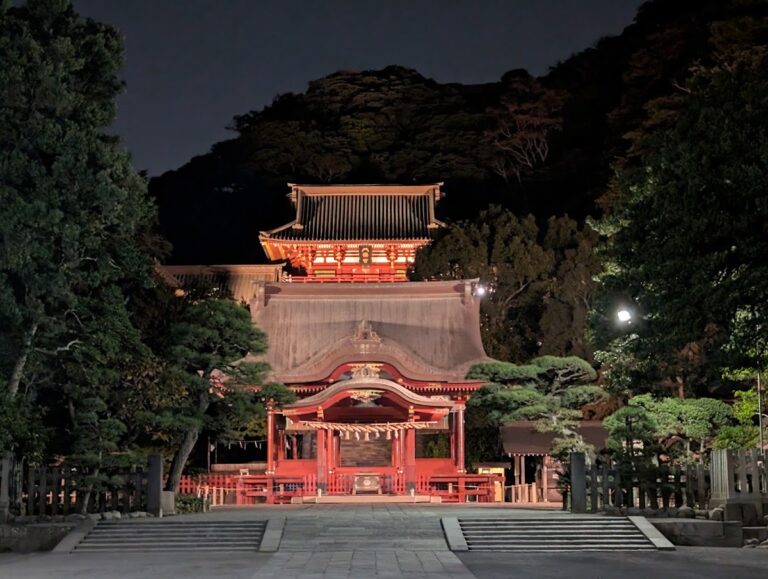
The vermilion-lacquered shrine building, located at the top of a large stone staircase, is designated as a National Important Cultural Property. The current shrine building was rebuilt in 1828.
Dance Hall
This is the place where Shizuka Gozen is said to have danced, longing for Yoshitsune. The current building stands on the site of the Wakamiya shrine, built in 1193.
Genpei Pond
Consisting of two ponds, the Genji Pond and the Heike Pond, it offers a beautiful view with the Hataage Benzaiten Shrine floating on the water. Cherry blossoms bloom in spring, and lotus flowers in summer.
Site of the Great Ginkgo Tree
The great ginkgo tree, said to be 1000 years old, fell in 2010, but a young tree is growing from its base.
Dangatsura
This is the approach to the shrine from Kamakura Station, lined with cherry trees on both sides. It is said to have been built by Minamoto no Yoritomo to pray for the safe delivery of his wife, Hojo Masako.
The Charms of Tsurugaoka Hachimangu Shrine to Enjoy Along with Goshuin (Shrine Stamps)
Amulets and Souvenirs
At Tsurugaoka Hachimangu Shrine, cute amulets featuring doves are popular.
Popular Charms:
- Pigeon Fortune Slip (a pigeon figurine containing a fortune slip)
- Victory Charm (for good fortune in victory and career)
- Matchmaking Charm
- Safe Childbirth Charm
- Traffic Safety Charm
Seasonal Events
January: First Shrine Visit of the Year, New Year’s Festival
February: Setsubun Festival
April: Kamakura Festival
August: Bonbori Festival
September: Grand Festival, Yabusame Ritual
December: Great Purification Ceremony
The Yabusame Ritual in September, in particular, is a traditional event that has continued since the Kamakura period and attracts many tourists.
Nearby Goshuin Stamp Spots
When visiting Tsurugaoka Hachimangu Shrine, why not also visit the surrounding temples and shrines?
Kamakura-gu Shrine (Daito-gu Shrine)
Approximately 15 minutes on foot from Tsurugaoka Hachimangu Shrine. This shrine is dedicated to Prince Moriyoshi and is known for its blessings of warding off evil.
Egara Tenjin Shrine
Approximately 15 minutes on foot from Tsurugaoka Hachimangu Shrine. This shrine is dedicated to Sugawara no Michizane, the god of learning, and is popular with students preparing for exams.
Hokaiji Temple
Approximately 10 minutes on foot from Tsurugaoka Hachimangu Shrine. This temple stands on the site of the Hojo clan’s residence, and beautiful bush clover flowers bloom here in September.
Kamakura Gozan Temples
Kenchoji Temple, Engakuji Temple, and other temples of the Kamakura Gozan are also within walking distance, making it a great place to collect Goshuin (temple/shrine stamps).
Frequently Asked Questions (FAQ)
Q1: How many types of Goshuin are available?
A: Normally, three types of Goshuin are available (Hongu, Hataage Benzaiten Shrine, and Shirahata Shrine). There are also periods when limited edition Goshuin are available.
Q2: How much does a Goshuin (temple/shrine stamp) cost?
A: Each Goshuin costs 500 yen.
Q3: What if I forget my Goshuincho (stamp book)?
A: You can receive a pre-written Goshuin or purchase a Goshuincho on the spot.
Q4: How long does it take?
A: If you only want to pray and get a Goshuin, it takes about 30 minutes to 1 hour. If you want to stroll around the temple grounds at a leisurely pace, it’s best to allow 1.5 to 2 hours.
Q5: Can I have my Goshuin mailed?
A: We generally do not offer mailing services. You need to visit the temple in person.
Q6: When is it crowded?
A: It is especially crowded during the first three days of the New Year, weekends during cherry blossom and autumn foliage seasons, and on the day of the Yabusame (mounted archery) ritual (September 16th).
Summary
The goshuin (seal) of Tsurugaoka Hachimangu Shrine is a popular souvenir of a visit to one of Kamakura’s most representative shrines. You can receive multiple goshuin, including those from the main shrine, Hatagami Benzaiten Shrine, and Shirahata Shrine, allowing you to fully experience the joy of collecting goshuin.
When visiting, please observe proper etiquette and receive your goshuin with gratitude. For those who wish to avoid crowds, visiting early morning or evening on weekdays is recommended.
Tsurugaoka Hachimangu Shrine boasts a history of over 800 years as the guardian deity of the Kamakura Shogunate. While receiving your goshuin, be sure to experience its solemn atmosphere and rich history and culture. Enjoying a stroll through the beautiful grounds, seasonal events, and visiting surrounding temples and shrines will make your Kamakura sightseeing even more fulfilling.