
Uno Hachimangu Shrine (Tamano City, Okayama Prefecture) Complete Guide | History, Deities, Shrine Highlights, and Access Information
Uno Hachimangu Shrine, located in Uno, Tamano City, Okayama Prefecture, is a historical shrine that has been revered as the local tutelary deity since the Edo period. Due to Tamano City’s history as a small island, it has received particularly strong devotion as the guardian deity of agriculture and maritime transport. This article comprehensively introduces information useful for visiting Uno Hachimangu Shrine, including its history, enshrined deities, shrine highlights, annual events, and access methods.
Overview and Basic Information of Uno Hachimangu Shrine
Uno Hachimangu Shrine is located in the heart of Tamano City, Okayama Prefecture, just north of Uno Elementary School. It is approximately 1.4 km southwest of JR Uno Station and is cherished by local residents as the guardian shrine of the Uno, Fujii, and Shinchi districts.
Basic Information
- Shrine Name: Uno Hachimangu Shrine
- Former Shrine Rank: Village Shrine
- Address: 2-30-1 Uno, Tamano City, Okayama Prefecture 706-0011
- Phone Number: 0863-21-4062
- Nearest Station: Approximately 17 minutes on foot (approx. 1.3 km) from Uno Station on the JR Uno Line
- Nearest Bus Stop: Approximately 2 minutes on foot from NTT Tamano-mae bus stop, approximately 2 minutes on foot from Narutakibashi bus stop
- Parking: Available
- Visiting Hours: Grounds are open freely (Shrine office is open only during the day)
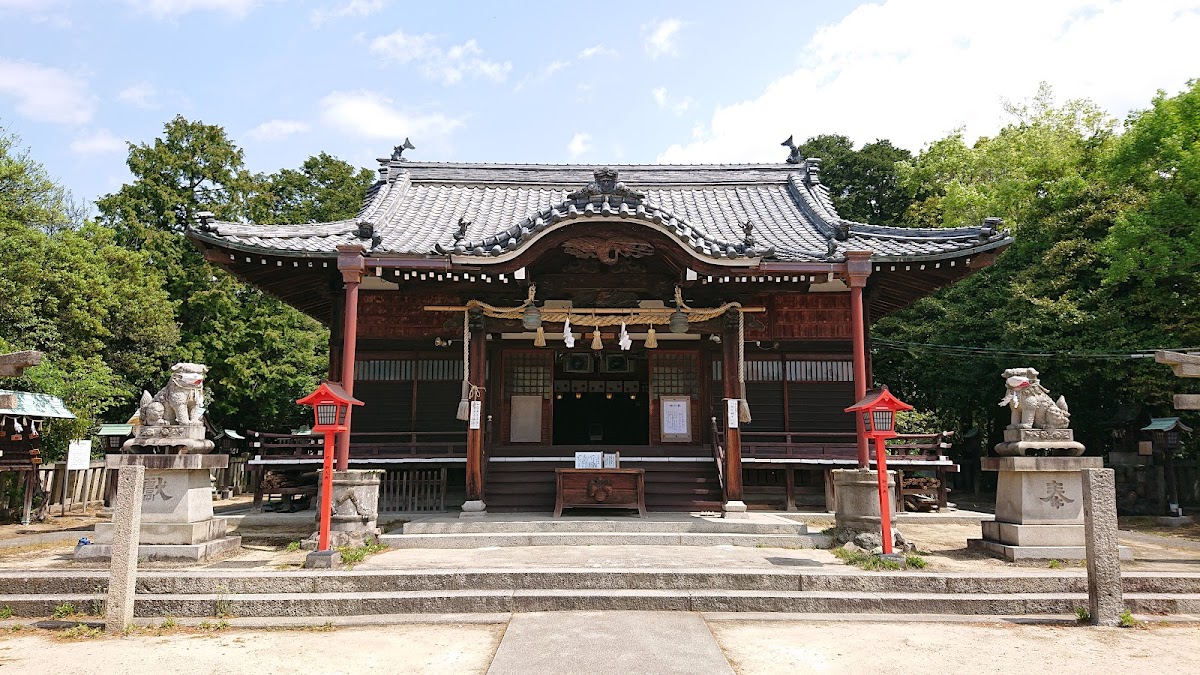
The bright and spacious shrine grounds are beautifully maintained, creating a pleasant environment for worship.
Deities Enshrined at Uno Hachimangu Shrine
Uno Hachimangu Shrine enshrines three deities central to Hachiman worship.
Emperor Ōjin
The 15th Emperor of Japan, he is enshrined as the principal deity of Hachiman shrines throughout Japan. He is worshipped as the god of military fortune and industrial development.
Emperor Chūai
The 14th Emperor of Japan, and the father of Emperor Ōjin. He is known as an emperor of exceptional military prowess.
Empress Jingū
The empress of Emperor Chūai and the mother of Emperor Ōjin. Known for the legend of her conquest of the Three Kingdoms of Korea, she is also worshipped as the goddess of safe childbirth and child-rearing.
These three deities are believed to possess a wide range of divine virtues, including military fortune, safe voyages, industrial development, and safe childbirth and child-rearing, which is one of the reasons why our shrine has been revered as the guardian deity of agriculture and shipping.
The History and Origins of Uno Hachimangu Shrine
The history of Uno Hachimangu Shrine is ancient, dating back to before the Edo period, although its founding date is unknown. Let’s trace the shrine’s changes chronologically.
From Founding to the Early Edo Period
Originally, the shrine was located at Fujii Oomura (at the foot of the present-day Fujii Inari Shrine). While the founding date is unknown, it was revered as the guardian shrine of Uno Village and a spiritual center for the villagers. It was particularly worshipped as the guardian deity of agriculture and maritime transport, attracting fervent devotion from those involved in fishing and shipping.
The Kanbun 6 (1666) Policy of Consolidating Shrines
In Kanbun 6 (1666) during the Edo period, a policy was implemented to consolidate small shrines within Bizen Province. At this time, the shrine, as a local tutelary deity, was spared from consolidation and was allowed to continue as an independent shrine. This indicates that the shrine was an important center of faith for the region.
Relocation in 1718
In 1718 (Kyoho 3), our shrine was relocated to its current location. This relocation placed the shrine in the center of Uno Village, creating an environment where more villagers could easily visit and worship.
Changes Since the Mid-Edo Period
Even after the relocation during the Kyoho era, our shrine underwent several repairs and reconstructions. Records show that it was relocated to the former sites of the Toshiyori-gu and Misaki-gu shrines, and to Komaruyama (present-day Karushima), indicating that the shrine changed along with the changes in the region.
During the An’ei era (1772-1781) and the Tenpo era (1830-1844), the roof was re-thatched, demonstrating continuous maintenance and upkeep.
Reconstruction and Renaming in the Showa Era
The current shrine building was constructed in 1942 (Showa 17). In 1984, the shrine was officially renamed “Uno Hachimangu Shrine,” and as the guardian shrine of the Uno, Fujii, and Shinchi districts, it began to attract worshippers from a wider area.
Highlights of the Shrine Grounds
The grounds of Uno Hachimangu Shrine are a beautifully maintained space. Here are some highlights to look out for during your visit.
Approach and Stone Steps
The approach leading from the entrance to the shrine consists of stone steps of a moderate length. The number of steps is not excessive, making it easy for people of all ages to visit.
Bizen Ware Komainu (Guardian Dogs)
At the entrance to the shrine grounds sits a pair of Bizen ware guardian dogs (komainu) dating back to 1931. Made from Bizen ware, a traditional craft representative of Okayama Prefecture, these dogs are known for their beauty and are a popular spot for photography. The unique texture and firing color of Bizen ware have developed a rich, aged character over many years.
Worship Hall
The worship hall, located in the center of the spacious grounds, is a magnificent building with a hipped roof and a curved gable. Built in 1942, the shrine preserves the beauty of traditional Shinto architecture. Worshippers perform the ritual of two bows, two claps, and one bow in front of the worship hall.
Main Sanctuary
Behind the worship hall stands the main sanctuary, covered with copper plates. It exudes a solemn atmosphere as a sacred space where the enshrined deity resides.
Shrine Office
To the left of the stone steps leading to the shrine is the shrine office, where you can receive Goshuin (shrine stamps) and various amulets. You can receive a Goshuin as a memento of your visit.
Atmosphere of the Shrine Grounds
The bright and open shrine grounds are kept clean and well-maintained, creating a pleasant environment for worship. Located right in front of Uno Elementary School, the shrine gives the impression of being a friendly and welcoming place open to the community.
List of Annual Events and Rituals at Uno Hachimangu Shrine
At Uno Hachimangu Shrine, various rituals and festivals are held throughout the year. The summer and autumn festivals, in particular, are important events cherished by the local community.
Main Annual Events
- New Year’s Day Festival (January 1st): A festival celebrating the New Year
- Spring Festival: A festival celebrating the arrival of spring
- Summer Festival: A summer tradition where local children and residents gather
- Autumn Festival: An important festival giving thanks for a bountiful harvest
- Shichi-Go-San Festival (November): A pilgrimage to celebrate the growth of children
- Year-End Purification Ceremony (December 31st): A Shinto ritual to purify oneself of the impurities of the year
The summer and autumn festivals are particularly lively and beloved by the local community. Processions of portable shrines and dedication ceremonies are held, providing an opportunity to deepen the bonds of the local community.
Goshuin (Shrine Seal) Information
Goshuin (shrine seals) can be received at Uno Hachimangu Shrine.
Location and Hours for Obtaining Goshuin (Shrine Stamps)
- Location: Shrine office located to the left of the stone steps leading to the shrine.
- Hours: Daytime (It is recommended to check the exact hours in advance.)
- Offering Fee: Similar to other shrines (approximately 300-500 yen)
Goshuin are popular as proof of worship and as a memento of one’s connection with the shrine. If you do not have a goshuincho (stamp book), you may be able to purchase one at the shrine office; please inquire.
How to Access Uno Hachimangu Shrine
Uno Hachimangu Shrine is located in the center of Tamano City and has several access options.
Access by Train
From JR Uno Line “Uno Station”
- Walking: Approximately 17 minutes (approximately 1.3-1.4 km)
- Head southwest from the Uno Station exit, passing through the residential area towards Uno Elementary School.
Access by Bus
Nearest Bus Stops
- NTT Tamano-mae Bus Stop: Approximately 2 minutes on foot (approximately 141 m)
- Narutakibashi Bus Stop: Approximately 2 minutes on foot (approximately 149 m)
These bus stops are the closest and most convenient if you choose to use the bus.
Access by Car
From Major Roads
- From National Route 30, head towards the city center.
- Use Tamano City Hall and Uno Elementary School as landmarks for easy access.
- Parking: Parking space available on the shrine grounds.
Nearby Landmarks
- Uno Elementary School: Immediately south of the shrine (directly in front).
- Tamano City Hall: Located nearby, in the city center.
- Uno Port: South of Uno Station, the gateway to Shikoku.
Historical Background of Uno Hachimangu Shrine and Tamano City
Understanding the historical background of Tamano City is important for understanding Uno Hachimangu Shrine.
Tamano as an Island Region
The central area of Tamano City was once a region dotted with small islands known as “iso-kojima” (detached islands). Due to this geographical characteristic, many residents were engaged in fishing and shipping, living in close connection with the sea.
Faith as the Guardian Deity of Agriculture and Maritime Transport
Due to these regional characteristics, Uno Hachimangu Shrine was particularly revered as the guardian deity of agriculture and maritime transport. The shrine received heartfelt prayers from people involved in the sea for safety at sea, safe voyages, and abundant catches.
The Development of Uno Port and the Shrine
Since the Meiji era, Uno Port has developed as a gateway to Shikoku. The opening of Uno Station and the commencement of ferry services to Shikoku from Uno Port made this area a transportation hub. Even amidst this development, Uno Hachimangu Shrine has remained a constant spiritual pillar of the region.
Its Role in Modern Times
Currently, as the guardian shrine of the Uno, Fujii, and Shinchi districts, it attracts faith from a wider area. Even amidst increasing urbanization, it continues to play an important role as a center of the local community and a spiritual anchor.
Manners and Etiquette for Visiting the Shrine
We will introduce basic manners and etiquette for visiting Uno Hachimangu Shrine.
How to Pass Through a Torii Gate
A torii gate is the entrance to a sacred area. Bow before passing through. Since the center of the path is considered the path of the gods, it is polite to walk along the sides.
Proper Ritual for Washing Hands
- Hold the ladle in your right hand and wash your left hand.
- Switch the ladle to your left hand and wash your right hand.
- Switch the ladle back to your right hand, receive water in your left hand, and rinse your mouth.
- Wash your left hand again.
- Hold the ladle upright, wash the handle, and return it to its original position.
Proper Ritual for Worshiping at the Main Hall
- Bow slightly.
- Gently place your offering in the offering box.
- Ring the bell if there is one.
- Bow twice, clap twice, and bow once.
- Bow deeply twice.
- Clap your hands twice.
- Express your wishes and gratitude silently.
- Bow deeply once.
Nearby Tourist Attractions
Here are some nearby tourist attractions you might want to visit when you come to Uno Hachimangu Shrine.
Artworks Around Uno Port
The area around Uno Port is one of the venues for the “Setouchi Triennale,” and contemporary art works are scattered throughout the area. Visiting public art installations such as “Uno’s Black Sea Bream” is also one of the pleasures of the area.
Fujii Inari Shrine
This shrine is located near Fujii Oomura, where Uno Hachimangu Shrine was originally situated. As a shrine with historical ties to Uno Hachimangu Shrine, it’s worth visiting both.
Uno Port
Uno Port, just a short walk from JR Uno Station, is the gateway to Shikoku, with ferries departing for Takamatsu Port. You can enjoy beautiful views of the Seto Inland Sea.
Tamano Marine Museum (Shibukawa Marine Aquarium)
This facility allows you to learn about Tamano City’s marine culture, primarily exhibiting creatures from the Seto Inland Sea.
Summary: The Charm of Uno Hachimangu Shrine
Uno Hachimangu Shrine has a history dating back to the Edo period and has been revered as the local tutelary deity. Due to Tamano City’s history as a small island, it has attracted particularly strong devotion as the guardian deity of agriculture and maritime transport.
Uno Hachimangu Shrine boasts many attractions, including beautiful Bizen ware guardian lion-dogs dating back to 1931, a magnificent worship hall with a hipped roof and a curved gable, and a bright, well-maintained grounds. During the summer and autumn festivals, you can feel the lively atmosphere created by the local community, offering a glimpse into the shrine’s deep roots in the region.
Within walking distance of JR Uno Station and close to a bus stop, access is excellent. When visiting Tamano City, be sure to pay your respects at Uno Hachimangu Shrine and experience the history and culture of the region. Along with the divine virtues of the enshrined deities, Emperor Ojin, Emperor Chuai, and Empress Jingu, you will feel the warm faith of the local people.
As the guardian shrine of the Uno, Fujii, and Shinchi districts, Uno Hachimangu Shrine will continue to be a spiritual anchor for the community. Its quiet and peaceful grounds offer peace and vitality to those of us living in the modern age.


