Wakamiya Hachiman Shrine (Sugiura-cho, Otsu City, Shiga Prefecture) Complete Guide | History and Highlights of an Ancient Shrine Founded in the Hakuhō Period
Wakamiya Hachiman Shrine, located in Sugiura-cho, Otsu City, Shiga Prefecture, is a historic shrine said to have been founded in the 4th year of the Hakuhō era (675 AD). With a founding legend associated with Emperor Tenji, and situated along the old Tōkaidō road in Zeze, this shrine has a long history as a center of local faith. This article provides a detailed introduction to Wakamiya Hachiman Shrine, including its history, enshrined deities, highlights within the grounds, and access information.
Basic Information about Wakamiya Hachiman Shrine
Location
Address: 20-20 Sugiura-cho, Otsu City, Shiga Prefecture
Postal Code: 〒520-0836
Corporate Number: 9160005001135
Wakamiya Hachiman Shrine is located in the Zeze district of Otsu City, on the southern shore of Lake Biwa. It is situated near the former Tokaido Road, in an area that retains the atmosphere of a historical highway. The vicinity is dotted with historical sites such as the ruins of Zeze Castle and the old Tokaido Road, making it an ideal base for historical walks.
Deities Enshrined
The main deity enshrined at Wakamiya Hachiman Shrine is Emperor Ojin (Homudawake no Mikoto), a central deity of Hachiman worship. Hachiman has long been revered by samurai families as the god of military fortune and victory. Furthermore, it is also worshipped as a god of safe childbirth and child-rearing, and is deeply rooted in the lives of the local people.
History and Origins of Wakamiya Hachiman Shrine
Emperor Tenji and the Founding Legend
Wakamiya Hachiman Shrine is said to have been founded in the 4th year of the Hakuhō era (675 AD). According to shrine tradition, when Emperor Tenji visited this area, he saw auspicious signs such as purple clouds and a golden dove perched on a nearby large tree, and decided to build a shrine here.
Emperor Tenji was the emperor who established the Ōtsu Palace in Ōmi Province and had deep ties to this region. Many historical sites related to Emperor Tenji remain in Ōtsu City, and Wakamiya Hachiman Shrine is a valuable one among them.
An Ancient Shrine Second Only to Usa Hachiman Shrine in Kyushu
Wakamiya Hachiman Shrine is said to be the second oldest Hachiman shrine after Usa Hachiman Shrine in Kyushu, which was completed in the 8th year of the Hakuhō era (679 AD). Initially called “Awazu no Mori Hachimangu,” it later became “Wakamiya Hachimangu,” and since the Meiji era, it has been known as “Wakamiya Hachiman Shrine.” This change in name reflects the shrine’s long history and evolving position within the region.
History of Fires and Reconstruction
Wakamiya Hachiman Shrine has suffered numerous disasters, but has been rebuilt each time.
Engi 17 (917 AD): Completely destroyed by lightning. This was the first major natural disaster.
Juei 3 (1184): Completely destroyed in the Battle of Awazu during the Genpei War. The Battle of Awazu, where Kiso Yoshinaka was killed, took place very close to this shrine. The shrine buildings were destroyed by fire, but were later rebuilt by Minamoto no Yoritomo. The fact that Minamoto no Yoritomo played a significant role in the reconstruction demonstrates the shrine’s importance at the time.
Relationship with the Zeze Domain
During the Edo period, Wakamiya Hachiman Shrine came under the protection of the Zeze Domain. The Zeze Domain was established by order of Tokugawa Ieyasu in Zeze, a strategic point on the Tokaido road, and flourished around Zeze Castle. Like many shrines in Zeze, Wakamiya Hachiman Shrine developed as a center of local faith under the domain’s protection.
Highlights of the Shrine Grounds
The Main Gate, Relocated from Zeze Castle’s Inubashiri Gate
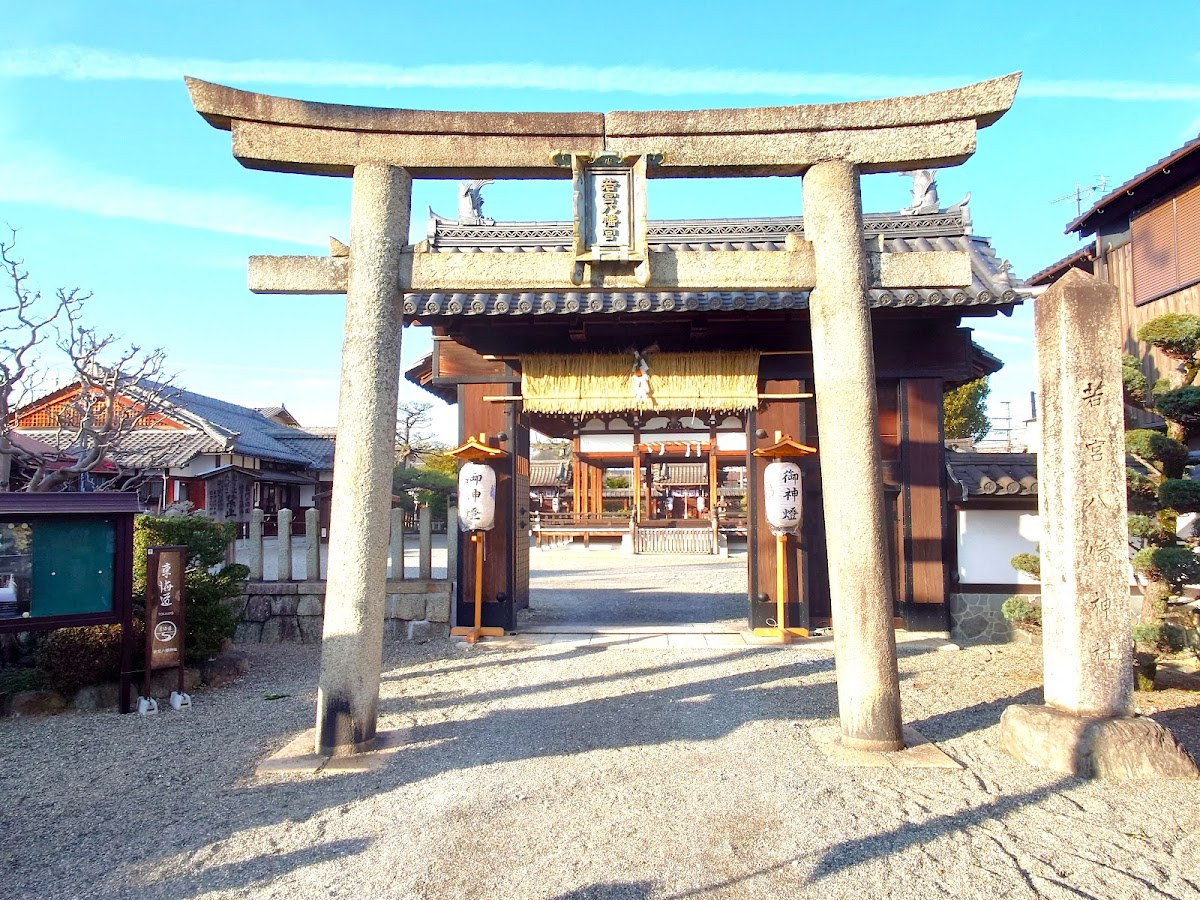
One of the greatest highlights of Wakamiya Hachiman Shrine is its current main gate. This gate was relocated from Zeze Castle’s Inubashiri Gate and is extremely valuable as a relic of castle architecture.
Zeze Castle underwent a major renovation in 1651 and was repaired several times thereafter, but was demolished due to the Meiji-era decree abolishing castles. However, some parts of it were relocated to Wakamiya Hachiman Shrine and other surrounding temples and shrines, and have been preserved to this day.
The Inubashiri Gate is a gate built on a passageway called “Inubashiri,” one of the castle’s defensive structures. Due to its robust construction and historical value, it is an important structure that conveys the atmosphere of Zeze Castle to the present day, attracting many history enthusiasts.
Atmosphere of the Shrine Grounds
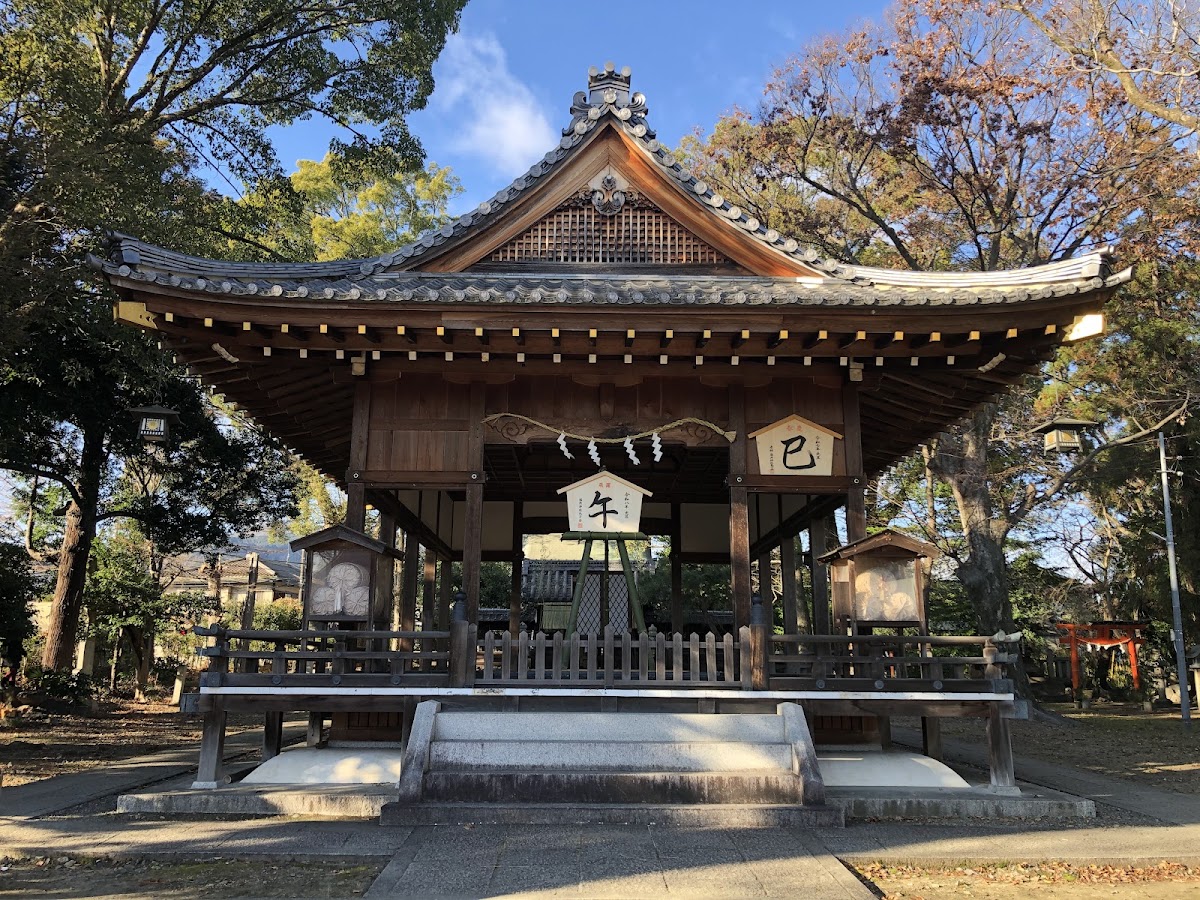
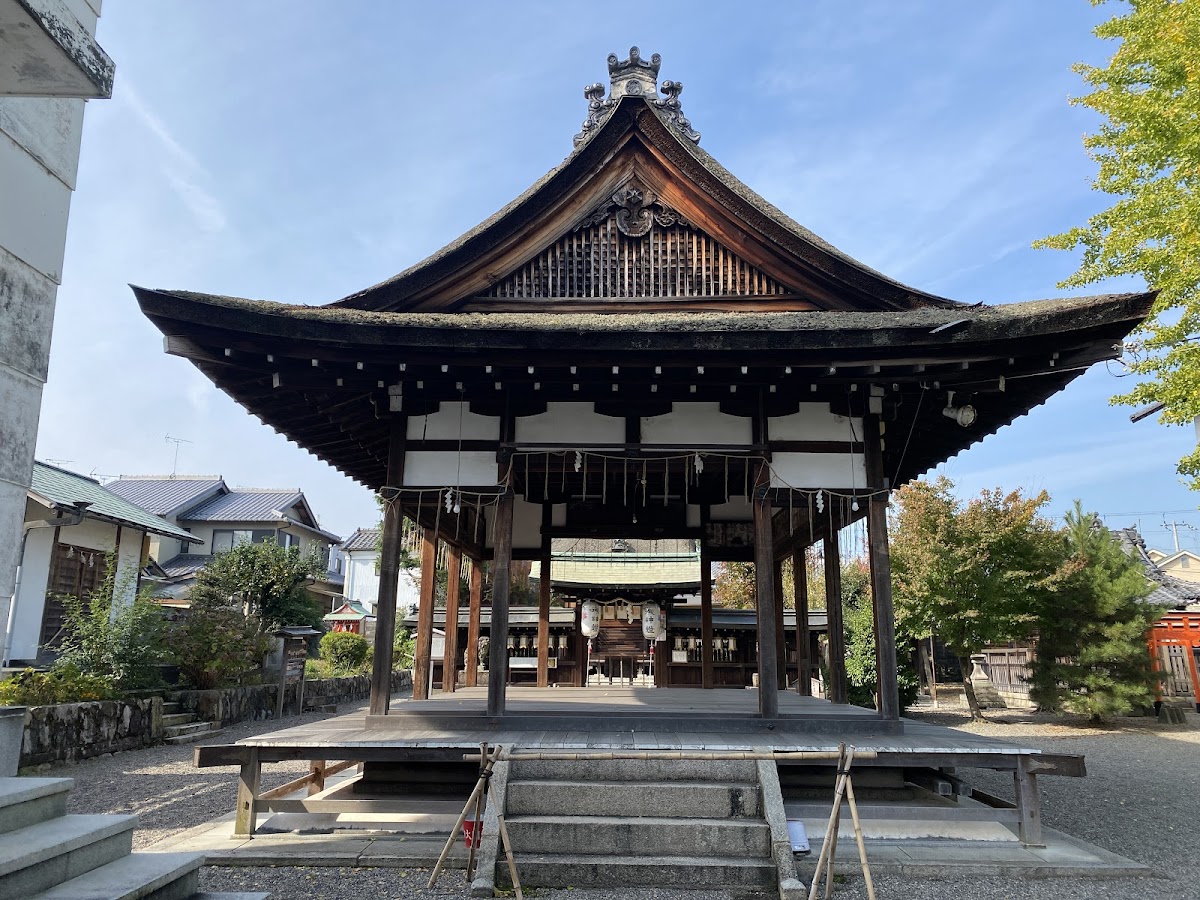
Despite being located in an urban area, the grounds of Wakamiya Hachiman Shrine maintain a tranquil atmosphere. Ancient trees stand tall, creating a space that evokes a sense of historical weight. Majestic trees, reminiscent of the legend of the “golden dove that Emperor Tenji saw,” welcome visitors.
The grounds are not too large, making them a suitable size for a leisurely visit. It is a place of daily worship for local people and a place of historical exploration, cherished by a wide range of visitors.
Access and Transportation Information
Nearest Station and Line
The most convenient access to Wakamiya Hachiman Shrine is via the Keihan Ishiyama-Sakamoto Line.
Kawarahama Station: Approximately 1 minute walk (approx. 60m)
This is the nearest station, located very close to the station exit. Please check the latest timetable on the Keihan Railway official website.
Awazu Station: Approximately 4 minutes walk (approx. 307m)
This is the next closest station after Kawarahama Station. The name Awazu is a historical place name derived from the Battle of Awazu, where Kiso Yoshinaka was killed.
Nakanosho Station: Approximately 6 minutes walk (approx. 442m)
It’s a little further, but still within walking distance.
Nearest Bus Stops and Routes
While trains are the most convenient public transport option, if you prefer to use the bus, please use the nearest bus stop for routes operating within Otsu City. For detailed bus routes, please check the latest information on the Otsu City public transport guide or the official websites of each bus company.
Access by Car
If you are coming by car, it is about a 15-minute drive from the Meishin Expressway’s “Otsu IC” exit. There are coin-operated parking lots nearby, but we recommend checking in advance for the shrine’s dedicated parking lot. There are also narrow roads along the old Tokaido route, so please check the route using a map app before coming.
Nearby Attractions and Tourist Spots
Zeze Castle Ruins
Within walking distance of Wakamiya Hachiman Shrine are the ruins of Zeze Castle. Currently, Zeze Castle Ruins Park has been developed on the site of the main keep, and parts of the stone walls and moats remain. Since the main gate of Wakamiya Hachiman Shrine is the Inubashiri Gate of Zeze Castle, visiting both together will deepen your understanding of the history.
Awazu no Seiran
The Awazu area, known for “Awazu no Seiran,” one of the Eight Views of Omi, is also nearby. This area allows you to enjoy both the beautiful scenery of Lake Biwa and a historical atmosphere.
Gichu-ji Temple
Gichu-ji Temple, where the graves of Kiso Yoshinaka and Matsuo Basho are located, is also close to Wakamiya Hachiman Shrine. As a temple commemorating Yoshinaka, who died in the Battle of Awazu, it attracts many literature and history enthusiasts.
Points to Note and How to Enjoy Your Visit
A Visit to Experience History
When visiting Wakamiya Hachiman Shrine, be sure to reflect on its long history. It boasts over 1300 years of history, from its founding during the Hakuhō period, to Emperor Tenji’s visit, the ravages of the Genpei War, and the patronage of the Zeze Domain.
As you pass through the main gate, you will remember that it is a remnant of Zeze Castle, and you will feel a sense of awe that the gate that once protected the castle now protects the shrine.
Spending a Quiet Time
Despite being in an urban area, the tranquil grounds are perfect for escaping the hustle and bustle of everyday life and finding peace of mind. It’s a great place to stop by during a historical walk with a map in hand, or to take your time to pray and compose yourself.
Photography Tips
The main gate, relocated from Zeze Castle’s Inubashiri Gate, is a historically valuable subject for photography. The ancient trees and shrine buildings within the grounds also offer opportunities for photos that convey a sense of history. However, please be mindful of others and observe proper etiquette when taking photos.
Annual Festivals and Events
Wakamiya Hachiman Shrine holds various festivals and events throughout the year. As the local guardian shrine, it hosts seasonal festivals and annual ceremonies, attracting the faith of local residents.
For specific festival dates, please check the latest information from the Shiga Prefectural Shrine Association or local tourist information centers. The annual ceremonies, in particular, create a lively atmosphere and offer a valuable opportunity to experience the region’s traditional culture.
About Goshuin (Shrine Seals)
For those visiting shrines, goshuin are important mementos of their visits. While it may be possible to receive a Goshuin (temple/shrine stamp) at Wakamiya Hachiman Shrine, it is recommended to check in advance whether they offer this service regularly.
Recently, an electronic Goshuin service has also become available, allowing you to record your visit on your smartphone. However, please understand that this is not an official shrine service, but rather part of a visitor record service.
Summary of the Charms of Wakamiya Hachiman Shrine
Wakamiya Hachiman Shrine (Sugiura-cho, Otsu City, Shiga Prefecture) is a shrine with the following charms:
- Ancient Shrine Founded in the Hakuhō Period: A venerable shrine with a history of over 1300 years.
- Site Associated with Emperor Tenji: Legend says it was founded by Emperor Tenji, who established the Ōmi Ōtsu Palace.
- Connection to the Genpei War: Historically, it was destroyed in the Battle of Awazu and rebuilt by Minamoto no Yoritomo.
- Remains of Zeze Castle: A valuable cultural asset: the main gate, which was relocated from the Inubashiri Gate.
- Excellent Accessibility: Conveniently located just a 1-minute walk from Kawaragahama Station.
- Base for Historical Exploration: Ideal for visiting nearby historical sites such as the Zeze Castle ruins and Gichūji Temple.
Notes for Visitors
- There are no specific visiting hours, but we recommend visiting during reasonable hours (daytime).
- Please maintain silence on the shrine grounds and be considerate of other visitors.
- Photography is permitted, but please be mindful of privacy and the dignity of the religious site.
- It is recommended to check the latest information (festival schedule, Goshuin stamp availability, etc.) in advance.
- The nearby roads include narrow paths along the old Tokaido road, so walking is recommended for exploring.
Summary
Wakamiya Hachiman Shrine is a historically rich shrine located in Sugiura-cho, Otsu City, Shiga Prefecture. Since its founding in the 4th year of the Hakuhō era, it has experienced numerous historical events, including the legend of Emperor Tenji’s visit, the ravages of the Genpei War, and the patronage of the Zeze Domain.
Despite its convenient access, just a 1-minute walk from Kawaragahama Station on the Keihan Ishiyama-Sakamoto Line, it is a precious place where you can feel the weight of history in a tranquil setting. The main gate, which was relocated from the Inubashiri Gate of Zeze Castle, is well worth seeing as a remnant of castle architecture.
Wakamiya Hachiman Shrine offers a variety of ways to enjoy it, whether as part of a historical walk around Lake Biwa, a tour of historical sites in the Zeze area, or simply as a place for quiet worship. Why not visit it with a map in hand? Enjoy a special time in this place steeped in 1300 years of history, along with the latest tourist information.