What is a Taisha? A Thorough Explanation of Meaning, History, and Types [From the Engishiki Jinmyocho to the Present]
Among the many shrines throughout Japan, there are some that bear the name “Taisha.” This term, used for famous shrines everyone has heard of, such as Izumo Taisha and Kasuga Taisha, actually has a deep historical background and a clear definition. This article will comprehensively explain the meaning of Taisha, its historical changes, and its position in modern times.
Basic Meaning and Pronunciation of Taisha
The word “Taisha” mainly has two pronunciations: “Taisha” and “Ooyashiro.” The difference in pronunciation has been used depending on the era and context.
Three Main Meanings
Historically, the word Taisha has been used in the following three senses:
1. Taisha as a General Meaning
It is used as a general noun referring to an extremely large shrine, or a historically significant and famous shrine. In this case, the term is used to express scale or historical importance, rather than being based on a specific rank or system.
2. Grand Shrines in the Engishiki Jinmyocho
In the Engishiki Jinmyocho, compiled in the early Heian period, shrines were classified into three ranks—Grand Shrines, Medium Shrines, and Minor Shrines—and this refers to the shrines ranked at the highest level. The Engishiki Jinmyocho lists 492 Grand Shrines nationwide, and these were recognized as the most prestigious shrines in ancient times.
3. Grand Shrines in the Modern Shrine Ranking System
In the modern shrine ranking system implemented from 1871 (Meiji 4), this term was used to refer to Kanpei Taisha (Grand Imperial Shrines) and Kokuhei Taisha (National Grand Shrines). During this period, Izumo Taisha was the only shrine permitted to use the title “Grand Shrine.”
The Position of Grand Shrines in the Engishiki Jinmyocho
The Engishiki Jinmyocho is a set of detailed regulations for the implementation of the Ritsuryo legal system, compiled starting in 905 (Engi 5) and completed in 927 (Encho 5). It lists all shrines nationwide recognized by the imperial court at the time.
Classification Criteria for Grand, Medium, and Minor Shrines
The Engishiki Jinmyocho classified shrines as follows:
- Grand Shrines: 492 shrines
- Medium Shrines: Approximately 220 shrines
- Minor Shrines: Approximately 2,140 shrines
This classification was determined by comprehensively considering factors such as the shrine’s history, the importance of its enshrined deity, its relationship with the imperial court, and its influence in the region. Being ranked as a Grand Shrine meant that the shrine was recognized as a nationally important entity.
Examples of Major Engishiki Grand Shrines
The Grand Shrines listed in the Engishiki Jinmyocho include the following well-known shrines:
- Izumo Taisha (Kitsuki Taisha) in Izumo Province
- Omiwa Shrine in Yamato Province
- Kamo Wakeikazuchi Shrine (Kamigamo Shrine) in Yamashiro Province
- Kamo Mioya Shrine (Shimogamo Shrine) in Yamashiro Province
- Ise Grand Shrine (Naiku and Geku) in Ise Province
- Kumano Sanzan in Kii Province
These shrines have played a central role in Japanese religious culture from ancient times to the present day.
The Specialness of Izumo Taisha and the Title “Taisha”
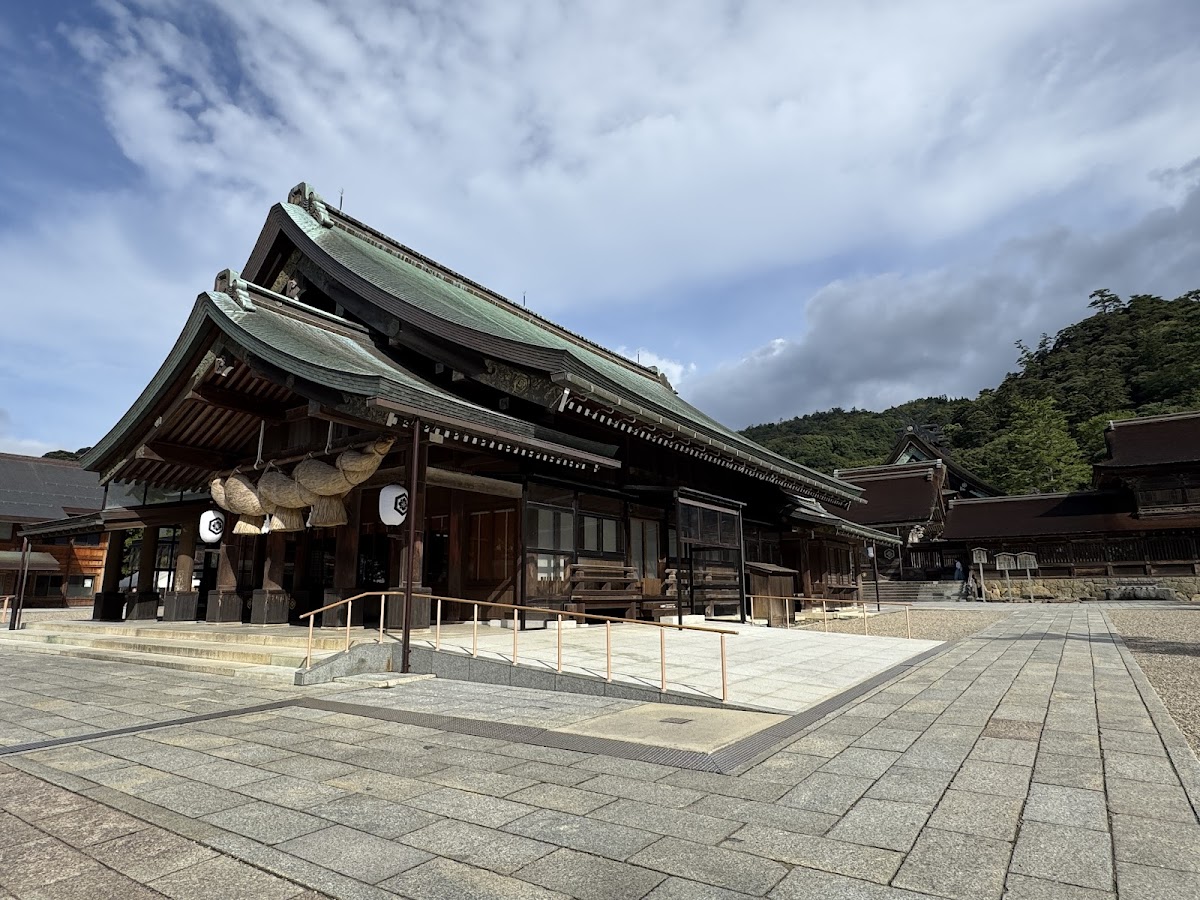
Historically, the term “Taisha” (大社) generally referred to Izumo Taisha (Izumo City, Shimane Prefecture). This fact indicates that Izumo Taisha held a special position in Japanese shrine culture.
The Historical Importance of Izumo Taisha
Izumo Taisha is an extremely old shrine, mentioned in Japan’s oldest historical texts, such as the Kojiki and Nihon Shoki. The enshrined deity, Ōkuninushi-no-Ōkami, is a central figure in the myth of the transfer of the land and is widely worshipped as a god of matchmaking.
The Izumo Taisha shrine buildings are believed to have been far larger in ancient times than they are today, overwhelming the scale of other shrines. Archaeological excavations have uncovered the remains of massive pillars, suggesting that the ancient Izumo Taisha may have been a magnificent structure reaching a height of 48 meters.
The “Taisha” Title After the Meiji Restoration
In the modern shrine ranking system established after the Meiji Restoration, Izumo Taisha was the only shrine permitted to use the title “Taisha” (Grand Shrine). This signifies the official recognition of Izumo Taisha’s historical and religious importance.
This shrine, previously known as “Kizuki Taisha,” was officially renamed “Izumo Taisha” in 1871 (Meiji 4).
Modern Shrine Ranking System and Grand Shrines
As part of its policy to establish Shinto as the foundation of national governance, the Meiji government introduced a modern shrine ranking system in 1871 (Meiji 4). This system systematically ranked shrines throughout the country.
Kanpei Taisha and Kokuhei Taisha
The highest-ranking shrines under the modern shrine ranking system were classified into the following two categories:
Kanpei Taisha
The highest-ranking shrines that receive offerings (heihaku) from the Imperial Court (Ministry of the Imperial Household). 28 shrines were designated nationwide. Major Kanpei Taisha include:
- Ise Grand Shrine (Inner and Outer Shrines)
- Izumo Taisha
- Atsuta Jingu
- Heian Jingu
- Meiji Jingu
- Kashihara Jingu
Kokuhei Taisha
Grand shrines that receive offerings (heihaku) from local officials (Kokushi). Over 50 shrines nationwide were designated as National Grand Shrines. Major National Grand Shrines include:
- Kasuga Grand Shrine
- Sumiyoshi Grand Shrine
- Suwa Grand Shrine
- Munakata Grand Shrine
- Otori Grand Shrine
Post-War Changes and the Adoption of the “Grand Shrine” Title
After World War II, the Shinto Directive of 1945 dismantled State Shinto and abolished the modern shrine ranking system. As a result, all shrines became legally equal religious corporations.
However, many shrines that were formerly Grand Shrines, such as former Imperial Grand Shrines and former National Grand Shrines, adopted the title “Grand Shrine” to indicate their historical status. Therefore, many shrines today use the name “○○ Grand Shrine.”
List of Major Grand Shrines in Modern Times
This section introduces major shrines in modern times that include “Grand Shrine” in their name, categorized by region.
Hokkaido and Tohoku Region
- Hokkaido Shrine (Former Kanpei Taisha, however the title “Taisha” is not used)
- Kashima Shrine (Ibaraki Prefecture, Former Kanpei Taisha)
Kanto Region
- Hikawa Shrine (Saitama Prefecture, Former Kanpei Taisha, Musashi Ichinomiya)
- Katori Shrine (Chiba Prefecture, Former Kanpei Taisha)
- Meiji Shrine (Tokyo, Former Kanpei Taisha)
Chubu Region
- Suwa Grand Shrine (Nagano Prefecture, Former Kanpei Taisha, Shinano Province Ichinomiya)
- Fujisan Hongu Sengen Taisha (Shizuoka Prefecture, Former Kanpei Taisha)
- Atsuta Shrine (Aichi Prefecture, Former Kanpei Taisha)
Kinki Region
- Ise Grand Shrine (Mie Prefecture, Former Kanpei Taisha, Higher Rank than All Shrines)
- Kasuga Grand Shrine (Nara Prefecture, Former Kanpei Taisha)
- Sumiyoshi Taisha (Osaka Prefecture, former Kanpei Taisha)
- Fushimi Inari Taisha (Kyoto Prefecture, former Kanpei Taisha)
- Yasaka Shrine (Kyoto Prefecture, former Kanpei Taisha, Gion Shrine)
Chugoku Region
- Izumo Taisha (Shimane Prefecture, former Kanpei Taisha, Ichinomiya of Izumo Province)
- Kumano Taisha (Shimane Prefecture, former Kokuhei Taisha, Ichinomiya of Izumo Province)
- Itsukushima Shrine (Hiroshima Prefecture, former Kanpei Taisha, Ichinomiya of Aki Province)
Shikoku Region
- Kotohira-gu (Kagawa Prefecture, former Kokuhei Taisha)
- Oyamazumi Shrine (Ehime Prefecture, former Kokuhei Taisha)
Kyushu Region
- Munakata Taisha (Fukuoka Prefecture, former Kanpei Taisha)
- Hakozaki-gu (Fukuoka Prefecture, former Kanpei Taisha)
- Kirishima Jingu (Kagoshima Prefecture, former Kanpei Taisha)
Differences between Taisha, Jingu, Jinja, and Miya
Besides “Taisha” (Grand Shrine), Japanese shrines have various other names such as “Jingu,” “Jinja,” and “Miya.” Understanding these differences will clarify the characteristics of Taisha.
Jingu (Grand Shrine)
This title is used for shrines that enshrine the ancestral deities of the Imperial Family or successive Emperors. The most prestigious is Ise Jingu, but others include Meiji Jingu, Heian Jingu, and Kashihara Jingu.
Jinja (Shrine)
This is the most common term for shrines and does not indicate a specific rank. Almost all shrines throughout Japan use this title.
Miya (Shrine)
This title is often used for shrines that enshrine Emperors, members of the Imperial Family, or specific nobles. Representative examples include Tenmangu (enshrining Sugawara no Michizane) and Toshogu (enshrining Tokugawa Ieyasu).
The Status of Grand Shrines
“Grand Shrine” is a title used for shrines of the highest rank or equivalent in the Engishiki Jinmyocho (a list of shrines compiled in the Heian period) and the modern shrine ranking system, signifying historical authority and profound tradition.
Characteristics of Worship at Grand Shrines
When visiting a Grand Shrine, there may be customs and characteristics that differ from those of a typical shrine.
Special Worship Customs at Izumo Grand Shrine
At Izumo Grand Shrine, a unique worship custom of “two bows, four claps, one bow” is used, rather than the common “two bows, two claps, one bow.” This indicates the special status of Izumo Grand Shrine.
Festivals and Rituals at Grand Shrines
Many Grand Shrines hold important festivals and rituals throughout the year. During the Kamiari-zuki (October in the lunar calendar) at Izumo Grand Shrine, it is believed that all the gods from across Japan gather in Izumo, and special rituals are performed.
Grand Shrines and Regional Culture
Grand shrines are not merely religious institutions; they have functioned as centers of the culture and history of their respective regions. ### Grand Shrines as Ichinomiya (First Shrine)
Many grand shrines are positioned as Ichinomiya, the most prestigious shrine in their respective provinces (under the old Ritsuryo system). For example, Izumo Taisha is the Ichinomiya of Izumo Province, and Suwa Taisha is the Ichinomiya of Shinano Province.
Formation of Temple Towns
Temple towns developed around grand shrines to cater to worshippers. Taisha-machi, the temple town of Izumo Taisha, remains a bustling center of the local economy, attracting many worshippers.
Architectural Styles of Grand Shrines
Many grand shrines possess unique architectural styles.
Taisha-zukuri (Taisha-style)
This architectural style, seen in the main hall of Izumo Taisha, is considered one of the oldest shrine architectural styles in Japan. It features a gabled roof, a gable-end entrance, and a unique arrangement where the staircase is located on the right side rather than in the center.
Kasuga-zukuri (Kasuga Style)
This architectural style, found at Kasuga Taisha Shrine, is characterized by its gable roof, entrance on the gable end, and a canopy on the front. The contrast between the vermilion pillars and white walls is particularly beautiful.
The Role of Grand Shrines in Modern Times
In modern society, grand shrines play a diverse range of roles, including:
Religious Centers
They continue to attract many believers and serve as religious centers, with millions of visitors annually.
Protection of Cultural Properties
Many grand shrines house buildings and works of art designated as National Treasures or Important Cultural Properties, playing a vital role in protecting Japan’s cultural heritage.
Tourism Resources
Major grand shrines such as Izumo Taisha and Ise Jingu are important tourism resources, significantly contributing to the local economy.
Preservation of Traditional Culture
Through festivals and religious ceremonies, they also function as venues for the preservation of traditional music, dance, and craft techniques.
Significance and Modern Value of Visiting Grand Shrines
Visiting a Grand Shrine holds significance beyond mere sightseeing.
Dialogue with History
Visiting a Grand Shrine with over a thousand years of history provides an opportunity to directly engage with Japanese history and culture.
Peace of Mind
By immersing oneself in a sacred space, one can escape the hustle and bustle of everyday life and find peace of mind.
Understanding Local Culture
Visiting a Grand Shrine and its surrounding area allows for a deep understanding of the unique culture and history of the region.
Summary
The term “Grand Shrine” (大社) is not simply a large shrine; it is an important concept with clear historical definitions, such as the highest-ranking shrines in the Engishiki Jinmyocho (a list of shrines compiled in the Heian period) and the Kanpei Taisha and Kokuhei Taisha (government-supported Grand Shrines) under the modern shrine ranking system.
Grand Shrines throughout Japan, including Izumo Taisha, have functioned as centers of Japanese religious culture for over a thousand years. Even today, these Grand Shrines are objects of worship, while also protecting valuable cultural assets, preserving traditions, and serving as the core of regional culture.
Visiting a major shrine offers a valuable opportunity to experience Japanese history and culture, and to connect with the faith and wisdom of our ancestors. Understanding the unique history and characteristics of each shrine will make your visit a deeper and more meaningful experience.