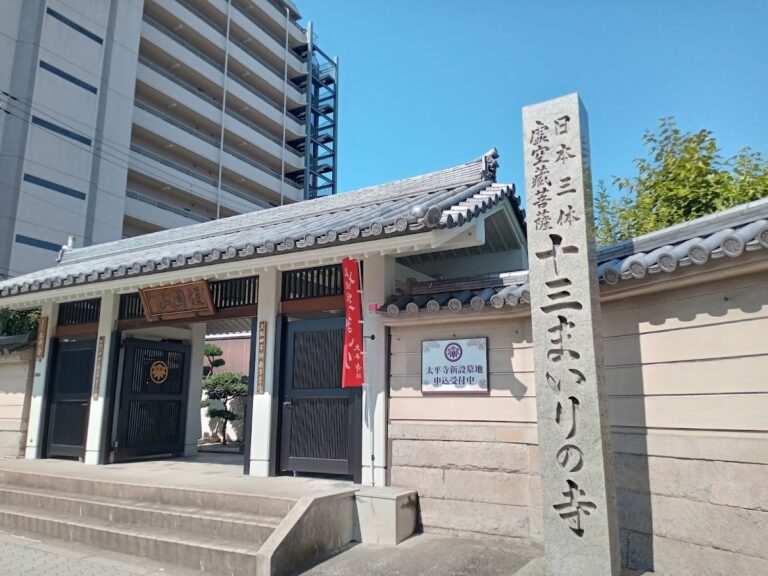
What is Saishoji Temple? A Thorough Explanation of the History, Characteristics, and Cultural Assets of Temples Scattered Across Japan
The name Saishoji (西照寺) refers to temples found in multiple regions throughout Japan. Each has a different history and characteristics, and has continued to protect the faith and culture of its region. This article provides a detailed explanation of the major Saishoji temples, including their founders, history, cultural assets, and forms of memorial services.
Overview of Saishoji Temples and Their Nationwide Distribution
The name Saishoji is thought to mean “a temple that illuminates the Western Pure Land,” and is mainly found in temples of the Jodo sect and Jodo Shinshu sect. There are dozens of Saishoji temples throughout Japan, each playing an important role in its local community.
Major Locations of Saisho-ji Temples
- Nara City, Nara Prefecture: Shionzan Ieyasuin Saisho-ji Temple (Independent temple, formerly Jodo sect)
- Tennoji Ward, Osaka City, Osaka Prefecture: Jodo sect Saisho-ji Temple
- Aisai City, Aichi Prefecture: Hououzan Saisho-ji Temple (Shingon sect, Chizan branch)
- Nagaoka City, Niigata Prefecture: Saisho-ji Temple
- Suita City, Osaka Prefecture: Hojuzan Saisho-ji Temple (Jodo Shinshu Honganji branch)
- Chofu City, Tokyo: Jigenzan Saisho-ji Temple (Jodo Shinshu Honganji branch)
- Shima City, Mie Prefecture: Saisho-ji Temple
These temples differ in sect and founding period, each possessing its own unique history and culture.
Saisho-ji Temple in Nara City: A Temple Associated with Tokugawa Ieyasu
Located in Imatsujiko-cho, Nara City, Nara Prefecture, Saisho-ji Temple, also known as Shionzan Ieyasu-in, is currently an independent temple, but was originally a Jodo sect temple.
Founding and History
Saisho-ji Temple has a deep connection with Tokugawa Ieyasu, as evidenced by the “Ieyasu-in” prefix in its temple name. It is estimated to have been founded in the early Edo period and developed under the faith and patronage of the Tokugawa family.
Principal Image and Characteristics
The principal image is known as “Haragake Amida Nyorai” (Amida Buddha with a Belly Band), and has attracted worshippers seeking safe childbirth and fertility. This unique principal image is deeply revered by local people as a Buddha that protects women during childbirth.
Saisho-ji Temple of the Jodo Sect in Tennoji Ward, Osaka City
Located in Tennoji Ward, Osaka City, Saisho-ji Temple is a Jodo sect temple and a center of local faith.
Temple Characteristics
Despite its urban location, the temple continues to uphold the traditional teachings of the Jodo sect, valuing its connection with parishioners through regular memorial services and rites. A distinctive feature is its continuation of traditional Buddhist rituals while maintaining modern temple management practices.
Activities and Memorial Services
Various memorial services are held throughout the year, with many visitors attending traditional events such as Higan-e (equinox) and Obon-e (Buddhist festival). The temple also offers memorial services tailored to modern needs, including perpetual memorial services and memorial services for stillborn babies.
Hōōzan Saishōji Temple in Aisai City, Aichi Prefecture: An Ancient Temple with Over 1400 Years of History
Located in Aisai City, Aichi Prefecture, Hōōzan Saishōji Temple belongs to the Chizan branch of the Shingon sect and is an ancient temple with over 1400 years of history, said to have been founded in 598 AD (the 6th year of Emperor Suiko’s reign).
Founding and History
With a tradition of being founded in the 6th year of Emperor Suiko’s reign, it boasts a long history dating back to the Asuka period. It is believed to have existed from the early stages of the spread of Buddhism in this region, playing an important role as a center of local Buddhist culture.
As a Shingon-shu Chizan-ha Temple
Based on the doctrines of the Shingon-shu Chizan-ha sect, it performs esoteric Buddhist rituals and prayers. Inheriting the teachings of Kobo Daishi Kukai, it also performs esoteric Buddhist ceremonies such as Goma rituals.
Cultural Properties and Buildings
As a temple with a long history, it is believed to possess valuable cultural properties and ancient documents. Historic buildings are arranged within the temple grounds, and it is cherished by local people as a “small ancient temple of prayer and learning.”
Nishitera-ji Temple in Nagaoka City, Niigata Prefecture
Nishitera-ji Temple, located in Nagaoka City, Niigata Prefecture, is an important temple that conveys the history and culture of the region.
Connections to the Community
Positioned as a tourist and historical resource in Nagaoka City, it is an important temple for understanding the region’s history. In the harsh natural environment of Niigata, a snowy region, it has functioned as a center of faith for the local residents.
Historical Value
As a temple that has contributed to the development of Buddhist culture in the Nagaoka region, it may be protected as a city cultural property or historical building.
Hojusan Saishoji Temple, Suita City, Osaka Prefecture
Located in Kasuga-cho, Suita City, Osaka Prefecture (formerly Shimonitta Village), Saishoji Temple, also known as Hojusan, is a Jodo Shinshu Honganji-ha (Nishi Honganji-ha) temple with Amida Buddha as its principal deity.
Founding and Establishment
It is believed to have been established a few years after Kan’ei 7-8 (1630-31) as a branch temple of Nishi Honganji. Founded in the early Edo period, it was established as the center of faith in the village at that time.
Characteristics of the Jodo Shinshu Honganji-ha
Based on the doctrines of the Jodo Shinshu Honganji-ha, it preaches salvation through the power of Amida Buddha’s vow. We carry on the teachings of Shinran Shonin and conduct religious activities centered on the Nembutsu (recitation of Amida Buddha’s name).
Role in the Local Community
Located in the heart of the former Shimonitta Village, it has functioned as a spiritual pillar of the village community. It continues to maintain strong ties with local parishioners.
Jigenzan Saishoji Temple, Chofu City, Tokyo
Jigenzan Saishoji Temple, located in Sengawa, Chofu City, Tokyo, is a temple of the Jodo Shinshu Honganji sect.
Formation of a Temple District
Six Jodo Shinshu Honganji sect temples form a temple district on the south side of Sengawa Station, and Saishoji Temple occupies an important position within this district.
Natural Environment of the Temple Grounds
Despite being located in a residential area, the temple grounds contain over 20 trees, including zelkova and oak, some nearly 100 years old, which are designated as protected trees by Chofu City. It also has value as a precious green space in an urban area.
Trees as Cultural Assets
The groves of trees designated as protected trees are an important element that conveys the history and natural environment of the region, creating a solemn atmosphere within the temple grounds.
Types of Memorial Services at Saisho-ji Temple
Various forms of memorial services are held at Saisho-ji temples throughout the region.
Annual Memorial Services
These are memorial services held on the anniversary of the deceased’s death, such as the first, third, seventh, and thirteenth anniversaries. Following the customs of each sect, prayers are offered for the repose of the deceased’s soul.
Perpetual Memorial Services
This type of memorial service is chosen when there are no successors or when one does not want to burden descendants. The temple takes responsibility for continuing the memorial services perpetually.
Memorial Services for Stillborn Children
This is a memorial service for children who died due to miscarriage or stillbirth. It is particularly common at Jodo-shu and Jodo Shinshu temples, and serves as a place of solace for parents.
Ancestor Worship
This is a Buddhist service held during Obon and Higan (Buddhist holidays) to honor the spirits of ancestors. Families gather to express their gratitude to their ancestors.
Cultural Assets of Saisho-ji Temple
Saisho-ji temples throughout Japan possess valuable cultural assets.
Buildings
Among the buildings, such as the main hall, temple gate, and bell tower, some were constructed during the Edo and Meiji periods, making them important resources for understanding the architectural history of the region.
Buddhist Statues and Paintings
Various Buddhist statues and paintings are enshrined, including the principal image of Amida Buddha. Some are designated cultural properties by the municipalities.
Ancient Documents and Records
Ancient documents essential for local history research, such as temple histories, registers of deceased persons, and records of parishioners, are preserved.
Temple Bells and Buddhist Altar Fittings
Temple bells cast during the Edo period and traditional Buddhist altar fittings are also important cultural assets. These items possess both religious significance and value as works of art.
Visiting and Questions about Saisho-ji Temple
Etiquette for Visiting
While the etiquette for visiting varies depending on the Buddhist sect, the basic procedure is as follows:
- Bow at the temple gate
- Cleanse your hands and mouth at the water basin
- Join your hands and bow at the main hall
- Chant the Nembutsu (in the Jodo sect) or the Shingon sect (in the Shingon sect)
- Bow upon leaving
Answers to Frequently Asked Questions
Each Saisho-ji temple courteously answers questions from non-parishioners. Feel free to inquire about questions regarding memorial services, requests for Buddhist ceremonies, and consultations regarding cemeteries.
Confirming Location and Address
If you wish to visit, it is recommended that you confirm the exact address and location beforehand. Since there are multiple temples with the same name, it is important to know the precise address of the Saisho-ji temple you wish to visit.
The Role of Saisho-ji Temple in Modern Times
Center of the Local Community
Even in modern times, Saisho-ji Temple functions as the spiritual center of the local community. Through Buddhist services and events, it serves as a place for local residents to interact.
Preservation of Traditional Culture
Through Buddhist rituals and annual events, it plays a role in passing on Japanese traditional culture to future generations. Buddhist and moral education for children is a particularly important activity.
A Place of Peace of Mind
For people struggling with the stresses and worries of modern society, Saisho-ji Temple is a place where they can find peace of mind. Some temples also hold Zen meditation sessions and sutra copying sessions.
Value as a Tourism and Cultural Resource
Saisho-ji Temple, with its historical buildings and cultural assets, is also attracting attention as a local tourism resource. Many people visit it for historical walks and cultural property viewing.
Future Prospects for Nishitera-ji Temple
Responding to Changes in the Danka System
Amidst changes in the traditional Danka system due to the declining birthrate, aging population, and urbanization, each Nishitera-ji temple is exploring new forms of temple management. There is a movement towards opening its doors to people other than its parishioners, becoming an open temple.
Efforts toward Digitalization
New initiatives utilizing digital technology have begun, such as information dissemination using websites and social media, and the implementation of online memorial services.
Challenges in Cultural Property Protection
Preservation, repair, and disaster prevention measures are crucial issues in order to pass on valuable cultural properties to future generations. We are working on cultural property protection in cooperation with the government and local communities.
Strengthening Collaboration with the Community
Efforts are underway to strengthen collaboration with the local community, such as participating in local events and opening temple facilities to the community.
Summary
Nishitera-ji temples are scattered throughout Japan, each possessing its own unique history and characteristics. Despite belonging to different sects such as Jodo-shu, Shingon-shu, and Jodo Shinshu, these temples share a common wish to “illuminate the Western Pure Land,” supporting the faith and lives of local people.
From temples founded during the reign of Empress Suiko to those established during the Edo period, each has evolved through the ages to reach the present day. While fulfilling diverse roles such as protecting cultural properties, conducting memorial services, and maintaining local communities, they continue to explore new ways of being temples in modern society.
For questions regarding visits or memorial services, you can receive courteous assistance by contacting each Saisho-ji temple directly. It is recommended to confirm the exact address and location before visiting.