Yakumo Shrine (Motokonyacho, Kofu City, Yamanashi Prefecture) Complete Guide | History, Goshuin (Shrine Seal), and Access Information
Yakumo Shrine, located in Motokonyacho, Kofu City, Yamanashi Prefecture, is a historic shrine situated on a hill in a quiet residential area, yet within walking distance of Kofu Station’s North Exit. This article provides detailed information you should know before visiting, including the shrine’s history, enshrined deities, goshuin information, access methods, and nearby attractions.
About Yakumo Shrine (Motokonyacho)
Basic Information
Yakumo Shrine is located at 187 Motokonyacho, Kofu City, Yamanashi Prefecture, approximately a 15-minute walk from the North Exit of Kofu Station on the JR Chuo and Minobu Lines. Despite being in a residential area, the shrine grounds, reached by climbing steep stone steps, are enveloped in a tranquil atmosphere and are beloved by locals.
Location: 187 Motokonyacho, Kofu City, Yamanashi Prefecture 400-0000
Main Deity: Susanoo-no-Mikoto
Shrine Rank: Former Village Shrine
Differences from Other Yakumo Shrines in Kofu City
There are several Yakumo Shrines in Kofu City, Yamanashi Prefecture. Particularly famous is the Yakumo Shrine (441 Igari-cho) located on Rakanji Mountain at the top of the Shosenkyo Ropeway. This shrine has a history dating back to March 1564 (Eiroku 7) and is known as a deity of matchmaking and marital harmony.
On the other hand, the Yakumo Shrine in Motokonyacho has developed alongside the Kofu castle town. While its founding date is unknown, it is believed that during the Takeda clan’s era, there was a shrine dedicated to Susanoo-no-Mikoto south of Tsutsujigasaki. It is said that the shrine was later relocated to its current location during the construction of Kofu Castle in the Bunroku era (1592-1596).
History and Origins of Yakumo Shrine
A Faith Continuing from the Takeda Era
The origins of Yakumo Shrine date back to the time when the Takeda clan ruled. At that time, there was a shrine dedicated to Susanoo-no-Mikoto south of Tsutsujigasaki (the area around the present-day Takeda Shrine), and this area was called “the land of ancient Yakumo.” Because it was located near the Takeda clan’s residence, Tsutsujigasaki-kan, it is thought that it was deeply revered by the Takeda clan and their retainers.
Construction of Kofu Castle and Relocation
When Asano Nagamasa and his son Yukinaga built Kofu Castle during the Bunroku era by order of Toyotomi Hideyoshi, the castle town was developed. It is said that Yakumo Shrine was relocated to its current location in Motokonyamachi during this period. The place name Motokonyamachi originates from the fact that dyers (konya) were concentrated there during the Edo period, and it was a thriving area as a craftsman’s district.
Prosperity in the Edo Period
After its relocation, Yakumo Shrine attracted fervent devotion from the people of Kofu Castle town due to its powerful divine blessings. Festivals were extremely lively, and it functioned as an important place of worship in Kofu Castle town. In 1876 (Meiji 9), it was designated a local shrine, establishing its position as a central shrine in the region.
The Great Fire of the Taisho Era and Reconstruction
In 1922 (Taisho 11), a great fire struck Kofu City, destroying all of Yakumo Shrine’s buildings and historical documents. This fire was a major disaster that burned down a large part of Kofu city, and many historical materials were lost. Afterward, through the efforts of the local people, the shrine buildings were rebuilt and remain to this day.
Deity and Divine Virtues
Susanoo-no-Mikoto
The deity enshrined at Yakumo Shrine is Susanoo-no-Mikoto. Susanoo-no-Mikoto is a god appearing in Japanese mythology, known as the younger brother of Amaterasu-Omikami. He is famous for the myth of slaying Yamata-no-Orochi in Izumo Province and rescuing Kushinada-hime. It is said that from this, he composed the oldest known waka poem: “Eight clouds rise, Izumo’s eightfold fence, I build an eightfold fence to enclose my wife, that eightfold fence.”
The name “Yakumo” comes from this poem, and shrines dedicated to Susanoo-no-Mikoto are often called “Yakumo Shrine.”
Divine Virtues and Blessings
Yakumo Shrine, dedicated to Susanoo-no-Mikoto, is believed to offer the following divine virtues and blessings:
- Protection from Evil and Disaster: From the myth of slaying Yamata no Orochi, the power to ward off disaster.
- Matchmaking: From the myth of marriage to Kushinadahime, the power to bring about good relationships.
- Family Safety: From the song “Yaegaki,” the power to protect the home.
- Business Prosperity: As the guardian deity of the former castle town, prosperity in business.
- Healing from Illness: Believed to be a god that quells epidemics.
In particular, the Yakumo Shrine in Motokonyamachi has been worshipped as the guardian deity of the artisan district, offering blessings for business prosperity and skill improvement.
Highlights of the Shrine Grounds
Steep Stone Steps
The approach to Yakumo Shrine is characterized by steep stone steps that begin in the middle of a residential area. Climbing these stone steps allows you to escape the hustle and bustle of everyday life and experience the feeling of entering a sacred realm. While the number of steps is not large, the incline makes it advisable to climb slowly, step by step.
Atmosphere of the Shrine Grounds
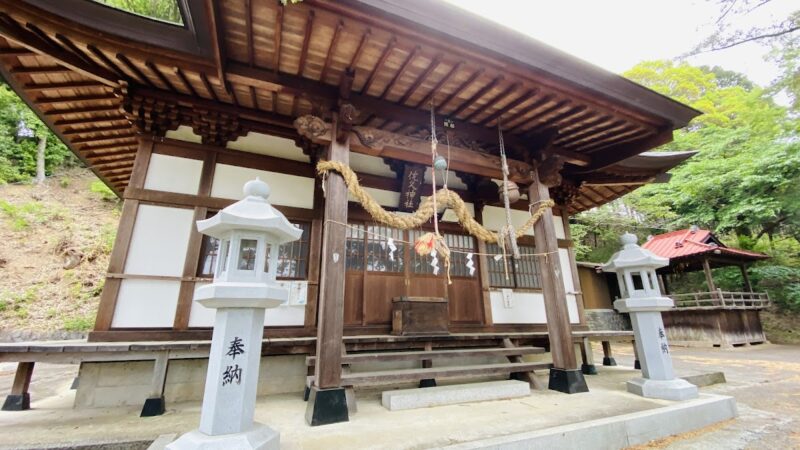
Upon reaching the top of the steps, a small, tranquil shrine grounds unfolds. Situated on a hill in a residential area, it sits a notch higher than its surroundings, creating a quiet and peaceful space. From the grounds, you can overlook the city of Kofu, evoking the atmosphere of a former castle town.
Shrine Buildings
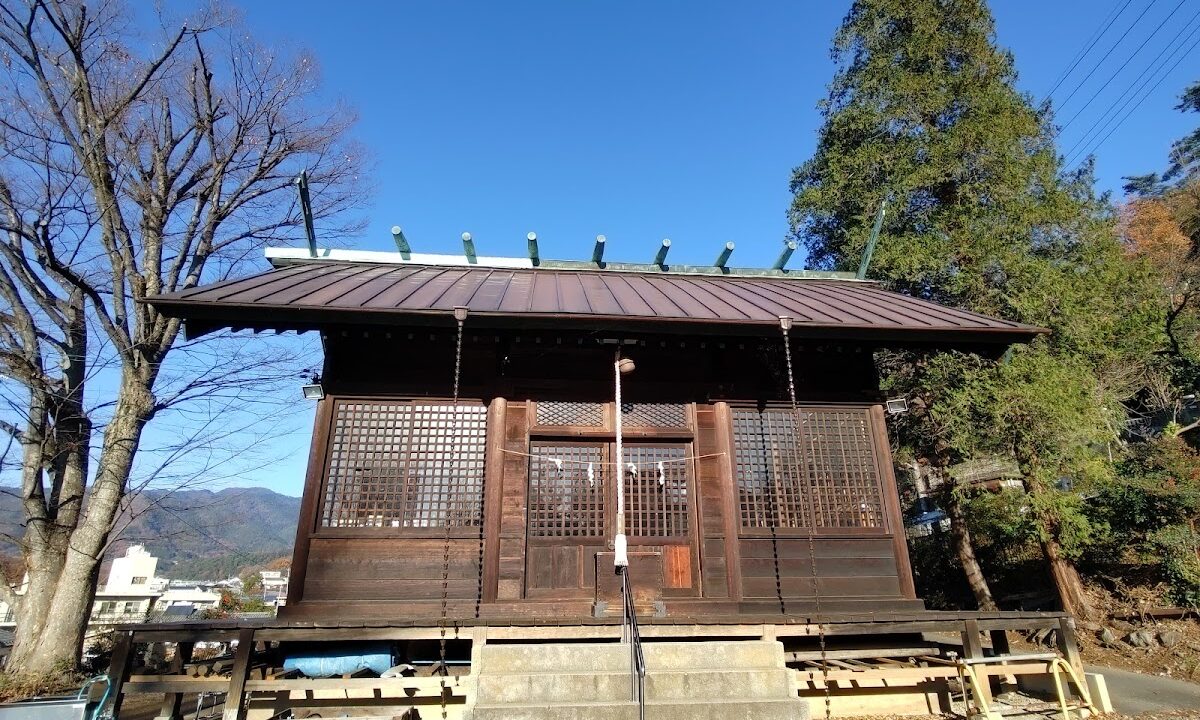
The current shrine buildings were rebuilt after the Great Fire of the Taisho era and, while simple, are meticulously maintained. The main hall is protected by a protective structure, a testament to the deep faith of the local people.
Goshuin (Shrine Seal) Information
Goshuin (shrine seals) are available at Yakumo Shrine. These seals are popular among visitors as proof of their visit and as a memento of their travels.
Regarding the Issuance of Goshuin (Shrine Seals)
Yakumo Shrine in Motokonyamachi is a small shrine, and there may not always be a resident priest. Those wishing to receive a Goshuin are advised to inquire in advance with the Yamanashi Prefectural Shrine Association or a nearby shrine.
In recent years, electronic Goshuin services have become available, allowing you to record your visit through a smartphone app. A record of obtaining an electronic Goshuin in March 2018 is also available.
Manners When Receiving a Goshuin
- Receive the Goshuin after completing your prayers.
- Prepare a Goshuincho (avoid notebooks or colored paper).
- Prepare a Hatsuhoryo (offering of approximately 300-500 yen).
- Remember to express your gratitude to the priest.
Access Information
Access by Train
Nearest Station: JR Chuo Line/Minobu Line “Kofu Station”
Approximately 15 minutes on foot from the north exit of Kofu Station. Exit the station and head north, passing through Kofu city center towards Motokonyamachi. Since it’s located in a residential area, we recommend using a map app or Google Maps.
Access by Car
It’s approximately 15 minutes from the Chuo Expressway’s “Kofu Showa IC” or approximately 20 minutes from the “Kofu Minami IC”. Because Kofu city center has many one-way streets, using a car navigation system or smartphone navigation function is convenient.
Parking Information
Since parking at Yakumo Shrine is limited, we recommend using nearby coin-operated parking lots or visiting by public transportation. There are several parking lots around Kofu Station, so parking near the station and walking to the shrine is also an option.
Nearby Tourist Attractions
Kofu Castle Ruins (Maizuru Castle Park)
Located about a 10-minute walk from Yakumo Shrine, the Kofu Castle Ruins are a symbolic landmark of Kofu City. Currently, it is maintained as Maizuru Castle Park, where you can see the restored Inari turret and stone walls. It is also known as a famous cherry blossom viewing spot in spring.
Takeda Shrine
Located about 10 minutes by bus from the north exit of Kofu Station, Takeda Shrine is a shrine dedicated to Takeda Shingen. Built on the site of the former Tsutsujigasaki Mansion, it is a historical site associated with the Takeda clan and attracts many tourists. Considering that the Yakumo Shrine in Motokonyamachi was located south of Tsutsujigasaki, which is considered the “land of ancient Yakumo,” one can feel the historical connection.
Shopping Streets in Kofu City
The area around Motokonyamachi retains the atmosphere of a former castle town. Along the way from Kofu Station to Yakumo Shrine, there are many old-fashioned shops and restaurants, allowing you to enjoy the local atmosphere.
Yakumo Shrine in the Shosenkyo Gorge Area
If you have time, why not visit the Yakumo Shrine located at the top of the Shosenkyo Ropeway in Igari-cho, Kofu City? This shrine has a history dating back to 1564 (Eiroku 7) and is known as a deity of matchmaking and marital harmony. Located on the summit of Mount Rakanji, it is a popular power spot with a unique form of worship, where a stone rod is enshrined within a stone shrine.
Points and Manners for Visiting
Etiquette for Visiting
- Bow before the torii gate: As a greeting before entering the sacred area.
- Purify yourself at the water basin: Purify your left hand, right hand, and mouth in that order.
- Walk along the edge of the path: The center is considered the path of the gods.
- Etiquette in front of the main hall: The basic procedure is two bows, two claps, and one bow.
Precautions when climbing the stone steps
Yakumo Shrine in Motokonyamachi is characterized by its steep stone steps. Please pay particular attention to the following points, especially during rainy weather and winter, as the ground can become slippery:
- Wear non-slip shoes when visiting the shrine
- Use handrails if available
- Climb slowly and without rushing
- Be especially careful if you are elderly or with small children
Visit Quietly
As this shrine is located in a residential area, consideration for nearby residents is necessary. Please refrain from loud conversations and visit quietly.
Annual Events and Festivals
Grand Festival
Yakumo Shrine holds various festivals throughout the year. The Grand Festival, in particular, is an important local event, attracting many local people. For specific dates, we recommend checking with the Yamanashi Prefectural Shrine Association or local information.
New Year’s Visit
The New Year’s visit is a time when many local people visit the shrine. Its location within walking distance of Kofu Station makes it a popular spot for New Year’s visits in the city center.
The Charm of Yakumo Shrine
A Faith Rooted in the Community
The greatest charm of Yakumo Shrine in Moto-Konyamachi is that it is a place of faith deeply rooted in the community. Although much was lost in the Great Fire of the Taisho era, it was rebuilt through the efforts of the local people and has been preserved to this day. In its simple atmosphere, unspoiled by tourism, you can feel the true meaning of visiting a shrine.
Experiencing Kofu’s History
This shrine embodies the history of Kofu, from the time of the Takeda clan to the development of Kofu Castle town and up to the modern era. As the place name Moto-Konyamachi suggests, it is the guardian deity of a region that flourished as a craftsman’s town, conveying a part of Kofu’s history to the present day.
A Tranquil Space
Located on a hill in a residential area, it offers a quiet space for worship despite being in the city. Climbing the steep stone steps, you can find peace of mind in a place slightly removed from everyday life—a kind of oasis in the city.
Visitor Feedback
Visitors who have actually visited Yakumo Shrine have praised it as a “power spot” and described it as a “quiet and peaceful place.” Many visitors are deeply moved by the atmosphere of the shrine grounds that unfolds after climbing the steep stone steps, and by the way it is cherished by the local people.
The stone steps and the views from the shrine grounds are also popular photo spots, with many worshippers taking pictures. However, please remember that this is a place of worship and be mindful of proper etiquette when taking photos.
Summary
Yakumo Shrine, located in Motokonyacho, Kofu City, Yamanashi Prefecture, has a history dating back to the Takeda clan era and has walked hand in hand with the castle town of Kofu. Having overcome the hardship of the Great Fire of the Taisho era, it stands quietly today as a place of faith protected by the local people.
Despite its convenient location within walking distance of Kofu Station, a tranquil space unfolds after climbing the steep stone steps, allowing you to forget the hustle and bustle of the city and find peace of mind. As a shrine dedicated to Susanoo-no-Mikoto, it is believed to offer divine blessings for protection against misfortune, matchmaking, and family safety, and is beloved not only by locals but also by tourists.
When sightseeing in Kofu, be sure to visit this historic Yakumo Shrine along with Kofu Castle Ruins and Takeda Shrine. It is a simple place of worship deeply rooted in the community, where you can feel the history and culture of Kofu.
Also in Kofu city, there is another Yakumo Shrine located on Rakanji Mountain in Shosenkyo Gorge, known as a power spot for matchmaking and marital harmony. If you have time, visiting both Yakumo Shrines is highly recommended. While each has its own distinct history and characteristics, they are both connected by the faith in Susanoo-no-Mikoto, allowing you to experience the richness of Yamanashi Prefecture’s shrine culture.