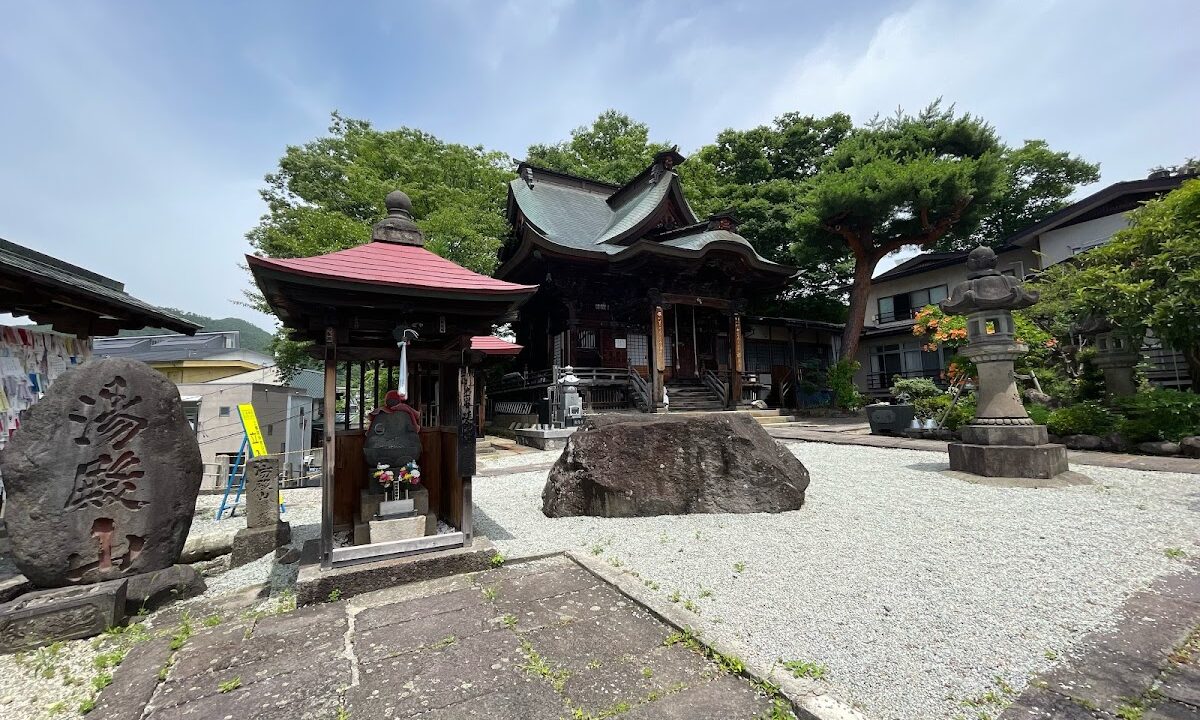
Yunoue Kannon (Yamagata Prefecture) Complete Guide | History, Access, and Highlights Explained in Detail
Yunoue Kannon, located in the hot spring town of Kaminoyama City, Yamagata Prefecture, is an ancient temple of the Shingon Chizan sect, officially known as “Mizukisan Jigen-in Kannon-ji.” Deeply intertwined with the history of Kaminoyama Onsen, this temple is also known as the tenth stop on the Mogami Thirty-Three Kannon Pilgrimage and enjoys fervent devotion from locals. This article provides a detailed explanation of Yunoue Kannon’s history, highlights, and access methods.
Overview of Yunoue Kannon
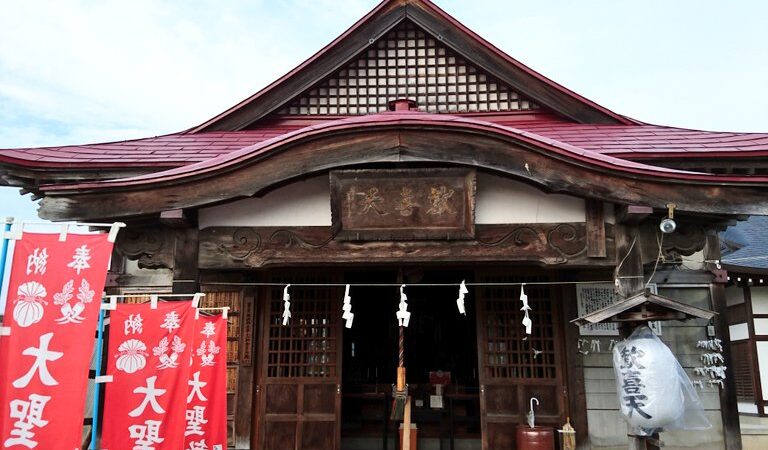
Yunoue Kannon is a Shingon Chizan sect temple located in Tokamachi, Kaminoyama City, Yamagata Prefecture. Its common name, “Yunoue” (meaning “above the hot spring”), originates from the waterfall within the temple grounds that supplied hot spring water to the bath of the “Shimo-no-Oyu” public bathhouse. It is a valuable site that preserves a unique culture where hot springs and Buddhism merge, and is cherished by locals.
Official Name and Sect
- Official Name: Mizugishi-san Jigen-in Kannon-ji Temple
- Sect: Shingon-shu Chizan-ha
- Principal Image: Holy Kannon Bodhisattva
- Pilgrimage Site: Tenth of the Mogami Thirty-Three Kannon Pilgrimage Sites, one of the Kaminoyama Thirty-Three Kannon Pilgrimage Sites
The temple grounds are located in the town of Kaminoyama Onsen, a convenient 15-minute walk from Kaminoyama Onsen Station. It’s a popular spot for tourists, easily accessible during a stroll through the hot spring town.
History of Yunoue Kannon
There are various theories regarding the history of Yunoue Kannon, but all confirm that it is a venerable temple with a history dating back to ancient times.
Legends Regarding its Founding
According to the oldest legend, it was founded in the Nara period by the high-ranking monk Gyoki, who received an imperial order from Emperor Shomu. Gyoki was a renowned monk known for founding temples throughout Japan, and it is said that he spread Buddhism in this area as well.
On the other hand, a more reliable record suggests that the temple was founded in 1109 (Tenjin 2) by the monk Dojaku. According to this theory, the temple was founded in the late Heian period.
Origin of the Main Image
An interesting legend surrounds the main image, a statue of the Holy Kannon Bodhisattva. This statue is said to have been the guardian deity of Ono no Takamura, the grandfather of Ono no Komachi, and is believed to have been carved by Gyoki himself. Ono no Takamura was a well-known court official and scholar of the early Heian period, and if this main image is truly associated with him, it would be an extremely valuable cultural asset.
History of Fire and Reconstruction
In March 1825 (Bunsei 8), a major fire broke out in the town of Kaminoyama, and the Kannon Hall was also destroyed. However, the then-chief priest cleverly retrieved the main image, thus saving the Holy Kannon Bodhisattva statue. This incident is recounted as an episode illustrating the deep faith of the local people in Kannon (Goddess of Mercy).
Deep Connection to Hot Springs
The most distinctive feature of Yunoue Kannon is its close relationship with Kaminoyama Onsen (hot springs). It possesses a unique history, a fusion of seemingly disparate cultures: a temple and a hot spring.
Origin of the Name “Yunoue”
Within the temple grounds, there was once a waterfall that supplied hot spring water to the bath of a public bathhouse called “Shimo-no-Oyu.” The hot spring water gushing from the source flowed through the temple grounds to the public bathhouse. For this reason, it became affectionately known locally as “Yunoue Kannon.”
Located in the heart of the hot spring town, it creates a unique landscape where hot spring culture and Buddhist culture are integrated. Such a close connection between a hot spring and a temple is rare even within Yamagata Prefecture, making it an indispensable part of the history of Kaminoyama Onsen.
Memorial Tower for the Bathhouse Girls
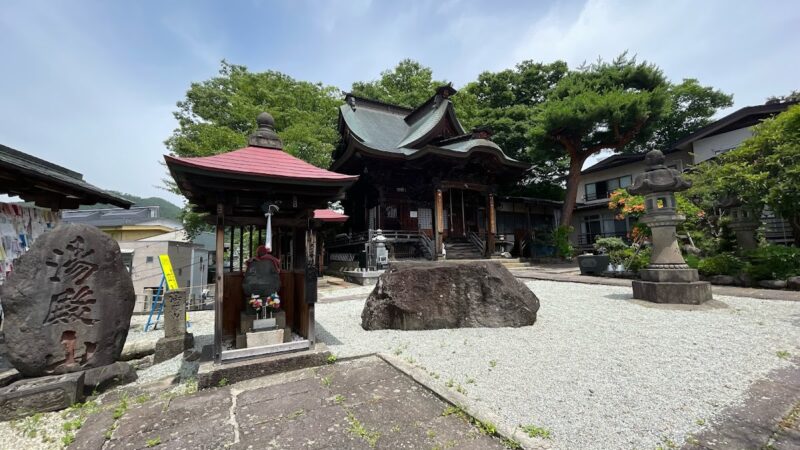
Within the temple grounds stands a memorial tower for the bathhouse girls (yuna) who worked at Kaminoyama Onsen during the Edo period. Yuna were women who provided hospitality and bathing assistance to guests at hot spring resorts, playing a vital role in supporting the hot spring culture of the time.
In particular, many yuna, known as Iimori, worked at Kaminoyama Onsen. Many of them faced harsh circumstances, and many died young. The local people erected this memorial tower to commemorate them.
Even today, a memorial service for the bathhouse girls is held, an important event that conveys the history and culture of Kaminoyama Onsen. This memorial tower is a valuable historical site that allows us to reflect not only on the glamorous side of the hot spring resort, but also on the hardships and sorrows of the people who worked there.
Hot Spring Water Basin
Within the temple grounds is a unique water basin called the “Hot Spring Water Basin.” While typical temples use spring water for their water basins, this temple is said to have used hot spring water, a characteristic unique to a hot spring resort.
Tenth Temple of the Mogami Thirty-Three Kannon Pilgrimage
Yugami Kannon is designated as the tenth temple of the Mogami Thirty-Three Kannon Pilgrimage. The Mogami Thirty-Three Kannon Pilgrimage is a pilgrimage route visiting Kannon temples within Yamagata Prefecture, attracting many believers.
Significance of Pilgrimage
The Kannon pilgrimage is a form of spiritual practice involving visiting 33 temples, named after the 33 manifestations of Kannon Bodhisattva. It is believed that by visiting each temple, one can dispel worldly desires and accumulate merit.
Yugami Kannon is also one of the Kaminoyama Thirty-Three Kannon temples and has played an important role as a center of local faith. Its location in a hot spring town makes it a popular destination not only for pilgrims but also for spa-goers and tourists.
Goshuin (Temple Seal)
Pilgrims visiting the 33 Kannon pilgrimage sites of Mogami can receive a Goshuin at each site. Yunokami Kannon also offers Goshuin, and many people receive one as a memento of their pilgrimage.
Highlights of the Temple Grounds
The grounds of Yunokami Kannon offer various historical sights.
Kannon Hall
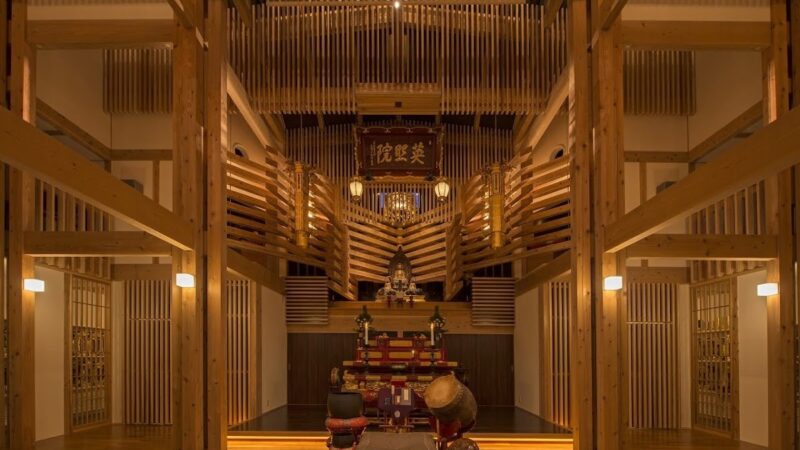
The Kannon Hall, which houses the principal image of the Holy Kannon Bodhisattva, was rebuilt after the Great Fire of Bunsei. It possesses a solemn atmosphere befitting a Shingon Buddhist temple, quietly welcoming visitors.
Stone Monuments and Buddhist Statues
The temple grounds are dotted with various stone monuments and Buddhist statues erected from the Edo period to the Meiji period. Each has its own history, conveying the depth of faith of the people of that time.
Seasonal Scenery
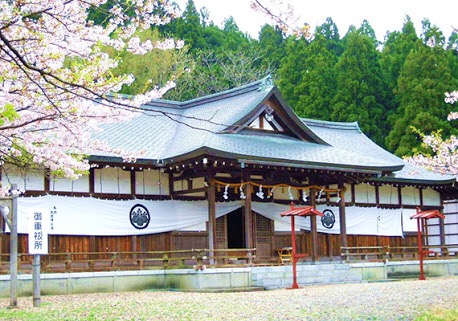
The temple grounds offer beautiful scenery throughout the seasons: cherry blossoms in spring, fresh greenery in summer, autumn leaves in fall, and snowscapes in winter. Especially during the autumn foliage season, the temple grounds are vividly colored, attracting many worshippers and tourists.
Nearby Tourist Attractions
Around Yunoue Kannon, there are many attractive tourist spots unique to the Kaminoyama Onsen area.
Kaminoyama Castle (Tsukioka Castle)
Kaminoyama Castle, also known as “Tsukioka Castle,” is a symbol of Kaminoyama City and is within walking distance of Yunoue Kannon. The current castle tower was restored in 1982, and the interior is open to the public as a local history museum. From the observation deck, you can enjoy a spectacular view of Kaminoyama city and the Zao mountain range.
Public Baths
Kaminoyama Onsen has several public baths used by locals. These include “Shimo-Oyu,” “Kami-Oyu,” “Shin-Yu,” “Yumachi-Yu,” and “Hayama-no-Yu,” which are easily accessible to tourists. Relaxing in a hot spring after visiting Yunoue Kannon is highly recommended.
Footbaths
Several free footbath spots are located throughout the hot spring town. You can easily stop by during your stroll and relax, relieving the fatigue of your travels.
Tsukioka Park
Tsukioka Park, located around Kaminoyama Castle, is known as a famous cherry blossom viewing spot. In spring, approximately 150 Somei Yoshino cherry trees bloom, attracting many visitors.
Lina World
Lina World, one of the largest amusement parks in Tohoku, is also located in Kaminoyama City. It’s a popular spot for families, offering a variety of attractions.
Fruit Picking
Yamagata Prefecture is famous for its fruit production, and you can enjoy various fruit picking activities in and around Kaminoyama City depending on the season. You can savor seasonal flavors such as cherries, peaches, grapes, and apples.
Access Information
Detailed information on how to access Yunokami Kannon Temple is provided below.
Access by Train
From JR Ou Main Line “Kaminoyama Onsen Station”
- Walking: Approximately 15 minutes
- Taxi: Approximately 5 minutes
Kaminoyama Onsen Station is approximately 20 minutes from Yamagata Station by local train and approximately 50 minutes from Sendai Station by Yamagata Shinkansen (Tsubasa). It is conveniently accessible from various parts of Tohoku.
From the station to Yunokami Kannon, we recommend walking while strolling through the hot spring town. Along the way, you’ll find public baths, footbaths, and souvenir shops, allowing you to enjoy the atmosphere of the hot spring town.
Access by Car
From Kaminoyama Onsen IC on the Tohoku Chuo Expressway:
- Travel time: Approximately 10 minutes
- Distance: Approximately 5 km
From Yamagata Zao IC on the Yamagata Expressway:
- Travel time: Approximately 20 minutes
- Distance: Approximately 15 km
Access to Yamagata Prefecture from various parts of Tohoku is convenient via the Tohoku Expressway, Yamagata Expressway, or Tohoku Chuo Expressway.
Parking
Yunokami Kannon has its own parking lot. However, space is limited, so during busy times, it is recommended to use nearby paid parking lots. There are several public parking lots in the Kaminoyama Onsen area, and you can also walk from there.
If you plan to explore the hot spring town, parking your car near Kaminoyama Castle and walking around the town is also a good option.
Manners and Precautions for Visiting
Here are some manners and precautions to observe when visiting Yunokami Kannon.
Basic Etiquette for Visiting a Temple
- Bow at the Entrance: Bow before passing through the temple gate.
- Proper Hand-Washing Etiquette: Cleanse your hands and mouth at the water basin.
- Quiet Worship: Be quiet within the temple grounds and be considerate of other visitors.
- Photography: Refrain from taking photos in areas where photography is prohibited, such as inside the main hall.
- Offering Money: Do not throw your offering; gently place it in the offering box.
Appropriate Attire for Visiting a Temple
While there are no strict dress code regulations, it is advisable to avoid overly revealing clothing when visiting a temple. Also, since the temple grounds include stone pavements and gravel paths, comfortable walking shoes are recommended.
Visiting Hours
While you can generally visit the temple grounds freely, it is recommended to check the visiting hours in advance if you wish to receive a temple stamp (Goshuin) or view the interior of the main hall.
Appropriate Attire for Visiting a Temple
There are no strict dress code regulations, but it is advisable to avoid overly revealing clothing when visiting a temple. Also, since the temple grounds include stone and gravel paths, comfortable shoes are recommended.
Visiting Hours
While you can generally visit the temple grounds freely, it is recommended to check the visiting hours in advance if you wish to receive a Goshuin (temple stamp) or view the interior of the main hall. ## History and Culture of Kaminoyama Onsen
Understanding the history of Kaminoyama Onsen is important for understanding Yunokami Kannon.
Legend of the Founding of Kaminoyama Onsen
There are several legends about the founding of Kaminoyama Onsen. The most famous is the legend that in 1458, a monk named Gesshu from Hizen Province (present-day Saga Prefecture) discovered the hot springs after seeing a crane healing its wounds.
This “crane’s repayment of kindness” type of legend is common to many hot spring resorts, and it is also cherished and passed down as the origin of the founding of Kaminoyama Onsen.
Development of the Hot Spring Town
During the Edo period, Kaminoyama flourished as a castle town of the Kaminoyama Domain and developed as a hot spring resort. Many people visited as a therapeutic hot spring resort, and the culture of bathhouse attendants also blossomed. The bathhouse attendant memorial tower at Yunokami Kannon is a valuable legacy that conveys the history of this era.
Even after the Meiji era, it was known as a famous hot spring in Tohoku, and many writers and artists visited. Currently, Kaminoyama Onsen is one of Yamagata Prefecture’s leading hot spring resorts, bustling with tourists throughout the year.
Water Quality of Kaminoyama Onsen
The water quality of Kaminoyama Onsen is primarily sodium-calcium chloride-sulfate. It is said to be effective for neuralgia, muscle pain, joint pain, frozen shoulder, paralysis, joint stiffness, bruises, sprains, chronic digestive diseases, hemorrhoids, sensitivity to cold, post-illness recovery, fatigue recovery, and general health improvement.
Annual Events
Various events are held throughout the year at Yunokami Kannon.
Memorial Service for the Bathhouse Girls
Every year, a memorial service is held to commemorate the bathhouse girls who once worked at Kaminoyama Onsen. This event plays an important role in passing on the history and culture of the hot spring resort to future generations.
Events of the Mogami Thirty-Three Kannon Pilgrimage
As a pilgrimage site of the Mogami Thirty-Three Kannon Pilgrimage, we participate in joint memorial services and other events organized by the pilgrimage association.
Recommended Plans for Visiting Yunokami Kannon
We suggest ways to enjoy Kaminoyama Onsen, centered around Yunokami Kannon.
Day Trip Plan
Morning
- Arrive at Kaminoyama Onsen Station
- Visit Yunoue Kannon Temple
- Stroll through the hot spring town (visiting public baths and footbaths)
Afternoon
- Visit Kaminoyama Castle
- Stroll through Tsukioka Park
- Lunch in the hot spring town
- Purchase souvenirs
- Return home
Overnight Stay Plan
Day 1
- Arrive at Kaminoyama Onsen Station
- Check into hotel/ryokan
- Visit Yunoue Kannon Temple
- Stroll through the hot spring town
- Dinner and hot springs at the accommodation
Day 2
- Morning bath
- Sightseeing at Kaminoyama Castle and Tsukioka Park
- Fruit picking experience (depending on the season)
- Lunch
- Check-out and return home
Plan Combined with Zao
Kaminoyama Onsen offers good access to Zao Onsen and the Zao Echo Line. A plan to enjoy the nature of Zao, stay overnight at Kaminoyama Onsen, and visit Yunoue Kannon Temple the next day is also recommended.
The Charms of Kaminoyama City
Kaminoyama City, home to Yunoue Kannon, boasts many attractions beyond its hot springs.
A Village of Wine and Fruit
Yamagata Prefecture is also known as a wine-producing region, and Kaminoyama City has several wineries. Visitors can enjoy winery tours and wine tastings.
Furthermore, there are many orchards where you can enjoy seasonal fruits such as cherries, peaches, grapes, and apples, making fruit picking a popular activity.
Traditional Crafts
Kaminoyama City also preserves traditional crafts such as Kokeshi dolls. Local crafts can be purchased at souvenir shops in the hot spring town.
Summary
Yunoue Kannon (Mizukiyama Jigen-in Kannon-ji Temple) is a historic Shingon Buddhist temple located in the hot spring town of Kaminoyama City, Yamagata Prefecture. With a long history dating back to the Nara or Heian period, it possesses a unique charm where hot spring culture and Buddhist culture are fused.
As the tenth temple on the Mogami Thirty-Three Kannon Pilgrimage and one of the Kaminoyama Thirty-Three Kannon Temples, it has attracted many worshippers. The memorial tower for bathhouse attendants within the temple grounds is a valuable historical site that conveys the Edo period’s hot spring culture and is indispensable when discussing the history of Kaminoyama Onsen.
Its convenient location, approximately a 15-minute walk from Kaminoyama Onsen Station, is also a major draw, making it easy to visit as part of a stroll through the hot spring town. The surrounding area offers plenty of attractions, including Kaminoyama Castle, public baths, footbaths, and Tsukioka Park.
When visiting Yamagata Prefecture, be sure to stop by Yunokami Kannon and experience the unique history and culture of this hot spring resort. You can find peace of mind in the tranquil grounds and feel the depth of faith nurtured over a long history.
Where hot springs and temples, history and culture intersect, Yunokami Kannon offers a special experience to everyone who visits Kaminoyama Onsen.