Complete Guide to Kibitsu Shrine | A Thorough Explanation of National Treasure Architecture and the Sacred Site of the Momotaro Legend
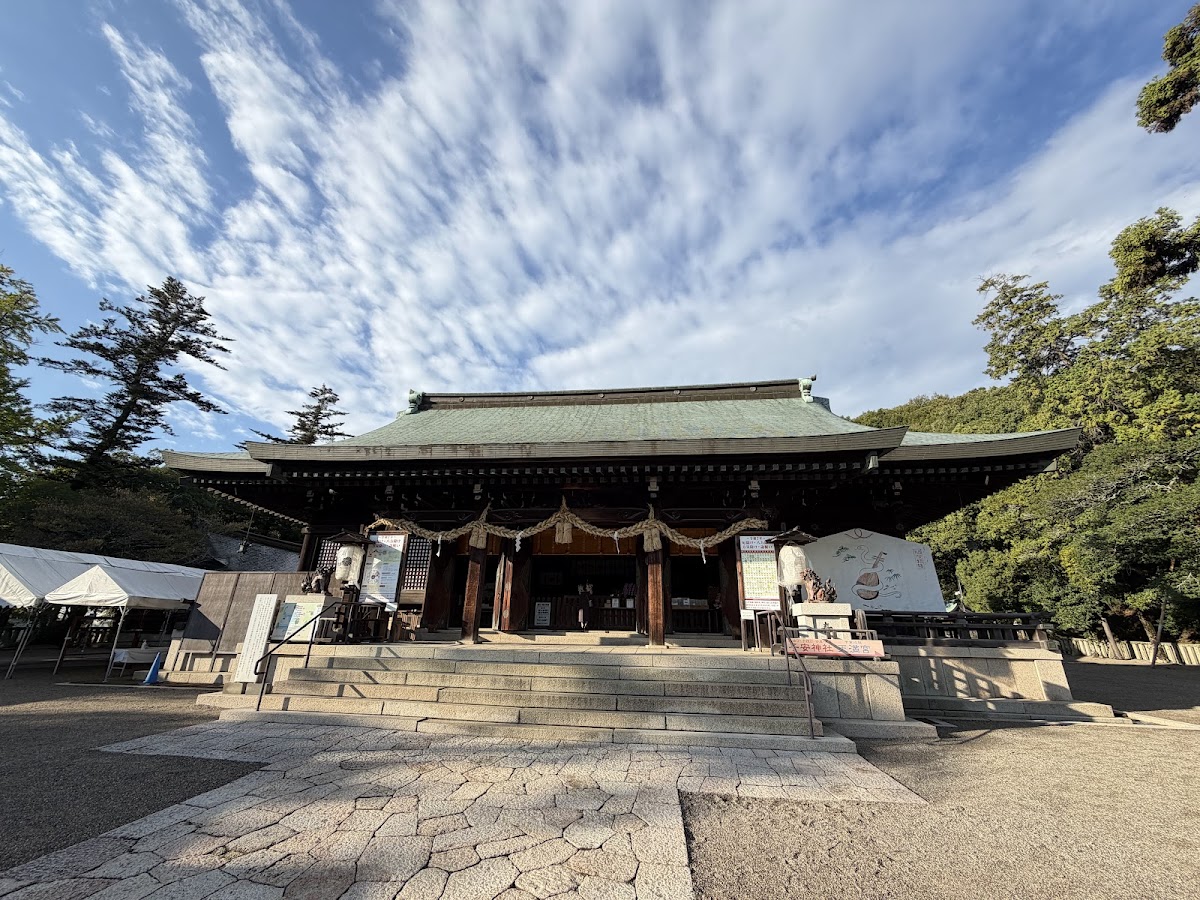
Located in Kibitsu, Kita-ku, Okayama City, Okayama Prefecture, Kibitsu Shrine boasts a nationally treasured building of immense value in the history of Japanese architecture, and is a shrine where ancient myths, the prototype of the Momotaro legend, still breathe life into the story. As the Ichinomiya (first-ranked shrine) of Bitchu Province, it boasts a history of over 1400 years and possesses many unique attractions not found in other shrines, such as its distinctive “Kibitsu-zukuri” architectural style and the rare Narukama ritual.
This article comprehensively explains everything you need to know before visiting Kibitsu Shrine, from its historical background and architectural highlights to points to consider when visiting and access methods.
What is Kibitsu Shrine? | History and Origins of the Ichinomiya of Bitchu Province
Founding and History of Kibitsu Shrine
Kibitsu Shrine is an ancient shrine that enshrines Okibitsuhiko-no-Okami as its main deity. Ōkibitsuhiko-no-Ōkami was a prince of Emperor Kōrei, the 7th emperor of Japan. He was dispatched to the San’yōdō region as one of the Four Generals and is revered as a hero who brought peace and order to the Kibi Province.
According to shrine tradition, the origin of the shrine lies in a thatched-roof palace built at the foot of Mount Kibi-Nakayama by a descendant of Ōkibitsuhiko-no-Ōkami. Later, during the reign of Emperor Nintoku, the shrine was built at its current location. During the Heian period, it was listed as a Myōjin Taisha (a major shrine) in the Engishiki Jinmyōchō (a list of shrines compiled in the Heian period) and enjoyed immense devotion as the guardian shrine of the Kibi Province.
Status as the Ichinomiya (First Shrine) of the Three Bizen Provinces
Even after the Kibi Province was divided into the three provinces of Bizen, Bitchū, and Bingo, Kibitsu Shrine maintained its special status as the original shrine. Kibitsuhiko Shrine was established in Bizen Province, and Bingo Ichinomiya Kibitsu Shrine in Bingo Province. These three shrines together are known as the “Ichinomiya of the Three Bizen Provinces.”
Kibitsu Shrine, in particular, continues to be a central figure in the faith of the Sanbi region, known as the “ancestral shrine of Kibi.”
Status as a Shikinaisha and Kanpei Chusha
Kibitsu Shrine is listed as a Shikinaisha (a shrine listed in the Engishiki, a compilation of ancient Japanese laws and regulations) and was revered as the Ichinomiya (first-ranked shrine) of Bitchu Province during the medieval period. Under the modern shrine ranking system, it was ranked as a Kanpei Chusha (a shrine of the second rank), and is currently one of the most prestigious shrines in Okayama Prefecture, listed as a Beppyo Jinja (a shrine listed in the special register) of the Association of Shinto Shrines.
National Treasure “Kibitsu-zukuri” Main Hall and Worship Hall | Japan’s Only Architectural Style
Magnificent Appearance of the Hiyoku Irimoya-zukuri Style
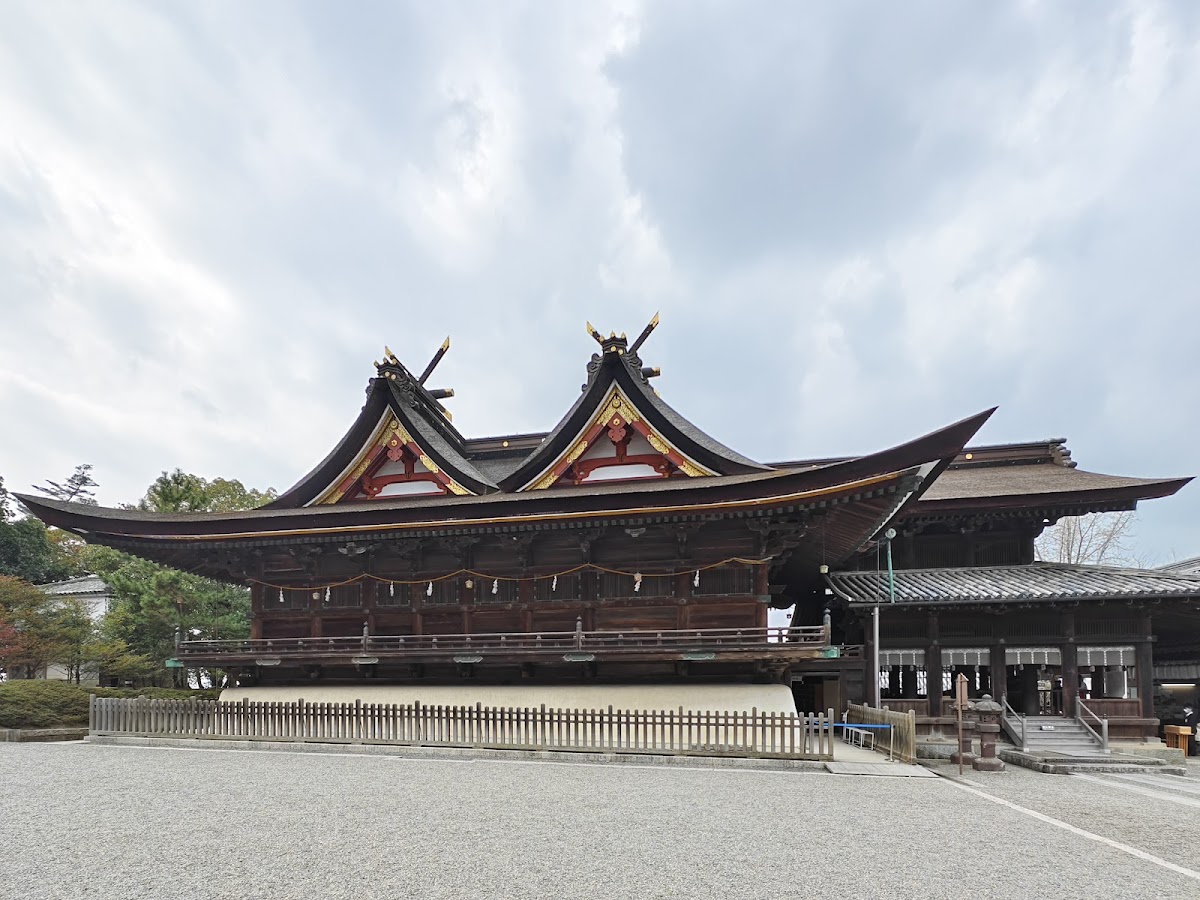
The greatest highlight of Kibitsu Shrine is its main hall and worship hall, which are designated as National Treasures. These buildings are constructed in the “Hiyoku Irimoya-zukuri” style, a unique style found nowhere else in Japan, and are also known as “Kibitsu-zukuri.”
The current main hall was rebuilt in 1425 (Oei 32), giving it a history of nearly 600 years. Its unique structure, with two hip-and-gable roofs side-by-side and covered by a single large roof, is extremely valuable in the history of Japanese architecture.
Architectural Features and Techniques
The main hall and worship hall boast a magnificent scale, measuring approximately 26 meters in length (front) and 17 meters in depth (width). The cypress bark roof features elegant curves, and the contrast between the vermilion pillars and white walls creates a beautiful exterior.
The interior structure is also superb; the spatial configuration from the worship hall to the main hall creates a solemn atmosphere that guides worshippers into the sacred realm. The detailed carvings and decorations, showcasing the pinnacle of architectural technique, are a must-see.
History of National Treasure Designation
The Kibitsu Shrine main hall and worship hall were designated a National Treasure in 1952 (Showa 27). As a masterpiece of Muromachi period shrine architecture and a cultural property that preserves a unique architectural style found nowhere else in Japan, its value is immeasurable.
398m-Long Corridor | A Breathtaking Corridor Architecture
History and Structure of the Corridor
Another highlight of Kibitsu Shrine is the corridor, approximately 398 meters long, extending from the main hall to the Okamaden (cauldron hall). This corridor is built along the natural terrain, creating a unique landscape with gentle undulations.
The current corridor was constructed in stages from the Muromachi period to the Edo period and is designated as an important cultural property of Okayama Prefecture.
Beauty in Every Season
Walking along the corridor is one of the highlights of a visit to Kibitsu Shrine. You can enjoy the beauty of nature throughout the seasons: fresh greenery in spring, deep green in summer, autumn leaves in fall, and snowscapes in winter.
The view of Mount Kibi-Nakayama visible from the corridor windows, and the beautiful contrast of light and shadow filtering into the hallway, continue to captivate visitors.
A Masterpiece of Architectural Technology
The design of the corridor, which skillfully utilizes the elevation differences of the terrain, speaks to the high level of architectural technology of the time. By adjusting the length of the pillars, the corridor maintains a horizontal level while creating natural curves, making it a masterpiece that combines functionality and beauty.
Narukama Shinto Ritual | Ancient Mystery Divination by the Sound of a Kettle
What is the Narukama Shinto Ritual?
The most famous ritual at Kibitsu Shrine is the “Narukama Shinto Ritual.” This is a unique ritual performed in the Kamado-den (cauldron hall), where good or bad fortune is predicted based on the volume and duration of the sound produced when a cauldron is lit. This is a rare method of divination nationwide.
Origin of the Ritual and the Legend of Ura
The origin of the Narukama Shinto Ritual stems from the legend that the head of a demon named Ura, whom Okibitsuhiko-no-Okami defeated, was buried beneath the Kamado-den. It is believed that the spirit of Ura conveys divine will by making a noise with a cauldron, and this has been worshipped since ancient times.
Flow of the Ritual and How to Experience It
The Narugama Ritual is by reservation only and is held daily in the morning. After praying at the Kamado-den (cauldron hall), worshippers listen to the sound of the shrine maiden boiling the cauldron. A loud noise from the cauldron is considered auspicious, while no noise indicates inauspiciousness or that it is too early.
The ritual takes about 30 minutes and requires a donation. Many worshippers undergo this ritual at turning points in their lives or when making important decisions.
The Momotaro Legend and the Defeat of Ura | Exploring the Stage of Mythology
The Model for Momotaro: Okibitsuhiko-no-Okami
The story of “Momotaro,” known to all Japanese people, is actually said to have originated from the battle between Okibitsuhiko-no-Okami and Ura, as told at Kibitsu Shrine. It is believed that Okibitsuhiko-no-Okami represents Momotaro, Ura represents the ogre, and the dog, monkey, and pheasant are the models for the retainers who followed the god.
Details of the Ura Legend
Ura was an ogre who came from Baekje and is said to have resided in Onijo Castle in Kibi-Nakayama, tormenting the people. Okibitsuhiko-no-Okami, under orders from the imperial court, hunted him down and defeated him after a fierce battle.
Historical Sites Related to the Legend
Historical sites related to the legend are scattered throughout the shrine grounds.
Yaoki-iwa (Arrow-Placing Rock): This rock, located behind the main hall, is said to be where Okibitsuhiko-no-Okami placed his arrows when defeating Ura.
Okamaden (Sacred Hearth Hall): This is the place where Ura’s head is said to be buried, and it is a sacred place where the Narukama ritual is performed.
Yatate Ritual: This ritual, held annually on January 3rd, involves the shooting of arrows in commemoration of the legend of defeating Ura.
Highlights and Important Cultural Properties within the Shrine Grounds
South and North Zuishin Gates
The South Zuishin Gate, the entrance to the shrine grounds, is a Muromachi period building designated as an Important Cultural Property. Its imposing vermilion-painted gate welcomes visitors into the sacred precincts.
The North Zuishin Gate is also an Important Cultural Property, and both gates house statues of guardian deities.
Three-Storied Pagoda (No Longer Existing)
A three-storied pagoda once stood on the shrine grounds, but it is now gone. However, its foundation stones remain, allowing us to imagine the magnificent layout of the temple complex in its heyday.
Main Shrine and Subsidiary Shrines
Behind the main hall, on the slopes of Mt. Kibi-Nakayama, lies the Main Shrine (Motomiya), believed to be the place where Okibitsuhiko-no-Okami was first enshrined. While it requires climbing a mountain path, it is a sacred space where you can feel the spirit of primitive beliefs.
Many other subsidiary shrines are enshrined within the grounds, each with its own unique faith.
Peony Garden
Kibitsu Shrine is also known as a famous spot for peonies. Every year from late April to early May, approximately 1,500 peony plants bloom, attracting many worshippers and tourists.
Annual Events and Festivals
Major Annual Events
Rice Planting Festival (Second Sunday of May): A traditional event praying for a bountiful harvest, featuring an ancient and elegant rice planting ceremony.
Tanabata Festival (July 7th): Tanabata decorations are set up on the shrine grounds, and worshippers can write their wishes on strips of paper.
Autumn Grand Festival (Second Sunday of October): One of the most important festivals of the year, featuring a portable shrine procession and other events. Yatate Ritual (January 3rd): This ritual commemorates the legend of defeating Ura, and involves shooting arrows at a target.
Monthly Festivals and Special Prayers
Monthly festivals are held on the 1st and 15th of each month to pray for daily peace and tranquility. Special prayers are also accepted at any time to address various life milestones and wishes, such as Shichi-Go-San (a traditional Japanese rite of passage for children), first shrine visits, protection from evil, and traffic safety.
Visiting Etiquette and Time Required
Basic Visiting Method
Visiting Kibitsu Shrine is done using the same etiquette as most shrines: “two bows, two claps, one bow.”
- Bow before passing through the torii gate.
- Purify your body and mind at the water basin.
- Offer your donation in front of the main shrine, then bow twice, clap twice, and bow once.
- Proceed to the sacred hearth hall via the corridor.
- If time permits, visit the main shrine.
Recommended Time Required
If you want to leisurely explore the shrine grounds, approximately 1 to 1.5 hours is a good estimate. If you plan to participate in the Narukama ritual, allow an additional 30 minutes or so.
If you plan to climb to the main shrine, you will need an additional 30 to 40 minutes for the round trip.
Photography
Photography is generally permitted within the shrine grounds, but it is prohibited inside the main shrine and during rituals. You are free to photograph the corridors and scenery within the grounds, but please be considerate of other visitors.
Access and Surrounding Area Information
Access by Train
Using the JR Kibi Line:
- Approximately 13 minutes from Okayama Station on the JR Kibi Line (Momotaro Line), alight at Kibitsu Station.
- Approximately 10 minutes on foot from Kibitsu Station.
The Kibi Line operates only 2-3 times per hour, so it is recommended to check the timetable in advance.
Access by Car
Using the Sanyo Expressway:
- Approximately 15 minutes from Okayama IC
- Approximately 20 minutes from Kurashiki IC
Using General Roads:
- Approximately 20 minutes from central Okayama City via National Route 180
Parking Information
Kibitsu Shrine has a free parking lot with a capacity of approximately 400 cars. Parking is usually not a problem, but congestion is expected during the first three days of the New Year and during major festivals, so using public transportation is recommended.
Visiting Hours and Admission Fee
- Visiting Hours: 5:00 AM to 6:00 PM (may vary depending on the season)
- Admission Fee: Free (free entry to the grounds)
- Narukama Ritual: Reservation required, offering fee from 5,000 yen
Recommended Nearby Spots
Kibitsuhiko Shrine: Located next to Kibitsu Station, a 3-minute walk from Bizen-Ichinomiya Station. The Ichinomiya (first-ranked shrine) of Bizen Province; visiting both Kibitsu Shrine and Kibitsu Shrine as part of the “Kibiji Pilgrimage” is popular.
Tsukuriyama Kofun: The fourth largest keyhole-shaped burial mound in Japan, approximately a 10-minute drive from Kibitsu Shrine.
Okayama Korakuen Garden: One of Japan’s three most famous gardens, located in the center of Okayama City. Approximately a 30-minute drive from Kibitsu Shrine.
Kurashiki Bikan Historical Quarter: A famous tourist spot known for its white-walled townscape. Approximately a 30-minute drive from Kibitsu Shrine.
Kibitsu Shrine and Japan Heritage
Cultural Property Constituting the Japan Heritage “Momotaro Legend”
Kibitsu Shrine is a major cultural property constituting the Japan Heritage site “Okayama, the Birthplace of the ‘Momotaro Legend’ – The Story of Demon Extermination Invited by the Heritage of Ancient Kibi,” which was certified in 2018.
Role as the Core of the Story
In the Japan Heritage story, Kibitsu Shrine is positioned as the central stage of the legend of defeating Ura, which served as the prototype for the Momotaro legend. Along with Kinojo Castle and Tsukuriyama Kofun (ancient burial mound), it forms an important group of cultural properties that convey the prosperity of ancient Kibi and the world of mythology to the present day.
Goshuin (Shrine Seals) and Amulets
About Goshuin (Shrine Seals)
At Kibitsu Shrine, in addition to the goshuin of the main hall, goshuin of the Mikamado-den (cave hall) and Hongu-sha (main shrine) are also available. Each has its own unique characteristics, and many visitors collect multiple goshuin.
Goshuin (temple/shrine stamps) are available at the shrine office, with a donation of 300 yen each. Original goshuin notebooks are also sold.
Popular Amulets and Items
Narukama Amulet: An amulet related to the Narukama ritual, believed to bring good fortune and happiness.
Momotaro Amulet: An amulet related to the Momotaro legend, believed to bring good luck in competitions and protection from evil.
Matchmaking Amulet: A popular amulet for visitors praying for success in love and good relationships.
Academic Achievement Amulet: A popular amulet for students and those taking exams, praying for academic success.
Seasonal Highlights
Spring (March-May)
Starting with the blooming of cherry blossoms, approximately 1,500 peony plants adorn the shrine grounds from late April to early May. The peony garden is a springtime attraction at Kibitsu Shrine, captivating many worshippers and tourists. The lush green corridors are also beautiful, making for a refreshing visit during this season.
Summer (June-August)
The shrine grounds, enveloped in deep green, exude a cool atmosphere even amidst the heat. The breeze blowing through the corridors is pleasant, making summer visits comfortable. On July 7th, during the Tanabata Festival, colorful strips of paper are displayed throughout the grounds.
Autumn (September-November)
During the autumn foliage season, the colorful trees viewed from the corridors create a spectacular sight. The Autumn Grand Festival in October is the most vibrant festival of the year, attracting many worshippers. Under the clear autumn sky, the beauty of the national treasure architecture is even more striking.
Winter (December-February)
The shrine grounds, enveloped in silence during winter, exude a solemn atmosphere. On snowy days, the corridors and national treasure buildings are as beautiful as ink paintings. The first three days of the New Year are extremely crowded with visitors, but the Yatate ritual on January 3rd is a must-see.
Summary | The Charm of Kibitsu Shrine
Kibitsu Shrine is a unique shrine in Japan, blending national treasure architecture, ancient mythology, and distinctive rituals. Its diverse elements—the only Kibitsu-style main hall in the country, a 398-meter-long corridor, the Narukama ritual, and its role as the setting for the Momotaro legend—continue to fascinate visitors.
When visiting Okayama, be sure to visit Kibitsu Shrine and experience the world of Japanese traditional culture and mythology in this sacred place steeped in over 1400 years of history. You will surely experience the beauty of the four seasons and the power of faith that has been passed down through the ages.