Suwa Grand Shrine (Nagano Prefecture) Complete Guide | The Charm of Visiting the Four Shrines and the History of Japan’s Oldest Shrine
Located around Lake Suwa in Nagano Prefecture, Suwa Grand Shrine is one of Japan’s oldest shrines, revered since ancient times as the Ichinomiya (first-ranked shrine) of Shinano Province. It is the head shrine of approximately 25,000 Suwa shrines nationwide and is known for its unique form of worship, composed of four shrines: Kamisha Honmiya, Kamisha Maemiya, Shimosha Akimiya, and Shimosha Harumiya.
This article will introduce the charm of Suwa Grand Shrine in its entirety, from its history and the characteristics of each of the four shrines to traditional events such as the Onbashira Festival and points to note when visiting.
What is Suwa Grand Shrine? | One of Japan’s Oldest Shrines
Suwa Grand Shrine is a shrine located in four separate locations centered around Lake Suwa in Nagano Prefecture. Its origins are said to date back more than 2,000 years, and it is positioned as one of Japan’s oldest shrines, appearing in the Kojiki (Records of Ancient Matters).
Status as the Ichinomiya (First Shrine) of Shinano Province
Suwa Grand Shrine, as the Ichinomiya of Shinano Province (present-day Nagano Prefecture), has been a central center of worship in the region since ancient times. It holds the highest rank of Sho-ichii (First Rank) and was formerly classified as a Kanpei Taisha (Grand Imperial Shrine). Currently, it serves as the head shrine of all Suwa shrines nationwide, designated as a Beppyo Jinja (Special Shrine) by the Association of Shinto Shrines.
Head Shrine of All Suwa Shrines Nationwide
There are approximately 25,000 Suwa shrines nationwide, with Suwa Grand Shrine as its head shrine. This number is second only to Inari shrines and Hachiman shrines, demonstrating the widespread popularity of Suwa worship throughout Japan. Affectionately known as “Suwa-sama,” it has been deeply revered by warlords, including Takeda Shingen.
Deities and Worship of Suwa Grand Shrine
The deities enshrined at Suwa Grand Shrine are Takeminakata-no-kami and Yasakatome-no-kami.
The Myth of Takeminakata-no-Kami
Takeminakata-no-Kami is a deity appearing in the myth of the transfer of the land in the Kojiki (Records of Ancient Matters). He is said to be a son of Okuninushi-no-Kami, who fled from Izumo to the Suwa region. This myth illustrates the uniqueness and importance of the Suwa region in ancient times.
Characteristics of Suwa Faith
The Suwa Grand Shrine’s faith encompasses the characteristics of a god of water, wind, agriculture, and war. It has attracted widespread devotion as a guardian deity of abundant harvests, the source of life, and martial prowess. In particular, as a god who controls water and wind, it has historically received fervent devotion from people engaged in agriculture.
Characteristics and Location of the Four Suwa Grand Shrines
The most distinctive feature of the Suwa Grand Shrine is its unique form of worship, with the shrines located in four separate locations across Lake Suwa. Each shrine has its own individuality, and the “four-shrine pilgrimage” is popular among visitors.
Kamisha Honmiya (Suwa City)
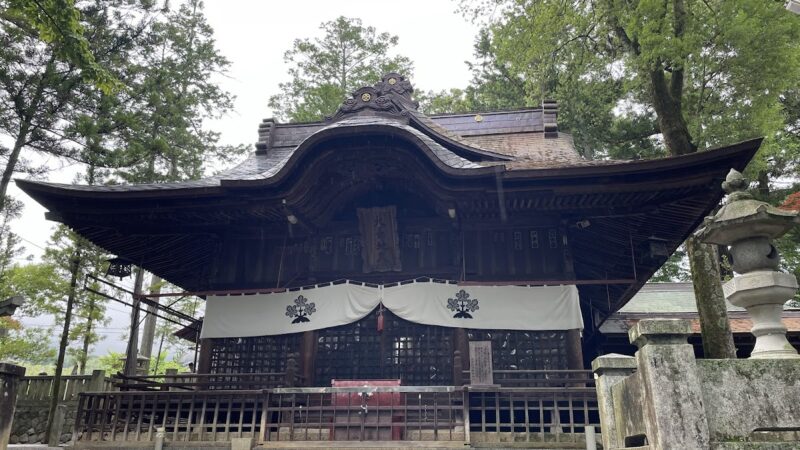
Kamisha Honmiya is located in Suwa City, on the south side of Lake Suwa. It is considered the most prestigious of the four Suwa Grand Shrines and is characterized by its unique form without a main hall. It retains the form of sacred mountain worship, with Mount Moriya behind it being revered as the sacred mountain.
Main Highlights:
- Entrance Gate (Important Cultural Property)
- Imperial Prayer Hall
- Four-Legged Gate
- Cloth Bridge (Path for the Gods)
- Four Sacred Pillars
The grounds are vast and enveloped in a solemn atmosphere, with sacred trees hundreds of years old standing throughout. The worship hall is an early Edo period building and is designated as an Important Cultural Property.
Kamisha Maemiya (Chino City)
Kamisha Maemiya is located in Chino City and is considered the birthplace of Suwa Grand Shrine. It is said to have the oldest history among the four shrines and is located in a place called Gobara.
Main Highlights:
- Main Shrine (Inner Sanctuary)
- Ten-Ken Corridor (Place where Shinto rituals are performed)
- Suiga Stream
- Maemiya’s Sacred Pillars
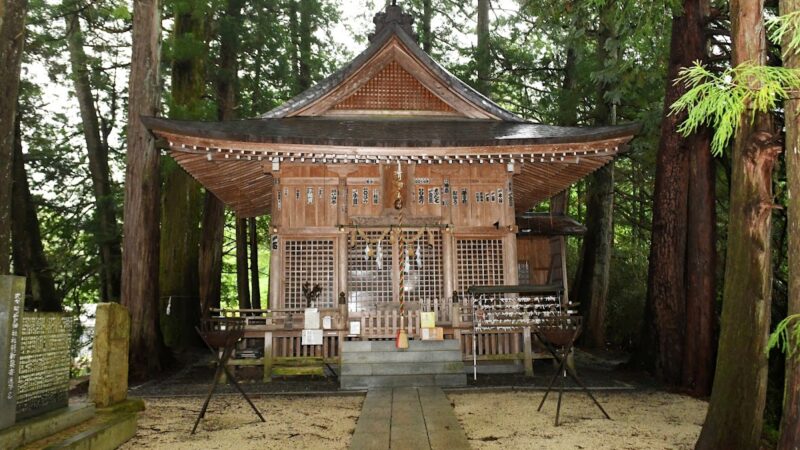
Maemiya is the only shrine within Suwa Grand Shrine that has a main shrine. Located on a quiet mountainside, it is a sacred space where you can feel the prototype of ancient faith.
Shimosha Akimiya (Shimosuwa Town)
Shimosha Akimiya is located in Shimosuwa Town, on the north side of Lake Suwa. Situated at the confluence of the Nakasendo and Koshu Kaido roads, it is a place that has flourished as a transportation hub since ancient times.
Main Highlights:
- Kagura Hall (Japan’s largest Shimenawa rope)
- Heihaiden (Important Cultural Property)
- Bronze Komainu (Important Cultural Property)
- Rooted Cedar (Sacred Tree)
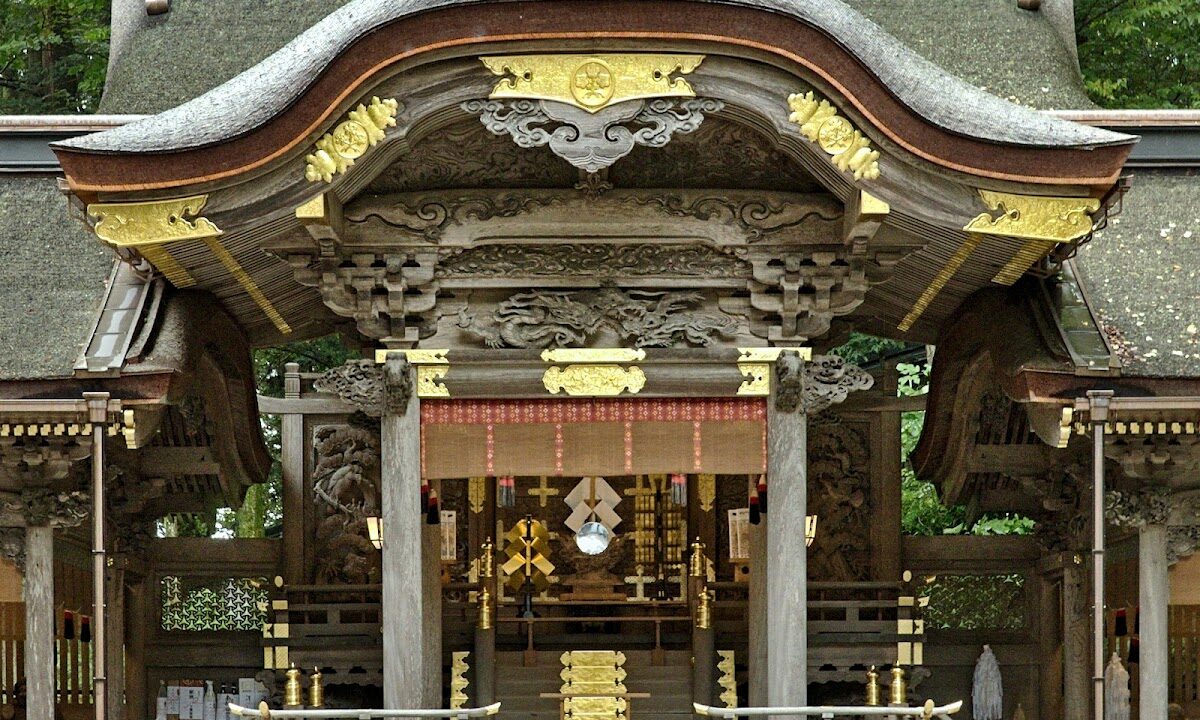
The large Shimenawa rope hanging over Akimiya’s Kagura Hall is one of the largest in Japan, comparable in size to that of Izumo Grand Shrine. Furthermore, the Heihaiden (offering hall) built from a Japanese yew tree is known as a masterpiece of the Tachikawa school of shrine carpentry.
Shimosha Harumiya (Shimosuwa Town)
Shimosha Harumiya is located about 1 kilometer from Akimiya. It is said to have the most elegant shrine layout among the Suwa Grand Shrines.
Main Highlights:
- Heihaiden (Important Cultural Property, same design as Akimiya)
- Manji Stone Buddha (Nearby landmark)
- Tsutsugayuden
- Ukishima Shrine
A clear stream flows through the grounds of Harumiya, allowing visitors to enjoy the natural beauty of the four seasons. It is especially beautiful during the cherry blossom season in spring and the autumn foliage season.
Shrines that worship sacred mountains and sacred trees
One of the major characteristics of Suwa Grand Shrine is its unique form of worship, lacking a main shrine (or having a very small main shrine). This is because it strongly retains the ancient form of sacred mountain worship.
Mount Moriya as a Sacred Object
At the Upper Shrine’s main sanctuary, Mount Moriya, towering behind it, is worshipped as the sacred object of worship. The absence of a main hall, with only a heiden (offering hall) behind the haiden (worship hall), is a remnant of ancient beliefs that considered the mountain itself as a dwelling place for the gods.
Sacred Tree Worship
At Suwa Grand Shrine, giant sacred trees called Onbashira play a crucial role. The Onbashira, erected at the four corners of each shrine, not only mark the sacred area but also serve as dwelling places for the gods. This sacred tree worship preserves a form of ancient Japanese nature worship.
Shikinen Zōei Onbashira Taisai (Onbashira Festival)
An essential part of discussing Suwa Grand Shrine is the Shikinen Zōei Onbashira Taisai, commonly known as the “Onbashira Festival,” held once every seven years (every seven years according to the traditional Japanese age counting system).
History and Significance of the Onbashira Festival
The Onbashira Festival is a traditional event said to have continued since the time of Emperor Kanmu in the early Heian period, boasting a history of over 1,200 years. It is a magnificent festival in which giant fir trees are pulled and erected at the four corners of each of the four shrines, and is known nationwide as a “magnificent festival.”
Flow of the Onbashira Festival
The Onbashira Festival is divided into two stages: “Mountain Descent” and “Village Pulling.”
Mountain Descent (April):
- Cutting down fir trees for the Onbashira from the foot of the Yatsugatake Mountains
- A magnificent ceremony of sliding down the log-dropping slope
- Crossing the river (“River Crossing”)
Village Pulling (May):
- Pulling the Onbashira to each shrine
- Erecting the Onbashira at the four corners of the shrine grounds (“Erecting the Onbashira”)
The Onbashira Festival attracts millions of tourists, and the entire Suwa region is immersed in the festival atmosphere.
The Role of the Onbashira Pillars
The erected Onbashira pillars function as a boundary of the sacred area and as a vessel for the gods for seven years until the next Onbashira Festival. The sight of the four pillars standing is an iconic image of Suwa Grand Shrine.
Rituals of Suwa Grand Shrine that Preserve Ancient Traditions
Besides the Onbashira Festival, many other traditional rituals are still performed at Suwa Grand Shrine.
Ontōsai (Head Festival)
This is an important ritual held at the Upper Shrine on April 15th. It got its name from the fact that 75 deer heads were offered in the past. Although stuffed deer are now used, it continues as a valuable ritual that conveys ancient hunting culture.
Tsutsugayu Shinji (Rice Porridge Ritual)
This ritual is held at the Lower Shrine’s Harumiya from January 14th to 15th and is used to predict the abundance or scarcity of the year’s crops. It is a traditional agricultural ritual in which the condition of rice porridge in reed tubes is used to predict the success of 43 different crops.
Relocation Ceremony
At the Lower Shrine, the deity is moved twice a year between the Spring Shrine and the Autumn Shrine. A ceremony is held on February 1st to move to the Spring Shrine and on August 1st to move to the Autumn Shrine, preserving this unique form of worship to this day.
How to Visit the Four Shrines of Suwa Grand Shrine
Visiting all four shrines, known as the “Four Shrine Pilgrimage,” is the highlight of a visit to Suwa Grand Shrine. We’ll introduce an efficient route and key points.
Recommended Order of Visiting the Shrines
Pattern 1 (From Upper Shrine to Lower Shrine):
- Upper Shrine Main Sanctuary (Suwa City)
- Upper Shrine Front Sanctuary (Chino City)
- Lower Shrine Autumn Sanctuary (Shimosuwa Town)
- Lower Shrine Spring Sanctuary (Shimosuwa Town)
Pattern 2 (From Lower Shrine to Upper Shrine):
- Lower Shrine Spring Sanctuary
- Lower Shrine Autumn Sanctuary
- Upper Shrine Front Sanctuary
- Upper Shrine Main Sanctuary
While the Lower Shrine’s Spring Sanctuary and Autumn Sanctuary are within walking distance (approximately 1 km), travel between the Upper and Lower Shrines, and between the Upper Shrine Main Sanctuary and Front Sanctuary, requires travel by car or bus.
Estimated Time Required
- Visiting time at each shrine: 30 minutes to 1 hour
- Visiting all four shrines including travel time: Half a day to 1 day
- For a thorough visit: 1 day to 1.5 days
Access Methods
Public Transportation:
- Take a bus or taxi from JR Chuo Main Line “Kami-Suwa Station,” “Shimo-Suwa Station,” or “Chino Station”
- Rental bicycles are also available from each station
By Car:
- From Chuo Expressway “Suwa IC” or “Suwa-Minami IC” to each shrine
- Parking is available at each shrine
Goshuin (Shrine Seals) and Amulets
At Suwa Grand Shrine, you can receive a Goshuin at each of the four shrines.
Goshuin Pilgrimage
Collecting all four Goshuin serves as proof of your visit to Suwa Grand Shrine. Each shrine has a different Goshuin design, and original Suwa Grand Shrine Goshuin notebooks are also available.
Special Amulets
Suwa Grand Shrine offers the following distinctive amulets:
- Nagikamamori: An amulet for good fortune in competition, also worshipped by Takeda Shingen
- Onsen Omamori: An amulet related to the hot springs of the Suwa region
- Onbashira Omamori: An amulet related to the Onbashira Festival
- Enmusubi Omamori: An amulet for matchmaking related to Yasakatome-no-kami
About Prayers
At Suwa Grand Shrine, you can receive various prayers at each shrine.
Main Prayers
- Family Safety
- Business Prosperity
- Traffic Safety
- Protection from Evil
- Success in Exams
- Safe Childbirth
- First Shrine Visit for a Newborn
- Shichi-Go-San (7-5-3 Festival)
Prayer Reception
Prayers are accepted at the shrine offices of each shrine. Reservations are generally not required, but advance contact is recommended for large groups or special dates/times.
Tourist Attractions Around Suwa Grand Shrine
Here are some nearby tourist attractions you might want to visit in conjunction with your visit to Suwa Grand Shrine.
Lake Suwa
Lake Suwa, the largest lake in Shinshu (Nagano Prefecture), offers beautiful scenery throughout the seasons. Enjoy sightseeing boats and boat rides, and in winter, you might even witness the natural phenomenon known as “Omiwatari” (the ice ridge).
Hot Springs in Suwa
There are many hot springs around Lake Suwa, including Kamisuwa Onsen and Shimosuwa Onsen. Relaxing in a hot spring after your visit is highly recommended.
Manji Stone Buddha
Located near the Shimosha Harumiya shrine, this uniquely shaped stone Buddha is a popular power spot.
Suwa City Museum and Suwa Grand Shrine Treasure Hall
This facility allows you to learn more about the history of Suwa Grand Shrine and the Onbashira Festival.
Annual Events at Suwa Grand Shrine
Suwa Grand Shrine holds various Shinto rituals and festivals throughout the year.
Main Annual Events
- January 1st: New Year’s Day Festival
- January 14th-15th: Tsutsugayu Ritual (Shimosha Harumiya)
- February 1st: Relocation Ceremony (to Harumiya)
- April 15th: Ontou Festival (Kamisha)
- August 1st: Relocation Ceremony (to Akimiya)
- August 27th: Hassaku Festival (Kamisha)
- Onbashira Year (once every 7 years): Shikinen Zōei Onbashira Grand Festival
Deepening the History of Suwa Grand Shrine
The history of Suwa Grand Shrine is deeply intertwined with ancient Japanese history.
Relationship with the Kojiki
In the Kojiki’s myth of the transfer of the land, there is a description that Takeminakata-no-kami fled from Izumo to Suwa. This suggests that Suwa was an independent sphere of influence from ancient times.
Suwa Faith in the Middle Ages
During the Middle Ages, the Shinto priests of Suwa Grand Shrine, known as the Ōhōri, also functioned as feudal lords of the Suwa region. The Suwa clan was also active as a samurai family, and Suwa faith spread among the samurai class.
Takeda Shingen and Suwa Grand Shrine
During the Sengoku period (Warring States period), Takeda Shingen was a devout follower of Suwa Grand Shrine, and used the shrine’s crest, the “Kaji no Ha” (mulberry leaf), on his battle standard. Suwa Grand Shrine strengthened its character as a god of war, attracting the devotion of warlords throughout Japan.
The Suwa Grand Shrine’s Crest: The “Kaji no Ha” (Mulberry Leaf)
The crest of Suwa Grand Shrine is the “Kaji no Ha” (mulberry leaf). The mulberry is a sacred plant used in Shinto rituals since ancient times and is a symbol of Suwa faith. This crest was used by the Takeda family and many other samurai families who worshipped Suwa Grand Shrine.
Points to Note and Manners When Visiting Suwa Grand Shrine
This section introduces basic manners when visiting Suwa Grand Shrine.
Proper Worship Etiquette
- Bow before passing through the torii gate.
- Purify your body and mind at the water basin.
- Bow twice, clap twice, and bow once in front of the main hall.
- Show respect to the sacred pillars.
Attire
There are no specific dress code requirements, but it is desirable to wear clothing that reflects the sacred nature of the place.
Photography
Photography is generally permitted within the shrine grounds, but please refrain from taking photos during religious ceremonies or in restricted areas.
Summary | The Charm of Suwa Grand Shrine
Suwa Grand Shrine, one of Japan’s oldest shrines with a history of over 2,000 years, continues to fascinate many visitors. It possesses many unique features not found in other shrines, such as its distinctive worship style, divided into four shrines on either side of Lake Suwa, the Onbashira Festival held once every seven years, and its sacred mountain worship without a main hall.
As the head shrine of approximately 25,000 Suwa shrines nationwide and the Ichinomiya (first-ranked shrine) of Shinano Province, Suwa Grand Shrine occupies a significant position in Japanese religious culture. Each of the four shrines possesses its own unique charm, and visiting all four allows you to experience the complete picture of Suwa faith.
When visiting Nagano Prefecture, be sure to experience a pilgrimage to the four Suwa Grand Shrines and immerse yourself in the ancient traditions and sacred atmosphere. Along with the beautiful nature of Lake Suwa, hot springs, and local cuisine, it will surely be a memorable trip.