Hotoku-ji Temple (Ukyo-ku, Kyoto Prefecture) Complete Guide | History, Access, and Highlights Explained in Detail
Hotoku-ji Temple, located in Sagakaribun-cho, Ukyo-ku, Kyoto City, is a tranquil temple belonging to the Seizan Jodo sect. While situated in a residential area slightly removed from the hustle and bustle of the Arashiyama area, it boasts a sutra copying hall and is known as a valuable place of worship for the local community. This article provides detailed information useful for visitors, including the history of Hotoku-ji Temple, its highlights, access methods, and surrounding area information.
Basic Information about Hotoku-ji Temple
Temple Overview
Official Name: Rokujisan Hotoku-ji Temple
Sect: Seizan Jodo Sect
Address: 22-2 Sagakaribun-cho, Ukyo-ku, Kyoto City, Kyoto Prefecture
Postal Code: 616-8342
Phone Number: 075-871-5449
Nearest Station: Kurumazaki-jinja Station, Keifuku Electric Railway Arashiyama Line
Parking: None
Hotoku-ji Temple, whose mountain name is “Rokujisan,” is a temple that inherits the teachings of the Seizan Jodo Sect. The Seizan Jodo Sect is a sect founded by Shoku Shonin (Seizan Shonin), a senior disciple of Honen Shonin, and is a branch of Pure Land Buddhism that preaches rebirth in paradise through chanting the Buddha’s name. It has attracted many followers, mainly in Kyoto.
About the Nishiyama Jodo Sect
The Nishiyama Jodo Sect is a Buddhist sect founded in the Kamakura period by the monk Shōkū. While inheriting the teachings of the monk Hōnen, it emphasizes its own unique interpretation and practice, particularly deeply pursuing the concept of “reliance on the power of others.” Its head temple is Kōmyōji Temple in Nagaokakyō City, Kyoto Prefecture, and Hōtokuji Temple, as a temple connected to this lineage, serves as a center of faith for the local people.
History and Origins of Hōtokuji Temple
Background of its Founding
While detailed records regarding the exact founding date of Hōtokuji Temple are limited, it is believed to have developed alongside the spread of Jodo Buddhism in the Sagano region. The Sagano area flourished as a villa area for aristocrats from the Heian period, and many temples were built there. Hōtokuji Temple, too, played a role in supporting the faith of the local people within this historical context.
The temple name “Hōtoku” embodies the profound meaning of repaying the grace of the Buddha. This embodies the core teaching of the Jodo sect: “Expressing gratitude for Amida Buddha’s salvation through chanting the Buddha’s name.”
Meaning of Rokuji-zan
The mountain name “Rokuji-zan” refers to the six characters of “Namu Amida Butsu,” the most important chanting in the Jodo sect. This six-character name is the most fundamental chanting expressing devotion to Amida Buddha and is central to the practice of the Nishiyama Jodo sect. The inclusion of “Rokuji” in the mountain name of Hotoku-ji Temple demonstrates the temple’s commitment to cherishing the chanting of Amida Buddha above all else.
Hotoku-ji Temple Grounds and Highlights
Layout and Characteristics of the Temple Grounds
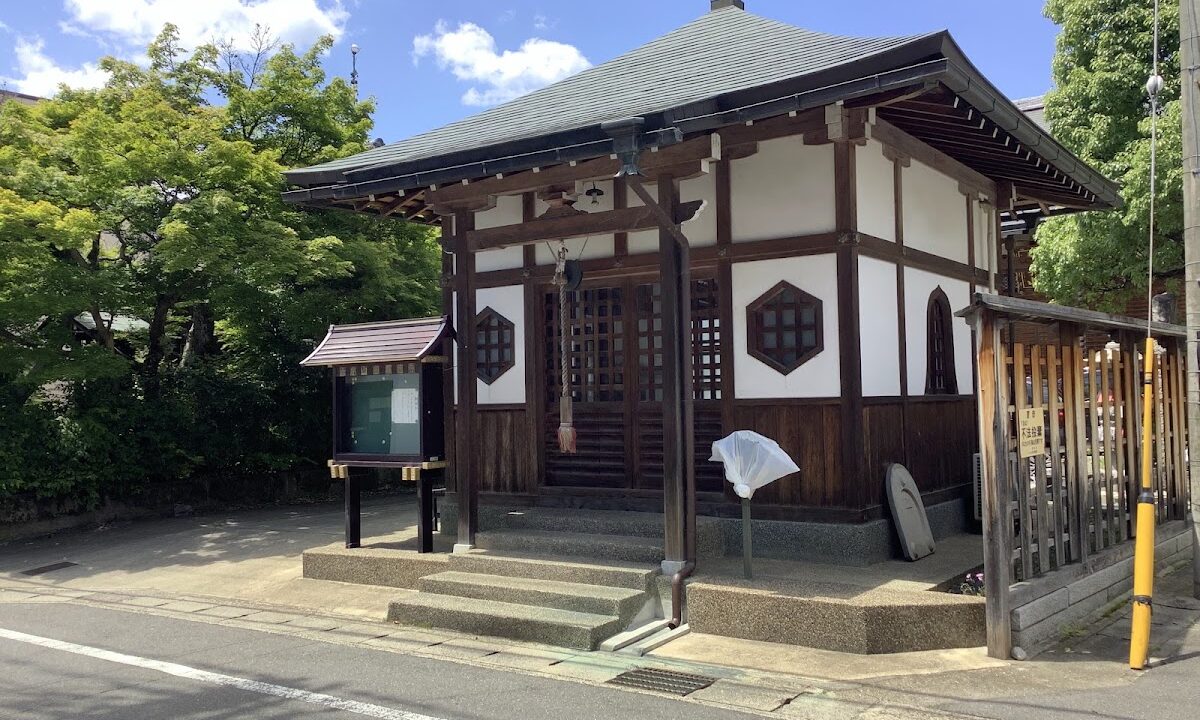
Hotoku-ji Temple is located along Showa-dori Avenue and features an open structure without a main gate. The Kannon Hall faces the street, with the main hall located behind it. The grounds, though compact, are neatly maintained, creating a tranquil atmosphere that makes you forget the hustle and bustle of the city.
The main hall, recently rebuilt, retains the traditional style of temple architecture while incorporating modern facilities. The clean and bright main hall is popular not only with local parishioners but also with visiting worshippers.
Kannon Hall
The Kannon Hall, situated along the road, is a landmark of Hotoku-ji Temple. Kannon Bodhisattva, a compassionate Buddha who relieves the suffering of all beings, has long been revered by the Japanese people. Hotoku-ji Temple’s Kannon Hall stands quietly, watching over passersby, and serves as a place where local people regularly offer prayers.
The sight of locals stopping in front of the Kannon Hall to pray for daily peace demonstrates that Hotoku-ji Temple is not merely a historical building, but a living place of faith.
Rokuji-do Sutra Copying Hall
A distinctive facility of Hotoku-ji Temple is the “Rokuji-do Sutra Copying Hall,” located to the left of the main hall. Sutra copying is a practice of carefully transcribing Buddhist scriptures character by character. It has been practiced since ancient times as a way to calm the mind and deepen one’s understanding of Buddhist teachings.
At the Hotoku-ji Temple sutra copying hall, anyone, from beginners to experienced practitioners, can experience sutra copying. The time spent carefully copying each character in a quiet environment will provide a valuable opportunity to escape the hustle and bustle of modern life and confront oneself.
Those wishing to use the sutra copying hall are advised to contact the temple in advance to confirm the dates, times, and participation procedures.
Main Hall
The newly rebuilt main hall is the central building of Hotoku-ji Temple. The principal image is enshrined inside, and daily services and ceremonies are held there. As a temple of the Seizan Jodo sect, it enshrines Amida Buddha as its principal image and serves as a place to preach salvation through chanting the Buddha’s name.
Various ceremonies and events are held in the main hall throughout the year. During the O-Higan and Obon periods, parishioners gather to perform ancestral memorial services.
Access Methods
Access by Train
The most convenient way to access Hotoku-ji Temple is via the Keifuku Electric Railway Arashiyama Line (commonly known as Randen).
Nearest Station: Kurumazaki-jinja Station
Distance from Station: Approximately 2 minutes on foot (approximately 130m)
Directions from Station: Exit Kurumazaki-jinja Station and head east along Showa-dori Street to the north. Hotoku-ji Temple will soon come into view.
Kurumazaki-jinja Station is an intermediate station on the Randen line connecting Arashiyama and Shijo-Omiya, and is also used as a base for Arashiyama sightseeing. Because it is very close to the station, even first-time visitors should be able to arrive without getting lost.
Access from Major Stations
- From Kyoto Station: Take the JR Sagano Line to Uzumasa Station or Saga-Arashiyama Station, then transfer to the Randen Line.
- From Shijo Kawaramachi: Take a city bus or Kyoto bus towards Arashiyama, or take the Hankyu Line to Omiya Station, then board the Randen Line at Shijo-Omiya Station.
- From Arashiyama: Approximately 5 minutes from Randen Arashiyama Station to Kurumazaki Shrine Station.
Access by Car and Parking Information
Hotokuji Temple does not have its own parking lot. If you are coming by car, we recommend using nearby coin-operated parking lots or public transportation. Traffic congestion is common in the Saga-Arashiyama area during peak tourist season, so access by train is the most reliable option.
While there are parking lots at Kurumazaki Shrine (for visitors) and commercial facilities nearby, we recommend avoiding parking solely for the purpose of visiting Hotokuji Temple and using public transportation instead.
How to Visit and Etiquette
Etiquette for Visiting
Hotoku-ji Temple is a typical temple for temple parishioners. While there are no special visiting hours or entrance fees, please observe the following etiquette when visiting.
- Visiting Hours: Visit during reasonable daytime hours (generally between 9:00 AM and 5:00 PM).
- Quietness: Be quiet on the temple grounds and refrain from loud conversations.
- Photography: Photography is generally permitted on the temple grounds, but refrain from taking photos inside the main hall or during religious ceremonies.
- Attire: There are no specific dress code requirements, but please wear appropriate and respectful attire for a temple.
How to Pray
- Bow slightly before entering the temple grounds.
- Join your hands in prayer in front of the Kannon Hall or main hall and pray quietly.
- If offering a donation, place it quietly into the offering box.
- If chanting a Buddhist prayer, chant “Namu Amida Butsu” silently or softly.
- Bow again when leaving the temple grounds after praying.
About the Sutra Copying Experience
If you wish to copy sutras at the Rokujido Sutra Copying Hall, please note the following:
- Check the dates and times and whether reservations are required by phone in advance.
- Confirm that a sutra copying fee (donation) may be required.
- Visit in appropriate clothing for sutra copying (clothing that allows for easy kneeling).
- While writing implements are often provided by the temple, it’s best to confirm in advance.
Attractions Around Hotoku-ji Temple
Kurumazaki Shrine
Located very close to Hotoku-ji Temple, Kurumazaki Shrine is a shrine dedicated to Kiyohara Yorinori, the god of learning, and is particularly famous as the god of performing arts. Within the shrine grounds is the “Performing Arts Shrine,” which is visited by many entertainers and artists. The names of famous people line the stone fence, creating a unique atmosphere.
Distance: Approximately 3 minutes on foot from Hotoku-ji Temple
Highlights: Geino Shrine, Promise Stone (Prayer Stone), Beautiful Temple Grounds
Rokuoin Temple
A Rinzai Zen temple founded by Ashikaga Yoshimitsu, known for its beautiful autumn foliage. Its tranquil garden and beautiful approach are popular as a hidden gem in Kyoto.
Distance: Approximately 8 minutes on foot from Hotoku-ji Temple
Highlights: Autumn foliage, moss garden, beautiful approach
Admission Fee: Yes (approximately 400 yen for adults)
Arashiyama Area
Arashiyama, located about 5 minutes from Hotoku-ji Temple by Randen train, is one of Kyoto’s most representative tourist destinations. It boasts numerous attractions, including Togetsukyo Bridge, the Bamboo Grove, and Tenryu-ji Temple. You can enjoy Arashiyama sightseeing in conjunction with a visit to Hotoku-ji Temple.
Main Highlights:
- Togetsukyo Bridge: An iconic landmark of Arashiyama
- Bamboo Grove Path: A magical path through a bamboo forest
- Tenryu-ji Temple: A Zen temple and World Heritage Site
- Nonomiya Shrine: A shrine famous for matchmaking
Arisugawa River
The Arisugawa River, flowing around Hotoku-ji Temple, is a small stream that flows through a quiet residential area, perfect for a stroll. It’s a hidden gem where you can enjoy cherry blossoms in spring and autumn leaves in fall.
Annual Events and Special Days
Main Annual Events
Hotoku-ji Temple, as a temple of the Seizan Jodo sect, holds various Buddhist services and events throughout the year.
Spring Equinox Service (March): A memorial service for ancestors is held during the spring equinox.
Flower Festival (Around April 8th): A memorial service celebrating the birth of Buddha.
Obon Festival (August): A memorial service for ancestors during the Obon period.
Autumn Equinox Service (September): A memorial service for the autumn equinox.
New Year’s Eve Bell Ringing (December 31st): The ringing of the temple bell at the end of the year.
These events are primarily for temple parishioners, but general visitors may be able to participate in some cases. Please contact the temple for details.
Points to Note When Visiting Hotoku-ji Temple
Considerations When Visiting
Hotoku-ji Temple is not a tourist temple, but rather a temple with a strong character as a local parishioner temple. Therefore, please be considerate of the following points.
- Visiting During Memorial Services: When a memorial service is being held, please refrain from visiting or observe quietly.
- Respect for Privacy: Please be considerate of the privacy of the parishioners and avoid loud conversations or noisy behavior on the temple grounds.
- Photography Etiquette: Avoid taking photos that include people, and be considerate when photographing buildings and Buddha statues.
- Take Your Trash Home: If there are no trash cans on the temple grounds, please be sure to take your trash home with you.
Best Time to Visit
Hotoku-ji Temple is open for visits throughout the year, but the following times are particularly recommended.
Spring (March-May): Beautiful cherry blossoms and fresh greenery, and pleasant weather.
Autumn (October-November): The season of autumn leaves, and the surrounding temples and shrines are also beautiful.
Weekdays: For those who want to visit in peace, weekdays with fewer tourists are recommended.
Hotoku-ji Temple and the Local Community
Role in the Community
Hotoku-ji Temple plays an important role in the local community of Sagakaribun-cho. Through the danka system (parishioner system), it has deep ties with local families and serves as a place to strengthen community bonds through weddings, funerals, and annual events.
Even in today’s increasingly urbanized world, community-oriented temples like Hotoku-ji Temple are invaluable as a spiritual haven for people and a place to pass on the history and culture of the region.
Significance of the Sutra Copying Dojo
The existence of the Rokujido Sutra Copying Dojo demonstrates that Hotoku-ji Temple is not merely a parishioner temple, but also plays a role in broadly transmitting Buddhist culture. Passing on the traditional practice of sutra copying to the modern age and offering it in a way that anyone can participate in significantly contributes to the spread of Buddhist culture.
Summary: The Charm of Hotoku-ji Temple
Hotoku-ji Temple, located in Sagakaribun-cho, Ukyo-ku, Kyoto City, close to Arashiyama, maintains a quiet atmosphere away from the hustle and bustle of tourist areas. It transmits the teachings of the Seizan Jodo sect and promotes Buddhist culture through its Rokujido Sutra Copying Dojo.
With its excellent accessibility—just a 2-minute walk from Kurumazaki Shrine Station—the clean and well-maintained grounds of the Kannon Hall and main hall, and the special opportunity to experience sutra copying, Hotoku-ji Temple is ideal for a stop during Arashiyama sightseeing.
While it lacks the glamour of famous tourist temples, it offers a simple and sincere place of faith rooted in the community, providing visitors with quiet peace. Visiting such community-oriented temples during a Kyoto temple tour offers a valuable opportunity to experience a different side of Kyoto than that of the tourist temples.
When you visit Arashiyama or Kurumazaki Shrine, why not also stop by Hotoku-ji Temple and spend some time finding peace of mind in its tranquil grounds? Hotoku-ji Temple, where the teachings of the six-character mantra “Namu Amida Butsu” live on, is a place that quietly speaks to us living in the modern age about the importance of inner peace and faith.