Myorinji Temple (Ukyo Ward, Kyoto Prefecture) Complete Guide | History and Access to a Nichiren Buddhist Temple in Saga-Arashiyama
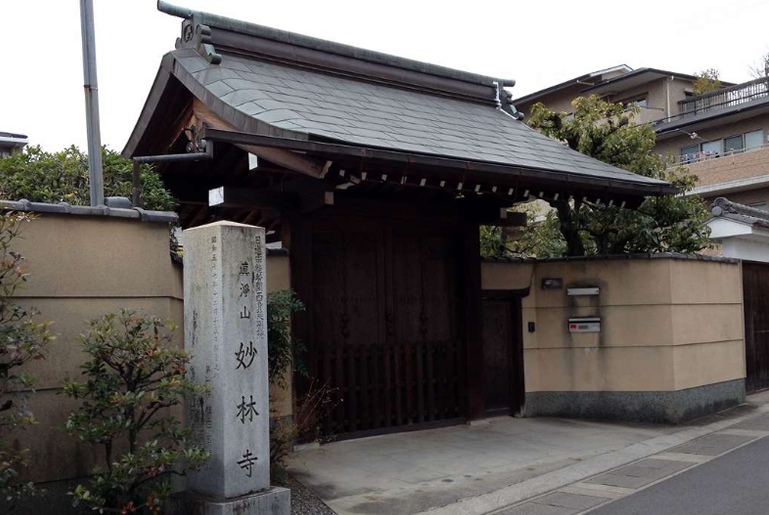
Shinjōzan Myorinji Temple, located in the Saga-Arashiyama area of Ukyo Ward, Kyoto City, is a temple known as a branch temple of Shinnyo-ji Temple, a Nichiren Buddhist temple in Nose-Kansai Minobu. Despite being in the bustling tourist area of Arashiyama, it is a quiet place of worship cherished by the local community. This article provides a detailed introduction to Myorinji Temple’s history, characteristics, access methods, and religious activities.
About Myorinji Temple
Basic Information
Official Name: Shinjozan Myorinji Temple
Sect: Nichiren Buddhism
Head Temple: Nichiren Buddhism Nose Kansai Minobu Shinnyo-ji Temple (Branch Temple)
Address: 14-1, Saga Tenryuji Imahori-cho, Ukyo-ku, Kyoto City, 616-8366
Phone Number: 075-864-4605
Myorinji Temple, though a relatively new temple established on June 1, 1979, is a special place with a deep history of faith.
Meaning of the Mountain Name, Temple Name, and Temple Name
The mountain name, “Shinjozan,” represents true purity and signifies a place of pure faith based on the teachings of the Lotus Sutra. The temple’s name, “Shinjōin,” similarly expresses its character as a place of worship where people practice the Lotus Sutra with a pure heart.
The temple’s name, “Myōrinji,” combines the surname of the Hayashi couple, who were deeply involved in its founding, with “Myōhō” from the Lotus Sutra, symbolizing the origins of this temple.
History and Founding of Myōrinji
Spreading the Lotus Sutra by Katsujirō and Umeji Hayashi
The history of Myōrinji dates back to the religious activities of Katsujirō and Umeji Hayashi, who ran a timber business. The Hayashi couple dedicated themselves to educating believers for many years, establishing a place of worship for the Lotus Sutra.
The couple opened their home and continued their activities to spread the teachings of Nichiren Buddhism. This private missionary work gradually took root in the community, and many believers began to gather. These efforts bore fruit, and on June 1, 1979, Myorinji Temple was officially established as a branch temple of Shinnyo-ji Temple, the Nose-Kansai Minobu branch of the Nichiren sect.
Relationship with Shinnyo-ji Temple
Myorinji Temple is positioned as a branch temple of Shinnyo-ji Temple, the Nose-Kansai Minobu branch of the Nichiren sect. Shinnyo-ji Temple is also known as “Kansai Minobu” and is an important base temple for the Nichiren sect in the Kansai region.
As a branch temple, Myorinji Temple plays a role in spreading the teachings of Shinnyo-ji Temple in Arashiyama, Kyoto, and continues its missionary activities of the Lotus Sutra in close cooperation with the head temple.
From Original Home to Temple
The current site of Myorinji Temple was originally the home where the Hayashi couple dedicated themselves to educating their followers. As a result of their many years of missionary work, this site was officially recognized as a temple site, and it was subsequently established.
Due to its origins, Myorinji Temple differs from large tourist temples with extensive temple complexes; it strongly embodies the character of a place of faith deeply rooted in the local community.
Myorinji Temple’s Faith Activities and Characteristics
Activities of the Myorin-ko
Myorinji Temple has a lay organization called “Myorin-ko,” which holds regular religious services and study sessions. The Myorin-ko is a group of believers that has continued since the time of the Hayashi couple and remains active today.
Once a month, a regular religious service and lecture are held, providing believers with an opportunity to gather, learn the teachings of the Lotus Sutra, and deepen their faith.
Relationship with Nichihō Shōnin
The existence of Nichihō Shōnin is important in the history of Myorinji Temple. Nichihō Shōnin was a monk who greatly contributed to the development of Myorinji Temple, supporting the religious activities of the Hayashi couple and playing a central role in building the temple’s foundation.
The teachings of Nichihō Shōnin continue to thrive in the faith activities of Myōrinji Temple, and his legacy is commemorated at monthly memorial services.
As a Training Ground for the Propagation of the Lotus Sutra
Myōrinji Temple has, from its founding, served as a training ground for the propagation of the Lotus Sutra. It is not a large-scale tourist temple, but rather a place for the practice of faith, a place to earnestly learn and practice the teachings of the Nichiren sect.
Focusing on the teachings of the Lotus Sutra, the fundamental scripture of the Nichiren sect, daily practices include chanting the title “Namu Myōhō Renge Kyō,” recitation of scriptures, and Dharma talks.
Access
Access by Train
Myōrinji Temple is accessible from multiple train lines.
Keifuku Electric Railway Arashiyama Line (Randen)
- Get off at “Randen Saga” Station, approximately 5 minutes on foot
- Get off at “Rokuoin” Station, approximately 7 minutes on foot
JR Sagano Line
- Get off at “Saga-Arashiyama” Station, approximately 10 minutes on foot
Located in a quiet residential area slightly away from the center of Kyoto’s Arashiyama area, it offers a calm atmosphere different from the bustling Togetsukyo Bridge area.
Access by Car
From central Kyoto
- Approximately 30 minutes via National Route 162 (Shuzan Kaido)
- Approximately 25 minutes from Marutamachi Street towards Tenryuji Temple
We recommend contacting the temple in advance regarding parking. The Arashiyama area becomes very crowded during peak tourist season, so using public transportation is recommended.
Location relative to major surrounding temples
Myorinji Temple is located in Saga Tenryuji Imahori-cho, close to the World Heritage site Tenryuji Temple.
- To Tenryuji Temple: Approximately 8 minutes on foot
- To Nison-in Temple: Approximately 12 minutes on foot
- To Jojakkoji Temple: Approximately 15 minutes on foot
It is also possible to visit Myorinji Temple as a quiet Nichiren Buddhist temple during your Arashiyama sightseeing.
Myorinji Temple Grounds and Facilities
Main Hall
Myorinji Temple’s main hall, having been built on the basis of the original residence, is a more approachable size than a large temple complex. Inside the main hall is enshrined Shakyamuni Buddha, the principal image of the Nichiren sect, flanked by statues of Many Treasures Buddha and Nichiren Daishonin.
Regular Buddhist services are held inside the temple, where believers gather to chant the Daimoku and recite scriptures.
Atmosphere of the Temple Grounds
The temple grounds are situated in a quiet environment surrounded by the nature of Saga Arashiyama. While it lacks the splendor of a tourist temple, it possesses a warmth befitting a place of daily faith and is cherished by the local community.
The trees on the grounds change their appearance with each season, allowing visitors to experience the changing seasons characteristic of Kyoto, such as the fresh greenery of spring and the vibrant autumn foliage.
About Buddhist Services and Events
Regular Buddhist Services
Myorinji Temple holds a regular Buddhist service once a month. This provides an opportunity for believers to gather, chant the Daimoku, and listen to Dharma talks.
For information on the dates of the services, please contact the temple directly or check the bulletin board.
Annual Events
As a Nichiren Buddhist temple, the following major annual events are held:
- New Year’s Shusho-e (January)
- Setsubun-e (February)
- Spring Equinox-e (March)
- Rikkyo Kaishu-e (April)
- Obon Segaki-e (August)
- Autumn Equinox-e (September)
- Oeshiki (October) An important memorial service commemorating the anniversary of Nichiren Daishonin’s death.
These events may be open to the general public as well as believers. Please contact the temple if you are interested.
Lectures and Study Sessions
Myorinji Temple irregularly holds lectures and study sessions. These provide opportunities to learn about the teachings of the Lotus Sutra, the history of Nichiren Buddhism, and Buddhism in general, making them valuable for those who wish to deepen their faith.
In the past, a lecture by Professor Akimasa Kiyama was held on March 21st (Wednesday, national holiday) from 2 PM to 4 PM, and similar events are planned for the future.
What is Nichiren Buddhism?
Teachings of Nichiren Buddhism
Myorinji Temple belongs to the Nichiren Buddhism, a Buddhist sect founded by Nichiren Daishonin (1222-1282), a monk of the Kamakura period. It considers the Lotus Sutra as its fundamental scripture and teaches that anyone can reach the state of Buddhahood by chanting the title “Namu Myoho Renge Kyo.”
The characteristics of Nichiren Buddhism are as follows:
- Supremacy of the Lotus Sutra: Believes the Lotus Sutra to be the true teaching of Shakyamuni Buddha.
- Emphasis on the Title: Considers chanting “Nam Myoho Renge Kyo” as the most important practice.
- Worldly Benefits and Enlightenment: Aims for both happiness in this life and enlightenment in the next.
- Social Participation: Emphasizes contributing to society based on the teachings of the Lotus Sutra.
What is the Lotus Sutra?
The Lotus Sutra (formal name: Myoho Renge Kyo) is one of the representative scriptures of Mahayana Buddhism, and expounds the idea of “universal enlightenment,” meaning that all people can become Buddhas.
The main teachings of the Lotus Sutra include the following:
- One Vehicle Doctrine: All teachings ultimately converge on one truth (the Buddha Vehicle).
- Eternal Enlightenment: Shakyamuni Buddha is the eternal Buddha who attained enlightenment long ago.
- The True Nature of All Phenomena: All existence inherently represents the truth.
At Myorinji Temple, religious activities are centered on the teachings of the Lotus Sutra.
Temple Culture in the Saga-Arashiyama Area
Historical Background of Saga-Arashiyama
Saga-Arashiyama, where Myorinji Temple is located, is a historic area that flourished as a villa area for aristocrats from the Heian period, with many temples being built there.
Famous temples of various sects, such as Tenryuji, Daikakuji, Seiryoji (Saga Shakado), and Nisonin, are concentrated here, making it an area with a particularly high density of temples within Kyoto.
Uniqueness as a Nichiren Buddhist Temple
While the Saga-Arashiyama area has many Zen (Rinzai and Soto) sect temples, Shingon sect temples, and Jodo sect temples, Myorinji Temple has a unique presence as a Nichiren Buddhist temple.
In this area, which has many temples catering to tourists, Myorinji Temple emphasizes its role as a place of worship for the local community, and is characterized by its function as a place for daily religious practice.
Manners and Precautions for Visiting
Basic Manners for Visiting
When visiting Myorinji Temple, please observe the following manners.
- Bow at the Temple Gate: Bow and clasp your hands together before entering the temple grounds.
- Respectful Respect: Be mindful that this is a place of worship and pray quietly.
- Photography: Please refrain from taking photographs within the temple grounds; photography is generally prohibited inside the main hall.
- Consideration During Services: Please be considerate and avoid disturbing any services being held.
About Visiting
Myorinji Temple is operated as a place of worship, not a tourist temple. We recommend contacting us by phone in advance to inquire about whether general visitors are being accepted.
Phone: 075-864-4605
If you wish to participate in a service or event, contacting us in advance will ensure a smoother experience.
About Goshuin (Temple Seals)
Goshuin are available at Myorinji Temple. Goshuin are given as proof of faith and have a different meaning than mere commemorative stamps.
When receiving a Goshuin (temple stamp), please bring your Goshuincho (stamp book) and make your request politely. It is recommended to check the Goshuin issuance hours and conditions in advance.
Attractions around Myorinji Temple
Tenryuji Temple (World Heritage Site)
Tenryuji Temple, located about an 8-minute walk from Myorinji Temple, is the head temple of the Tenryuji branch of the Rinzai school and a representative Zen temple of Kyoto, registered as a World Heritage Site.
The Sogenchi Garden, designed by Muso Soseki, is a magnificent pond garden with a strolling path that incorporates Arashiyama and Kameyama as borrowed scenery, allowing visitors to enjoy its beauty throughout the seasons.
Nison-in Temple
Nison-in Temple, located about a 12-minute walk away, is a Tendai sect temple with a beautiful approach known as the “Maple Horse Riding Ground.” It gets its name from the two principal deities enshrined there: Shakyamuni Buddha and Amida Buddha.
Jojakkoji Temple
Located about a 15-minute walk away, Jojakkoji Temple is a Nichiren Buddhist temple situated on the slopes of Mt. Ogura. It shares ties with Myorinji Temple, another Nichiren Buddhist temple. Known for its beautiful autumn foliage, the view from the pagoda is spectacular.
Togetsukyo Bridge, Arashiyama
Togetsukyo Bridge, a symbol of Arashiyama, is about a 15-minute walk from Myorinji Temple. This bridge spans the Katsura River, and its harmony with the Arashiyama mountains in the background is beautiful, making it one of Kyoto’s representative landscapes.
Summary
Shinjozan Myorinji Temple, located in Saga Tenryuji Imahori-cho, Ukyo-ku, Kyoto City, is a branch temple of Shinnyo-ji Temple, a Nichiren Buddhist temple of the Nose Kansai Minobu sect, established in 1979.
Myorinji Temple has a special history: its former home, where Katsujiro and Umejiro Hayashi, timber merchants, dedicated themselves for many years to spreading the teachings of the Lotus Sutra, was officially recognized as a temple.
In the Saga-Arashiyama area, which is home to many tourist temples, Myorinji Temple strongly maintains its character as a place of faith rooted in the community. Through monthly regular services and the activities of the Myorin-ko (Myorin Buddhist Association), it continues to practice the teachings of the Lotus Sutra.
When sightseeing in Arashiyama, it would be worthwhile to visit this quiet Nichiren Buddhist temple. However, please respect its status as a place of worship and observe proper etiquette during your visit.
Access: Approximately 5 minutes on foot from Keifuku Electric Railway “Randen Saga” Station, approximately 10 minutes on foot from JR “Saga-Arashiyama” Station
Inquiries: 075-864-4605
Why not experience the teachings of Nichiren Buddhism at Myorinji Temple, where history and faith breathe life into Kyoto’s Arashiyama?