Complete Guide to Ubusuna Shichisha Shrine (Kyotango City, Kyoto Prefecture) | Deities, History, and Access Information
About Ubusuna Shichisha Shrine
Ubusuna Shichisha Shrine is a shrine located in Mukoyama, Ichiba, Kumihama-cho, Kyotango City, Kyoto Prefecture. As its name suggests, it is a historical shrine established during the Meiji period by the merger of “Ubusuna Shrine” and “Shichisha Shrine,” and is cherished by local residents as an important place of worship in Kumano District, Tango Province.
Ubusuna Shichisha Shrine has long been revered as the tutelary deity of the Ichiba district of Kumihama-cho. The Ichiba district is known as an area where the Kusakabe clan resided since ancient times, and this shrine has deep ties to that history. Even today, it plays a central role in seasonal festivals and local events as the guardian deity of the region.
About the Deities
Eight deities are enshrined at Ubusuna Shichisha Shrine. These deities are important figures in Japanese mythology, each possessing different divine virtues.
Main Deities
Kuninotokotachi-no-Mikoto
One of the deities who appeared at the creation of heaven and earth in Japanese mythology, and is considered the primordial deity of the formation of the land.
Amatsuhikone-no-Mikoto
One of the five male deities born from the oath between Amaterasu-Omikami and Susanoo-no-Mikoto.
Ame-no-Hohi-no-Mikoto
Considered the ancestral deity of the Izumo no Kuni no Miyatsuko (provincial governor of Izumo Province), and a child of Amaterasu-Omikami.
Susanoo-no-Mikoto
The younger brother of Amaterasu-Omikami, a heroic deity known for the myth of slaying the Yamata no Orochi (eight-headed serpent). Possesses divine virtues of warding off evil and disaster.
Masaka Akatsukachihayahiame no Oshihomimi no Mikoto
A son of Amaterasu Omikami, he plays a crucial role in the myth of the descent of the heavenly grandchild.
Ikutsuhikone no Mikoto
One of the five male deities born from the oath between Amaterasu Omikami and Susanoo-no-Mikoto.
Kumano Kusubi no Mikoto
One of the five male deities born from the oath between Amaterasu Omikami and Susanoo-no-Mikoto.
Inadahime no Mikoto
The consort of Susanoo-no-Mikoto, the princess who was saved from the Yamata no Orochi (eight-headed serpent). She is believed to bestow blessings of matchmaking and marital harmony.
These deities possess diverse divine virtues, including national peace and security, abundant harvests, protection from evil, and matchmaking, and are worshipped as guardians of all aspects of the lives of the local residents.
History of Ubuzumi Nanasha Shrine
History Before Merger
To understand the history of Ubuzumi Nanasha Shrine, it is necessary to know about the two shrines before their merger.
Ubuzumi Shrine, as its name suggests, was a shrine dedicated to the “Ubusunagami” (guardian deity of the birthplace), watching over the birth and growth of the people of the Ichiba district. The worship of the Ubusunagami is one of the fundamental forms of belief in Japanese Shinto, and it is believed that the deity protects the people born in that land throughout their lives.
Nanasha Shrine existed as a shrine that enshrined multiple deities together. The name “Nanasha” (seven shrines) is thought to originate from the fact that it enshrined seven deities.
Shrine Mergers in the Meiji Era
During the Meiji era, as part of the government’s policy of reorganizing shrines, the merger of small shrines was carried out throughout the country. The Musubi Nanasha Shrine also took its current form around this time, when the Musubi Shrine and the Nanasha Shrine were merged.
This merger resulted in the deities of both shrines being enshrined in a single building, allowing the shrine to develop into one where people could receive the divine blessings of many more gods. Even after the merger, the faith of the local people did not cease; rather, it became an even more important shrine, inheriting the history and traditions of multiple shrines.
Relationship with the Kusakabe Clan
The Ichiba district, where the Musubi Nanasha Shrine is located, is known as the residence of the ancient Kusakabe clan. The Kusakabe clan played an important role in the Tango region and is particularly known for its deep connection with the Takeno Shrine.
It is said that the priestesses of the Takeno Shrine were traditionally descendants of the Kusakabe clan of Ichiba village, demonstrating the significant influence of the Kusakabe clan in this region. It is believed that the Musubi Nanasha Shrine also served as the tutelary deity or local guardian deity of the Kusakabe clan.
Even today, the Ichiba district retains traces of the Kusakabe clan’s residence, demonstrating the historical importance of this area. The Ubuzumi Nanasha Shrine can be understood within this historical context.
Highlights of the Shrine Grounds
Shrine Building
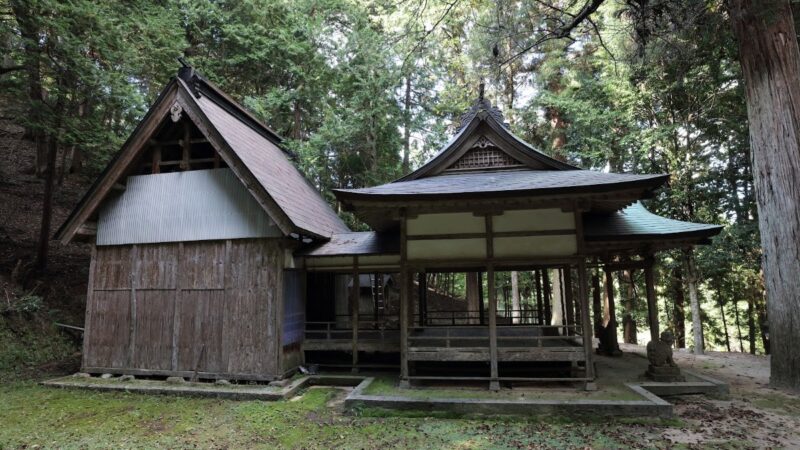
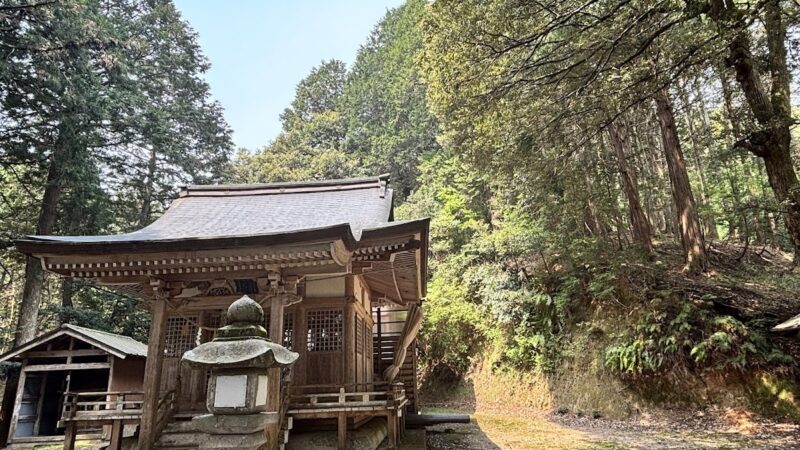
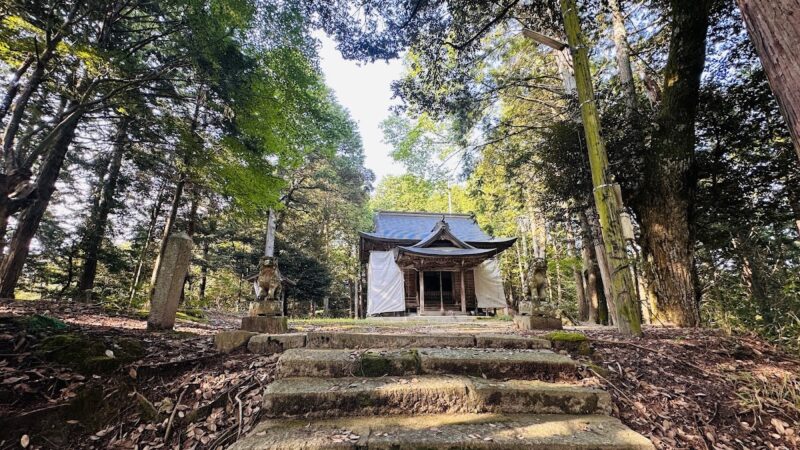
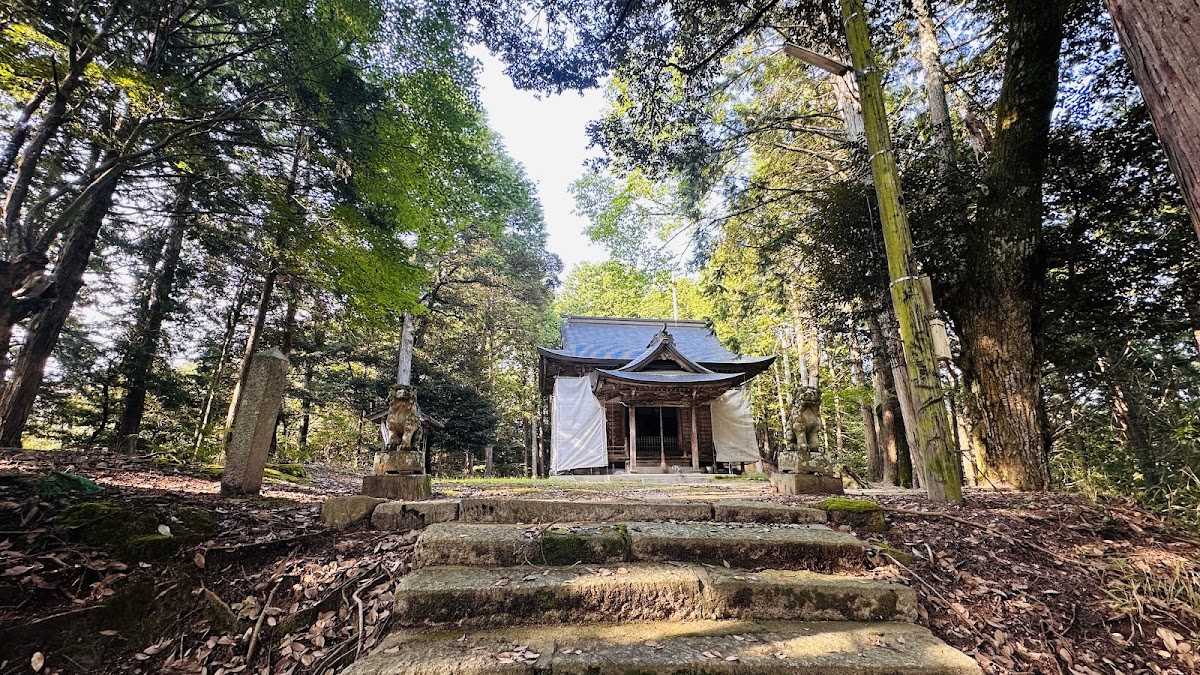
The shrine building of Ubuzumi Nanasha Shrine, though small, is meticulously maintained. Protected by the faith of the local people, the building exudes a simple yet solemn atmosphere.
Guardian Forest
A guardian forest surrounds the shrine, creating a tranquil space. Located in the naturally rich environment of Kumihama Town, far removed from the hustle and bustle of the city, it provides a peaceful environment for worship.
Location on Mukaiyama
As the place name Mukaiyama suggests, Ubuzumi Nanasha Shrine is situated on a small hill. This location suggests that the shrine has long been recognized as a sacred place. Japanese shrines often tend to be built in places of special significance within the community, and Mukaiyama is thought to have been one such sacred site.
Access Information
Location
Address: Mukoyama, Ichiba, Kumihama-cho, Kyotango City, Kyoto Prefecture
Access by Public Transportation
Access to Ubuzumi Nanasha Shrine is convenient by bus.
Nearest Bus Stop: Dezumi Bus Stop
Travel Time from Bus Stop: Approximately 2 minutes on foot
The shrine is very close to the bus stop, making it easy to visit using public transportation. However, Kumihama-cho in Kyotango City is located in a relatively suburban area, so bus services are limited. It is recommended to check the timetable in advance.
Access by Car
Visiting by private car is also possible. The following route is common from Kyoto City:
- Use the Kyoto Jukan Expressway
- Head towards Kumihama
- Head towards the Ichiba area
The travel time from Kyoto City is approximately 2 hours. It is recommended to check parking availability before visiting.
Nearby Tourist Attractions
Besides the Ubuzumi Nanasha Shrine, Kumihama Town has many other points of interest:
- Kumihama Bay: A scenic spot known for its beautiful coastline and oyster farming
- Takeno Shrine: An ancient shrine with deep ties to the Kusakabe clan
- Kumihama Onsenkyo: A popular hot spring resort in Tango
You can enjoy the nature and history of Kumihama Town in conjunction with your visit to the Ubuzumi Nanasha Shrine.
Manners and Etiquette for Visiting a Shrine
Basic Etiquette for Visiting a Shrine
When visiting Ubuzumi Nanasha Shrine, please observe the following basic etiquette:
- Bow before the Torii Gate: As a sign of respect upon entering the sacred area, bow before passing through the torii gate.
- Purify yourself at the Water Basin: If there is a water basin, purify your hands and mouth.
- Walking along the Path: The center of the path is considered the path of the gods, so walk along the sides.
- Etiquette at the Main Hall: Pray using the two bows, two claps, and one bow method.
Visiting in a Quiet Environment
Ubuzumi Nanasha Shrine is a small, community-oriented shrine. Since the surrounding area is residential, please maintain quietness and be considerate of the lives of local residents when visiting.
Festivals and Annual Events
Ubuzumi Nanasha Shrine, as a local shrine, holds seasonal festivals. Regarding specific dates, they may vary depending on local customs and the year, so it is recommended to check in advance when planning your visit.
Typical annual events at shrines include:
- New Year’s Day Festival: A festival to welcome the new year
- Spring Festival: A festival to pray for a bountiful harvest
- Autumn Festival: A festival to give thanks for the harvest
These are some examples. For the local people, these festivals are important events throughout the year.
About Goshuin (Shrine Seals)
Information regarding Goshuin at Ubuzumi Nanasha Shrine is limited. Because it is a small shrine, it is unclear whether they always issue Goshuin. If you wish to obtain a Goshuin, it is recommended to inquire in advance or obtain information from a nearby shrine.
Due to the recent Goshuin boom, many shrines now issue them, but at small, community-based shrines like Ubuzumi Nanasha Shrine, the priest may not be permanently stationed there.
The Charm of Ubuzumi Nanasha Shrine
Historical Value
Ubuzumi Nanasha Shrine is a shrine that preserves traces of a significant event in modern Japanese history: the Meiji-era consolidation of shrines. Furthermore, through its connection to the ancient Kusakabe clan, it is a valuable site for understanding the ancient history of the Tango region.
Center of the Local Community
Even today, Ubuzumi Nanasha Shrine functions as a spiritual center for the people of the Ichiba district. Unlike large-scale tourist shrines, its charm lies in its preservation of its original form as a place of daily worship for local residents.
Tranquil Worship Environment
At Ubuzumi Nanasha Shrine, which is rarely crowded with tourists, you can worship in peace and tranquility. The time spent facing the gods in a natural environment, away from the hustle and bustle of the city, will be a valuable experience for modern people.
Shrine Culture of Kyotango City
Kyotango City in Kyoto Prefecture has 266 shrines, and Ubuzumi Nanasha Shrine is one of them. This is a remarkably large number relative to the area of Kyotango City, demonstrating the deep-rooted faith in Shinto shrines in this region.
The Tango region has long formed its own unique cultural sphere as “Tango Province.” It boasts a history dating back to the age of mythology, and the “Tango Province Fudoki” (ancient provincial gazetteer) even records a story that served as the prototype for the legend of Urashima Taro. The Ubuzumi Nanasha Shrine is situated within this rich mythological and historical background of the Tango region.
Corporate Information
The Ubuzumi Nanasha Shrine is registered as a religious corporation, with corporate number 4130005011232. Its head office is located in Mukoyama, Ichiba, Kumihama-cho, Kyotango City, Kyoto Prefecture.
This corporate information indicates that the shrine is officially recognized as a religious corporation and serves as proof of proper management and operation.
Points to Note When Visiting
Importance of Prior Confirmation
Because the Ubuzumi Nanasha Shrine is a small, community-based shrine, clear information regarding visiting hours and office hours may not be publicly available. If you are visiting from a distance, we recommend checking with the local tourist information center or the Kumihama Town Hall in advance.
Considerations for Season and Weather
Kyotango City is located on the Sea of Japan side, so it snows in winter. If you are visiting in winter, you will need to take precautions against the cold and snowy roads. Also, in summer, the humidity is high, which is typical of coastal areas, so don’t forget to take precautions against heatstroke.
Respect for the Community
The area around Ubuzumi Nanasha Shrine is a residential area. When visiting, please respect the lives of the local residents and be considerate of noise and parking etiquette. The shrine is an important place for the local community, and visitors are expected to behave as part of that community.
Summary
Ubuzumi Nanasha Shrine is a historical shrine located in Ichiba, Kumihama-cho, Kyotango City, Kyoto Prefecture, which was merged with other shrines during the Meiji period. This shrine enshrines eight deities, allowing visitors to receive the divine blessings of important gods from Japanese mythology, including Kunitokotachi-no-Mikoto, Susanoo-no-Mikoto, and Inadahime-no-Mikoto.
With its historical background as the site of the Kusakabe clan’s residence, it is a valuable site that conveys the ancient history of the Tango region. Unlike large-scale tourist shrines, it is a place where you can pray in peace in a tranquil atmosphere unique to a shrine rooted in the local community.
When visiting Kumihama Town, why not add a visit to Ubuzumi Nanasha Shrine to your itinerary, along with the beautiful Kumihama Bay and hot springs? By experiencing the region’s history and faith, you will surely discover a deeper charm of Kyotango.