Honjo Shrine (Saga Prefecture) Complete Guide | An Ancient Shrine Established by Emperor Kinmei’s Imperial Order and the History of Yodohime Worship
Located in Honjo-cho, Saga City, Honjo Shrine has been revered by the local people as the center of Yodohime worship, which has continued since ancient times. This shrine, said to have been founded by the imperial order of Emperor Kinmei, is considered to be one of three entities along with Yotohime Shrine (the Ichinomiya of Hizen Province) and Yoga Shrine, and is an indispensable part of understanding Saga’s history and culture. This article provides a detailed introduction to Honjo Shrine, including its history, enshrined deities, highlights within the grounds, and access information.
Basic Information about Honjo Shrine
Location: 1156 Honjo, Honjo-cho, Saga City, Saga Prefecture
Deity: Toyotamahime-no-Mikoto
Former Shrine Rank: Gosha (designated December, Meiji 4)
Founding: Traditionally believed to be September 28, 564 (25th year of Emperor Kinmei’s reign)
Alternative Name: Honjo Myokenzan Yodohime Daimyojin
Honjo Shrine is located in Honjo-cho, in the northern part of Saga City, nestled in a quiet residential area. Even today, it remains a local tutelary shrine, attracting many worshippers every year.
History and Founding Origin of Honjo Shrine
Founding Legend by Imperial Order of Emperor Kinmei
There is an interesting legend about the founding of Honjo Shrine that has been passed down since ancient times. On the night of September 28th, 564 (the 25th year of Emperor Kinmei’s reign), it is said that a sincere farmer named Tanjiro, living in Sueji Village (present-day Saga City), was gathering firewood when the ground suddenly shook, and a sacred tree appeared before him.
From this sacred tree, five-colored light, especially golden light, emanated, and heavenly music could be heard from nowhere. The spirit of Yodohime then appeared and delivered a divine oracle to Tanjiro. This mystical event was reported to Emperor Kinmei, and the construction of the shrine by imperial decree marks the beginning of Honjo Shrine.
Relationship with the Originating Buddha
During the era of syncretism of Shinto and Buddhism, the Eleven-Faced Kannon was enshrined as the original Buddha of Honjo Myokenzan Yodohime Daimyojin. This reflects a uniquely Japanese religious view that blended Shinto and Buddhism, and tells the story of Honjo Shrine before the Meiji-era separation of Shinto and Buddhism.
Shrine Rank Upgrade During the Meiji Period
In December 1871 (Meiji 4), Honjo Shrine was elevated to the rank of Gosha (village shrine). This signifies its official recognition as an important local shrine within the modern shrine ranking system established by the Meiji government. This rank demonstrates the importance of the role Honjo Shrine has played in the local community.
About the Deity, Toyotama-hime no Mikoto
About Toyotama-hime no Mikoto
Toyotama-hime no Mikoto, the deity enshrined at Honjo Shrine, is the daughter of the sea god (Watatsumi) in Japanese mythology. According to the Kojiki and Nihon Shoki, she married Yamasachihiko (Hikohodemi no Mikoto) and gave birth to Ugayafukiaezu no Mikoto. This Ugayafukiaezu no Mikoto was the father of Emperor Jimmu, the first emperor of Japan, and Toyotama-hime no Mikoto holds an important position as one of the ancestral deities of the Imperial family.
Relationship with Yodohime Worship
In the Saga region, Toyotamahime-no-Mikoto has been worshipped as “Yodohime” and “Yotohime.” “Yodo” means a place where the water flow is gentle, and she possesses characteristics of a water deity and agricultural deity. As the goddess who governs the abundant water blessings of the Chikugo River system, she has long been revered by the local people.
Belief in the Three Bodies as One | Relationship with Yotohime Shrine and Yoka Shrine
The Legend of “Three Bodies as One”
When discussing Honjo Shrine, the relationship with Yotohime Shrine and Yoka Shrine is indispensable. There has long been a legend that “Yoga Yodohime Daimyojin and the god of Honjo are one and the same” and “Honjo, Yodohime, and Yoga are one and the same entity.” All three shrines enshrine Toyotamahime-no-Mikoto (Yotohime-no-Mikoto), and all are said to have been established in the 25th year of Emperor Kinmei’s reign.
Yotohime Shrine (Hizen Ichinomiya)
Yotohime Shrine is the Ichinomiya (first-ranked shrine) of Hizen Province, located in Yamato-cho, Saga City, Saga Prefecture. Its former rank was Prefectural Shrine. Situated on the banks of the Kase River, it is a shrine with particularly strong devotion as a water deity. It holds the highest status among the three shrines and has been revered as the guardian shrine of the entire Hizen Province.
Yoga Shrine
Yoga Shrine is located in Yoga-cho, Saga City, close to the city center. It also enshrines Toyotamahime-no-Mikoto and is cherished as the local tutelary deity.
Considerations Regarding the Relationship Between the Three Shrines
The belief that the three shrines are “three in one body” likely stems from the widespread worship of water deities in the ancient Saga Plain. A sphere of worship dedicated to the same deity formed around the Chikugo River and its tributaries, the Kase River and Tabuse River, and shrine buildings were likely constructed in each region.
While the tradition that the three shrines were founded in the same year, 564 AD (the 25th year of Emperor Kinmei’s reign), is difficult to verify historically, it is a valuable tradition demonstrating the importance and spread of the Yodohime faith in ancient times.
Honjo Shrine Grounds and Highlights
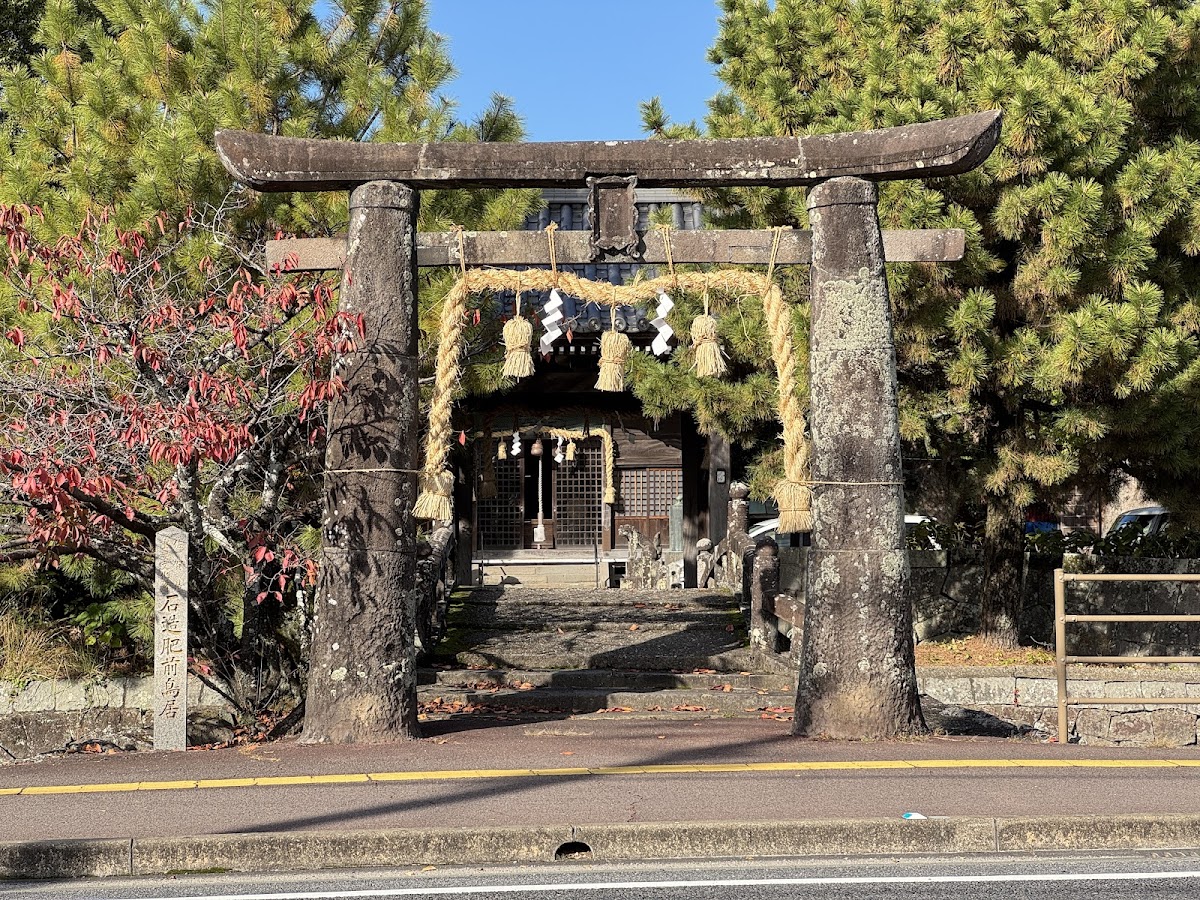
The Second Torii Gate, Built in 1603
A particularly noteworthy feature of the Honjo Shrine grounds is the second torii gate, built in 1603. This gate bears the inscription “Honjo Yodohime Daimyojin” and is a valuable stone structure that conveys the appearance of Honjo Shrine in the early Edo period.
The 8th year of the Keicho era (1603) was the year Tokugawa Ieyasu established the Edo Shogunate. The construction of this magnificent torii gate during this period speaks to the high social status of Honjo Shrine at the time.
Main Hall and Worship Hall
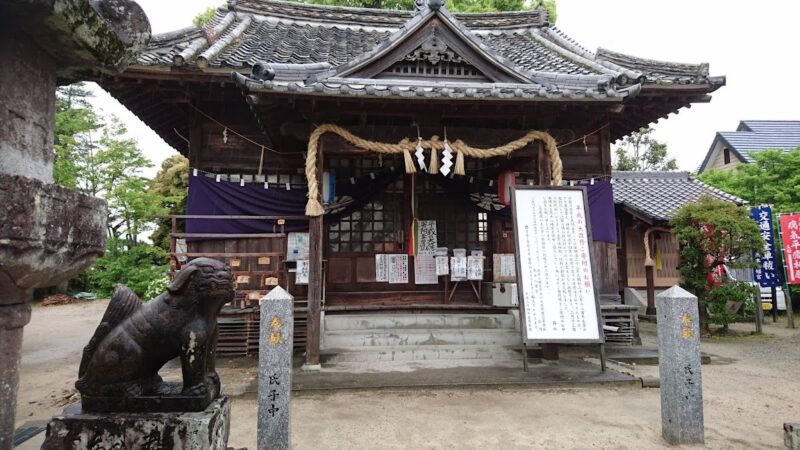
The current main hall has been maintained through historical reconstructions. The shrine grounds are enveloped in a tranquil atmosphere, and visitors are welcomed by a rich natural environment surrounded by ancient trees.
Stone Structures on the Shrine Grounds
Various stone structures from the Edo period to the Meiji period remain on the shrine grounds. The guardian lion-dogs, stone lanterns, and purification fountains are valuable cultural assets that show the forms of faith in each era.
Natural Environment
The grounds of Honjo Shrine offer a space where one can feel the nature of the Saga Plain. The trees on the grounds have grown over many years, displaying different expressions throughout the seasons. The sacred atmosphere is especially heightened during the seasons of fresh greenery and autumn leaves.
Annual Events and Festivals
Grand Festival
Honjo Shrine holds its annual grand festival every year. It’s an important opportunity for local people to gather, participate in traditional events such as portable shrine processions and sacred dances, and deepen the bonds of the local community.
Other Festivals
Various Shinto rituals are performed throughout the year, including the New Year’s visit, the Setsubun festival, and the summer purification ceremony. These events are valuable opportunities to pass on forms of faith that have continued since ancient times to the present day.
Access to Honjo Shrine
Access by Public Transportation
- From JR Saga Station: Approximately 15-20 minutes by bus, get off at the “Honjo” bus stop, then approximately 5 minutes on foot.
- Saga City Bus: Buses bound for Honjo are available.
Access by Car
- From Nagasaki Expressway Saga Yamato IC: Approximately 20 minutes.
- Parking: There is parking space for visitors on the shrine grounds.
Nearby Attractions
When visiting Honjo Shrine, we recommend also visiting other historical spots in Saga City. Visiting Yotohime Shrine and Yoga Shrine to experience the “Three Bodies as One” belief is also recommended.
Cultural Value of Honjo Shrine
Importance as Historical Materials
Historical materials concerning Honjo Shrine are important resources for studying the ancient history of the Saga region. In particular, the founding legend during the reign of Emperor Kinmei provides clues to understanding the form of shrine worship in northern Kyushu during the 6th century.
Center for Yodohime Worship Research
Along with Yotohime Shrine and Yoga Shrine, Honjo Shrine occupies an important position in the study of Yodohime worship (Toyotamahime-no-Mikoto worship). The relationships between the three shrines and the extent of their worship areas are valuable examples for understanding ancient water deity worship and agricultural deity worship.
Role in Local History
As evidenced by its designation as a local shrine in 1871 (Meiji 4), Honjo Shrine has served as a central shrine in the Honjo region, a spiritual pillar of the local community. Its role in the formation of local history, culture, and community is immeasurable.
Manners and Etiquette for Visiting a Shrine
Basic Worship Etiquette
- When passing through the torii gate: Bow before entering the shrine grounds.
- Purification at the water basin: Purify your left hand, right hand, and mouth in that order.
- Worship at the main hall: Two bows, two claps, and one bow are the basic rituals.
- Behavior within the shrine grounds: Worship quietly and with reverence.
Regarding Photography
Photography is generally permitted within the shrine grounds, but photography inside the main hall or during religious ceremonies should be avoided. Also, please be considerate of other worshippers.
The History of Honjo Shrine and Saga
Ancient Saga and the Yodohime Faith
The Saga Plain has been a region where rice cultivation has flourished since ancient times, and the blessing of water was essential to people’s lives. The faith in Toyotamahime-no-Mikoto (Yodohime) is deeply connected to these abundant water resources. The faith of people who were grateful for the blessings of water provided by the Chikugo River system and prayed for a bountiful harvest gave rise to shrines dedicated to Yodohime, including Honjo Shrine.
Honjo Shrine in the Medieval and Early Modern Periods
From the medieval to the early modern period, Honjo Shrine received the patronage of influential local figures and feudal lords. The construction of the torii gate in 1603 (Keicho 8) indicates its high social status during this period. During the Edo period, it was under the control of the Saga Domain and attracted the faith of the feudal lord and local people.
Developments Since the Modern Era
Following the Meiji Restoration and the separation of Shinto and Buddhism, Honjo Shrine underwent significant changes. It transitioned from a syncretic Shinto-Buddhist form to a purely Shinto shrine, and in 1871 (Meiji 4), it was designated a local shrine. Since then, it has continued to walk hand in hand with the local community as the tutelary deity of the region.
Summary | The Charm and Value of Honjo Shrine
Honjo Shrine is an ancient shrine said to have been founded in the 25th year of Emperor Kinmei’s reign (564 AD). It has a history of over 1400 years as one of the centers of Yodohime worship in the Saga region. It enshrines Toyotamahime-no-Mikoto, and its unique form of worship, considered a “three-in-one entity” along with Yotohime Shrine and Yoga Shrine, is a valuable example for understanding ancient shrine worship in northern Kyushu.
The stone structures within the shrine grounds, including the second torii gate built in 1603 (Keicho 8), the tranquil natural environment, and the fervent faith of the local people that continues to this day, demonstrate that Honjo Shrine is not merely a historical building, but a living place of worship.
When you visit Saga, be sure to visit Honjo Shrine and feel the spirit of the ancient Yodohime worship. Visiting it along with Yotohime Shrine and Yoga Shrine will allow you to gain a deeper understanding of Saga’s history and culture. As you clasp your hands together in the tranquil temple grounds, you will surely feel the prayers of people passed down through more than a thousand years, and their gratitude for the blessing of water, resonating in your heart.