Complete Guide to Ooso Shrine (Uchida, Aka Village, Fukuoka Prefecture) | History, Deities, Grounds, and Visiting Information
Ooso Shrine, located in Uchida, Aka Village, Tagawa District, Fukuoka Prefecture, is a shrine that preserves the history and faith of the Chikuhō region. This article provides a detailed introduction to Ooso Shrine, including its history, enshrined deities, highlights of the grounds, and proper worship etiquette.
Basic Information about Ooso Shrine
Location and Access
Location: 3538 Uchida, Akamura, Tagawa-gun, Fukuoka Prefecture
Phone Number: 0947-62-2151
Access Method: – By Car: Approximately 40 minutes from the Kyushu Expressway “Kokura Minami IC” or approximately 35 minutes from the “Yahata IC”
- By Public Transportation: Approximately 15 minutes on foot from JR Hitahikosan Line “Uchida Station”
- Parking: Parking space for visitors is available on the shrine grounds.
Akamura is a village rich in nature located in Tagawa-gun, in the eastern part of Fukuoka Prefecture. Ooso Shrine has been cherished by the residents as the local tutelary deity since ancient times.
Jurisdiction and Shrine Association Information
Ooso Shrine belongs to the Chikuhō area of the Fukuoka Prefectural Shrine Association and can be confirmed in the shrine search system. While several shrines share the same name within Fukuoka Prefecture (including those in Shima Keya, Itoshima City, and Uchida 296, Akamura), this article focuses on the Ooso Shrine located at Uchida 3538, Akamura.
History and Origins of Ooso Shrine
Founding and Ancient History
The founding of Ooso Shrine is believed to date back to the reign of Emperor Shomu (724-749). From the Nara period to the Heian period, a syncretic form of Shinto-Buddhist belief developed in this region, and two temples, Dainichi-ji and Zenpuku-ji, stood beside the shrine.
During the Kenji era (1275-1277), in the late Kamakura period, religious facilities were reorganized. Dainichi-ji moved to Tomari Village, and Zenpuku-ji moved to the village center and was renamed Kenji-ji. These changes during this period are thought to reflect the movement toward the separation of Shinto and Buddhism in the medieval period.
Connection to Myoken Faith
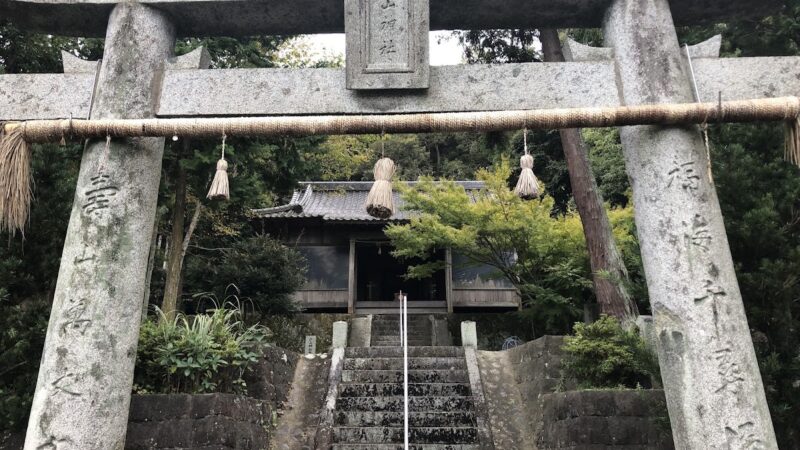
A distinctive aspect of Ooso Shrine is its deep connection to Myoken faith. The plaque above the second torii gate bears the inscription “Myoken-gu,” indicating that it was once a Myoken shrine dedicated to Myoken Bodhisattva (a Buddhist deity personifying the North Star and the Big Dipper), attracting many worshippers.
Myoken faith has been widely practiced in the Kyushu region as a guardian deity for safe voyages and directions, and as an object of prayer for bountiful harvests in agriculture. Many Myoken shrines existed in the Chikuhō region, and Ooso Shrine was one of them, serving as a center of local faith.
Changes Since the Early Modern Period
Throughout the Edo period, Ooso Shrine was revered as the local tutelary deity, but in 1854 (Kaei 7), it suffered a major disaster. That year, the shrine building and storehouse were destroyed by fire, along with many treasures and ancient documents. The loss of detailed historical records prior to this fire represents a significant loss for historical research.
Subsequently, due to the Meiji-era decree separating Shinto and Buddhism, Buddhist elements were removed, and the shrine’s name was unified to its current form, “Ōso Shrine.” Through this period, the shrine was refined into its present form.
Deities and Divine Virtues
Main Deities
Records indicate that Ōso Shrine enshrines Amaterasu Ōmikami, Izanagi-no-Mikoto, and Izanami-no-Mikoto.
Amaterasu Ōmikami:
The supreme deity in Japanese mythology, a goddess who personifies the sun. She is the ancestral deity of the Imperial family and revered as the tutelary deity of all Japanese people.
Izanagi-no-Mikoto and Izanami-no-Mikoto:
A divine couple of creator gods who gave birth to the land of Japan and many other gods. They are believed to bestow divine virtues such as national peace, matchmaking, and safe childbirth.
Divine Virtues and Faith
At Ooso Shrine, the following divine virtues are believed to be present, attracting worshippers with various wishes:
- Family Safety and Good Health: As the local tutelary deity, it protects all aspects of the lives of its parishioners.
- Abundant Harvests and Business Prosperity: Prayers for the development of local industries, primarily agriculture.
- Protection from Misfortune and Directional Misfortune: As a remnant of Myoken faith, it removes misfortunes related to direction.
- Matchmaking and Prosperity of Descendants: Strengthening family bonds through the worship of the creator god.
Highlights and Cultural Assets within the Shrine Grounds
Approach and Torii Gate
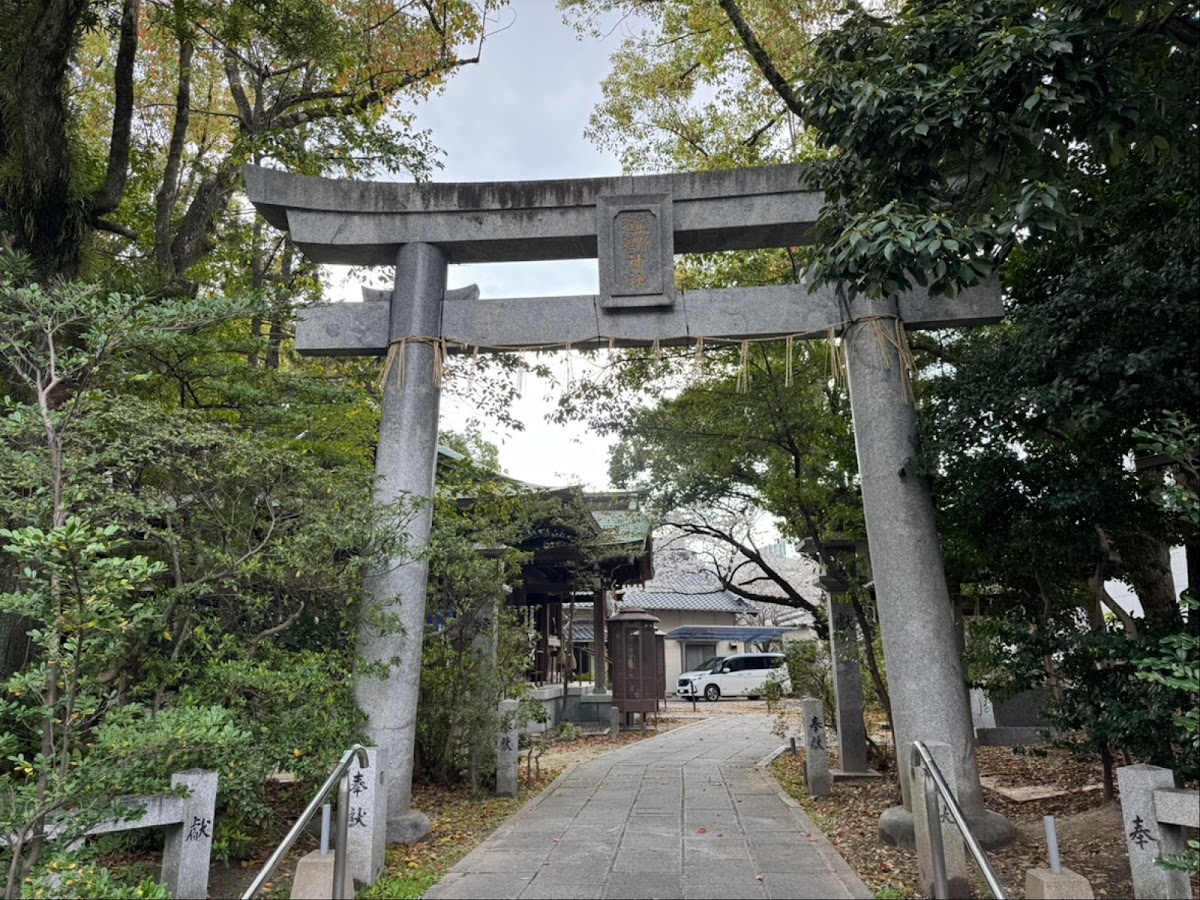
The grounds of Ooso Shrine are characterized by an approach that begins with the first torii gate.
First Torii Gate: The first torii gate, marking the entrance to the sacred area, is built in the Myojin-style. On either side of the torii gate stand guardian lion-dogs (komainu), one with its mouth open (A-gyo) and the other with its mouth closed (Un-gyo), welcoming visitors. These lion-dogs appear to be quite old, judging from their weathered state.
Second Torii Gate and Myoken-gu Shrine Plaque:
Proceeding along the path from the first torii gate, you will come to the second torii gate. This gate bears a plaque inscribed with “Myoken-gu,” making it an important historical relic that tells the story of the shrine’s history. It is a valuable historical document that conveys the form of worship before the Meiji-era separation of Shinto and Buddhism.
Giant Trees on the Path
Along the path stands giant trees, estimated to be several hundred years old. These trees are living witnesses that have watched over the long history of the shrine and are an important element in creating the sacred atmosphere of the grounds. A shimenawa (sacred rope) is stretched around the base of the giant trees, and they are revered as sacred trees.
While further detailed investigation is needed to determine the tree species and exact age, its majestic presence leaves a deep impression on visitors.
Worship Hall and Main Shrine
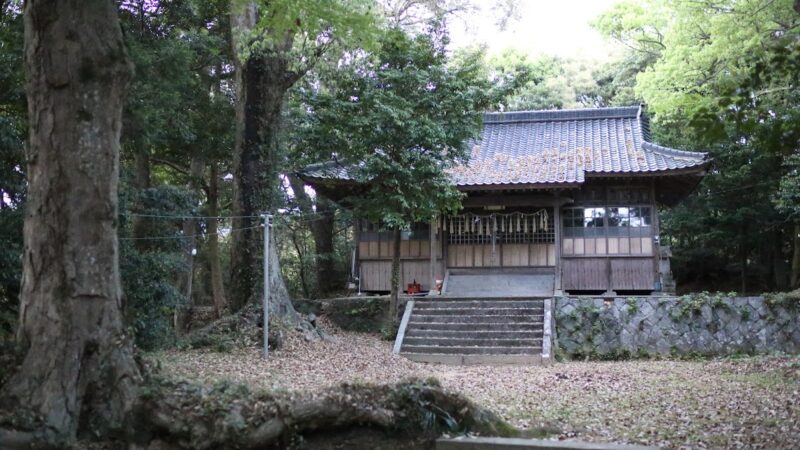
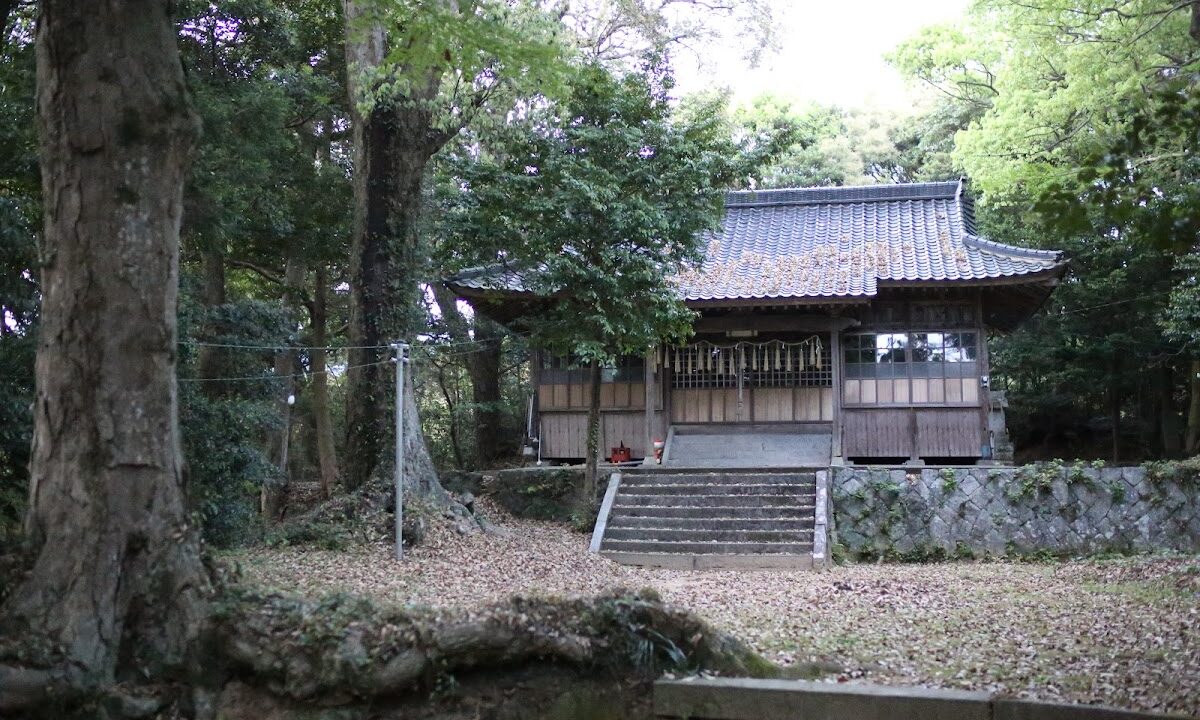
Worship Hall: Located at the end of the approach to the shrine, the worship hall is where worshippers offer their prayers. Numerous votive tablets (ema) donated by parishioners and devotees hang inside, testifying to the deep faith of the local people. These tablets bear various wishes, such as family safety, success in examinations, and recovery from illness.
Main Shrine: Situated behind the worship hall, the main shrine is the most sacred place where the enshrined deity is worshipped. Its architectural style and decorations reflect the characteristics of traditional shrine architecture in the region.
Stone Five-Storied Pagoda
A particularly noteworthy cultural asset within the grounds of Oosho Shrine is the stone five-storied pagoda standing beside the worship hall.
This stone five-storied pagoda is a valuable stone structure that shows the remnants of the syncretism of Shinto and Buddhism, and is estimated to have been built during the Edo period. While five-story pagodas are originally Buddhist architectural structures, their presence within the shrine grounds indicates their former function as Myoken-gu shrines.
The pagoda’s body may be inscribed with Sanskrit characters or Buddhist imagery, giving it an important place in the history of local stone art. Although some parts are weathered, the overall shape is well-preserved, demonstrating the high level of stonemasonry skill of the time.
Shrine Precincts
Within the grounds of Ooso Shrine, there are several subsidiary shrines dedicated to deities other than the main deity. These subsidiary shrines reflect the diverse beliefs of the region and cater to worshippers seeking various divine blessings.
The existence of these subsidiary shrines indicates that the shrine has functioned not merely as a religious facility, but as a spiritual center for the local community.
Shrine Visit Etiquette and Manners
Basic Shrine Visit Etiquette
When visiting a shrine, following traditional etiquette allows for a more reverent approach to the deities.
1. How to pass through a torii gate:
- A torii gate is the entrance to a sacred area. Bow before passing through the gate.
- The center of the approach to the shrine is considered the path of the gods, so it is polite to walk along the edge.
2. How to perform the purification ritual:
- Hold the ladle in your right hand and purify your left hand.
- Switch the ladle to your left hand and purify your right hand.
- Switch the ladle back to your right hand, receive water in your left hand, and rinse your mouth.
- Finally, hold the ladle upright and purify the handle.
3. Worship at the main hall:
- Stand in front of the offering box and bow slightly.
- Gently place your offering in the box.
- If there is a bell, ring it.
- Perform the “two bows, two claps, one bow” ritual.
- Bow deeply twice.
- Clap your hands twice at chest height.
- Finally, bow deeply once.
Life Rituals and Shrines
Shrines are deeply intertwined with the life rituals of the Japanese people. The Ooso Shrine has played an important role in various milestones in the lives of the people of the region.
First Shrine Visit (Hatsumiyamairi):
A baby’s first visit to the shrine is to pray for their healthy growth. This is typically done on the 31st day after birth for boys and the 33rd day for girls.
Shichi-Go-San (7-5-3 Festival):
At the milestones of 3, 5, and 7 years old, people express gratitude for their growth and pray for their future health.
Exorcism for Unlucky Years:
During the unlucky years, considered turning points in life, people are purified and cleansed of misfortune.
Wedding Ceremony:
A couple exchanges vows before the gods and begins their new life together under their watchful eyes.
History and Culture of Akamura
Overview of Akamura
Akamura is a small village located in Tagawa District, Fukuoka Prefecture, with a population of approximately 3,000. The village center is the Uchida district, where the Ooso Shrine is also located.
Village Office:
1188 Uchida, Akamura, Tagawa-gun, Fukuoka Prefecture 824-0432
Akamura is located in a naturally rich environment surrounded by mountains, and has long been a place where people have lived a life centered on agriculture. In recent years, efforts have also been made to promote tourism, taking advantage of its rich natural environment.
Local Rituals and Festivals
At Ooso Shrine, various rituals and festivals are held throughout the year. These rituals and local events are important opportunities to deepen the bond between parishioners and the shrine, and to strengthen the unity of the local community.
Spring Grand Festival:
This festival celebrates the arrival of spring and prays for a bountiful harvest. Local residents gather to offer thanks and prayers to the gods.
Autumn Grand Festival:
This festival, held in the autumn harvest season, is a festival to give thanks for the year’s harvest. A procession of portable shrines and offering ceremonies may also be held.
Monthly Festivals:
These festivals are held on a fixed day each month to pray for daily peace and safety.
These festivals strongly reflect the region’s traditional performing arts and customs, providing a valuable opportunity to pass on Akamura’s culture to future generations.
Shrine Culture of the Chikuhō Region
Characteristics of the Chikuhō Area
The Chikuhō region, where Ōsojinja Shrine is located, stretches from the central to eastern part of Fukuoka Prefecture and has a history of prosperity due to coal mining. Numerous shrines are scattered throughout this region, each with its own unique history and beliefs.
The Fukuoka Prefectural Shrine Association’s shrine search system allows you to check many shrines belonging to the Chikuhō area. Many are branch shrines of nationally known shrines such as Kasuga Shrine, Hachiman-gū, Hachiman Shrine, Hiyoshi Shrine, Hakusan Shrine, Kumano Shrine, and Suwa Shrine, demonstrating the diversity of Japanese shrine faith.
Other Ōsojinja Shrines in Akamura
Interestingly, there are multiple Ōsojinja Shrines within Akamura. According to records of the Fukuoka Prefectural Shrine Association, in addition to the Ooso Shrine at Uchida 3538, there is also an Ooso Shrine at Uchida 296 (Tel: 0947-62-2725).
Furthermore, the database of local guardian deities records the Ooso Shrine in the Aka district of Aka Village, and it is known to have several subsidiary shrines within its grounds, including Okunoin, Yamajingu Shrine, Hachimangu Shrine, Hiyokegu Shrine, and Sugagu Shrine.
The existence of these multiple Ooso Shrines demonstrates the deep faith in Shinto in Aka Village and the traditional form of worship where each settlement enshrines its own guardian deity.
Nearby Tourist Attractions
Nature and Historical Sites of Aka Village
When visiting Ooso Shrine, we recommend also exploring the rich nature and historical sites of Aka Village.
Nature of Aka Village: The village boasts beautiful streams and mountains, allowing visitors to enjoy nature throughout the seasons. The autumn foliage season is particularly spectacular.
Historical Buildings: Akamura is dotted with historical buildings, including old houses and stone structures dating back to the Edo period.
Other Attractions in the Chikuhō Region
Tagawa Area: This area boasts numerous museums showcasing the history of coal mining and many facilities of value as industrial heritage.
Mt. Hiko: Known as a sacred site for Shugendō (mountain asceticism), Mt. Hiko is relatively close to Akamura, offering opportunities for hiking and pilgrimage.
Frequently Asked Questions
Visiting Hours
Ōso Shrine is generally open for worship at any time during the day. However, if you wish to receive a Goshuin (shrine stamp) or prayer, it is recommended to confirm in advance by phone (0947-62-2151).
Parking
There is parking space for visitors on the shrine grounds, but it may be crowded during festivals. Please use it respectfully.
Goshuin (Shrine Stamps)
The availability of Goshuin may vary depending on the priest’s presence at the shrine. If you definitely want to receive a Goshuin (temple/shrine stamp), we recommend contacting the shrine in advance to confirm.
Prayer Requests
If you wish to request prayers for protection from evil, family safety, business prosperity, etc., you need to contact the shrine in advance to arrange a date and time. Please inquire directly regarding the offering fee (prayer fee).
Summary
Ooso Shrine (3538 Uchida, Akamura, Tagawa-gun, Fukuoka Prefecture) is a valuable shrine that preserves its ancient history and the remnants of Myoken worship. With its stone five-story pagoda, Myoken-gu shrine plaque, and giant trees along the approach, it offers many sights to see and continues to attract the faith of its parishioners as the local tutelary deity.
When visiting the Chikuhō region, we highly recommend visiting Ooso Shrine and finding peace of mind in its tranquil grounds. By experiencing the shrine’s history and culture, you will surely feel the depth of traditional Japanese faith.
The Ooso Shrine, which can be found in the Fukuoka Prefectural Shrine Association’s shrine search system, is an indispensable part of Akamura’s history and culture, and will continue to walk hand in hand with the local people. When visiting the shrine, it is important to observe proper etiquette and manners and to show respect to the deities.