Hachiman Shrine (Miyawaki-ko, Yoshimura-cho, Miyazaki City) Complete Guide | History, Deities, and Access Information
Hachiman Shrine, located in Miyawaki-ko, Yoshimura-cho, Miyazaki City, is a historic shrine founded in 1476 during the Muromachi period. Despite being located in the heart of the city, approximately 500 meters southeast of Miyazaki Station, it maintains a tranquil atmosphere. This article provides a detailed overview of Hachiman Shrine’s history, enshrined deities, grounds, access methods, and annual festivals.
History and Origins of Hachiman Shrine
Founding History
Hachiman Shrine was founded on June 13th, 1476 (according to the old lunar calendar), by Shimizu Nagato-no-kami in the present-day Miyawaki, Yoshimura-cho. Built with a divided spirit from Usa Shrine, this shrine boasts a long history of approximately 550 years.
During the late Muromachi period, the establishment of shrines was flourishing throughout Hyuga Province, and this Hachiman Shrine was one such example, welcomed as the guardian deity of the region. The background to Shimizu Nagato-no-kami’s invitation of a divided spirit from Usa Shrine reflects the flourishing Hachiman faith in samurai society and the deep faith of people praying for the peace and security of their community.
Former Shrine Rank and Historical Positioning
Under the Meiji-era shrine ranking system, it was classified as a village shrine and served as the central shrine of the Yoshimura district, attracting the faith of local residents. The village shrine rank was bestowed upon shrines that played an important role in their respective regions, demonstrating the significant role Hachiman Shrine played in the local community.
The Tradition of Yabusame
From the Meiji to Taisho periods, Yabusame (mounted archery) was performed at the Hachiman Shrine’s Mid-Autumn Festival. Yabusame is a traditional samurai ritual, a magnificent ceremony in which archers shoot at targets from galloping horseback. This tradition is an important historical fact indicating that Hachiman Shrine is a shrine dedicated to Hachiman-Ōkami, who has the characteristics of a god of war.
Deities Enshrined
The deities enshrined at Hachiman Shrine are the following three:
Emperor Ōjin
Emperor Ōjin, the principal deity, is known as the 15th Emperor and is enshrined as Hachiman-Ōkami at Hachiman shrines throughout Japan. He has been worshipped since ancient times as a god of military fortune and a god of national protection, and has received deep reverence, especially in samurai society. He is also said to have made contributions to industrial development and cultural advancement, and is known as a god with a wide range of divine virtues.
Emperor Chūai
Emperor Chūai, the 14th Emperor, is the father of Emperor Ōjin. He was the husband of Empress Jingū and is also known as a brave warrior.
Empress Jingu
Empress Jingu, the mother of Emperor Ojin, is a legendary empress known for the legend of her conquest of the Three Kingdoms of Korea. She is also worshipped as a goddess of safe childbirth and child-rearing, and is deeply revered by women.
These three deities are enshrined together as the “Three Gods of Hachiman,” and are believed to bestow various divine blessings, including military success, family safety, business prosperity, and safe childbirth and child-rearing.
Shrine Grounds and Highlights
Shrine Grounds Layout
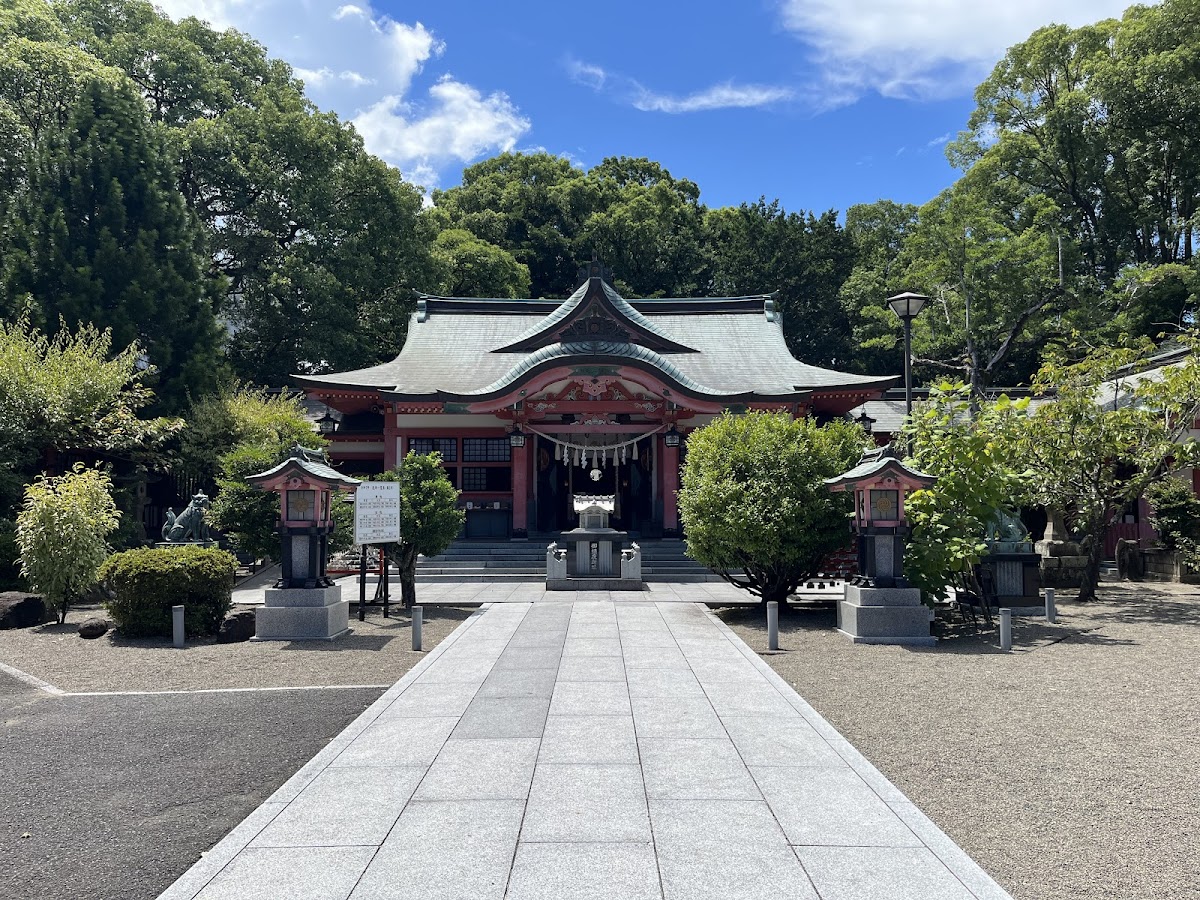
Despite being located in a residential area of Miyazaki city, the grounds of Hachiman Shrine maintain a tranquil atmosphere. Passing through the torii gate, a path leads to the worship hall and the main shrine.
Worship Hall and Main Shrine
The worship hall is neatly maintained as a place for worshippers to offer prayers. The main shrine, located behind it, houses the enshrined deities and preserves the traditional style of shrine architecture. The main shrine building cannot be seen from the worship hall, but it is carefully preserved as a sacred space.
Atmosphere of the Shrine Grounds
Despite being located in an urban area, the shrine grounds maintain a tranquil atmosphere, allowing worshippers to escape the hustle and bustle of everyday life and offer prayers in peace. It is also a popular place of relaxation for local residents, and people can be seen visiting during their morning and evening walks.
Location and Address
Official Address: 2133 Miyawaki-ko, Yoshimura-cho, Miyazaki City, Miyazaki Prefecture 880-0841
Hachiman Shrine is located in the Yoshimura-cho area, in the heart of Miyazaki City. The place name “Miyawaki” means “near the shrine,” indicating that a shrine has existed in this area since ancient times.
Access Information
Nearest Station and Line
JR Nippo Main Line, Miyazaki Station
The nearest station to Hachiman Shrine is Miyazaki Station on the JR Nippo Main Line. Miyazaki Station is the central station of Miyazaki Prefecture, offering convenient access from both within and outside the prefecture.
- Distance from Miyazaki Station: Approximately 500 meters southeast
- Walking Access: Approximately 7-10 minutes on foot from Miyazaki Station
- Route from the Station: Exit the east exit of Miyazaki Station and head straight southeast. After passing through a residential area, you will arrive at Hachiman Shrine.
Miyazaki Station is a major station where express trains also stop, making it easily accessible for visitors from outside the prefecture. Its convenient location within walking distance makes it easy to stop by during Miyazaki sightseeing.
Nearest Bus Stops and Routes
You can also use Miyazaki Kotsu bus routes operating within Miyazaki City.
Main Bus Stops:
- “Yoshimura-cho” bus stop: A few minutes’ walk to the shrine
- “Miyazaki Station” bus stop: Approximately 10 minutes’ walk to the shrine
Several bus routes departing from and arriving at Miyazaki Station pass through the surrounding area. If you plan to use the bus, we recommend checking the Miyazaki Kotsu route map and timetable in advance.
Access by Car
From Miyazaki IC on the Miyazaki Expressway: Approximately 15 minutes
If you are traveling by car, follow the general road conditions of central Miyazaki City. Since the area around the shrine is residential, we recommend checking the availability and space for parking in advance.
Festivals and Events
Major Annual Festivals
Hachiman Shrine holds various festivals throughout the year.
Annual Grand Festival
The Annual Grand Festival, the most important festival of Hachiman Shrine, has traditionally been held around the 13th day of the sixth month of the lunar calendar (the day of its founding). Currently, it is held according to the Gregorian calendar, and local residents gather to pray for the prosperity of the shrine and the peace of the community.
Fifteenth Night Festival
The Fifteenth Night Festival, which once featured Yabusame (mounted archery), continues as a festival to give thanks for the autumn harvest. This is a traditional event held in conjunction with the Mid-Autumn Festival on the 15th day of the eighth month of the lunar calendar.
Other Annual Events
- New Year’s Day Festival (January 1st): Celebrating the New Year and praying for peace throughout the year
- Setsubun Festival (around February 3rd): Traditional events such as bean-throwing
- Summer Purification Ceremony (end of June): A Shinto ritual to purify oneself of the impurities accumulated over the past six months
- Autumn Festival: A festival to give thanks for the autumn harvest
- Niiname-sai Festival (November 23rd): A festival to offer the new harvest to the gods
- Great Purification Ceremony (end of December): A Shinto ritual to purify oneself of the impurities accumulated over the year
Specific dates and contents of festivals may vary from year to year, so it is recommended to contact the shrine directly when planning your visit.
About Goshuin (Shrine Seals)
Goshuin (shrine seals) are available at Hachiman Shrine. In recent years, it has become possible to obtain electronic goshuin (temple/shrine stamps), accommodating modern worship styles.
Goshuin are popular among many worshippers as proof of their visit to the shrine and as a memento of their journey. Bringing your goshuincho (stamp book) will allow you to receive a unique goshuin specific to Hachiman Shrine.
Please check with the shrine office regarding goshuin issuance hours and fees upon your visit.
Manners and Etiquette for Worship
Basic Worship Etiquette
There are traditional manners for visiting shrines. When visiting Hachiman Shrine, please observe the following basic manners.
- Bow before passing through the torii gate: This is a greeting before entering the sacred area.
- Walk along the edge of the path: The center is considered the path of the gods.
- Purify your body and mind at the water basin: Purify your left hand, right hand, and mouth in that order.
- Bow before the main hall: Two bows, two claps, and one bow is the basic form.
- Exit quietly: Bow again when leaving the torii gate.
Appropriate attire for worship
There are no specific dress code requirements, but please wear clean clothing appropriate for a sacred place. It is advisable to avoid revealing or overly casual clothing.
Nearby attractions
Differences from Miyazaki Hachimangu Shrine
There is another Hachimangu shrine in Miyazaki City called “Miyazaki Hachimangu Shrine,” located in Miyata-cho. This shrine has a longer history, having been founded during the Eisho era of the Heian period, and is affectionately known as “Hachiman-sama,” the guardian shrine of Miyazaki City. Please note that this is a different shrine from the Hachiman Shrine in Yoshimura-cho. When visiting, please check the address to avoid any confusion. A “Hachiman Shrine pilgrimage” visiting both shrines would also be an interesting experience.
Sightseeing in Miyazaki City Center
Hachiman Shrine is located within walking distance of Miyazaki Station, making it easy to visit in conjunction with sightseeing in Miyazaki City center.
- Miyazaki Jingu: A representative shrine of Miyazaki City, dedicated to Emperor Jimmu
- Tachibana-dori: Miyazaki City’s main street, convenient for shopping and dining
- Phoenix Natural Zoo: A recommended tourist spot for families
- Aoshima Shrine: A mystical shrine surrounded by the sea
The Charm of Hachiman Shrine and Recommendations for Visiting
Hachiman Shrine in Miyawaki-ko, Yoshimura-cho, Miyazaki City, is a precious place of worship that maintains a tranquil atmosphere despite being located in the city center. Despite its nearly 550-year history, this shrine warmly welcomes modern visitors, making it popular not only with locals but also with visitors from outside the prefecture.
Its convenient location, easily accessible on foot from Miyazaki Station, is one of its attractions, allowing for a casual visit during sightseeing. As a Hachiman shrine with Emperor Ojin as its main deity, it is believed to offer diverse blessings, including military success, family safety, and business prosperity, attracting visitors with various wishes.
Spending a quiet prayer in its historic grounds will allow you to escape the hustle and bustle of everyday life and enjoy a peaceful time. When you visit Miyazaki, be sure to stop by Hachiman Shrine.
Summary
Hachiman Shrine (Miyawaki-ko, Yoshimura-cho, Miyazaki City) is a historic shrine founded in 1476 (Bunmei 8) by inviting a divided spirit from Usa Shrine. This shrine, dedicated to Emperor Ōjin, Emperor Chūai, and Empress Jingū, has been a center of local faith for approximately 550 years.
Its convenient location, just a 7-10 minute walk from Miyazaki Station, makes it easily accessible for visitors. While it boasts a tradition as a shrine dedicated to war gods, including the dedication of Yabusame (mounted archery) during the Meiji and Taisho periods, it now functions as a place of relaxation for local residents and an open shrine welcoming visitors from outside the prefecture.
Various festivals are held throughout the year, with the annual grand festival and the full moon festival being particularly important local events. The shrine also offers Goshuin (stamped seals), making it a recommended destination for those who enjoy visiting shrines.
If you have the opportunity to visit Miyazaki, please be sure to pay your respects at this historic and traditional Hachiman Shrine. It will be a precious time to calm your mind in its tranquil grounds and receive the divine blessings of its enshrined deities.