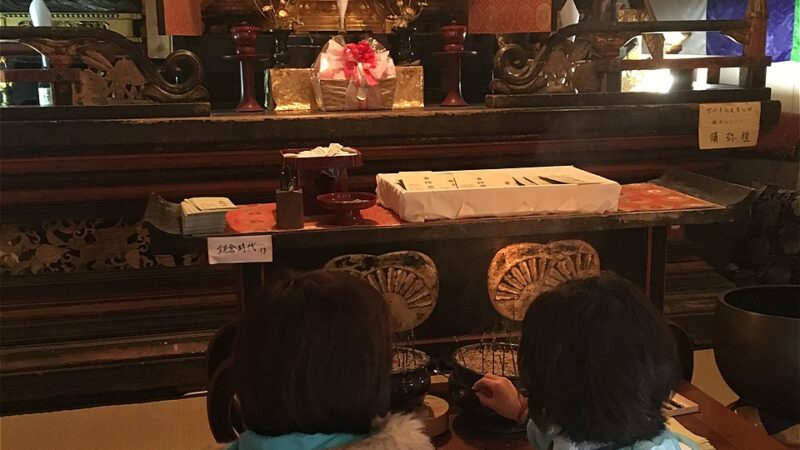
Hokkedake Yakushiji Temple (Miyazaki Prefecture) Complete Guide | History and Visiting Information for Japan’s Three Great Yakushi Temples
Hokkedake Yakushiji Temple, nestled on the slopes of Mt. Hokkedake in Kunitomi-cho, Higashimorokata-gun, Miyazaki Prefecture, is a renowned temple known nationwide as one of Japan’s Three Great Yakushi Temples, alongside Yoneyama Yakushi (Niigata Prefecture) in Echigo and Horaiji Temple (Aichi Prefecture) in Mikawa. Located approximately 500 meters above sea level, this ancient temple, with its breathtaking views and over 1300 years of history, continues to fascinate many visitors.
History and Origin of Hokkedake Yakushiji Temple
Origin of Founding
Hokkedake Yakushiji Temple is said to have been founded in 718 AD (Yoro 2). According to tradition, it began when a high-ranking monk built a hall on the summit of Mt. Shakagatake (830.6 meters above sea level) and enshrined a statue of Yakushi Nyorai (Medicine Buddha). Originally known as “Kinpusan Chokiin,” it flourished as a center of mountain worship.
The mountain’s name, Shakagatake, itself originates from a legend that a statue of Shakyamuni Buddha was enshrined on its summit when Hokkedake Yakushiji Temple was built, reflecting its history as a place of worship where the temple and the mountain were integrated.
Status as one of Japan’s Three Yakushi Temples
Hokkedake Yakushiji Temple is counted among Japan’s “Three Yakushi Temples,” along with Yoneyama Yakushi in Niigata Prefecture and Horaiji Temple in Aichi Prefecture. Yakushi Nyorai (the Medicine Buddha) is a deity revered by people praying for healing and longevity, and Hokkedake Yakushiji Temple, in particular, has long been visited by many worshippers seeking its efficacy in “healing illnesses.”
As a Zen Buddhist temple, it serves as a spiritual haven for those seeking mental healing and physical health, and its faith continues to be passed down to the present day.
The Legend of Izumi Shikibu
When discussing Hokkedake Yakushiji Temple, the legend surrounding Izumi Shikibu, a female poet of the Heian period, is indispensable. The legend of Izumi Shikibu’s pilgrimage adds profound color to the temple’s history.
According to tradition, Izumi Shikibu visited this place and prayed to Yakushi Nyorai (the Medicine Buddha), and this story has been passed down to this day. This legend indicates that Hokkedake Yakushiji Temple was not merely a local temple, but a historically significant sacred site with connections to the aristocratic culture of the capital.
Cultural Properties and Highlights
Prefectural Designated Tangible Cultural Properties
Hokkedake Yakushiji Temple preserves numerous important cultural properties designated by Miyazaki Prefecture. Of particular note are the “Wooden Statues of Yakushi Nyorai and Two Attendant Bodhisattvas.” This group of Buddha statues has been the principal image of worship throughout its long history and is protected as a valuable cultural property possessing outstanding sculptural beauty.
The Yakushi Nyorai (Medicine Buddha) statue is enshrined in the center, flanked by Nikko Bosatsu (Sunlight Bodhisattva) and Gekko Bosatsu (Moonlight Bodhisattva) on either side. These Buddhist statues, having withstood the test of time, are precious legacies that convey the skill and faith of the Buddhist sculptors of the time.
Hokkedake Yakushiji Stone Pagodas
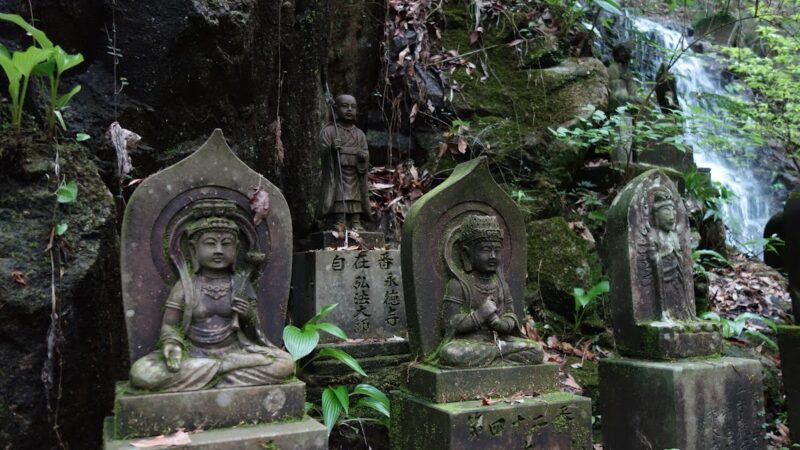
In the garden on the north side of Hokkedake Yakushiji Temple, a group of stone pagodas of high historical value stands. These pagodas are designated cultural properties of Kunitomi Town and are important historical sites that tell the story of the temple’s long history.
Particularly noteworthy are the uniquely shaped stone pagodas known as “Muhōtō” (seamless pagodas). These Muhōtō, with their rounded tops, were erected as tombs for successive chief priests and exhibit a style characteristic of Zen Buddhist temples. The group of stone pagodas is located in a scenic spot on the slopes of Mount Hokkedake, allowing visitors to feel the presence of the monks of yesteryear in a tranquil atmosphere.
Temple Grounds and Scenery
One of the greatest attractions of Hokkedake Yakushiji Temple is the spectacular view it offers from its location. From the temple grounds, located on a mountainside at an altitude of approximately 500 meters, you can see the townscape of Kunitomi and even the distant Hyuga Sea. On clear days, a magnificent panorama of the Miyazaki Plain unfolds below.
The temple grounds are surrounded by a rich natural environment, displaying different expressions throughout the seasons. You can enjoy the fresh greenery in spring, the deep green in summer, the vibrant autumn leaves, and the crisp winter air and views, each offering a unique charm depending on the time of year you visit.
Annual Events and the Hokkedake Yakushiji Grand Festival
Overview of the Hokkedake Yakushiji Grand Festival
The most important annual event at Hokkedake Yakushiji Temple is the “Hokkedake Yakushiji Grand Festival,” held on the weekend closest to the 8th and 9th of the first month of the lunar calendar. This grand festival is an important New Year’s event for the local people, attracting many worshippers from within and outside the prefecture.
On the day of the festival, numerous stalls line the approach to the temple, creating a lively atmosphere. Stalls selling local specialties, lucky charms, and food line the streets, allowing visitors to enjoy the festival atmosphere alongside their worship.
Goma Prayer Ceremony
The central event of the Hokkedake Yakushiji Grand Festival is the Goma prayer ceremony. It is usually held twice a day, from 11:00 AM to 12:00 PM and from 2:00 PM to 3:00 PM.
The Goma prayer ceremony is an esoteric Buddhist ritual in which worldly desires are burned away by fire, and wishes are granted. Along with the chanting of sutras by the monks, wooden prayer sticks, each containing the wishes of the worshippers, are thrown into the fire, and the prayers are carried to heaven with the rising smoke. This solemn ceremony is an important opportunity for many worshippers to pray for good health and safety for their families throughout the year.
Basic Information and Access
Location and Contact Information
Address: 4050 Fukatoshi, Kunitomi-cho, Higashimorokata-gun, Miyazaki Prefecture
Phone Number: 0985-78-1004
Visiting Hours: Grounds are freely accessible
Holidays: Open every day
Admission Fee: Free
Access Method
Hokkedake Yakushiji Temple is located approximately 10 kilometers west of the center of Honjo, Kunitomi-cho, along the Prefectural Road Hogatake-Honjo Line.
Access by Car:
- Approximately 40 minutes from the center of Miyazaki City
- Approximately 20 minutes from the Miyazaki Expressway “Kunitomi Smart IC”
- Parking available (for visitors)
Public Transportation:
Public transportation access is limited, so visiting by car is recommended. If using a taxi, it takes approximately 15 minutes from the center of Kunitomi-cho.
Because the route involves climbing a mountain road, extra caution is required when driving, especially in winter or rainy weather. While the mountain road has many curves, it is paved and accessible by regular vehicles without issue.
Points and Precautions for Visiting the Temple
Etiquette for Visiting the Temple
Hokke-dake Yakushi-ji Temple is a Zen Buddhist temple. Please keep the following points in mind when visiting:
- Bow at the Temple Gate: Before entering the temple grounds, bow at the temple gate.
- Praying at the Main Hall: Join your hands in prayer in front of the main hall and offer your prayers quietly.
- Temple Stamp: If you wish to receive a temple stamp, you can request one at the temple office after your visit.
- Photography: Photography is permitted within the temple grounds, but please refrain from photographing the interior of the main hall or the Buddha statues.
Clothing and Items to Bring
As the temple is located in the mountains, we recommend the following preparations:
- Comfortable walking shoes: The temple grounds have slopes and stone steps, so comfortable walking shoes such as sneakers are recommended.
- Seasonal clothing: Temperatures are lower in the mountains than in the lowlands, so be sure to dress warmly, especially in autumn and winter.
- Drinking water: Remember to stay hydrated, especially in summer.
- Rain gear: The weather in mountainous areas can change quickly, so a folding umbrella is recommended.
Best Time to Visit
Hokkedake Yakushiji Temple is open year-round, but the best times to visit are:
- Spring (March-May): The fresh greenery is beautiful, the weather is mild, and it’s ideal for visiting.
- Autumn (October-November): The autumn leaves are at their peak, and the mountain scenery is at its most beautiful.
- Grand Festival Day: The weekend closest to the 8th and 9th of the first month of the lunar calendar allows you to enjoy the festival atmosphere.
Nearby Attractions
Shakagatake Mountain
Shakagatake Mountain (elevation 830.6 meters), towering behind Hokkedake Yakushiji Temple, is located in the southernmost part of the Kyushu Mountains. A well-maintained hiking trail leads to the summit, offering a 360-degree panoramic view. Many visitors combine trekking with a visit to Hokkedake Yakushiji Temple.
Tourist Attractions in Kunitomi Town
Kunitomi Town, home to Hokkedake Yakushiji Temple, also boasts other attractive tourist spots:
- Honjo Kofun Cluster: Historical sites that tell the story of ancient history
- Kunitomi Town Agricultural Products Direct Sales Market: You can purchase fresh local vegetables and specialty products
- Hot Spring Facilities: There are also nearby day-trip hot spring facilities where you can relax after visiting the temple.
The Charm and Faith of Hokkedake Yakushiji Temple
Benefits of Healing Illness
Yakushi Nyorai, also known as the “King of Medicine,” is worshipped as a Buddha who heals illnesses and protects health. Hokkedake Yakushiji Temple is particularly known for its benefits in healing illnesses, and people suffering from illness have prayed there for recovery since ancient times.
Even today, worshippers continue to visit the temple praying for health, longevity, and recovery from illness, and this faith has been passed down through generations.
A Place of Healing
Hokkedake Yakushiji Temple is not merely a place to pray for recovery from illness, but also a haven for those seeking inner peace. The tranquil mountain setting, the magnificent scenery stretching out below, and the atmosphere of the temple grounds, steeped in long history, provide visitors with profound tranquility.
Its spirituality as a Zen Buddhist temple also offers a valuable opportunity for calming the minds of those living in today’s stressful society.
Summary
Hokkedake Yakushiji Temple boasts a history of over 1300 years, founded in 718 AD, and is a renowned temple known nationwide as one of Japan’s three major Yakushi temples. It possesses numerous valuable cultural assets, including a wooden statue of Yakushi Nyorai and its two attendant figures (designated tangible cultural properties of Miyazaki Prefecture), and a group of stone pagodas, including the tombs of successive chief priests.
It is a historical sacred site associated with the legend of Izumi Shikibu, and many worshippers visit seeking blessings for recovery from illness. The Hokkedake Yakushiji Grand Festival, held on the weekend closest to the 8th and 9th of the first month of the lunar calendar, is a lively event cherished by locals, featuring goma (fire ritual) prayers and numerous stalls lining the temple grounds.
The breathtaking views from its location on the slopes of Mount Hokkedake, approximately 500 meters above sea level, are a major attraction. The panoramic views, stretching from the town of Kunitomi to the Hyuga Sea, soothe the souls of visitors. When visiting Miyazaki Prefecture, be sure to visit this sacred site where history and nature harmonize.
The temple grounds are open year-round and free of charge. Despite its relatively accessible location—approximately 40 minutes by car from central Miyazaki City—it offers a tranquil mountain environment where one can refresh both mind and body, making it a representative spiritual and cultural hub of Miyazaki Prefecture.