Gyōshinji Temple (Tsuno-cho, Koyu-gun, Miyazaki Prefecture) Complete Guide
Gyōshinji Temple, located in Tsuno-cho, Koyu-gun, Miyazaki Prefecture, is a Shingon Buddhist temple of the Koyasan sect, situated on a hill overlooking the Hyūga Sea with the Osuzuyama Mountains as a backdrop. It is known as the 35th temple of the Kyushu 88 Sacred Sites and 108 Temple Pilgrimage, attracting many worshippers and pilgrims. This article comprehensively introduces everything you need to know before visiting Gyōshinji Temple, from its history and highlights to information on temple stamps and access methods.
Basic Information about Gyōshinji Temple
Temple Overview
Official Name: Henjōzan Gyōshinji Temple
Sect: Kōyasan Shingon Buddhism
Principal Image: Seated statue of Dainichi Nyorai of the Vajradhatu Mandala
Pilgrimage Site: 35th temple of the Kyushu Eighty-Eight Sacred Sites and One Hundred and Eight Sacred Sites
Address: 11830 Kawakita, Tsunō-chō, Koyu-gun, Miyazaki Prefecture 889-1201
Phone Number: Please contact the temple office
Location and Environment
Gyōshinji Temple is located in the Kawakita area of Tsunō-chō, Koyu-gun, Miyazaki Prefecture, on a hill at the foot of the Osuzuyama Mountains. From the temple grounds, you can enjoy a panoramic view of the Hyūga Sea, making it an excellent location to admire the sunrise over the Hyūga Sea in the morning and the beautiful sunset in the evening. The surrounding area is rich in nature, and it is a beloved place for peaceful worship in a tranquil atmosphere.
History and Origins of Gyōshinji Temple
Circumstances of its Founding
There are several records regarding the founding of Gyōshinji Temple. According to the main records, it was founded in 1909 (Meiji 42) by Abbot Takahashi Kankō. However, other documents state that it was founded in 1924 (Taisho 13) by Abbot Gyōshin, and there are various theories regarding the details of its founding.
In any case, it is certain that it was established as a center of Shingon Buddhism in this region during the late Meiji and Taisho periods. Since its founding, it has developed as a place of worship for local residents and as a training ground for transmitting the teachings of Shingon Esoteric Buddhism.
Progress Towards the Present
Since its founding, Gyōshinji Temple has undergone several renovations and improvements to reach its present state. Of particular note is the completion of the current main hall in 1998 (Heisei 10). The construction of this new main hall has created a system that can welcome a larger number of worshippers. Even today, the sound of the temple bell ringing at 6 AM and 6 PM has become a local tradition. In the morning, the temple grounds, bathed in the sunlight of the Hyuga Sea, are enveloped in a sacred atmosphere, while in the evening, they offer a time of tranquility and peace.
Connection to the Kyushu 88 Sacred Sites
Gyōshinji Temple is designated as the 35th temple of the Kyushu 88 Sacred Sites (108 Sacred Sites). This pilgrimage route is modeled after the Shikoku 88 Sacred Sites and covers sacred sites in the Kyushu region, spanning seven prefectures: Fukuoka, Saga, Nagasaki, Kumamoto, Oita, Miyazaki, and Kagoshima.
As one of the temples within Miyazaki Prefecture, it attracts many pilgrims from both within and outside the prefecture, and a significant number of visitors seek its Goshuin (temple stamp). Its location in Tsuno Town makes it an important base along the pilgrimage route along the Hyuga Sea.
Principal Image and Faith
Vajradhatu Dainichi Nyorai Seated Statue
The principal image of Gyōshin-ji Temple is a Vajradhatu Dainichi Nyorai seated statue. Dainichi Nyorai is the most important Buddha in Shingon Buddhism and is considered to embody the very truth of the universe. The Vajradhatu refers to the mandala world representing the aspect of wisdom, and the Vajradhatu Dainichi Nyorai symbolizes the “completion of wisdom.”
In Shingon Esoteric Buddhism, a mandala-like worldview centered on Dainichi Nyorai is emphasized, and practitioners aim for unification with Dainichi Nyorai. At Gyōshin-ji Temple, faith and practice centered on this principal image are also carried out.
Teachings of the Kōyasan Shingon Sect
The Kōyasan Shingon sect, to which Gyōshin-ji Temple belongs, is a sect of Shingon Esoteric Buddhism founded by Kōbō Daishi Kūkai. The head temple is Kongobu-ji Temple on Mount Koya in Wakayama Prefecture, and it is one of the major Buddhist sects in Japan, with approximately 3,600 branch temples nationwide.
A characteristic feature of Shingon Buddhism is the teaching of “Sokushin Jobutsu,” that is, the doctrine that one can become a Buddha in this very body. Its distinctive practice is the “Three Mysteries Empowerment” method, which involves chanting mantras, visualizing mandalas, and forming mudras.
Highlights of the Temple Grounds
Main Hall
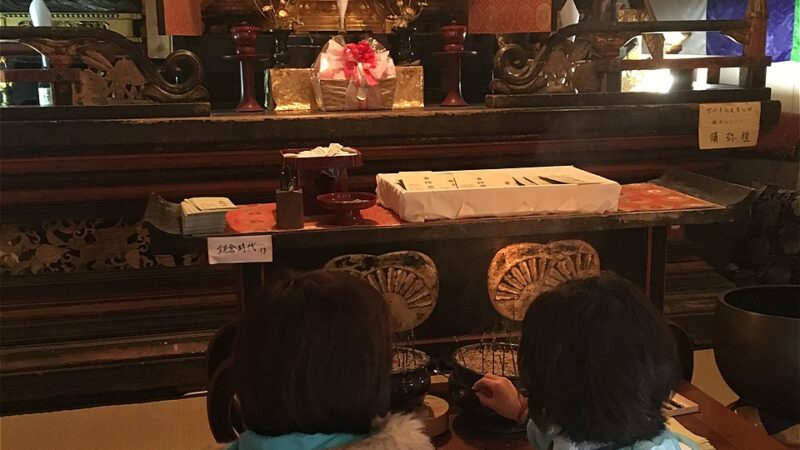
Completed in 1998, the main hall incorporates modern architectural styles while maintaining the beauty of traditional temple architecture. Inside, the principal image, a seated statue of Dainichi Nyorai of the Vajradhatu Mandala, is enshrined, creating a solemn atmosphere. Visitors can chant sutras and meditate in the main hall.
Temple Bell
The temple bell at Gyōshinji Temple is rung every morning and evening at 6:00 AM, its sound resonating throughout the surrounding area. This bell’s sound is not only a way for local residents to tell the time, but also a sound cherished for its ability to purify the soul. In Buddhism, the sound of the temple bell is considered a symbol of dispelling worldly desires and leading to enlightenment.
View from the Temple Grounds
One of the great attractions of Gyōshinji Temple is the magnificent view it offers, thanks to its elevated location. From the temple grounds, you can enjoy a panoramic view of the Hyūga Sea, and on clear days, you can see all the way to the horizon. The sight of the sun rising over the Hyūga Sea is particularly breathtaking, creating a mystical atmosphere reminiscent of the “dance of the phoenix.”
At dusk, you can admire the beautiful sunset as the sun sinks into the sea, making it a perfect place to calm your mind at the end of the day.
Shiramizu Falls
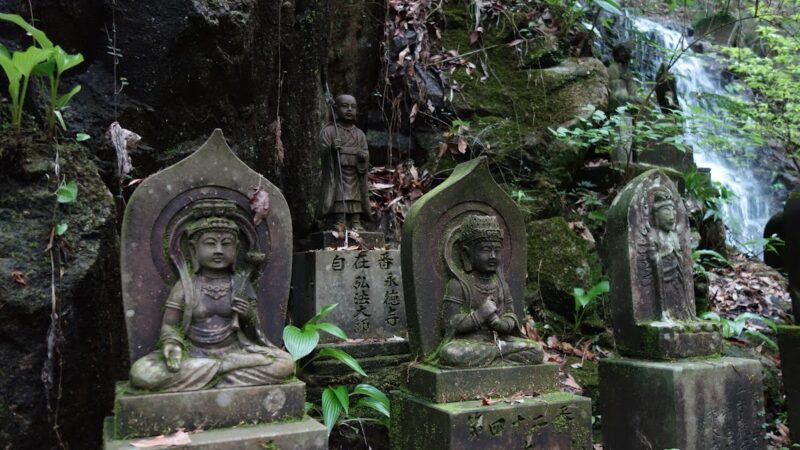
Near Gyōshinji Temple is a waterfall called “Shiramizu Falls,” known as a spot where one can experience the beauty of nature. This waterfall is worth visiting in conjunction with a visit to Gyōshinji Temple, and the clear flow of water is said to have a purifying effect on the mind and body.
Goshuin (Temple Seal) Information
Issuance of Goshuin
Gyōshinji Temple issues goshuin (temple seals) to visitors. As the 35th temple of the Kyushu Eighty-Eight Sacred Places and One Hundred and Eight Temples Pilgrimage, the goshuin is a valuable record for pilgrims. The goshuin includes the temple name, the name of the principal deity, and the temple number, written in ink and stamped with a red seal.
Manners When Receiving a Goshuin
Goshuin are not merely stamps, but are given as proof of worship. Please observe the following manners:
- Always pray before receiving a Goshuin (temple stamp): It is important to pray with sincerity in the main hall.
- Prepare a Goshuincho (stamp book): Use a dedicated Goshuincho, not a notebook or blank paper.
- Prepare the offering: Generally, 300 to 500 yen is a guideline.
- Use polite language: Ask politely, “May I receive a Goshuin?”
- Wait quietly while the stamp is being written: Show respect to the person writing the stamp and wait quietly.
Annual Events and Memorial Services
Regular Memorial Services
Gyōshinji Temple, as a Shingon Buddhist temple, holds various memorial services and events. The main annual events include the following:
- New Year’s Day (First Three Days): New Year’s prayer service
- Spring Equinox Service: Ancestor memorial service (around the spring equinox in March)
- Obon Service: Obon festival (August)
- Autumn Equinox Service: Ancestor memorial service (around the autumn equinox in September)
- Year-End and New Year Events: New Year’s Eve bell ringing, etc.
Monthly Events
Regular monthly events such as Goma fire rituals and sutra copying sessions are sometimes held. Please inquire with the temple office in advance for detailed dates.
Access Information
Access by Train
Nearest Station: JR Nippo Main Line “Tsuno Station”
- Walking from Tsuno Station: Approximately 45-50 minutes (approximately 2.4km-1.8km)
- Taxi from Tsuno Station: Approximately 10 minutes
If walking from the station, it’s a bit of a distance, so we recommend allowing ample time for your visit. Especially in summer, the sun is strong, so please bring a hat and drinks.
Access by Bus
The nearest bus stop is “Iwayama Bus Stop,” from which it’s approximately a 3-minute walk (approximately 173m). Miyazaki Kotsu bus routes are available, but the number of buses is limited, so we recommend checking the timetable in advance.
Access by Car
If using the Higashi-Kyushu Expressway:
- Approximately 15 minutes from “Tsuno IC”
- Accessible via National Route 10
Parking: There is parking space on the temple grounds, but we recommend checking the details in advance.
Address and Navigation
11830 Kawakita, Tsuno-cho, Koyu-gun, Miyazaki Prefecture 889-1201
Entering “Gyōshinji Tsuno-cho” or the above address into your car navigation system or smartphone map app will display the exact location.
Nearby Tourist Attractions
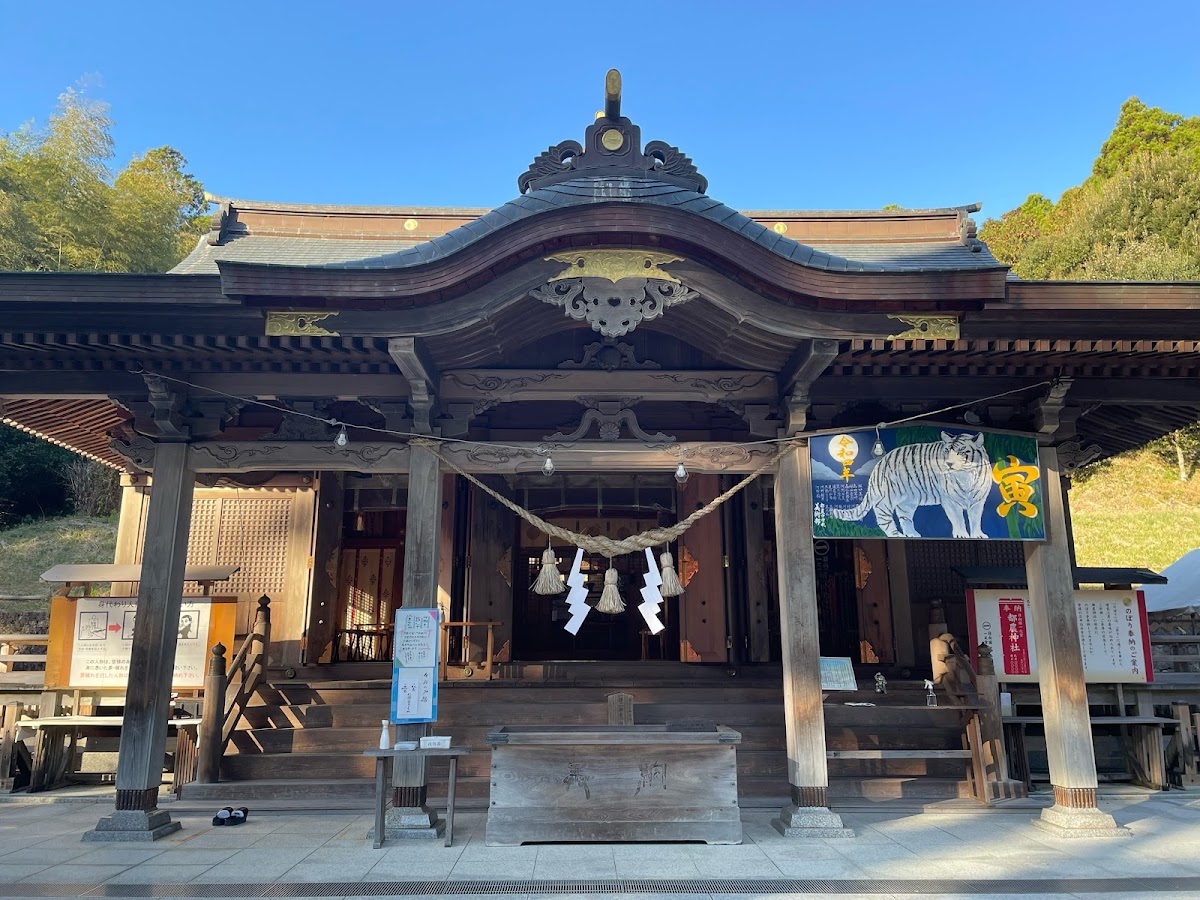
Tsuno Shrine
A representative shrine of Tsuno-cho, revered since ancient times as the Ichinomiya (first-ranked shrine) of Hyūga Province. Located about 10 minutes by car from Gyōshinji Temple, many visitors combine a visit to the shrine and the temple.
Tsuno Winery
A facility that manufactures and sells Miyazaki Prefecture-produced wine, offering tastings and shopping. A recommended spot for wine lovers.
Osuzuyama Mountain
A mountainous area where you can enjoy beautiful natural scenery, including the “Yaken Falls,” selected as one of Japan’s Top 100 Waterfalls. Ideal for hiking and nature walks.
Michi-no-Eki Tsuno (Roadside Station Tsuno)
A roadside station located along National Route 10, where you can purchase local specialties and fresh agricultural products. It’s also a convenient resting spot.
Manners and Etiquette for Visiting Temples
Attire
When visiting a temple, it is best to wear modest, understated clothing. Especially when entering the main hall, avoid revealing clothing. Even in summer, clothing that covers your shoulders and knees is ideal.
Etiquette for Visiting Temples
- Bow at the Temple Gate: Bow at the temple gate before entering the temple grounds.
- Purify at the Water Basin: If there is a water basin, purify your hands and mouth.
- Pray at the Main Hall: Join your hands in prayer in front of the main hall and pray with sincerity.
- Be Quiet: Do not speak loudly on the temple grounds; remain quiet.
- Photography: Photography inside the main hall and of the principal image is generally prohibited. Please refrain from taking photos within the temple grounds.
Shingon Buddhist Worship Etiquette
In Shingon Buddhism, the sacred name “Namu Daishi Henjo Kongo” is chanted. This expresses devotion to Kobo Daishi Kukai. Sometimes, the mantra of Dainichi Nyorai, “Om Abiraunken Bazara Dato Ban,” is also chanted.
About Tsuno Town
Overview of Tsuno Town
Tsuno Town is a town of approximately 10,000 people located in Koyu District, in the central part of Miyazaki Prefecture. It faces the Hyuga Sea to the east and borders the Osuzuyama Mountains to the west, making it a naturally rich area. Agriculture thrives, taking advantage of the warm climate, and it is particularly famous for the cultivation of bell peppers, mangoes, and grapes.
History and Culture
Tsuno Town has a history dating back to ancient times, and has developed around Tsuno Shrine, the Ichinomiya (first-ranked shrine) of Hyuga Province. It is a charming town where history dating back to the age of mythology harmonizes with abundant nature. ### Access and Transportation
The temple is located approximately 40 minutes by car from Miyazaki City and 30 minutes from Nobeoka City, accessible via the JR Nippo Main Line and National Route 10. The Tsuno Interchange on the Higashi-Kyushu Expressway is also nearby, making transportation relatively convenient.
Kyushu’s Shingon Buddhist Temple Network
Shingon Buddhism in Kyushu
Numerous temples of various Shingon Buddhist sects, including the Koyasan Shingon sect, exist in the Kyushu region. Shingon temples are present in Fukuoka, Saga, Nagasaki, Kumamoto, Oita, Miyazaki, and Kagoshima prefectures, each maintaining its faith in its respective region.
Kyushu’s Eighty-Eight Sacred Sites
Gyōshinji Temple is one of the 88 sacred sites of Kyushu, a pilgrimage route modeled after the Shikoku Eighty-Eight Sacred Sites. Visiting these sites throughout Kyushu allows for a pilgrimage aimed at spiritual purification and personal growth.
Miyazaki Prefecture has several pilgrimage sites, each with its own unique history and characteristics. Among them, Gyōshinji Temple stands out for its superb location overlooking the Hyūga Sea and its newly constructed main hall.
Training and Learning at Gyōshinji Temple
Sutra Copying Experience
Many Shingon Buddhist temples offer sutra copying experiences. By carefully copying scriptures such as the Heart Sutra, one can calm their mind and connect with the teachings of Buddhism. Gyōshinji Temple may also hold sutra copying sessions; please inquire in advance if you are interested.
Meditation and Zen Meditation
Shingon Buddhist training includes meditation and a contemplative method called Ajikan. The time spent calming the mind and finding inner peace in the tranquil temple grounds will be a valuable experience for those of us living in modern society.
Gyōshinji Temple in Each Season
Spring (March-May)
Spring is the season of fresh greenery; the trees in the temple grounds bud, creating an atmosphere full of vitality. Many worshippers visit during the Spring Equinox. The mild climate makes it an ideal season for worship.
Summer (June-August)
In summer, the sea breeze from the Hyuga Sea is pleasant, and Gyōshinji Temple, situated on a hill, feels relatively cool. During the Obon period, memorial services for ancestors are held, and local people gather. Morning visits are recommended.
Autumn (September-November)
Autumn is the most pleasant season, and the Autumn Equinox is held. The air is clear, the view of the Hyuga Sea is even more beautiful, and the sunset is exceptionally beautiful. It is also pilgrimage season, and many people visiting temples come.
Winter (December-February)
While Miyazaki Prefecture is relatively mild in winter, it can get chilly in the mornings and evenings. The temple is bustling with worshippers visiting for Hatsumode (first shrine visit of the year) during the New Year period. Visiting the temple in the crisp winter air is a truly invigorating experience for both mind and body.
The Significance of Visiting Gyōshinji Temple
Seeking Peace of Mind
Modern society is an information-overloaded and stressful environment. Visiting a quiet temple like Gyōshinji offers a precious opportunity to escape from daily life and calm the mind. The time spent pacifying oneself while listening to the sound of waves in the temple grounds overlooking the Hyūga Sea is of priceless value.
Ancestor Worship and Gratitude
Temple visits are also a place for expressing gratitude and offering prayers to ancestors. Our existence here today is thanks to countless ancestors. By joining our hands in prayer at Gyōshinji Temple, we can renew our feelings of gratitude towards our ancestors.
As a Step on Pilgrimage
As the 35th temple of the Kyushu 88 Sacred Sites, Gyōshinji Temple is an important base for pilgrimage. Pilgrimage is not merely sightseeing; it is a journey of self-reflection and spiritual growth. Step by step, visiting each temple on the pilgrimage will allow you to experience personal growth.
Temple Culture in Miyazaki Prefecture
Buddhism in Miyazaki Prefecture
Miyazaki Prefecture is home to temples of various sects, each supporting the faith of its region. Diverse Buddhist cultures are deeply rooted here, including Koyasan Shingon Buddhism, Jodo Shinshu Buddhism, Soto Zen Buddhism, and Nichiren Buddhism.
Numerous temples exist within Miyazaki City, and temples with unique characteristics are scattered throughout the prefecture, including Nobeoka City in the north, Nichinan City in the south, and Tsuno Town in the central region.
Tradition of Shinto-Buddhist Syncretism
Miyazaki Prefecture is known as the setting for many myths, and Shinto worship is very prevalent in this region. At the same time, there are many Buddhist temples, and the tradition of Shinto-Buddhist syncretism remains strong. Tsuno Town, where Gyōshinji Temple is located, also has Tsuno Shrine, the Ichinomiya (first-ranked shrine) of Hyuga Province, demonstrating a culture where shrines and temples coexist.
Precautions for Visiting the Temple
Visiting Hours
Temples are generally open for visits from sunrise to sunset, but hours may differ during religious services and events. If you wish to visit during these times, it is recommended to contact the temple office in advance.
Parking and Restrooms
It is advisable to check in advance whether there is parking, the number of spaces, and restroom facilities. This is especially important for group visits or if you are visiting with someone with a disability.
Weather and Clothing
Miyazaki Prefecture has a mild climate, but Gyōshinji Temple, located on a hill, can experience strong winds on some days. Please prepare appropriate clothing for the weather. It can get particularly chilly in the mornings and evenings during winter, so bringing a jacket is recommended.
Insect Repellent
Due to the rich natural environment, insect repellent spray and other preventative measures are recommended, especially during the summer months, for a more comfortable visit.
Insect Repellent
Due to the temple’s natural surroundings, insect repellent spray and other preventative measures are recommended, especially during the summer. ## Summary
Gyōshinji Temple is a Shingon Buddhist temple of the Koyasan sect located on a hill in Tsunō-cho, Koyu-gun, Miyazaki Prefecture. It is the 35th temple on the Kyushu 88 Sacred Sites and 108 Temple Pilgrimage, welcoming many visitors. Founded between the late Meiji and Taisho periods, the current main hall was completed in 1998.
Its superb location overlooking the Hyūga Sea, the sound of the temple bell ringing morning and evening, and the solemn atmosphere with the Vajradhatu Dainichi Nyorai as its principal deity provide peace and inspiration to visitors.
Access is relatively good, approximately a 45-minute walk from JR Tsunō Station or about a 15-minute drive from the Higashi-Kyushu Expressway Tsunō Interchange. Visiting Gyōshinji Temple in conjunction with nearby tourist spots such as Tsunō Shrine and Tsunō Winery allows you to fully experience the charm of Tsunō-cho.
Whether as part of a pilgrimage or seeking peace of mind, please do visit Gyōshinji Temple. The beautiful scenery of the Hyuga Sea and the tranquil temple grounds will bring peace to your heart.
Frequently Asked Questions
Q1: Can I get a Goshuin (temple stamp) at Gyōshinji Temple anytime?
A1: You can generally get a Goshuin during visiting hours, but there may be times when it is unavailable due to memorial services, events, or when the temple is closed. If you want to be sure to get a Goshuin, we recommend calling ahead to confirm. Especially if you are visiting from a long distance, it is best to contact us in advance.
Q2: Do I need a reservation to visit Gyōshinji Temple?
A2: Reservations are not required for regular visits. However, if you wish to visit as a group, request a memorial service, or participate in experiential programs such as sutra copying sessions, you need to contact the temple office in advance to make a reservation.
Q3: Is it difficult to walk from Tsuno Station?
A3: It is approximately 2.4 km from Tsuno Station to Gyōshinji Temple, and takes about 45 minutes on foot. Because there is an uphill climb to a hilltop, we recommend taking a taxi if you are not confident in your physical fitness or during hot weather. If taking the bus, the nearest stop is Iwayama bus stop, which is about a 3-minute walk away.
Q4: Please tell me about the Kyushu 88 Sacred Sites Pilgrimage
A4: The Kyushu 88 Sacred Sites Pilgrimage is a pilgrimage route in the Kyushu region modeled after the Shikoku 88 Sacred Sites Pilgrimage, spanning seven prefectures: Fukuoka, Saga, Nagasaki, Kumamoto, Oita, Miyazaki, and Kagoshima. Gyōshinji Temple is the 35th temple on the pilgrimage. There is no specific order for the pilgrimage, so you can visit at your own pace.
Q5: Are there places to eat near Gyōshinji Temple?
A5: Because the area around Gyōshinji Temple is a residential area with a natural environment, there are not many restaurants within walking distance. There are restaurants and the Tsuno Roadside Station in the center of Tsuno Town and along National Route 10. We recommend eating in the central area of Tsuno town before or after your visit to the shrine, or bringing your own lunch.